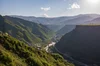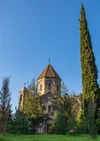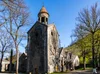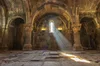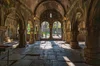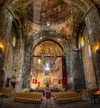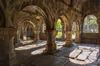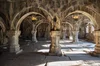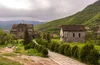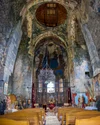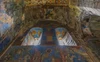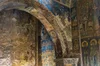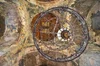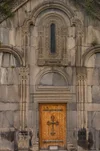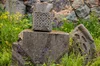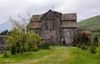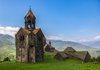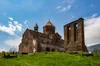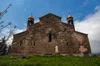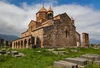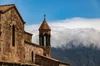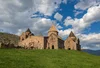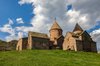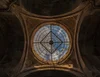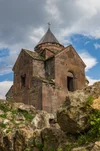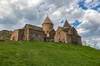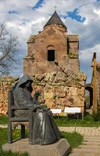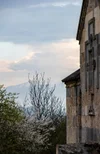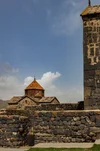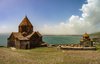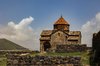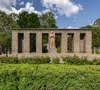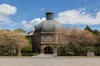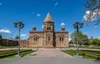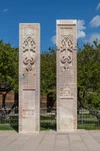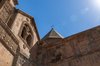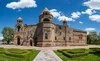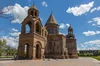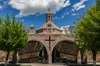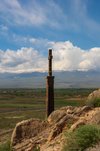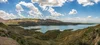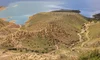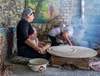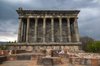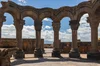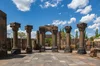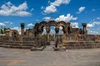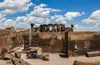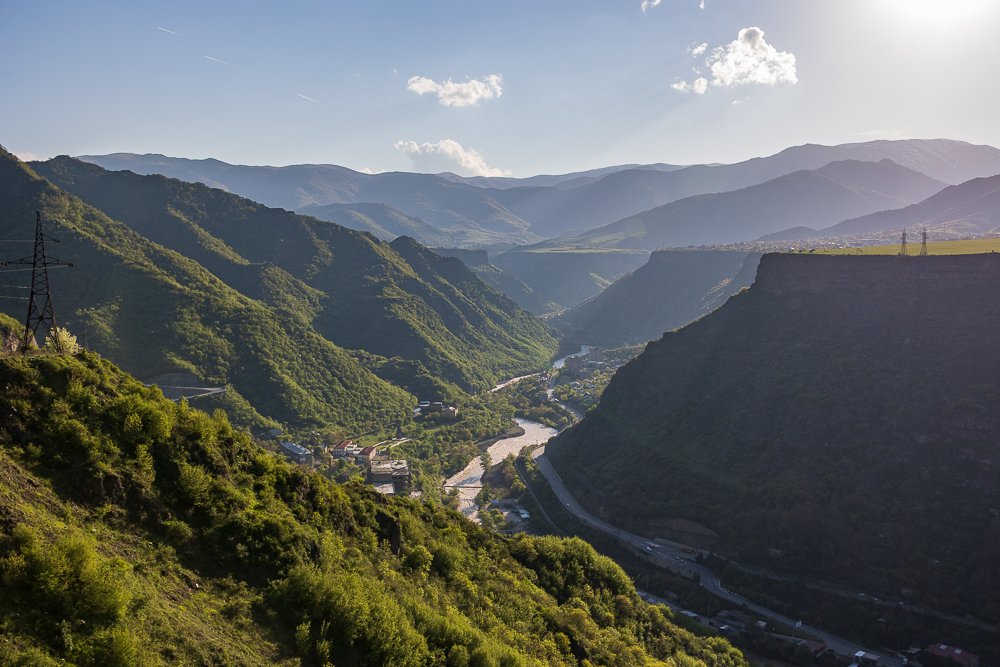
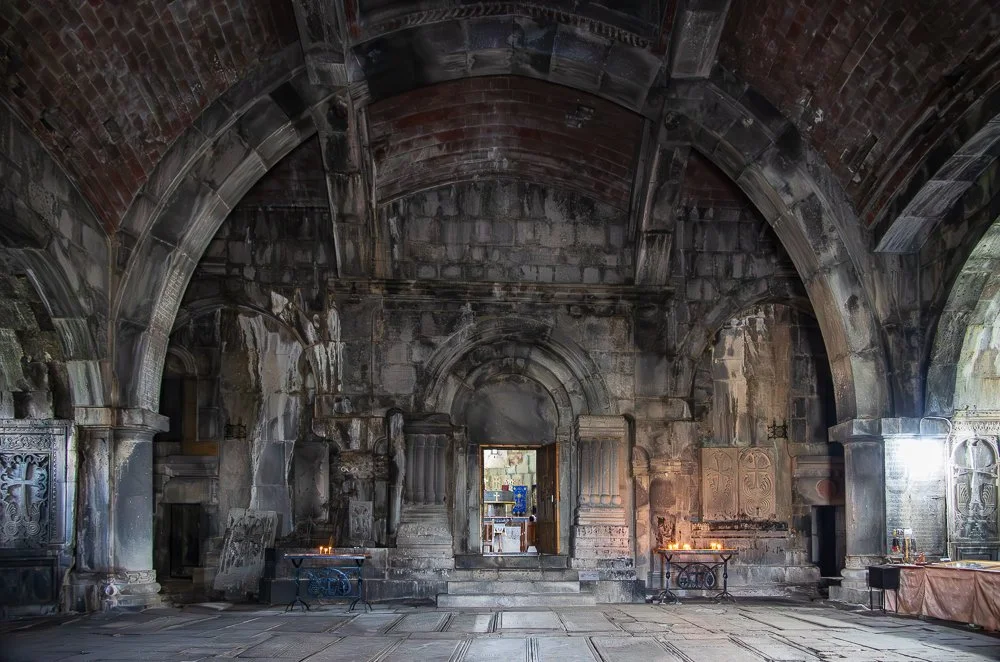
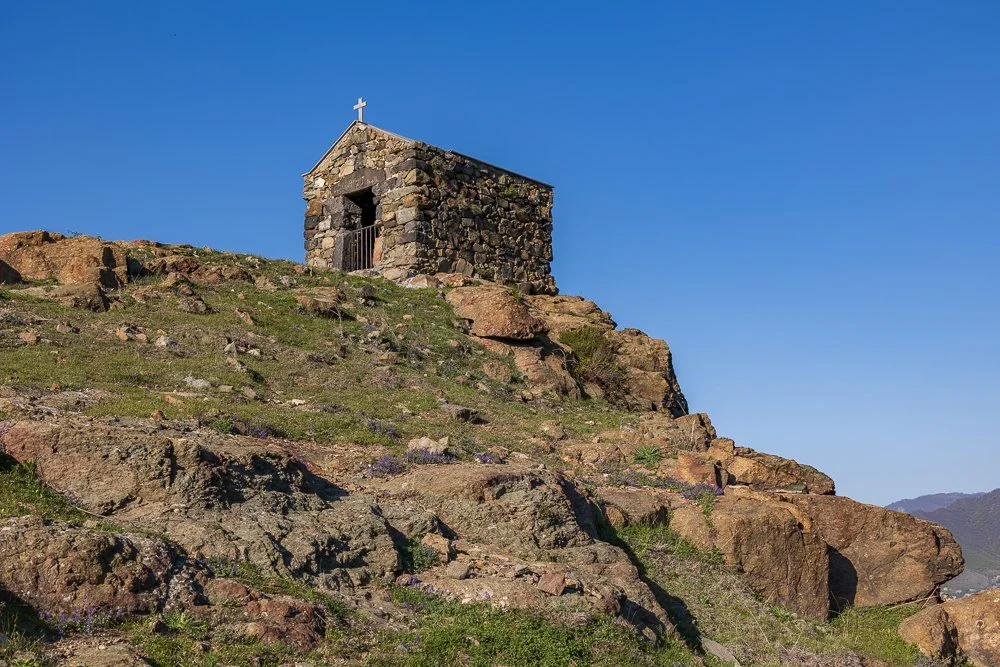
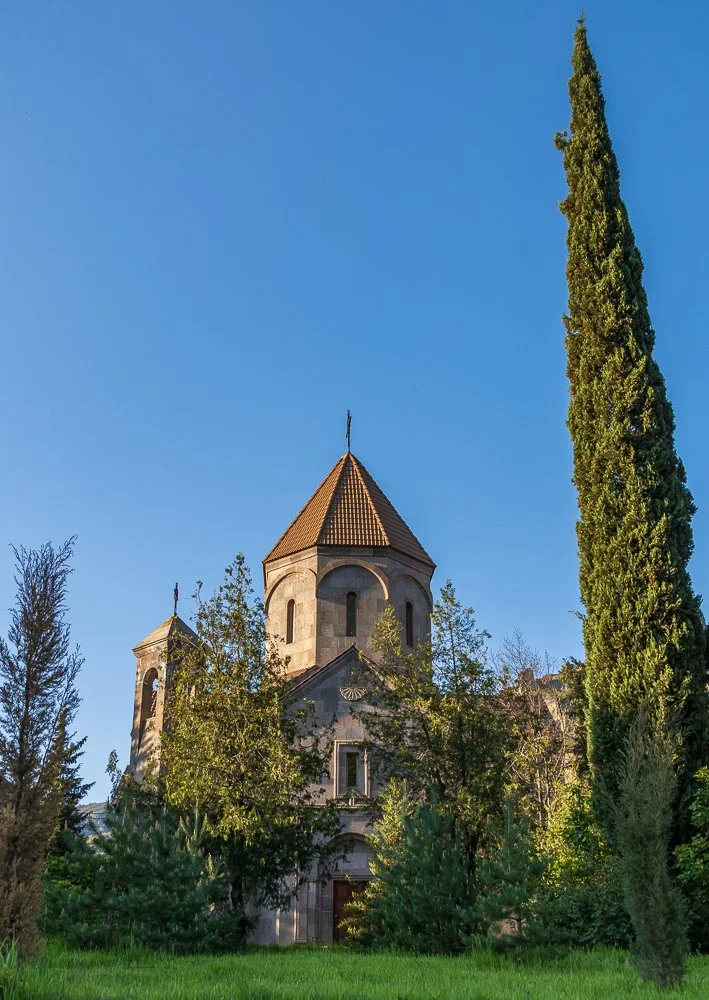
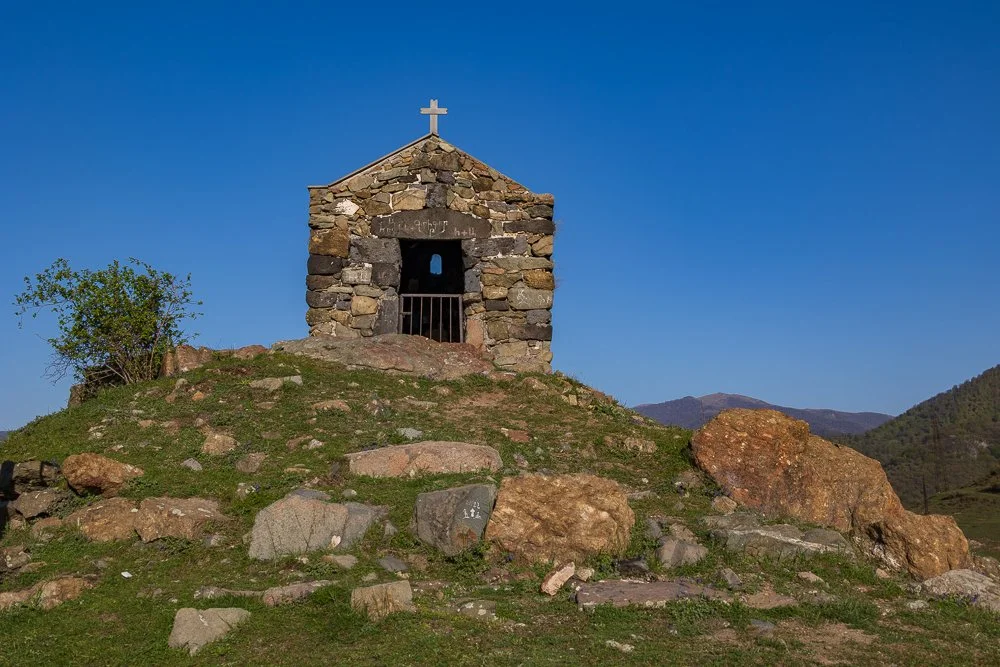
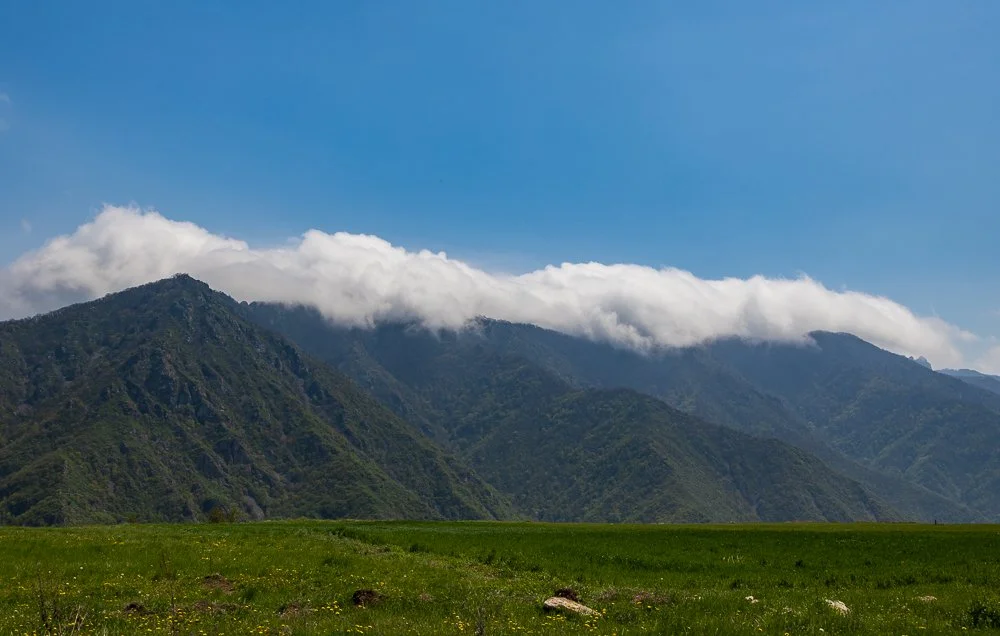
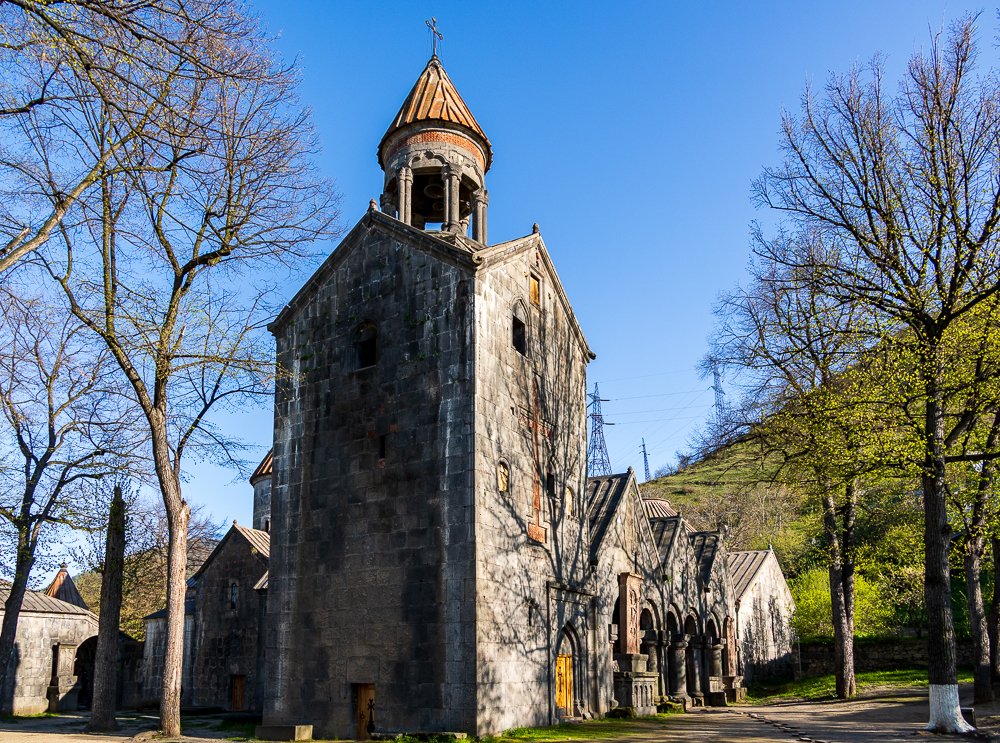
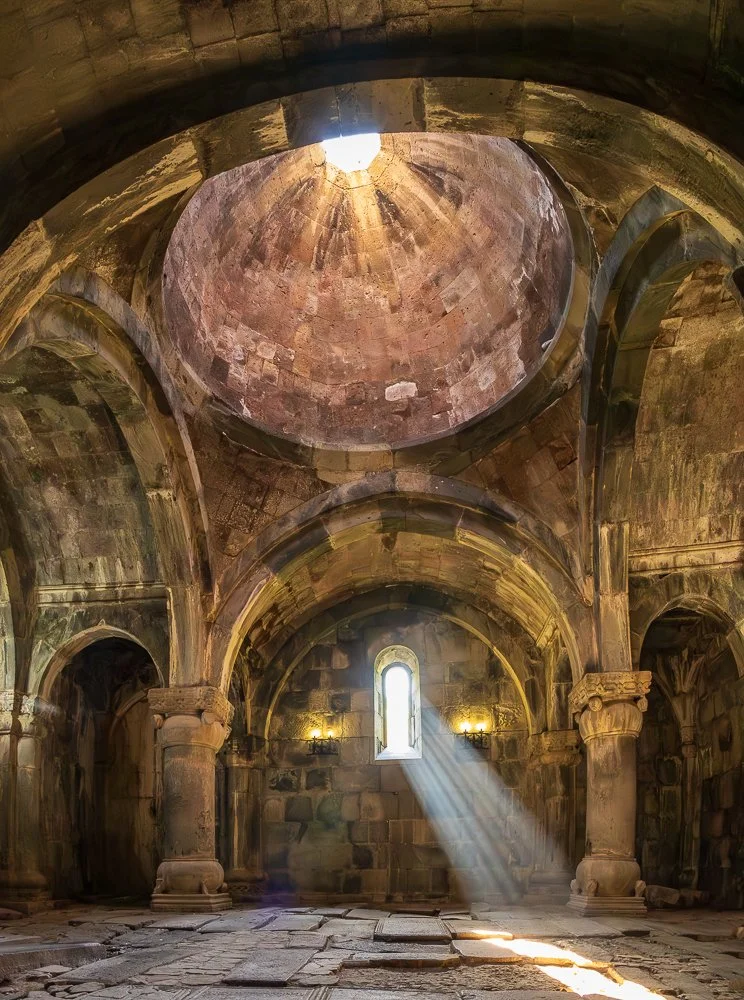
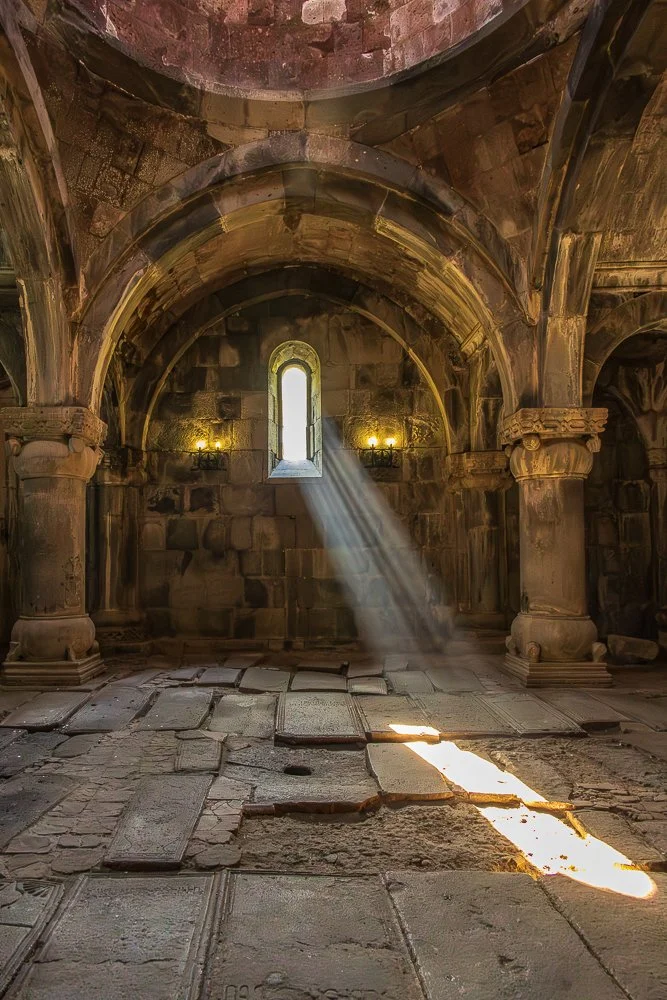
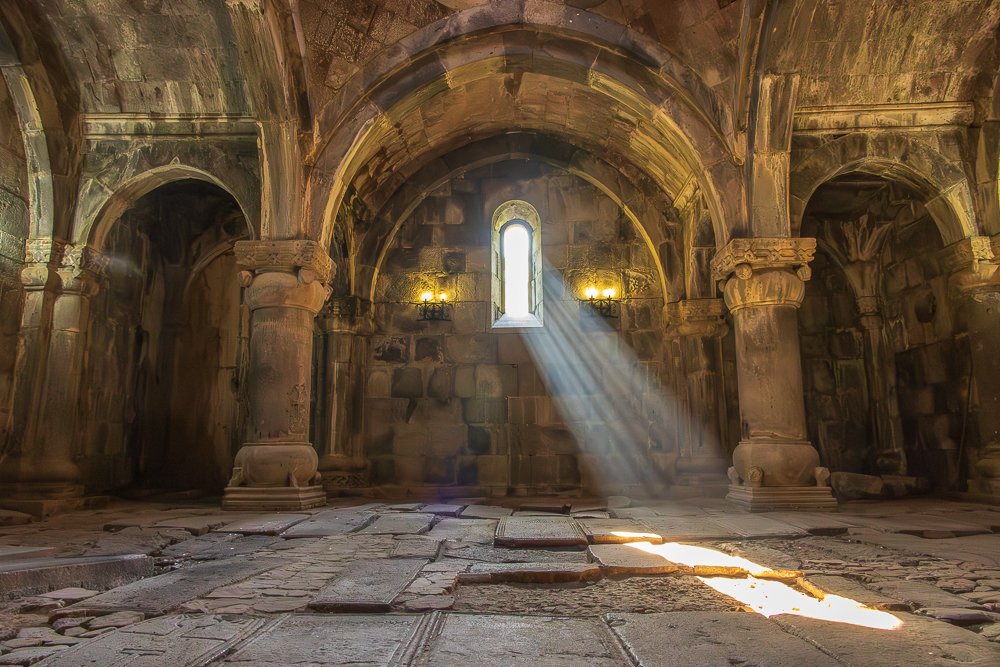
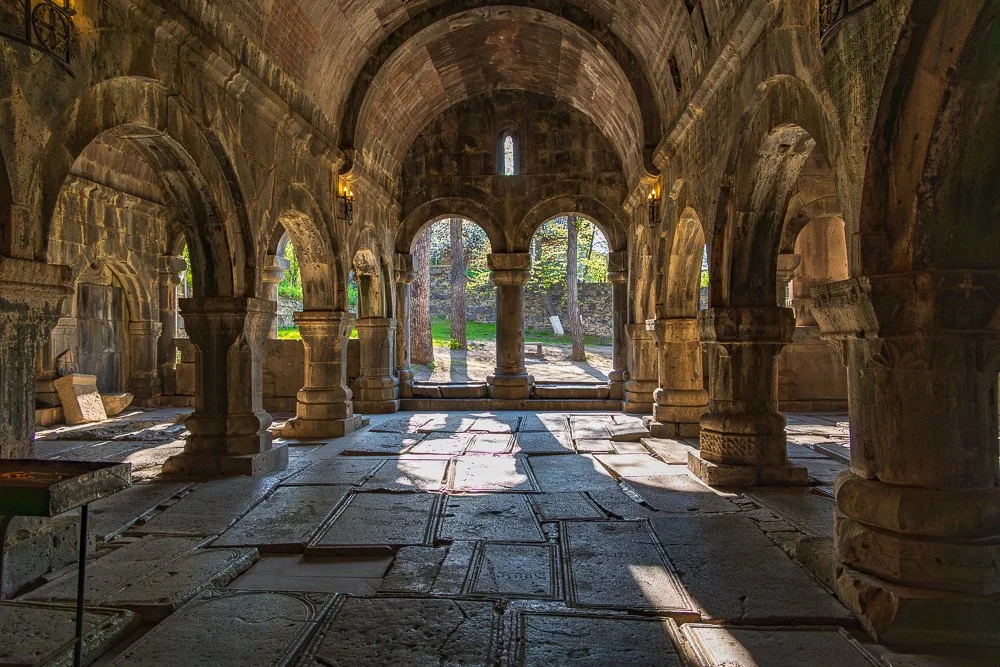
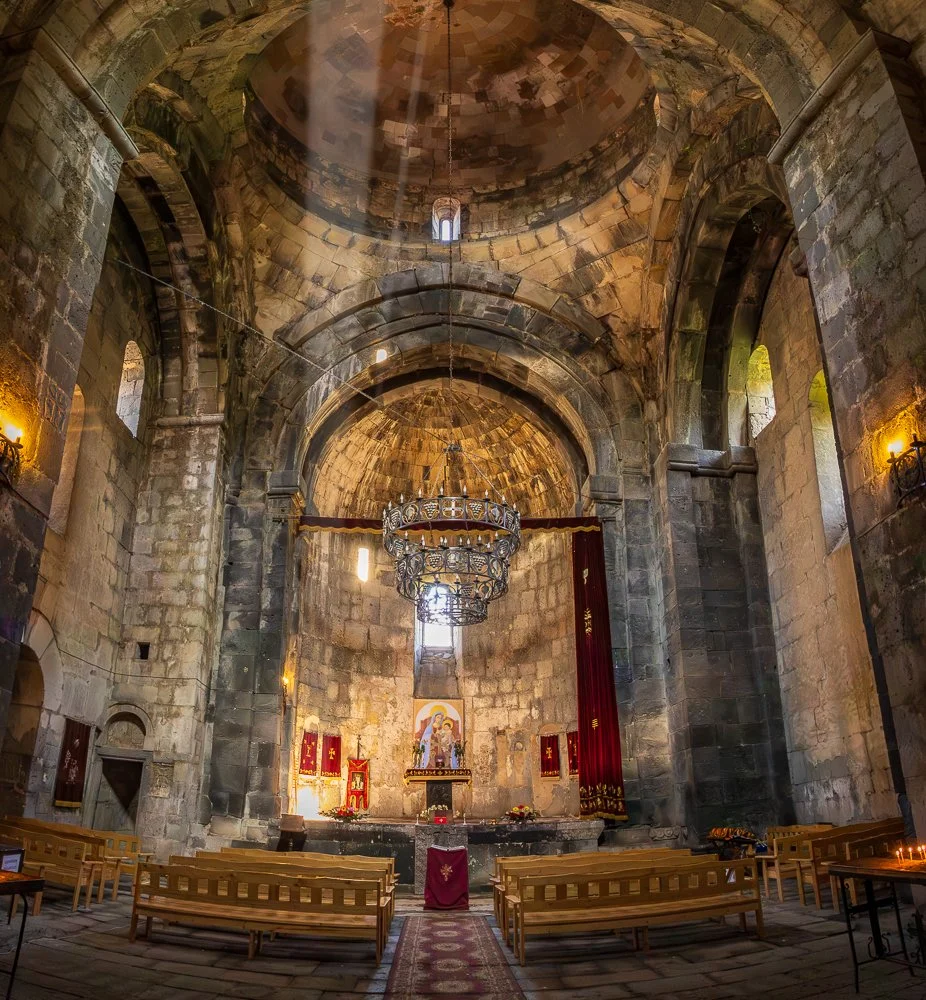
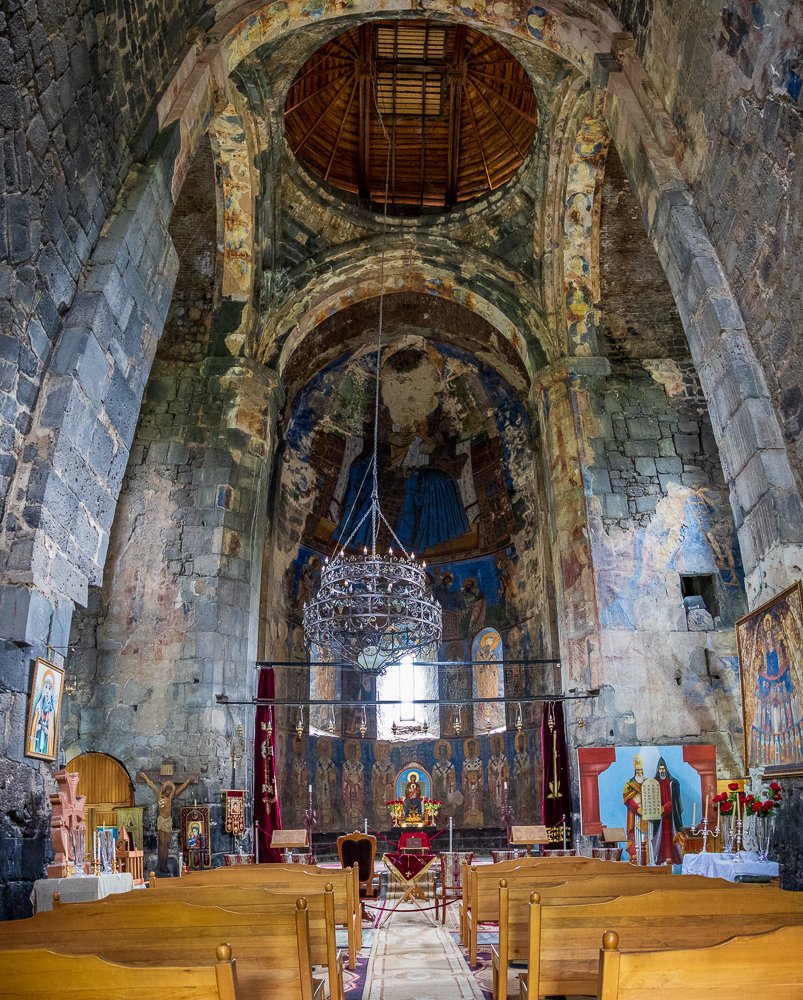
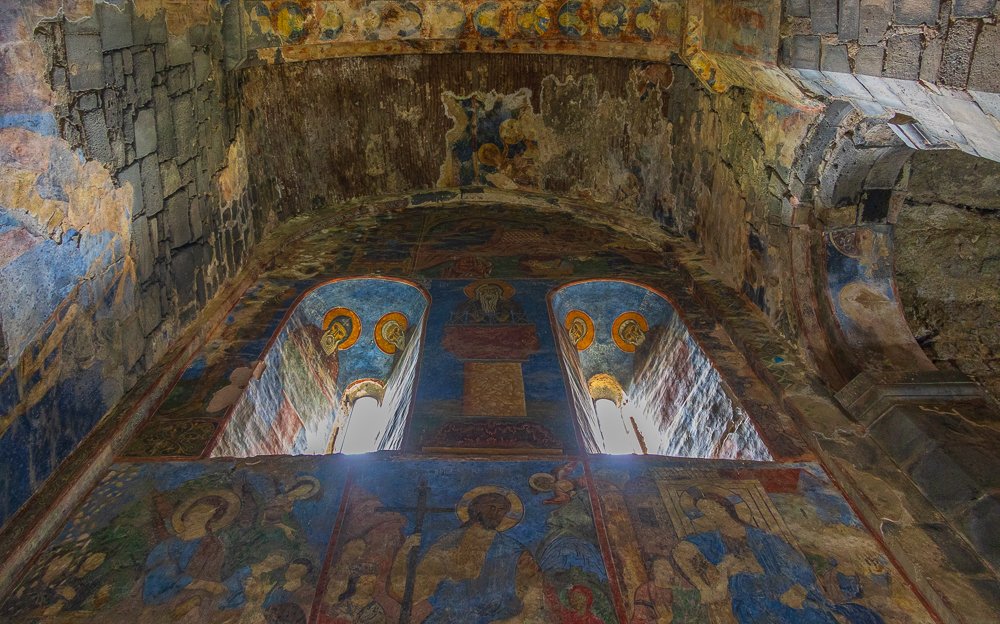
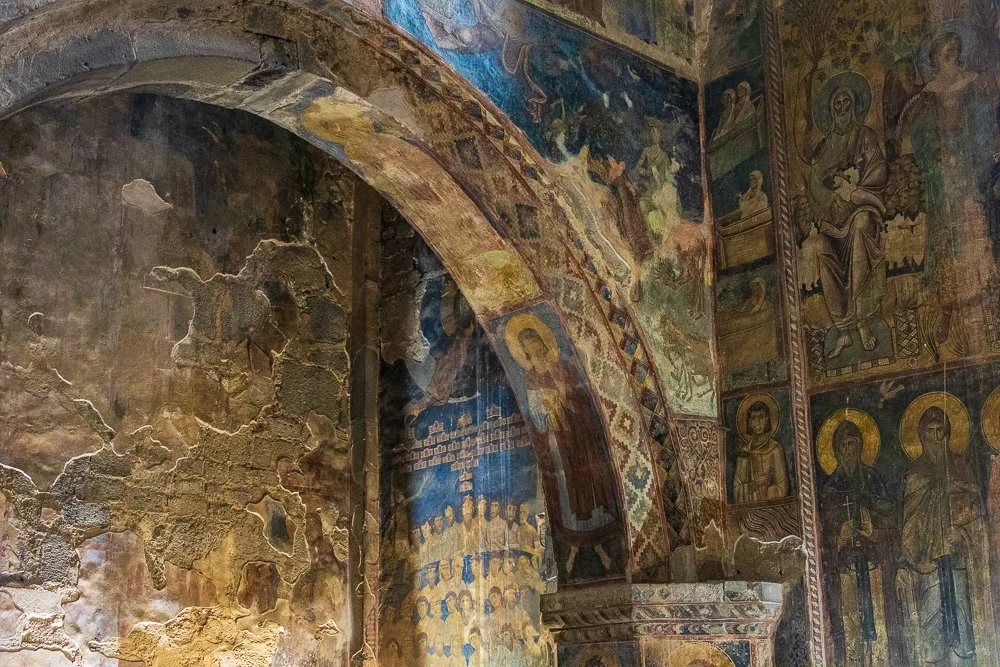
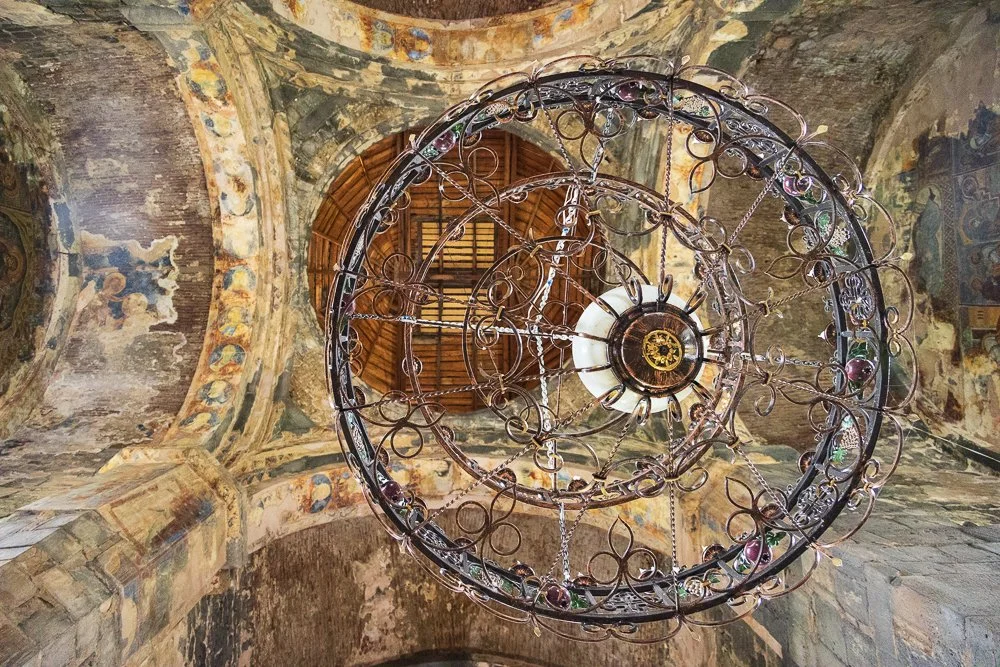
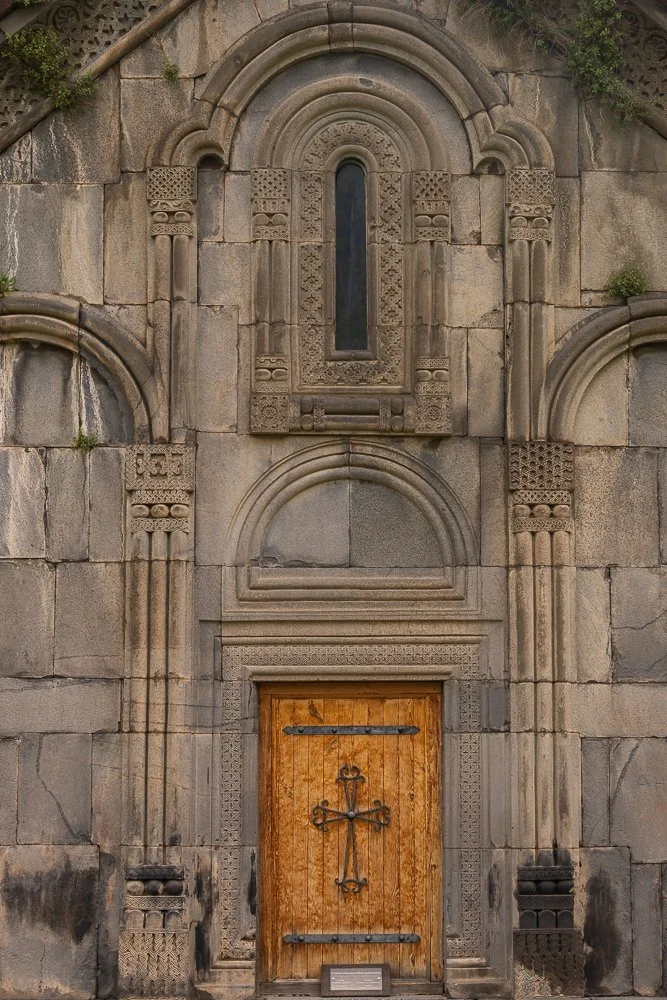
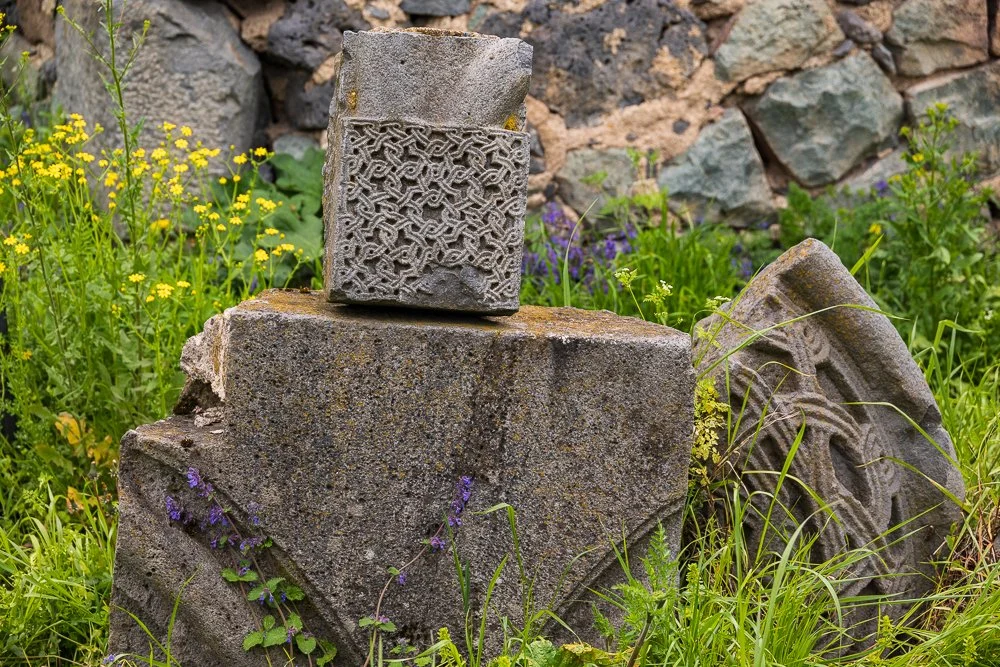
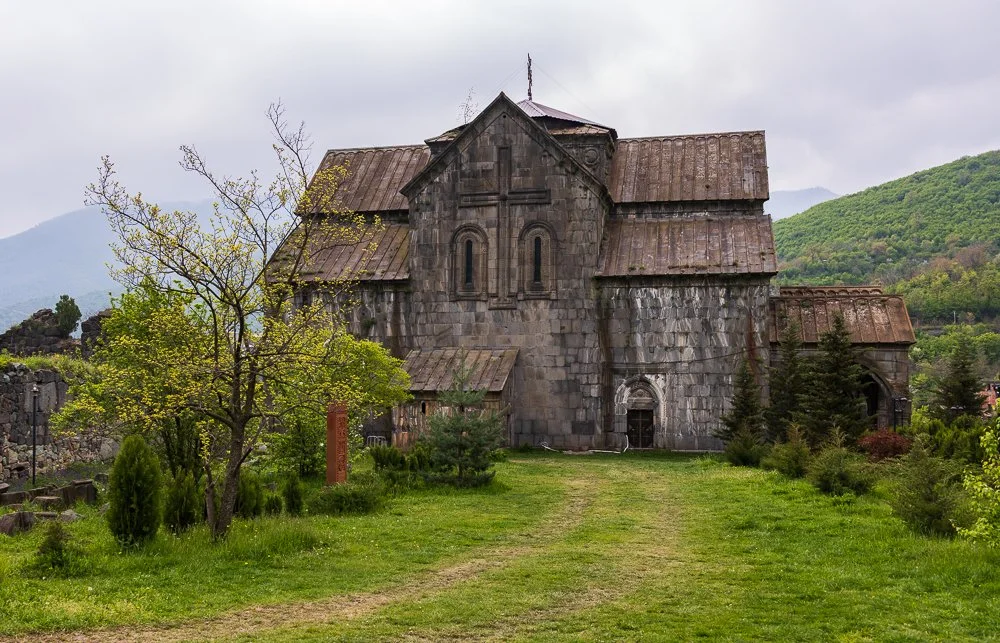
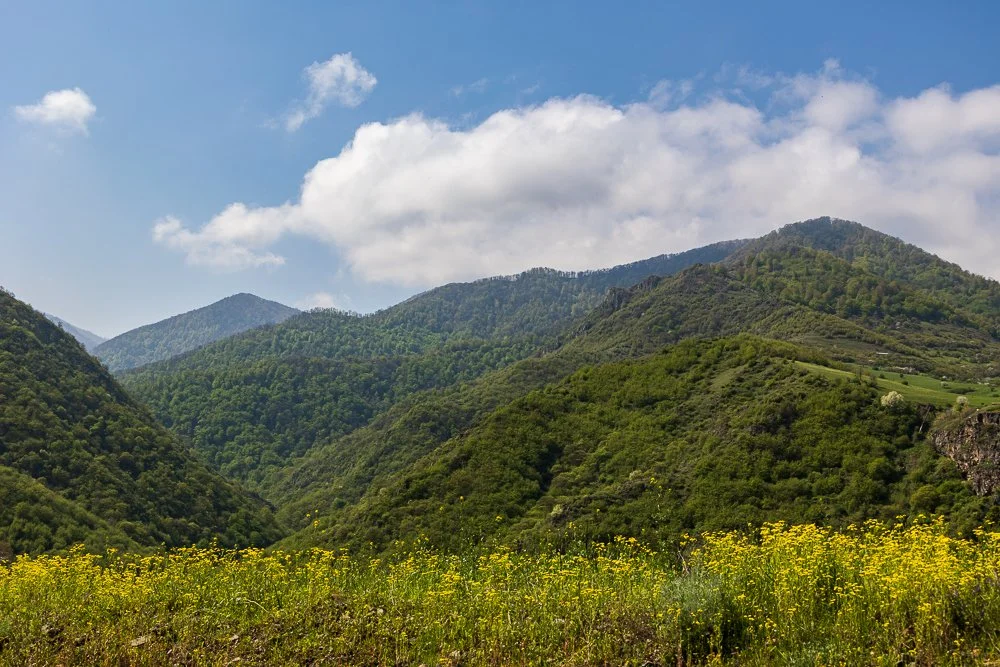
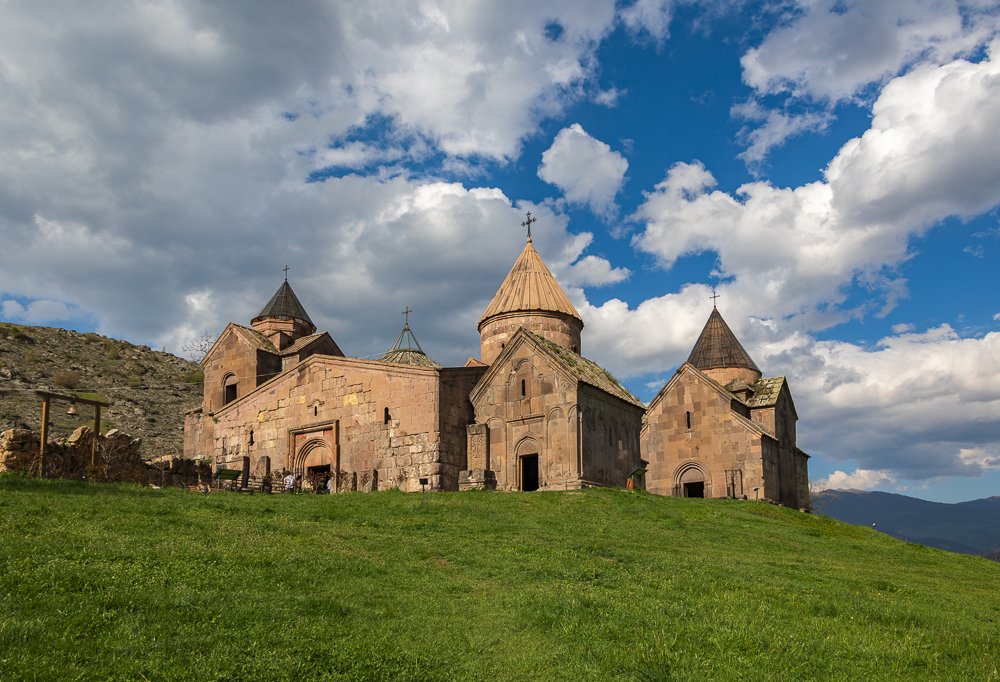
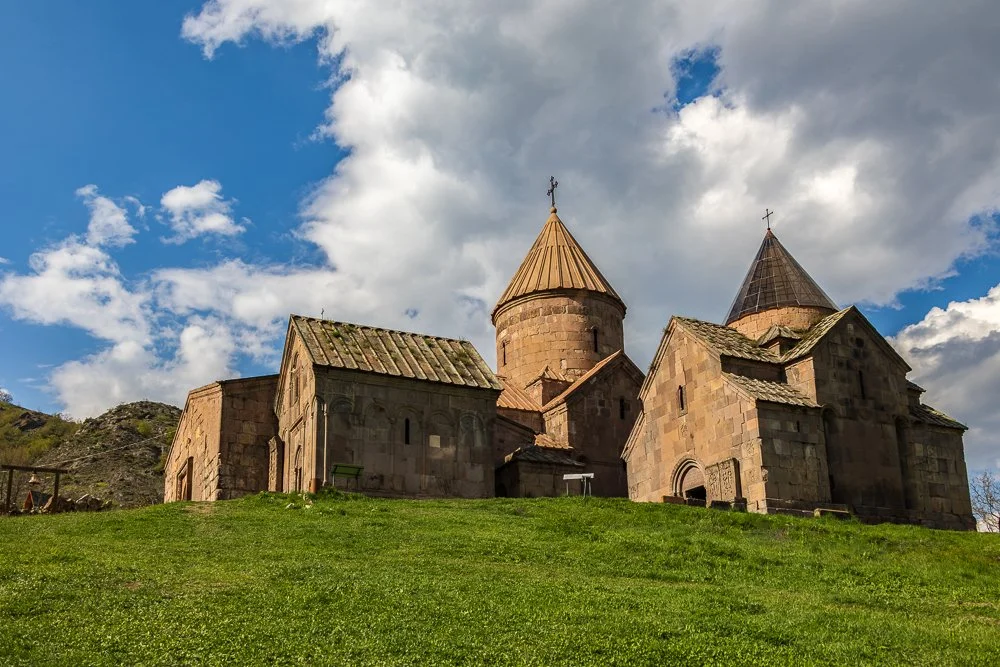
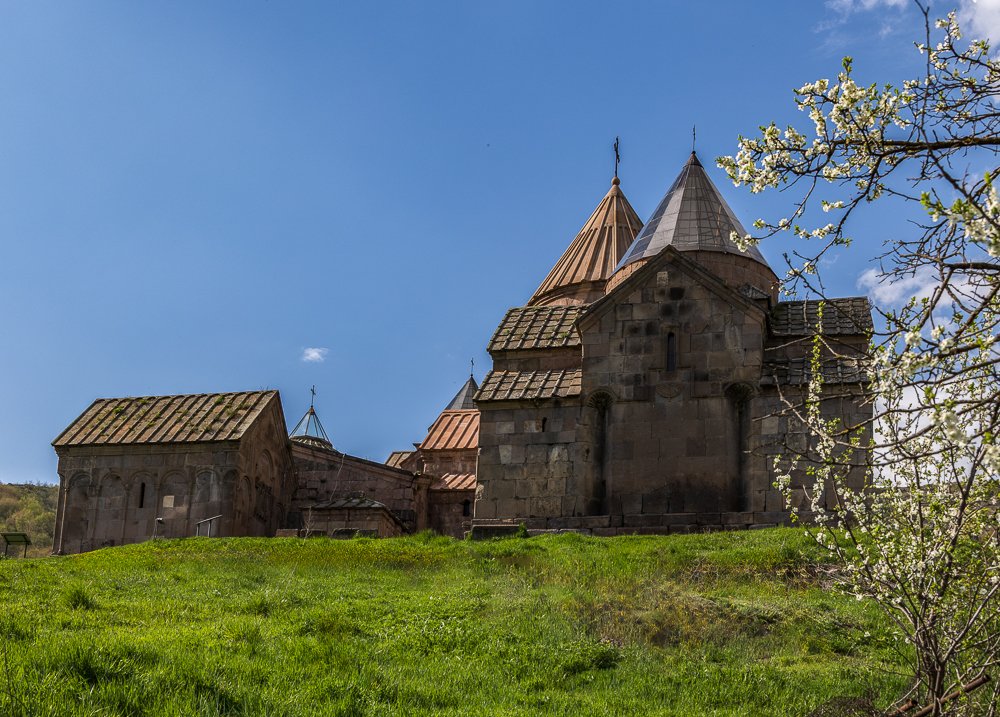
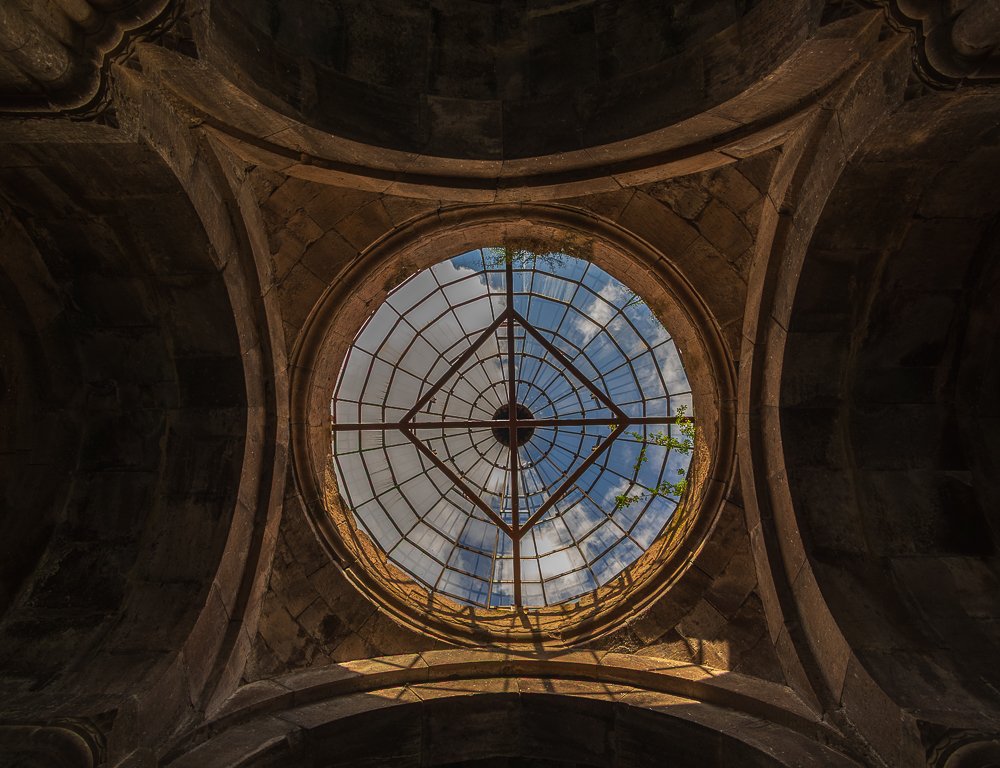
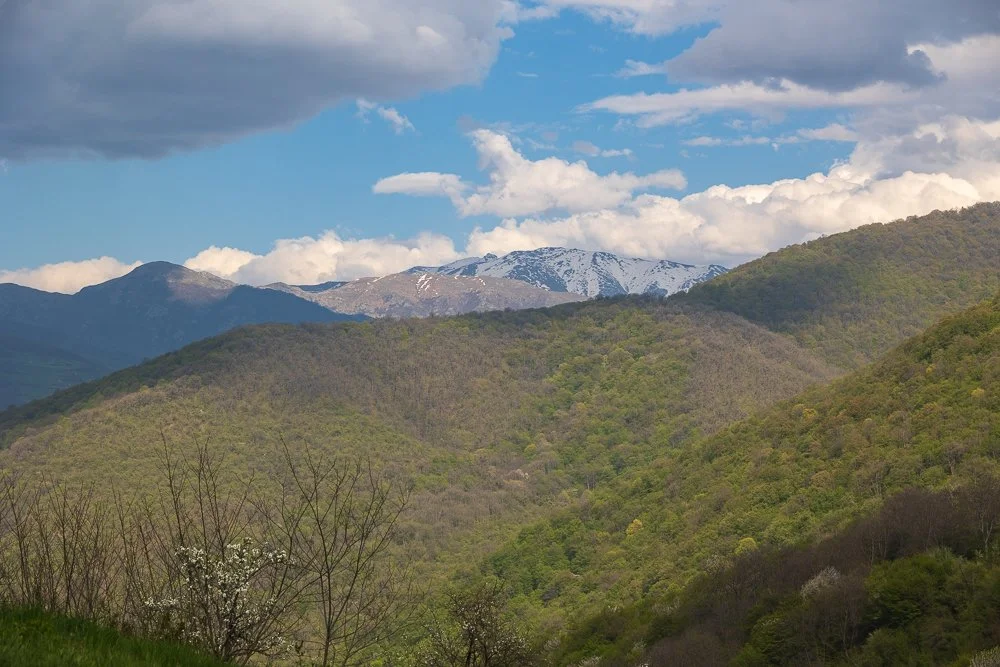
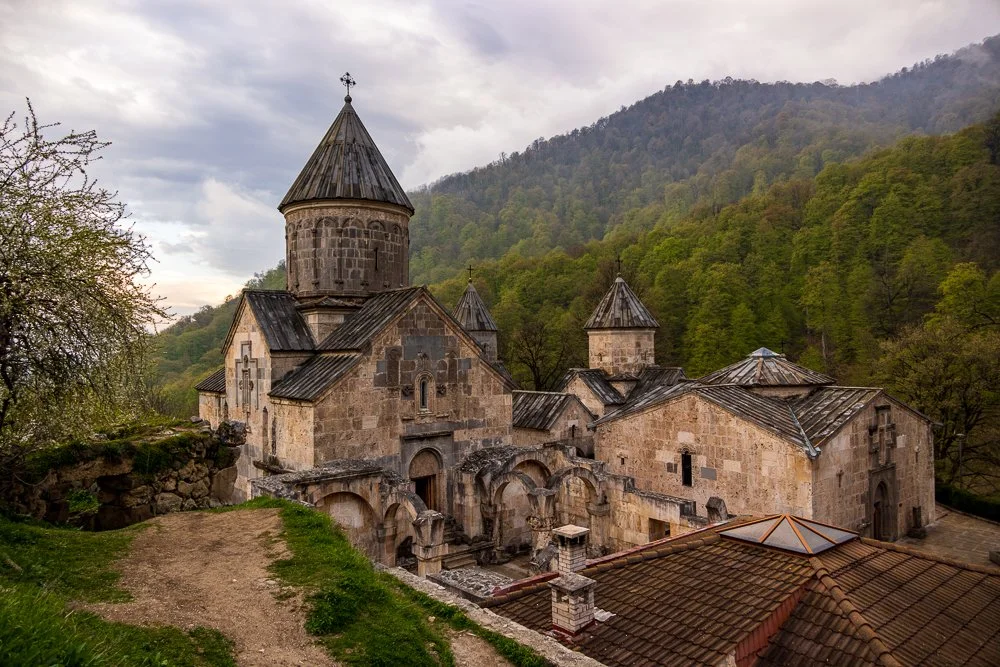
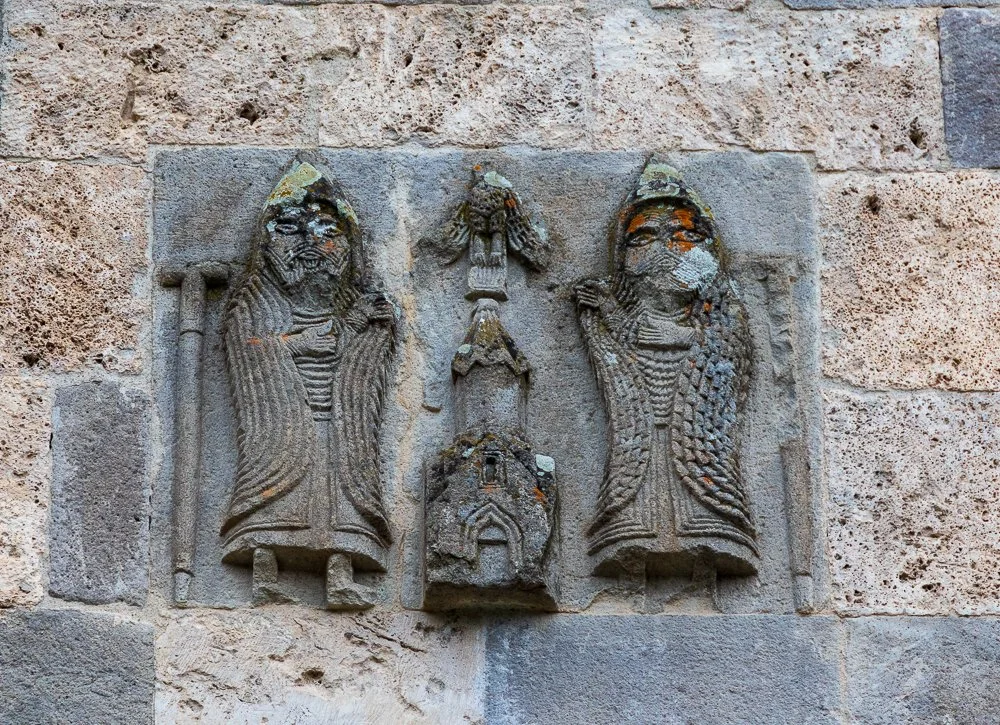
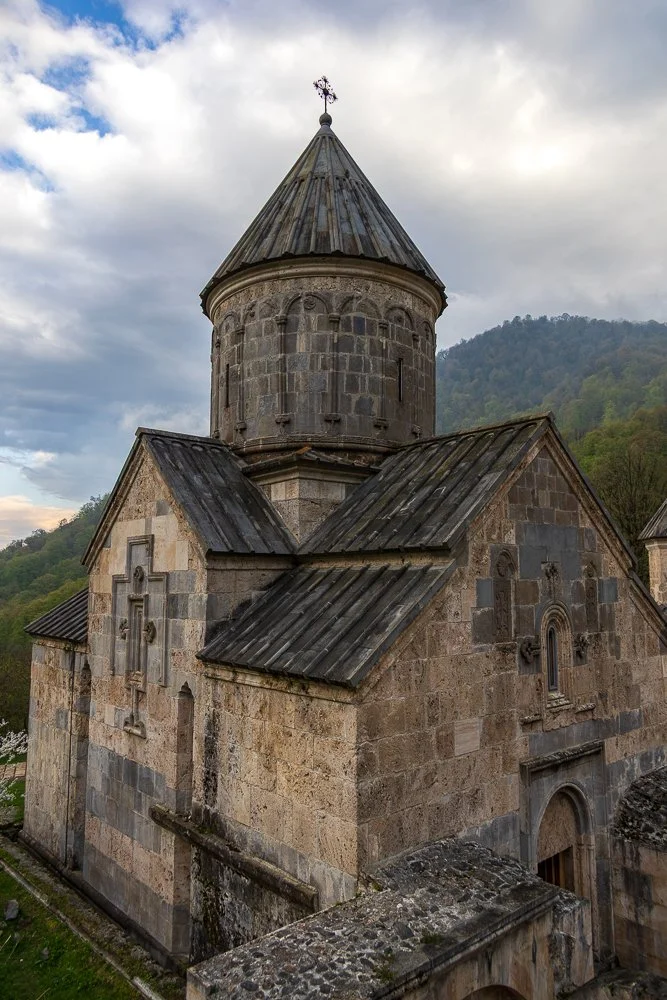
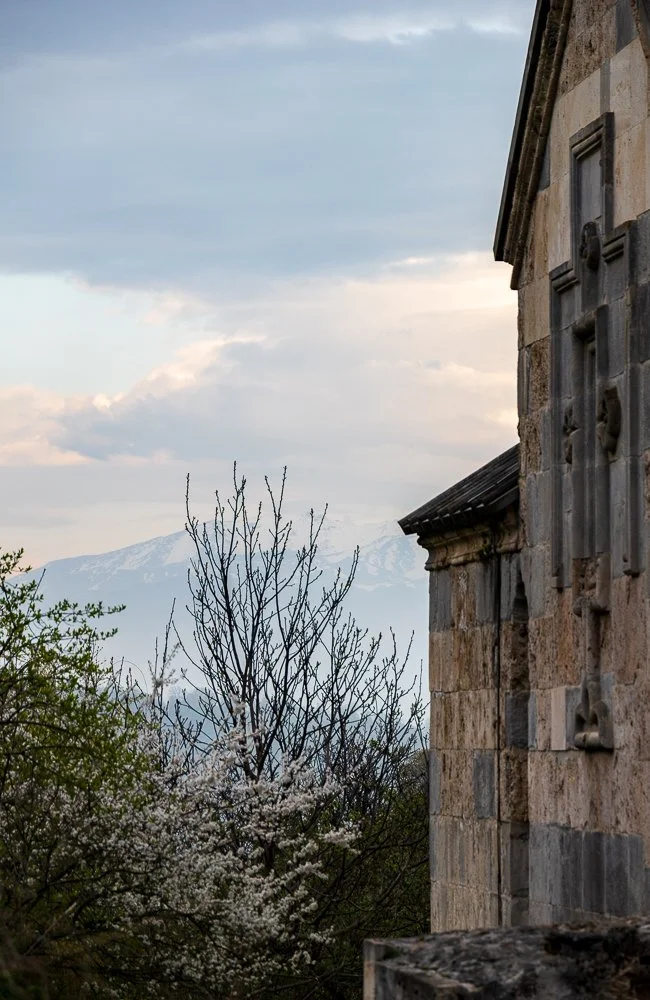
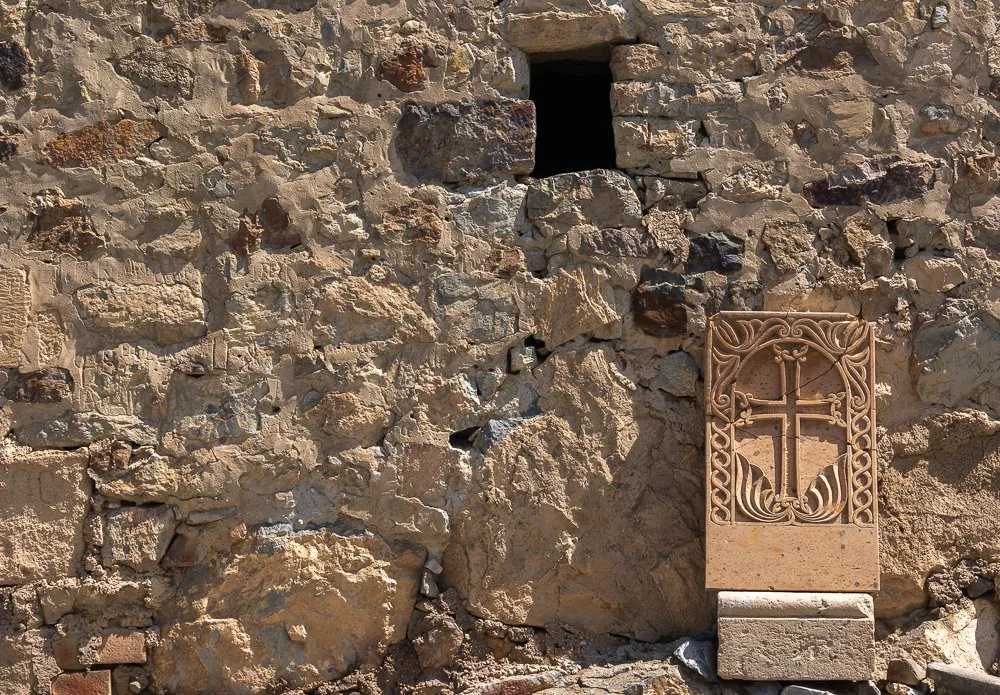
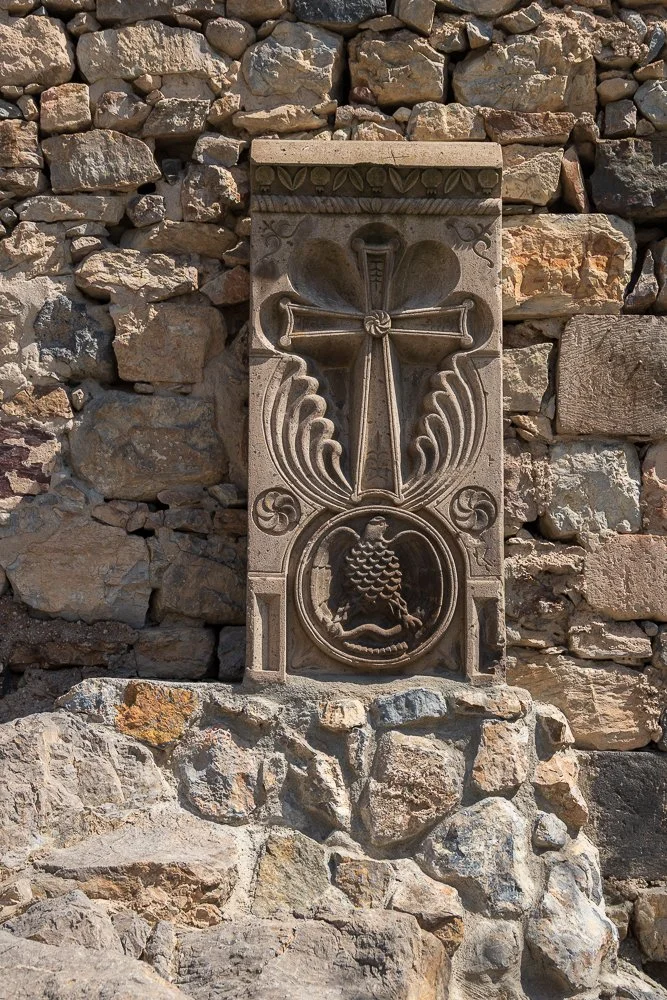
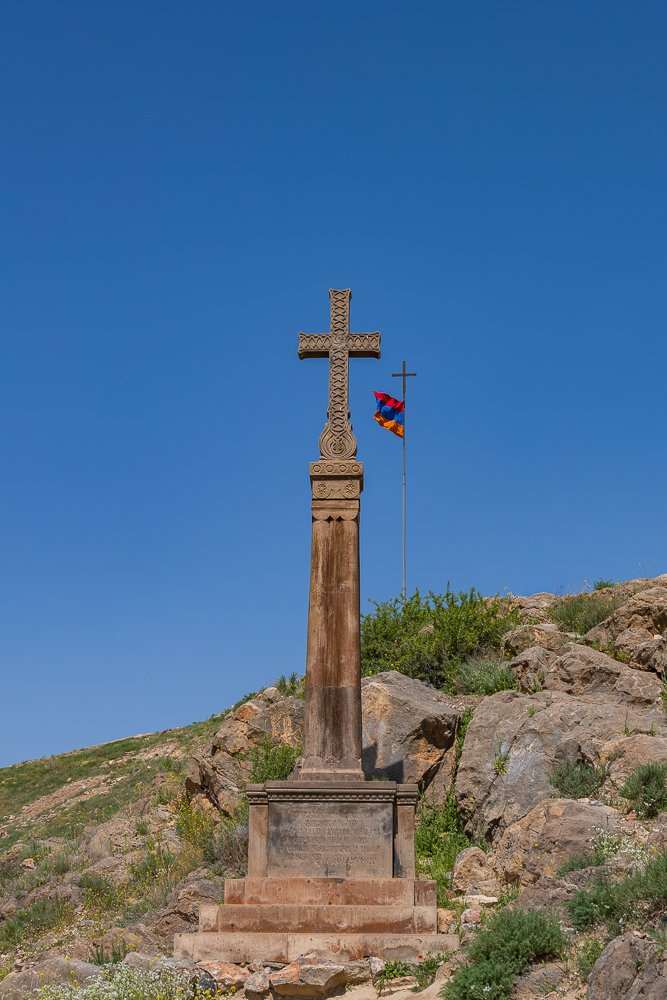
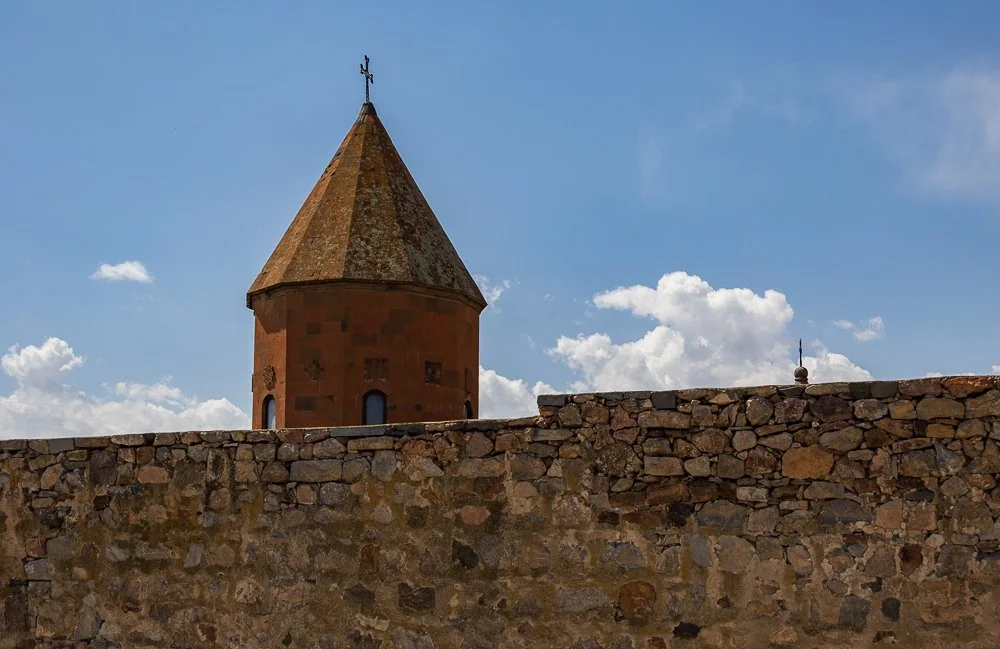
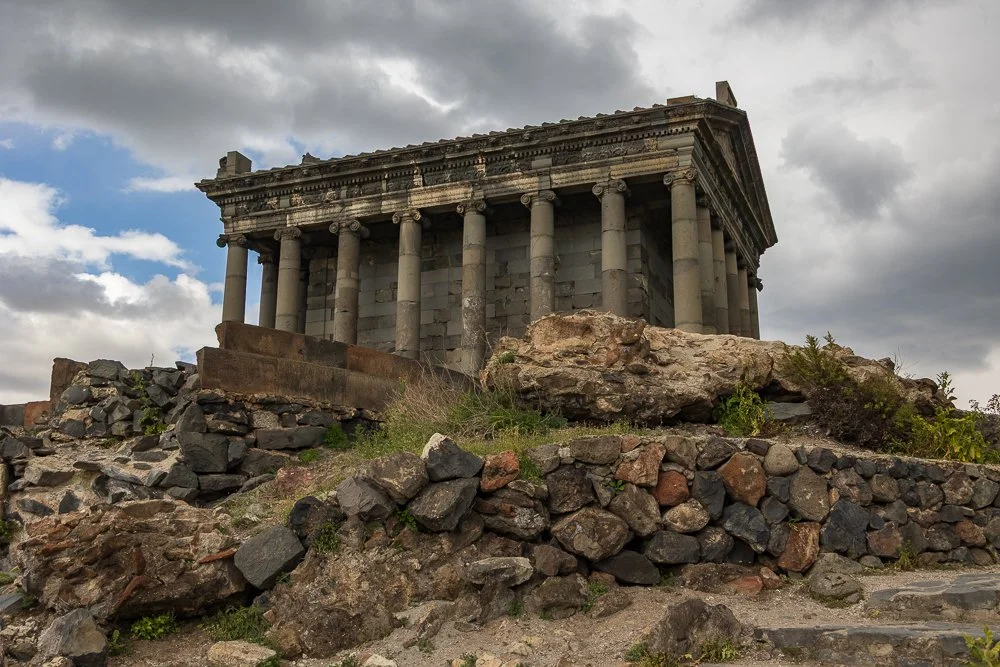
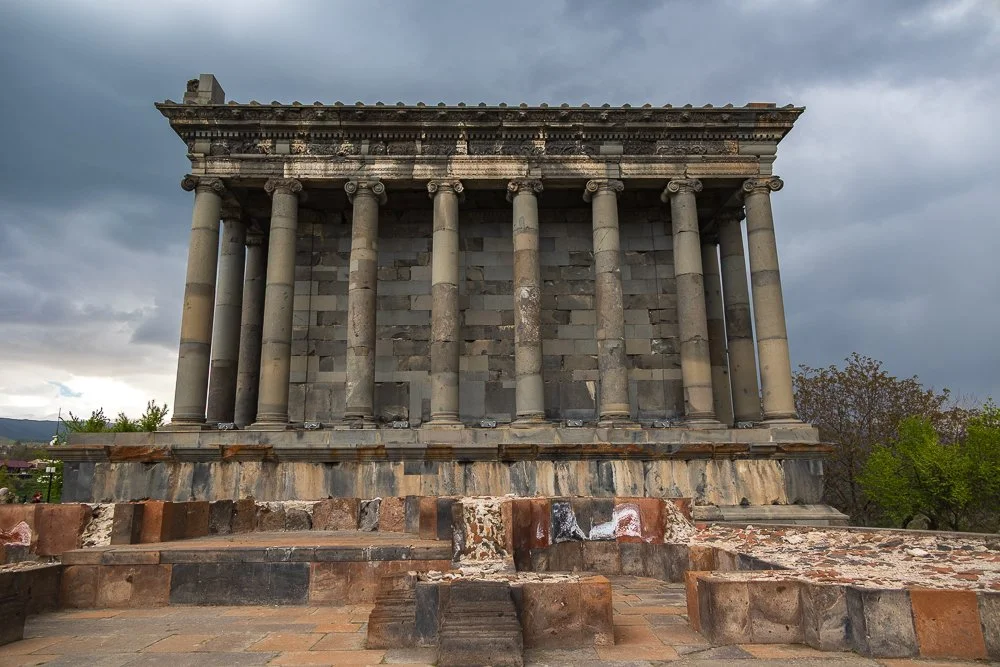
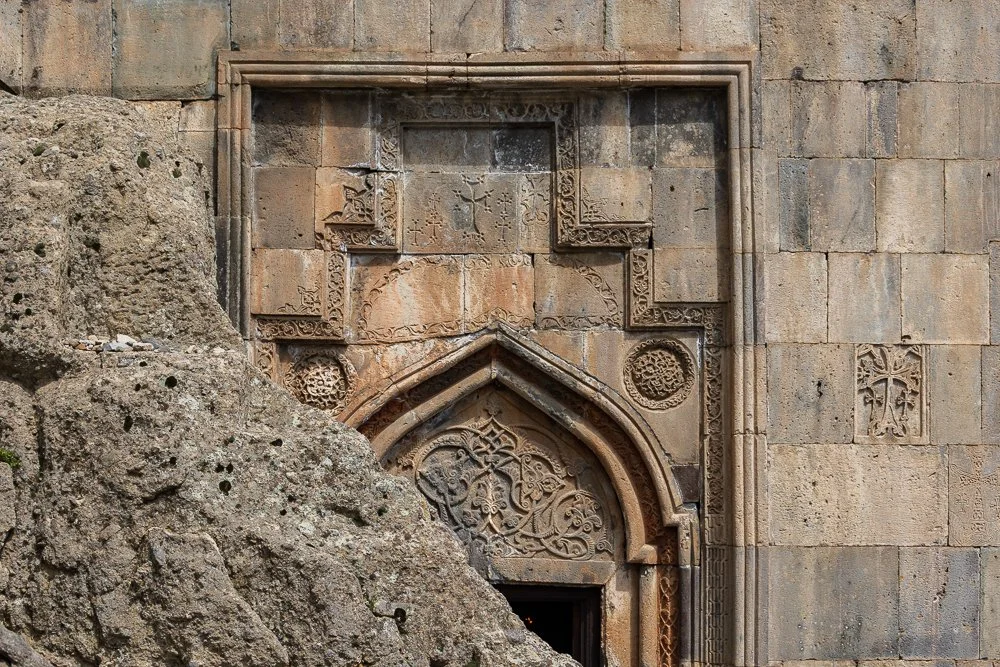
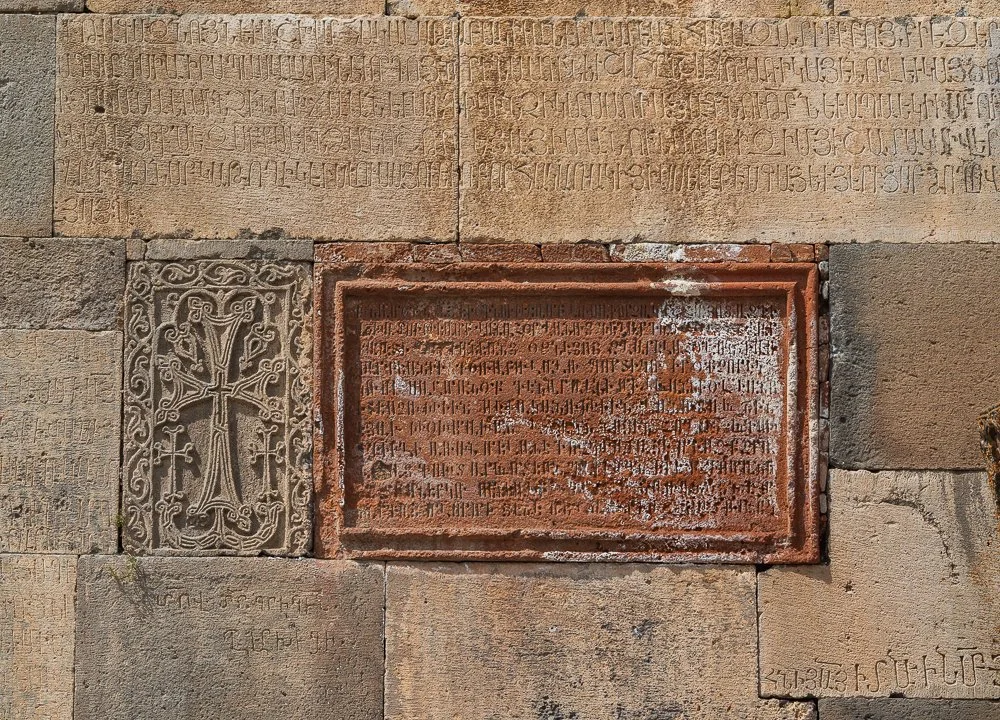
Armenia  was the first country in the world to adopt Christianity as a state religion, in 301 AD, and within hours of crossing the border I understood I had underestimated what that actually means here. Monasteries are everywhere: on forested ridge
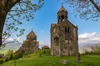
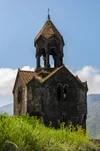
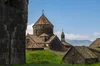
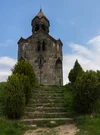
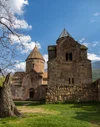
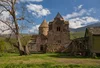
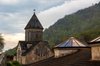
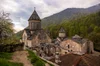
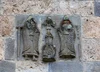
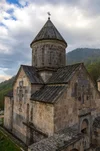
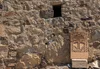
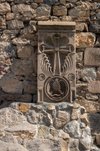
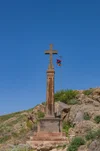
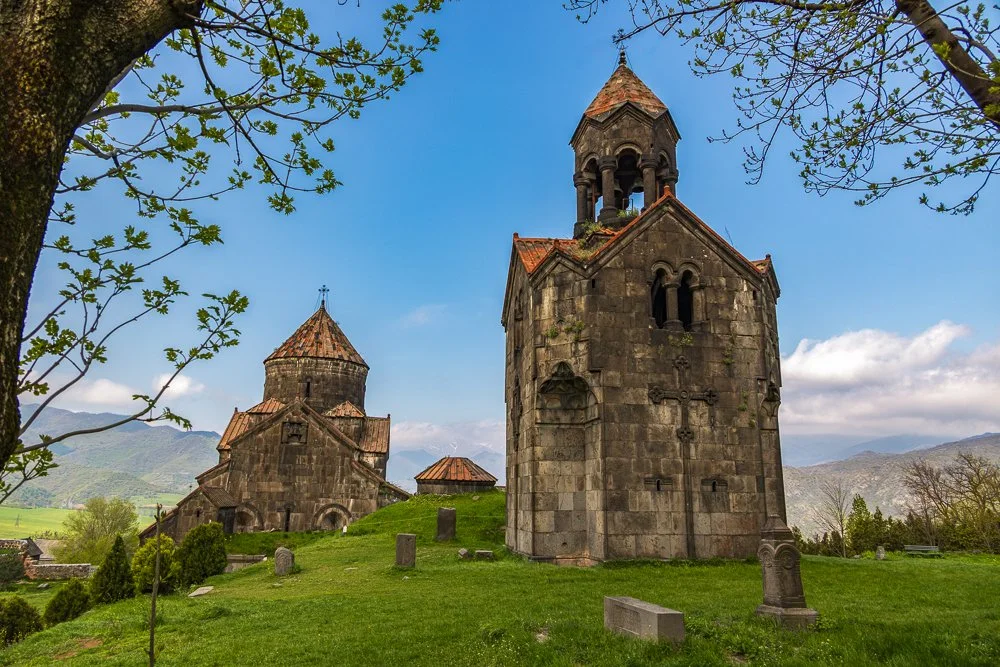
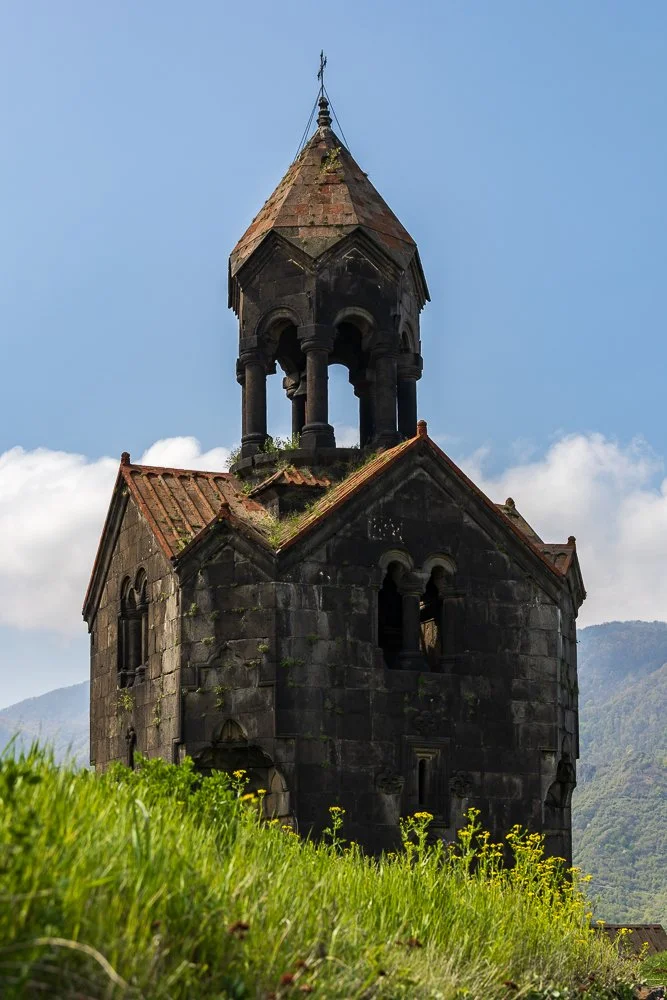
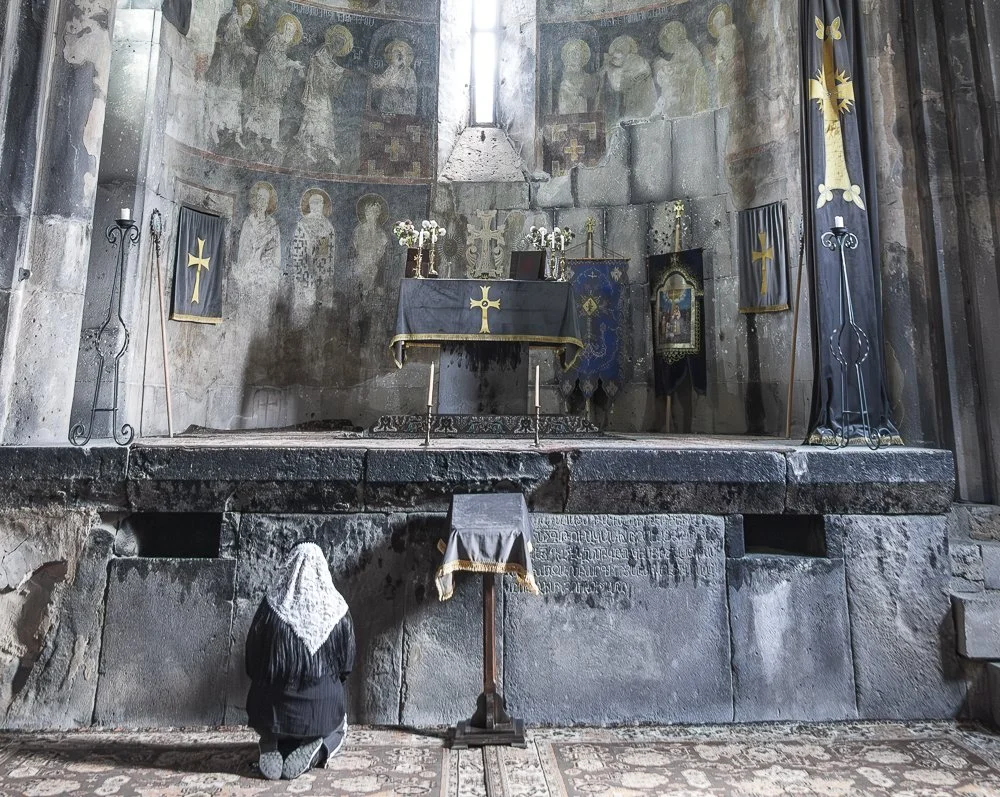
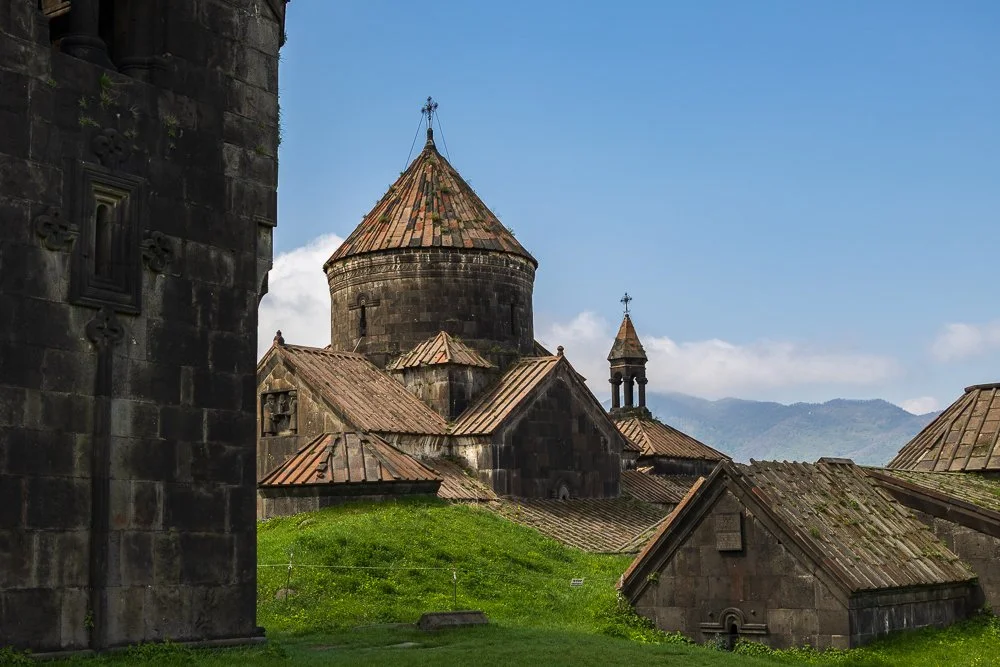
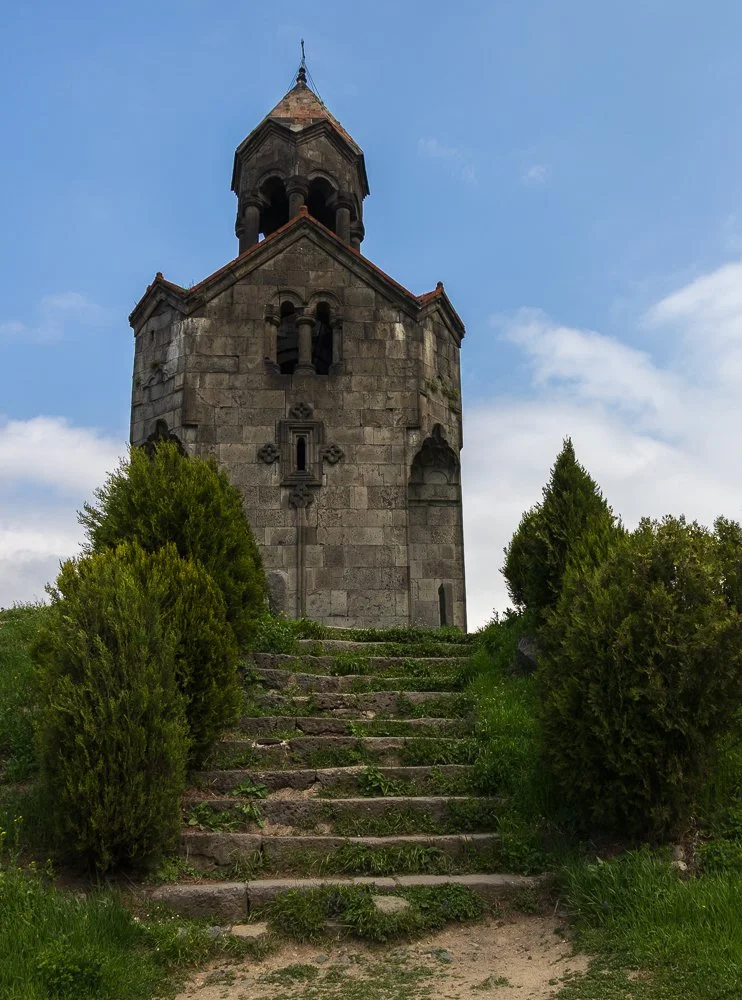
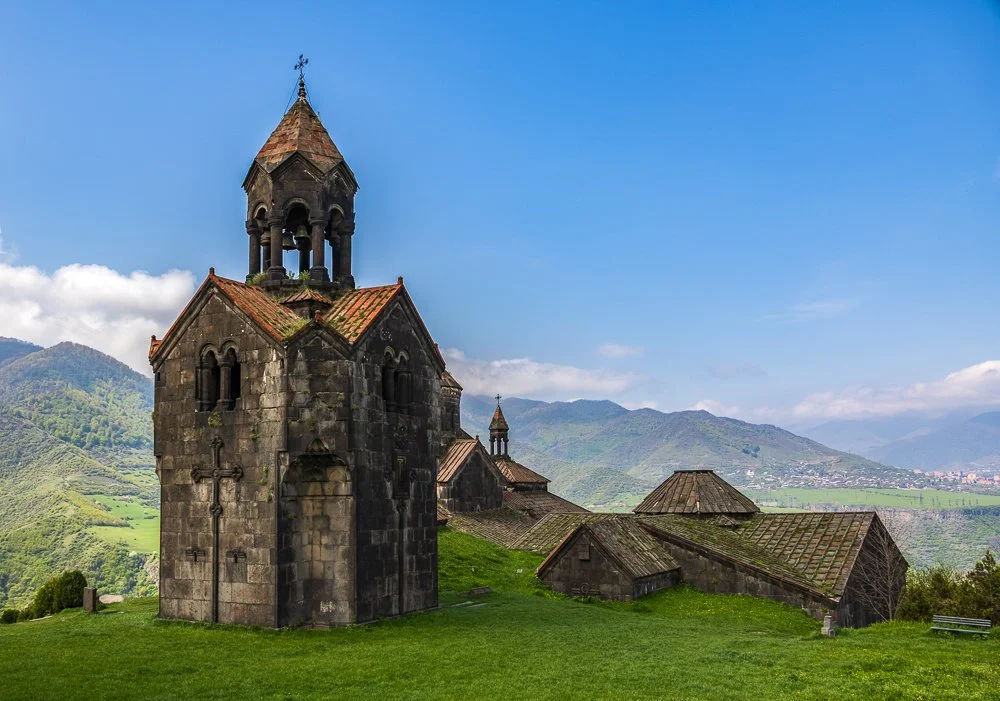
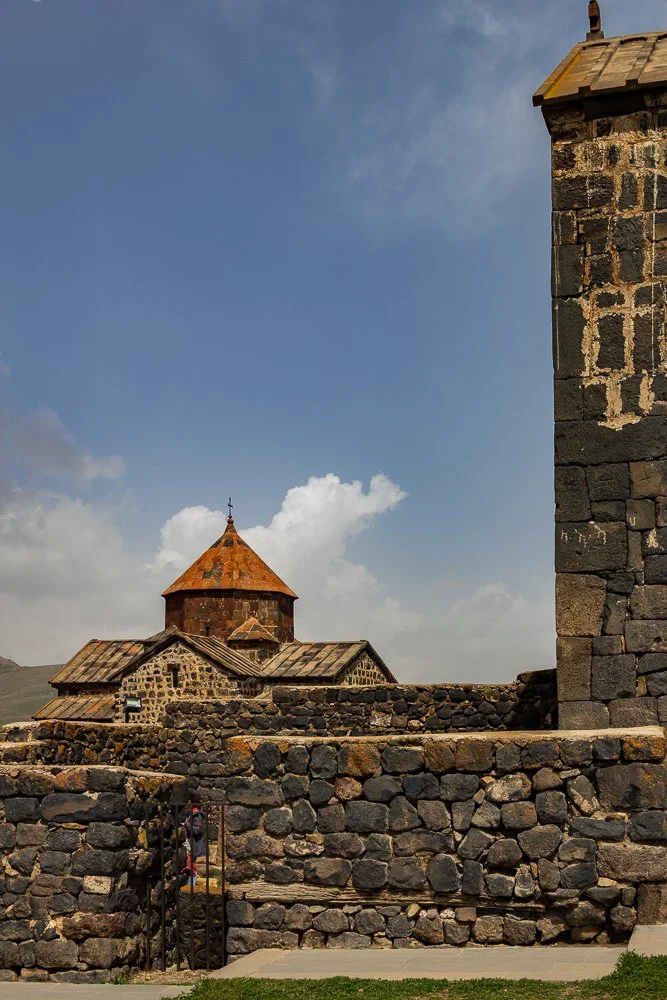
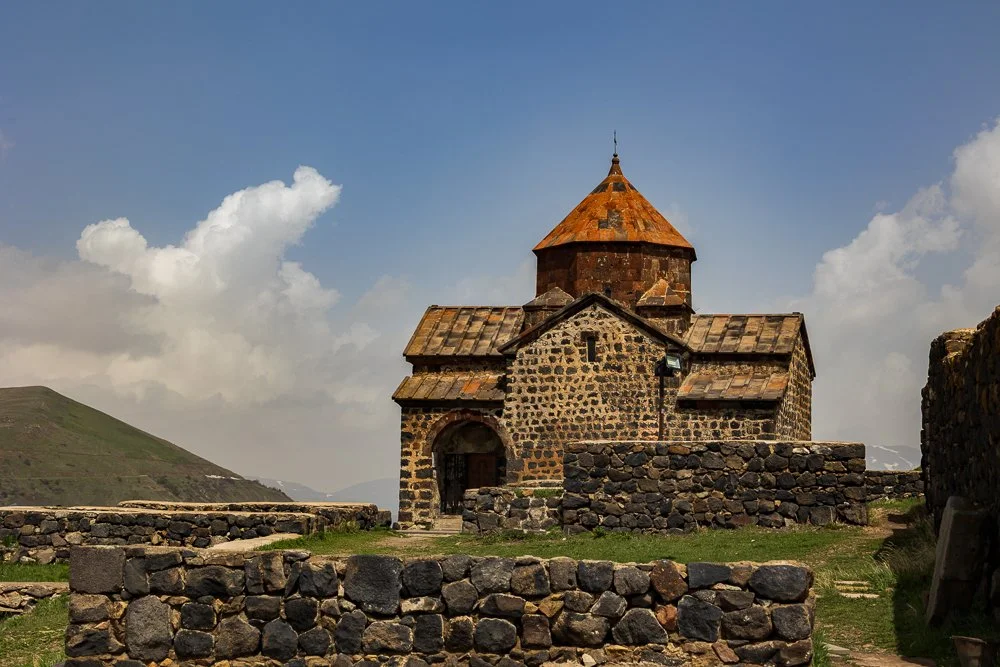
  Haghpat Monastery  was founded in 976 AD by Queen Khosrovanuysh, sitting on a plateau above the Debed canyon. The twin powerhouse to nearby Sanahin: rival schools, rival scriptoriums, rival reputations.
E13A6155.jpg
E13A6232.jpg
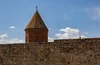
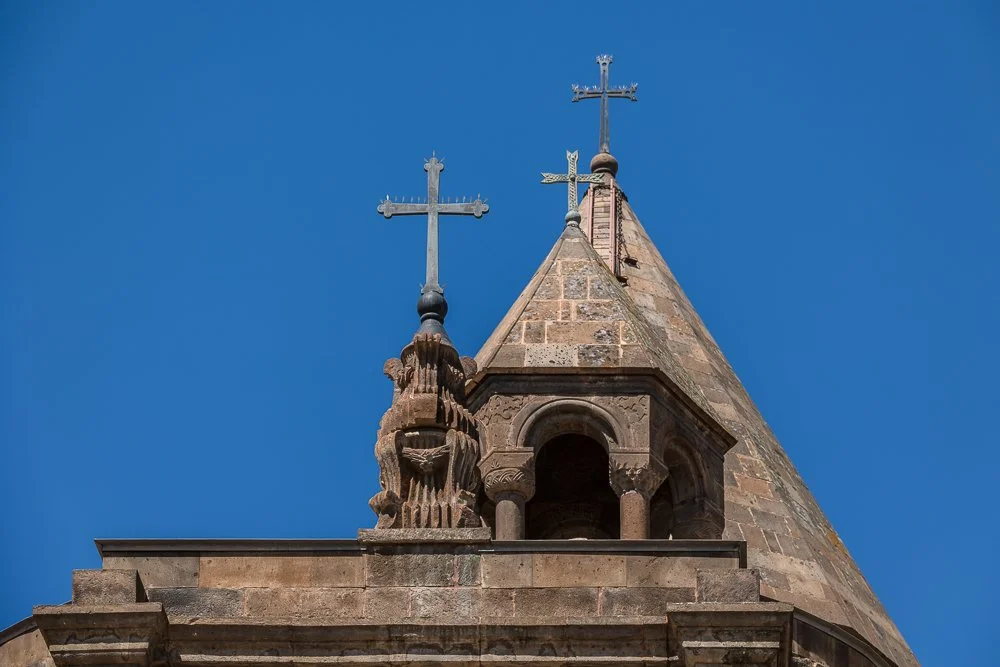
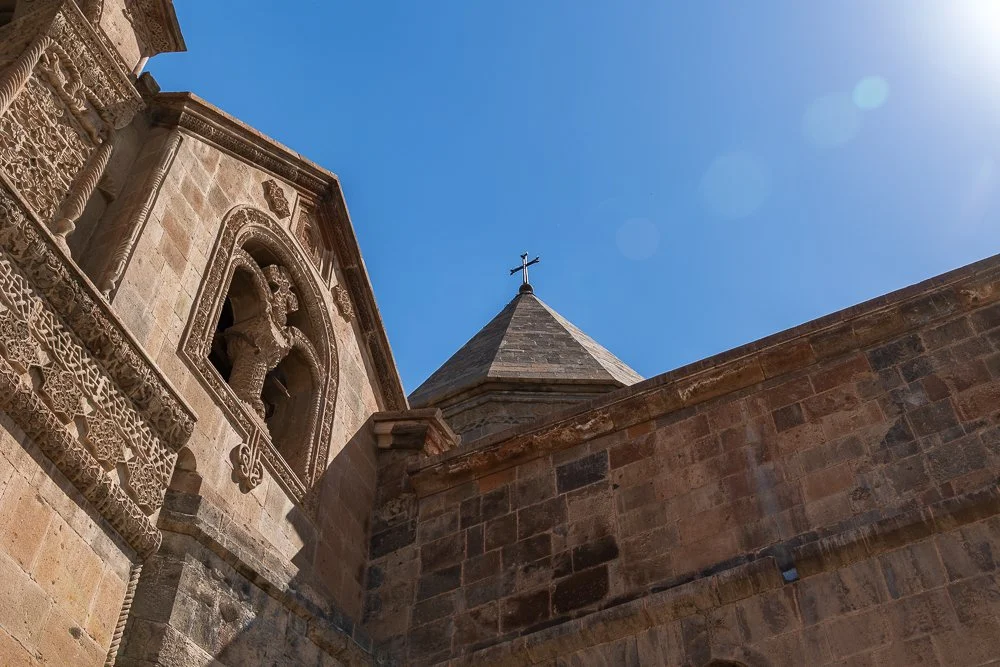
 At its peak  Haghpat Monastery  housed over 500 monks with a famous library and schools of grammar, philosophy, theology, music, and medicine. It was the exterior I couldn't stop photographing: the defensive walls, the bell tower, the stone roofs. I
E13A6242.jpg
E13A6220.jpg
E13A6002.jpg
  Sanahin Monastery  was founded slightly earlier, around 966 AD, by the same queen. The name means "this one is older than that one," a quiet dig at Haghpat. Also a major medieval centre of learning, with its own scriptorium, library, and academy.
E13A6005.jpg
E13A6258.jpg
E13A5978.jpg
E13A5847.jpg
E13A5853.jpg
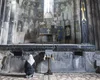
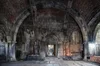
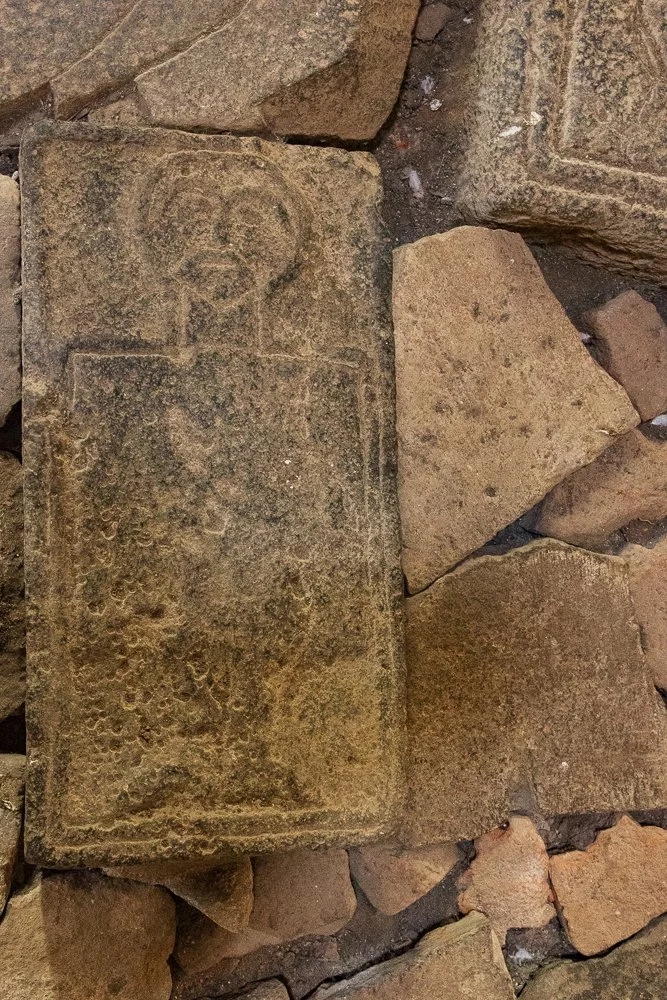
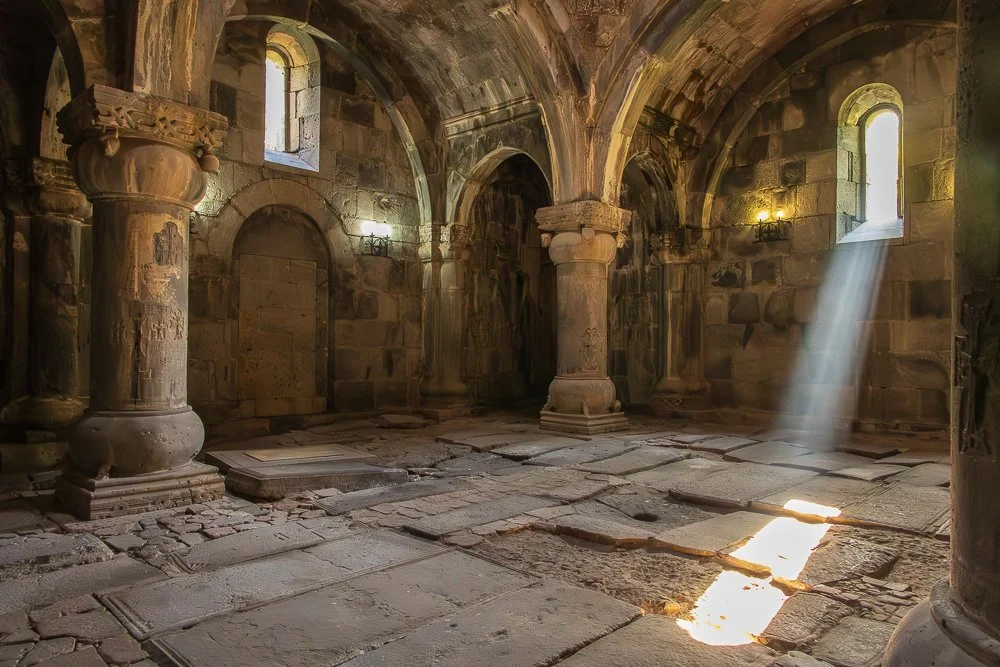
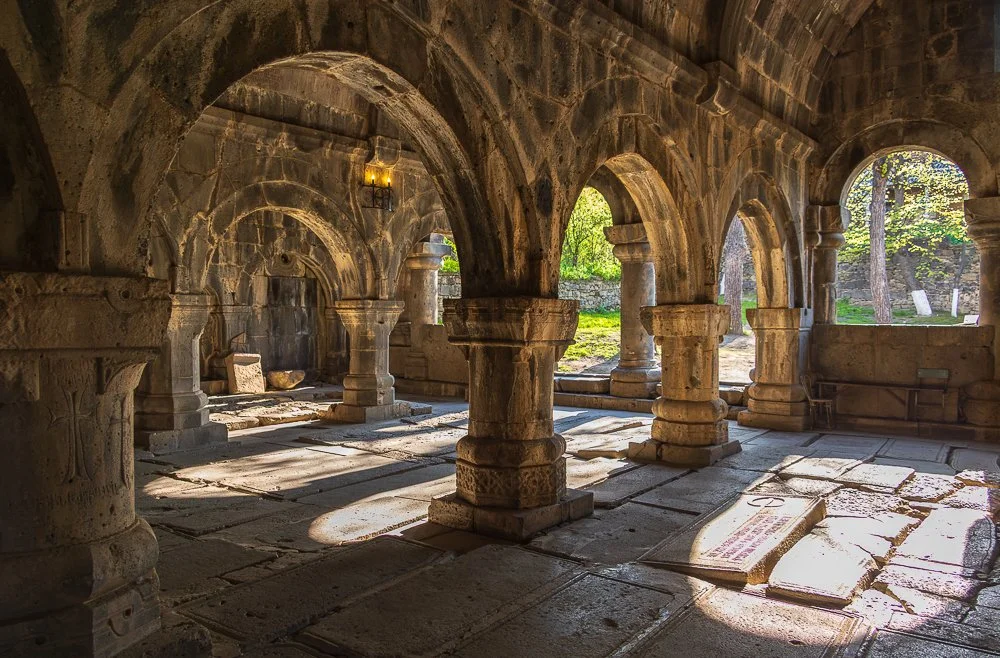
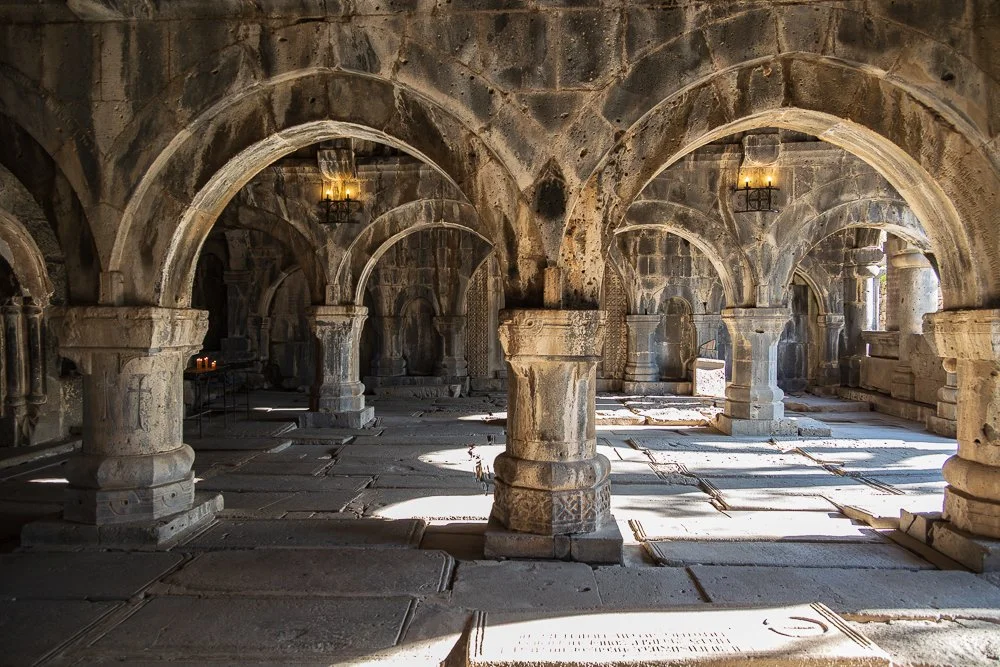
 Inside  Sanahin  I barely moved. The floor of the gavit, the antechamber, is paved with engraved tombstones: clergy, nobility, and patrons buried beneath your feet. A thousand years underfoot. The light was extraordinary.
E13A5856.jpg
E13A5870.jpg
 The Sanahin complex consists of sacred and civil structures built in different periods. It includes churches, narthex halls, scriptoria (libraries), and mausoleums.
E13A5873-Pano-2.jpg
E13A5942.jpg
E13A5949.jpg
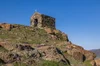
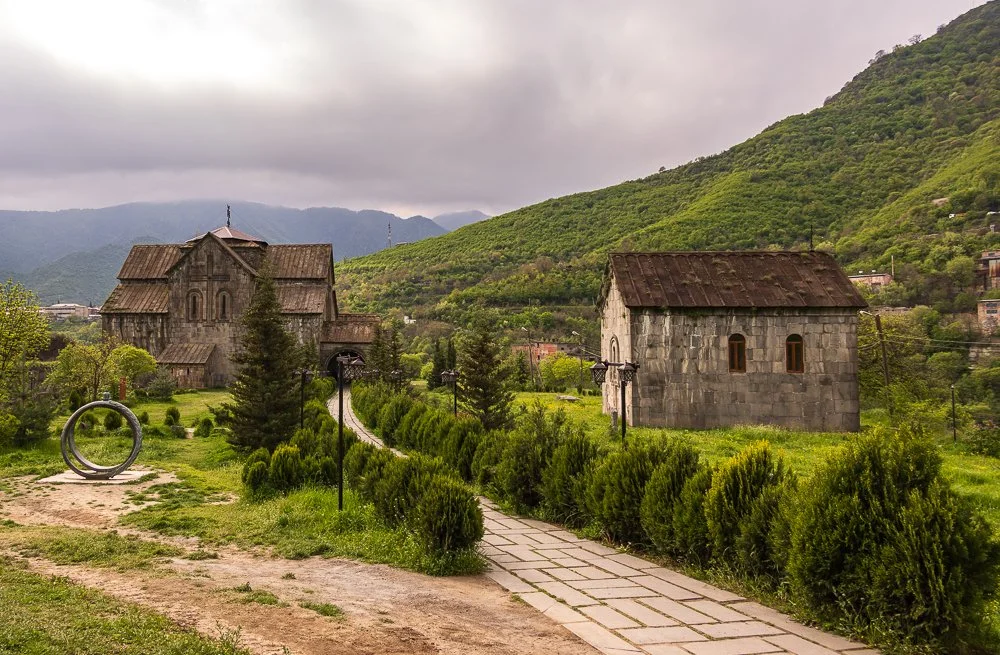
  Akhtala Monastery  began as a defensive fortress before becoming a religious centre, set on a plateau above a river and partially surrounded by old fortress walls. Its 13th-century frescoes cover much of the interior, something rare in Armenian chu
E13A6054-Pano.jpg
E13A6071.jpg
E13A6084.jpg
E13A6094.jpg
E13A6102.jpg
E13A6132.jpg
E13A6137.jpg
E13A6144.jpg
E13A6159-Edit.jpg
E13A6301.jpg
E13A6317.jpg
E13A6320.jpg
E13A6346.jpg
E13A6360.jpg
E13A6363.jpg
E13A6404.jpg
E13A6412.jpg
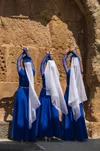
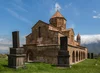
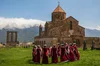
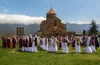
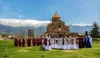
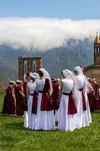
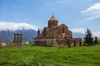
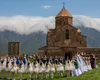
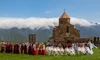
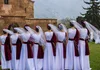
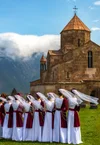
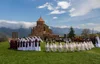
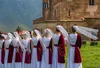
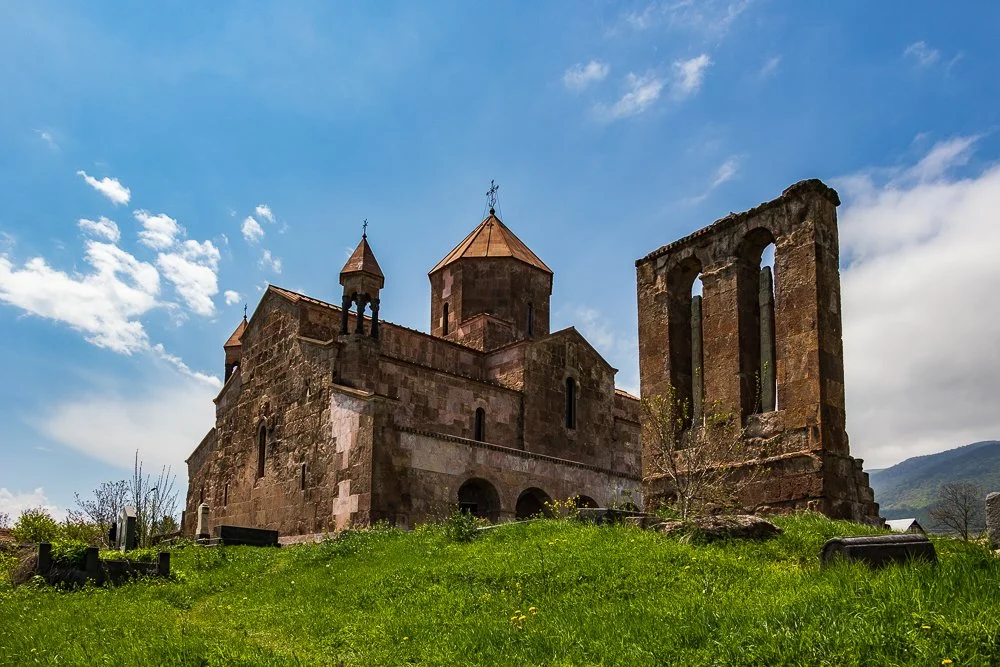
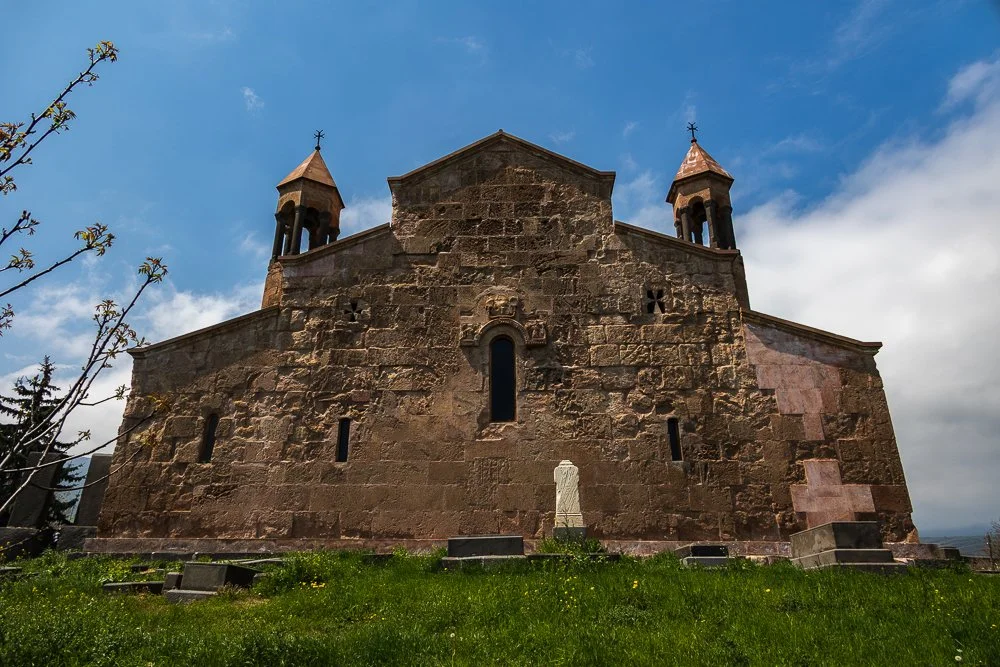
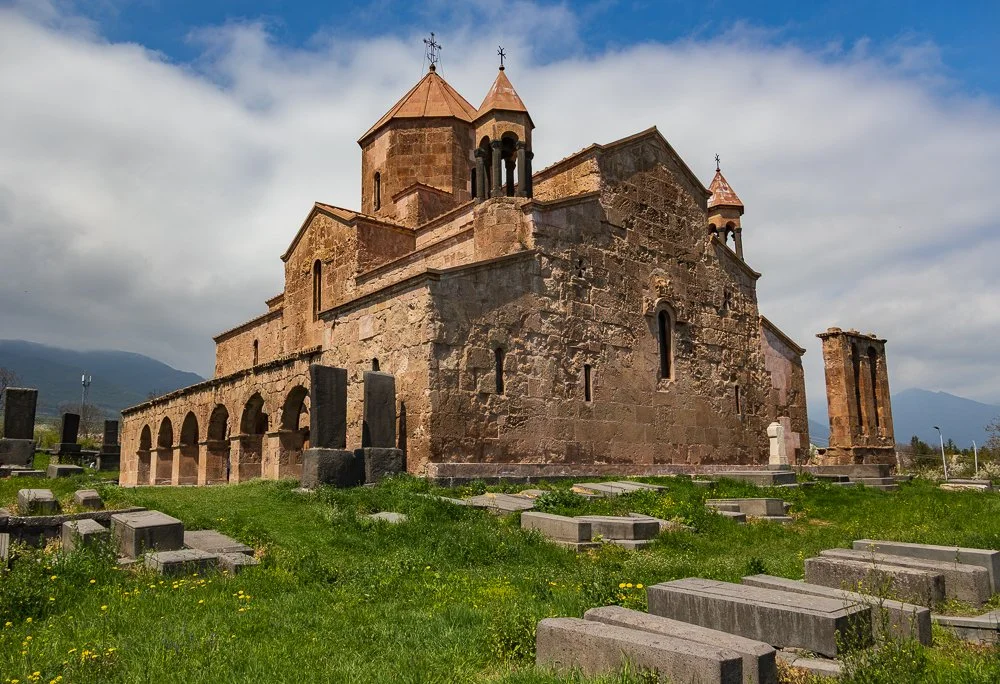
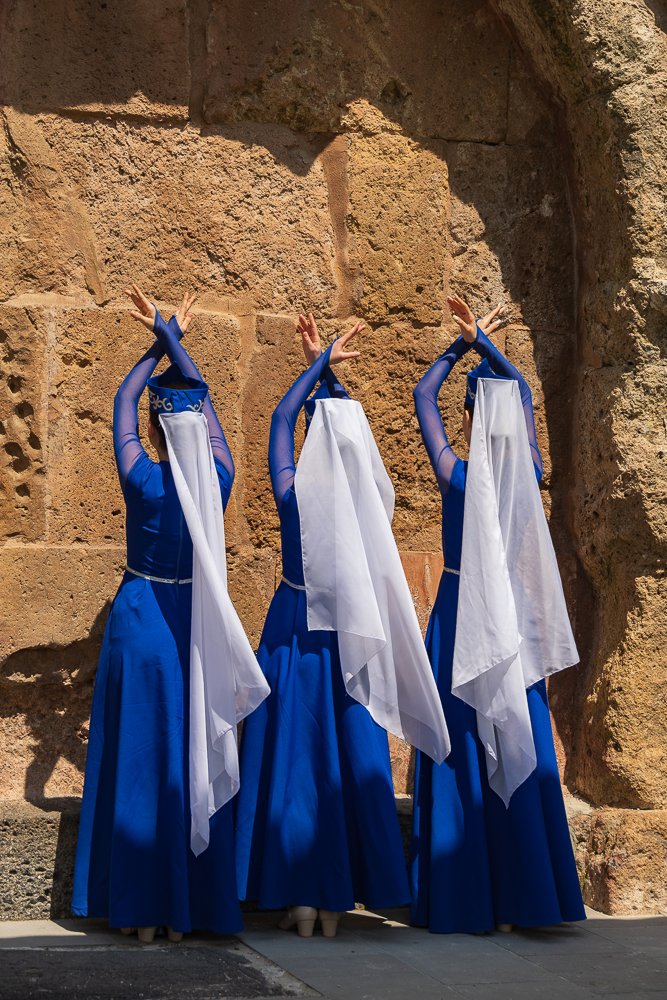
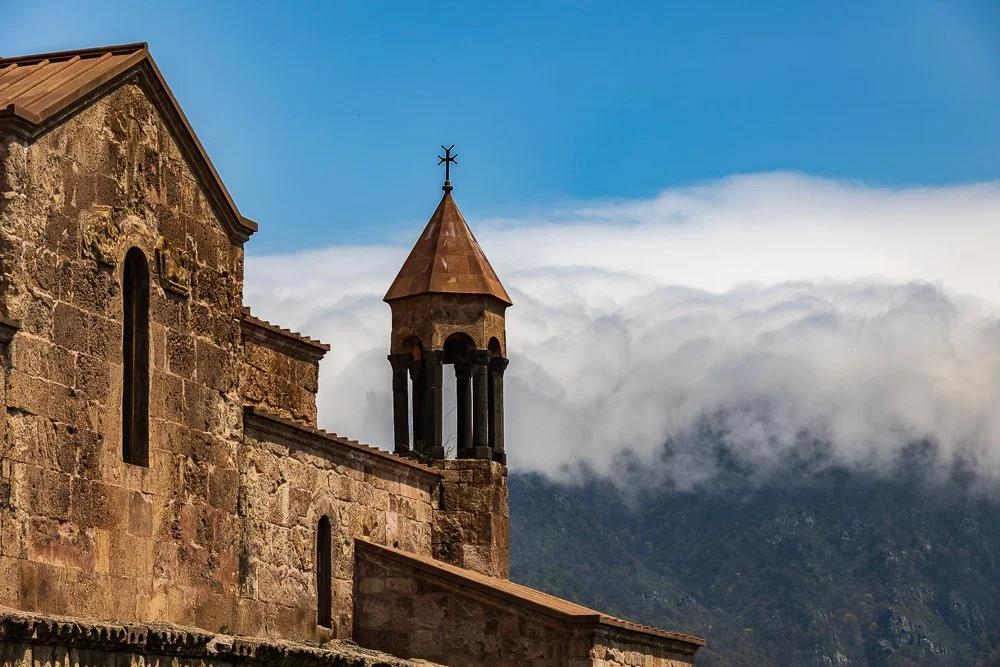
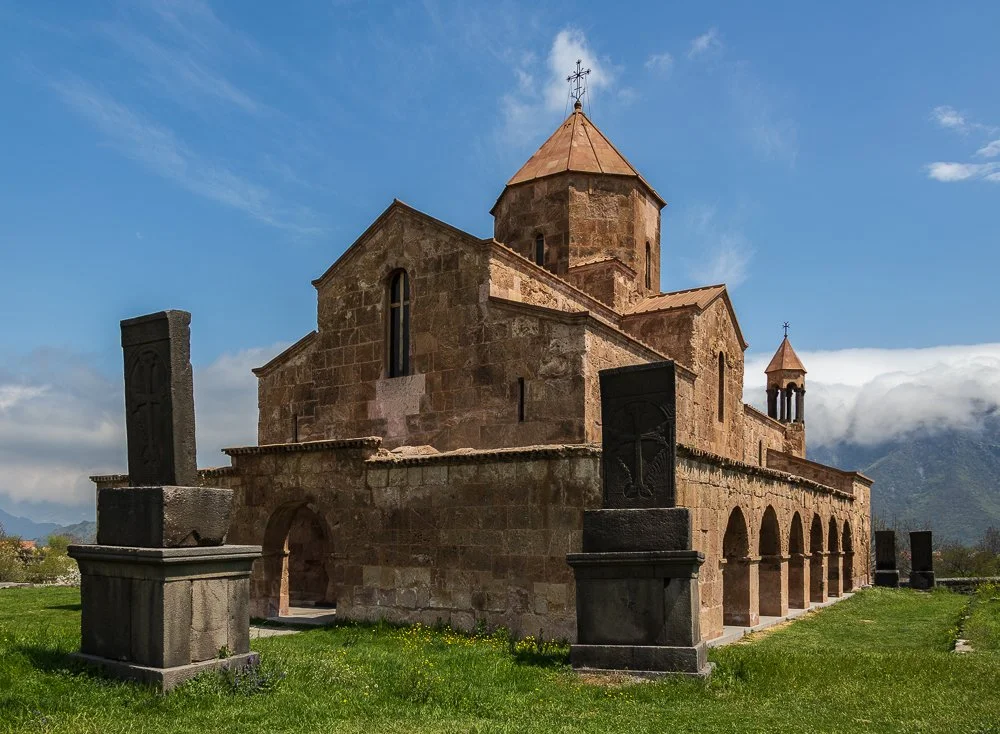
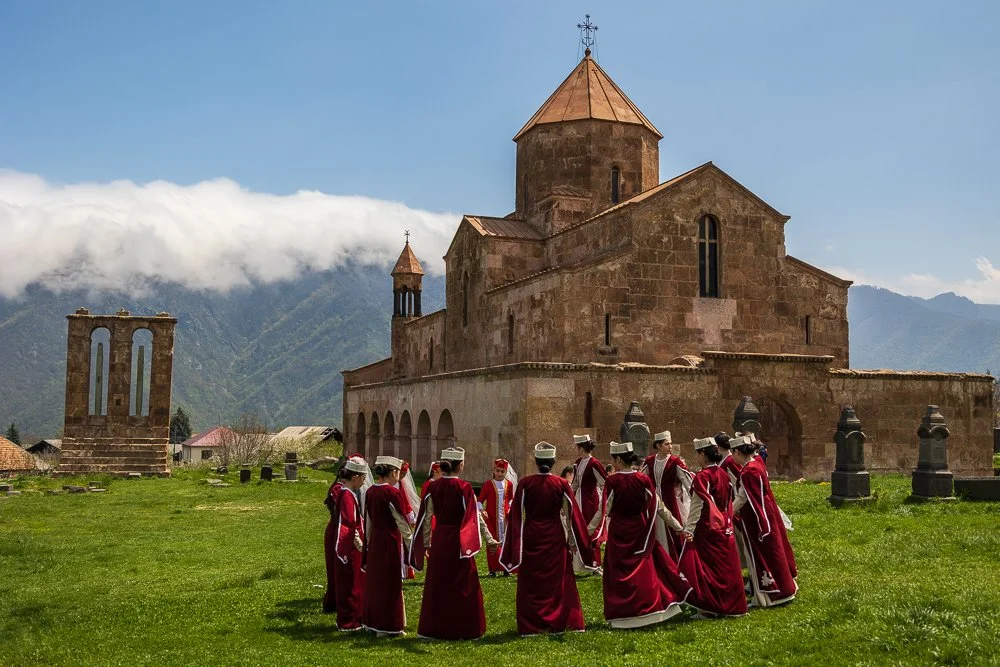
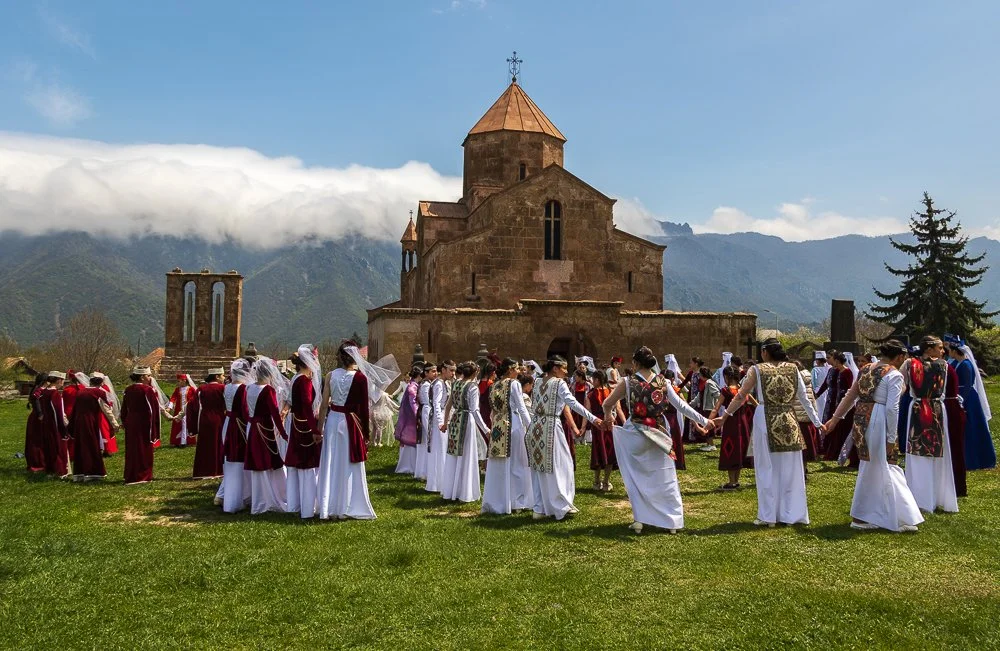
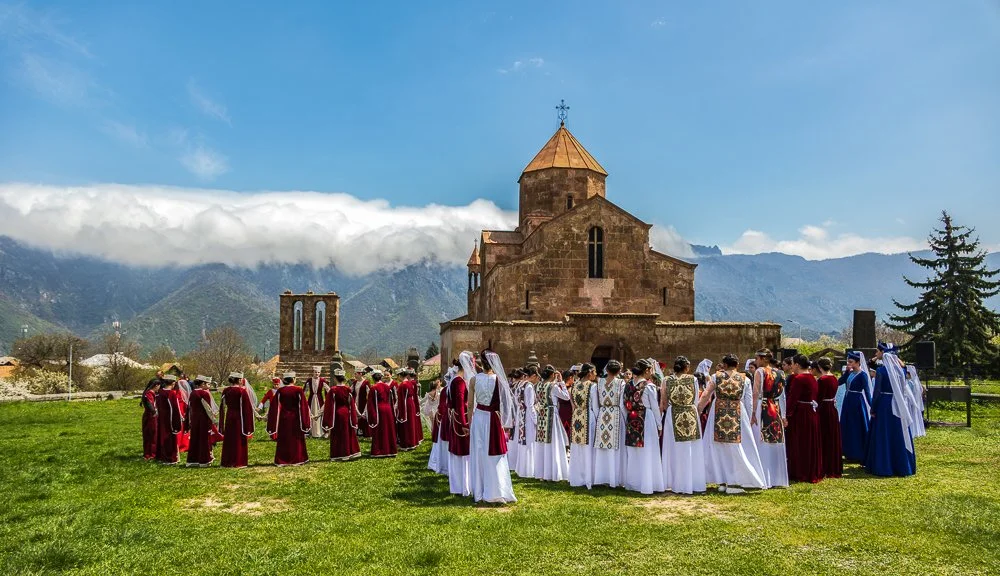
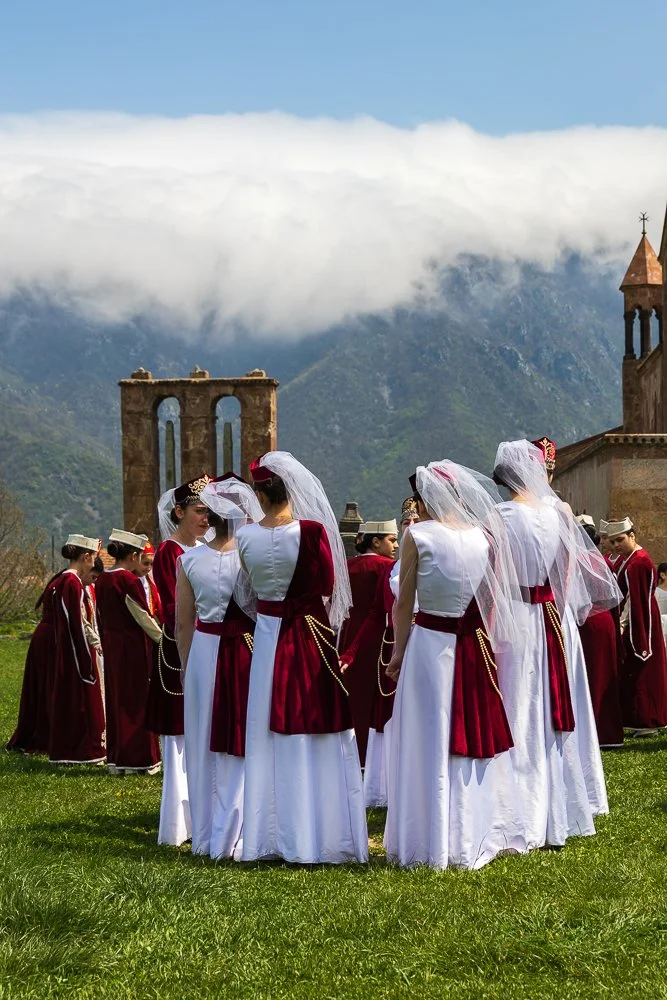
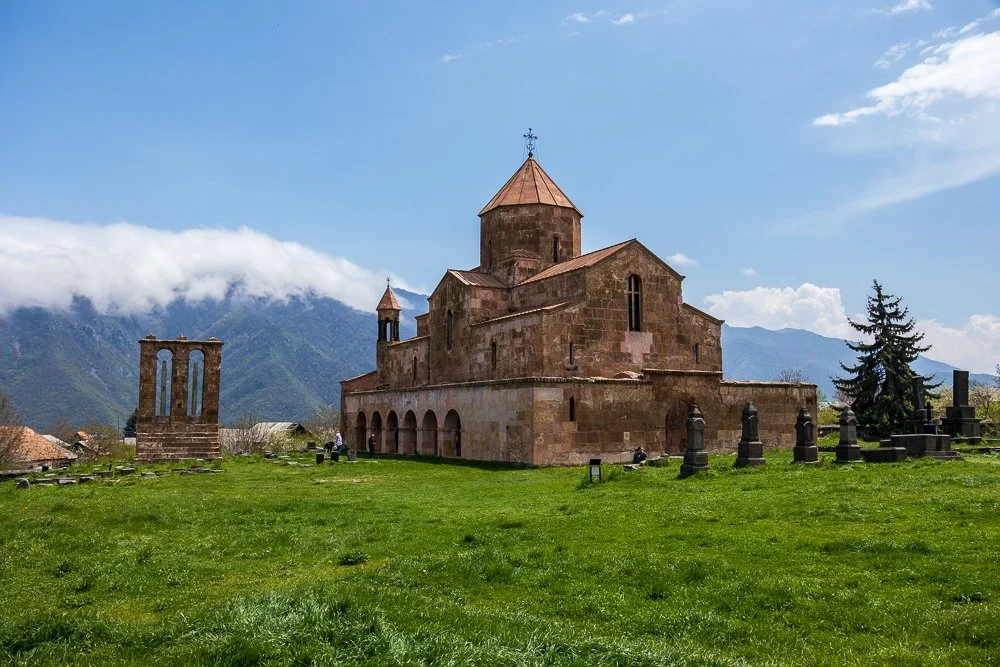
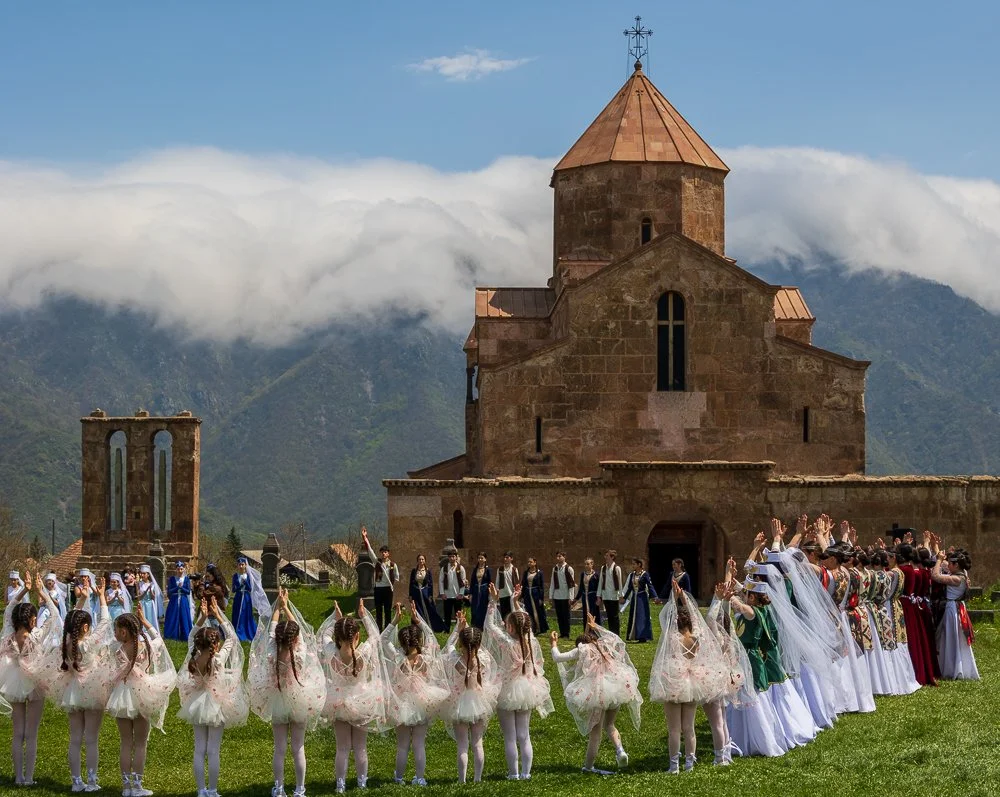
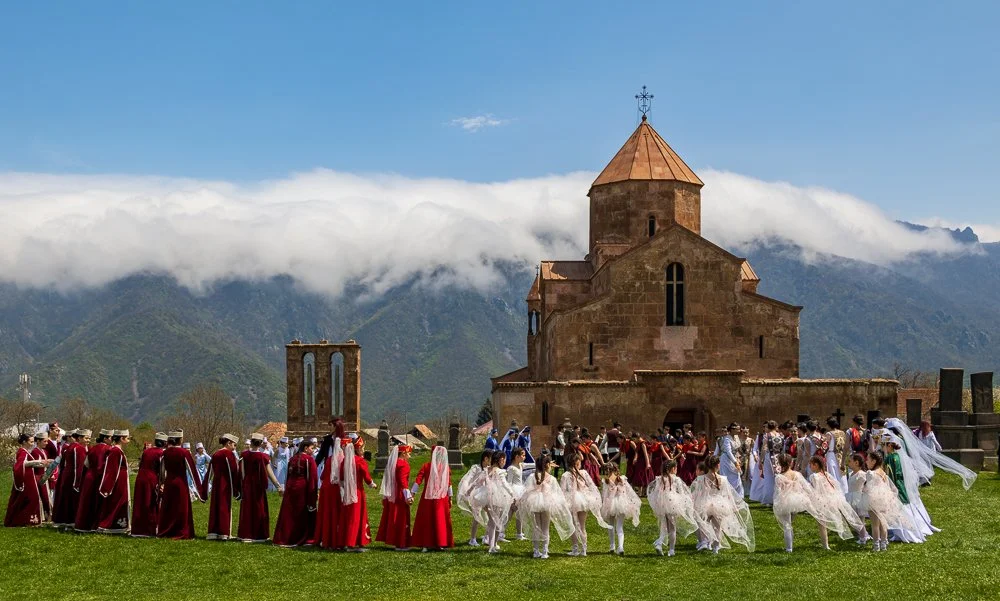
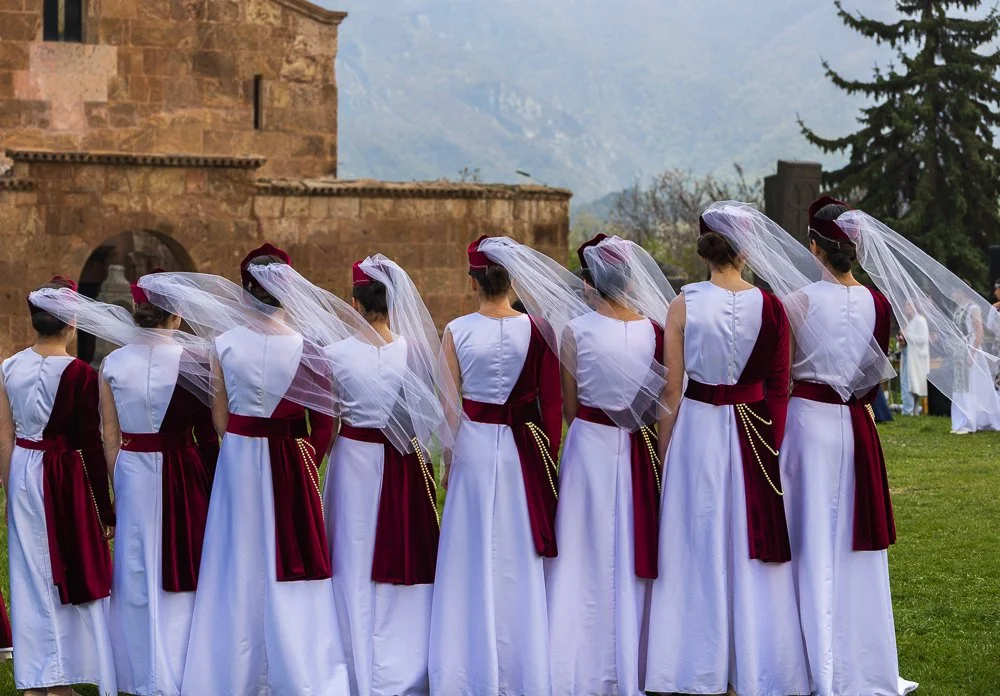
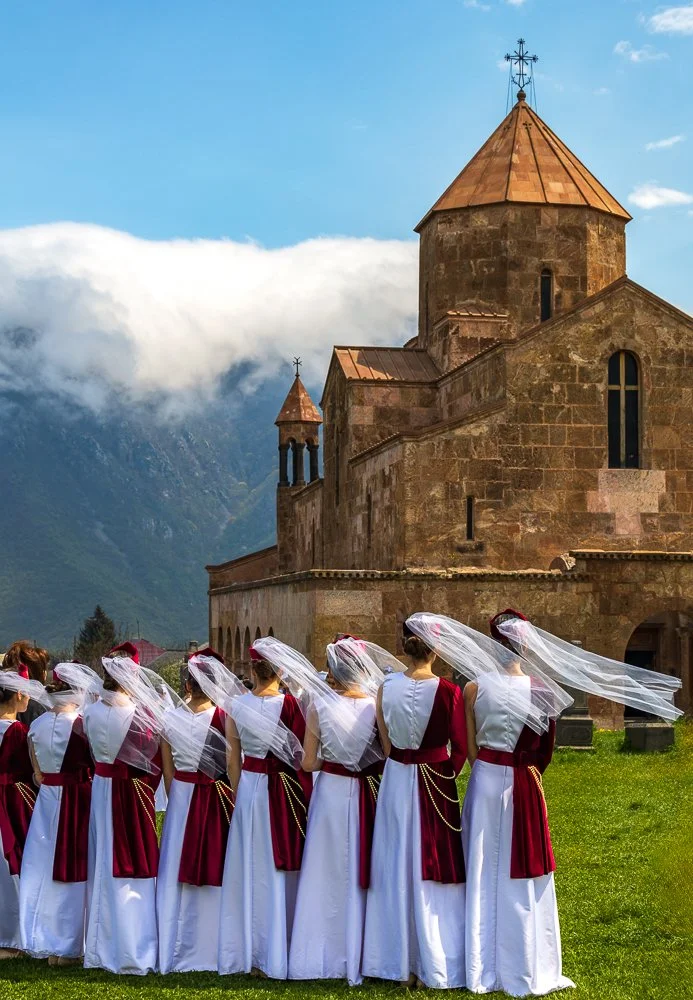
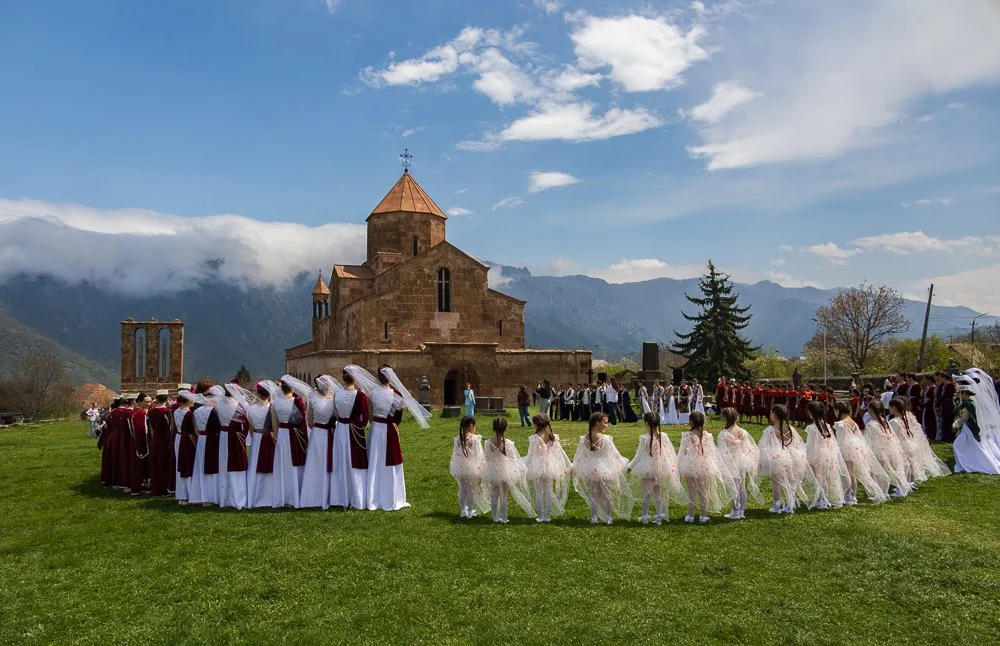
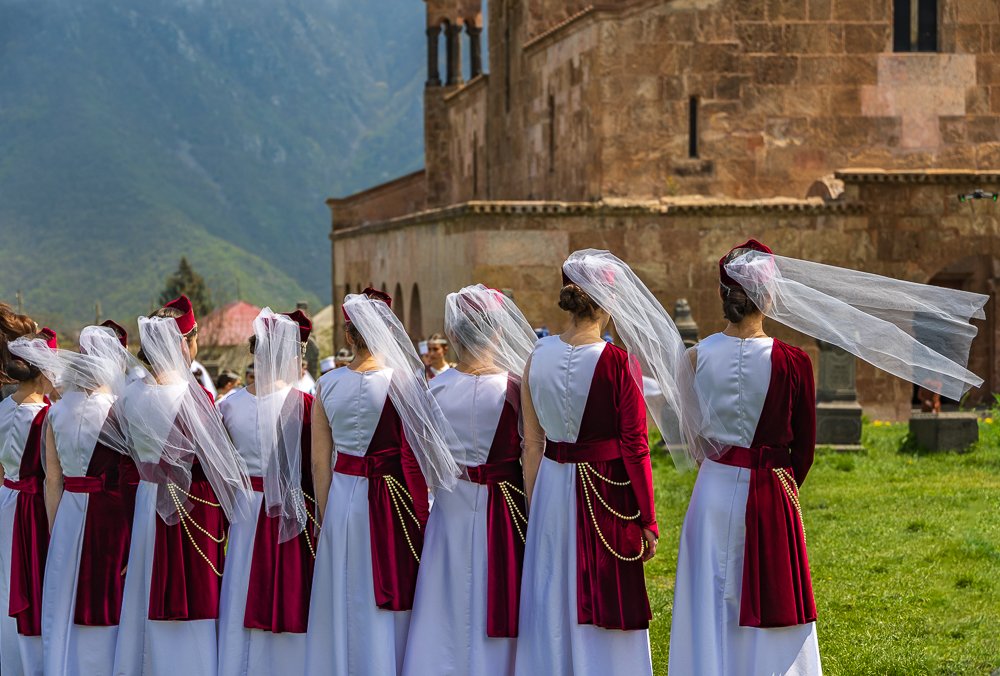
 At  Odzun Monastery , a 6th-century domed basilica of pink stone sitting in the centre of the village, my timing was impeccable. A folk dance festival was underway outside the church, women and girls in traditional dress performing on the grass.
E13A6432.jpg
E13A6444.jpg
E13A6465.jpg
E13A6469-Edit.jpg
E13A6530.jpg
E13A6537-Edit.jpg
E13A6539-Edit.jpg
E13A6546.jpg
E13A6558.jpg
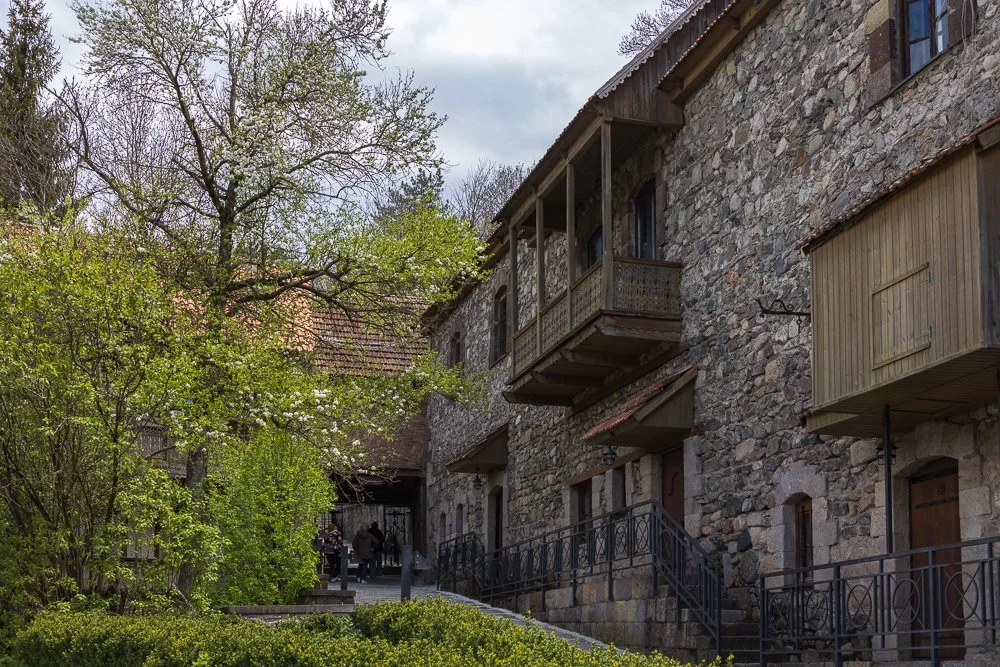
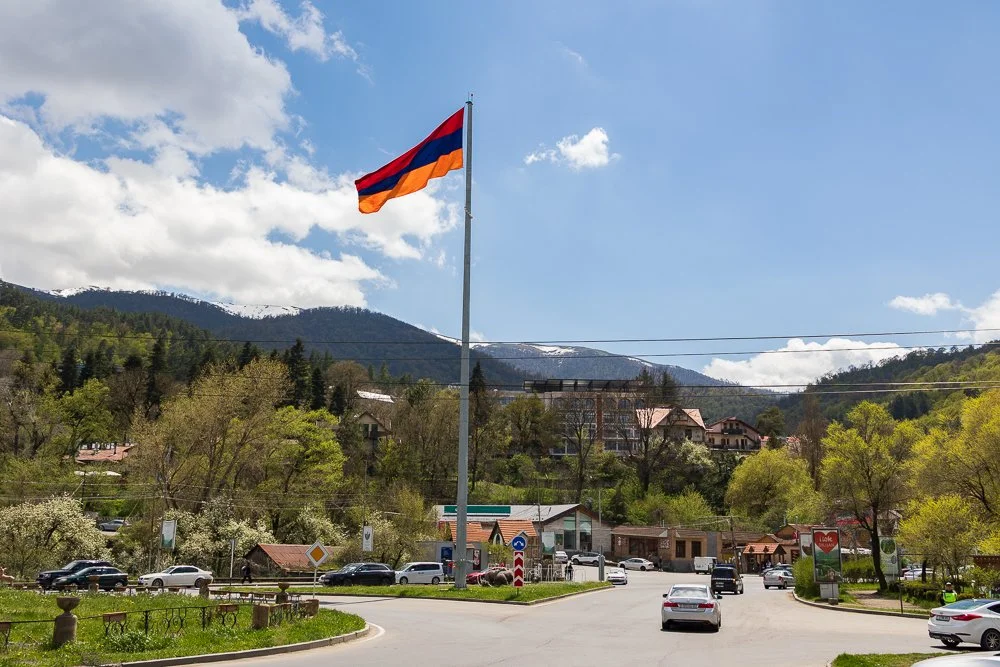
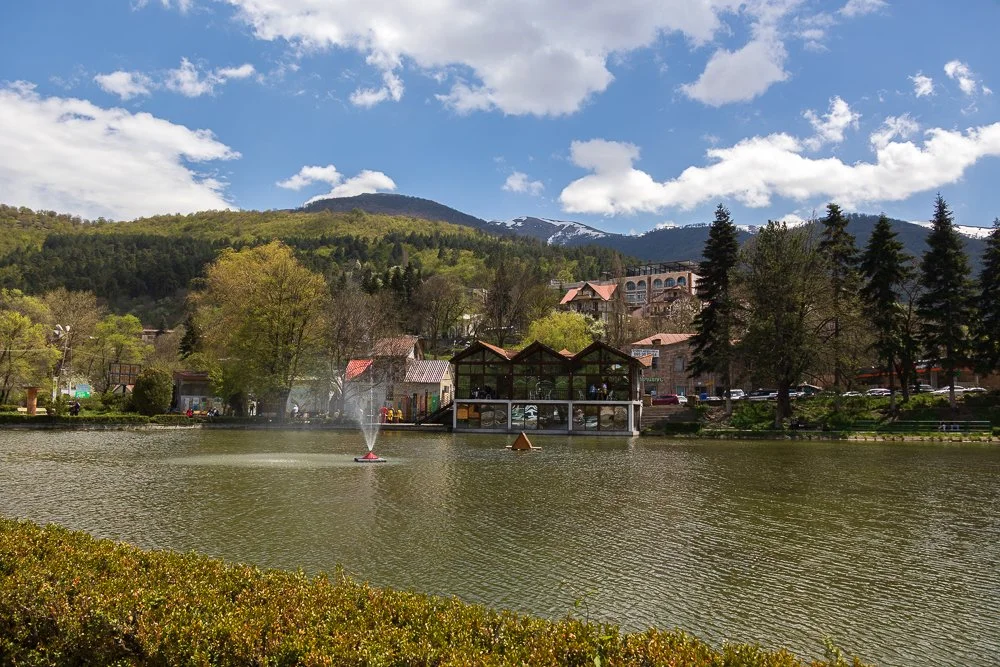
  Dilijan  gets called the Switzerland of Armenia for its forested mountains and alpine air, and you can see why the moment you arrive. The town itself has a single cobblestone lane, Sharambeyan Street, where old wooden-balconied houses have become g
E13A6571.jpg
E13A6589.jpg
E13A6599.jpg
E13A6602.jpg
E13A6637-Edit-Edit.jpg
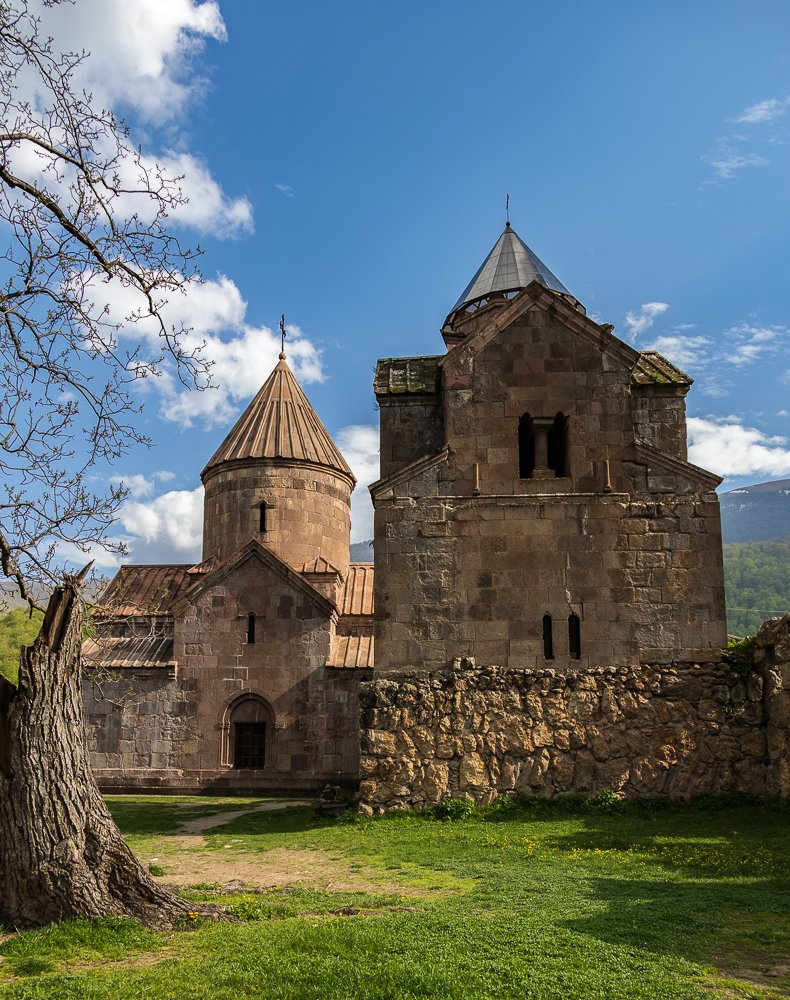
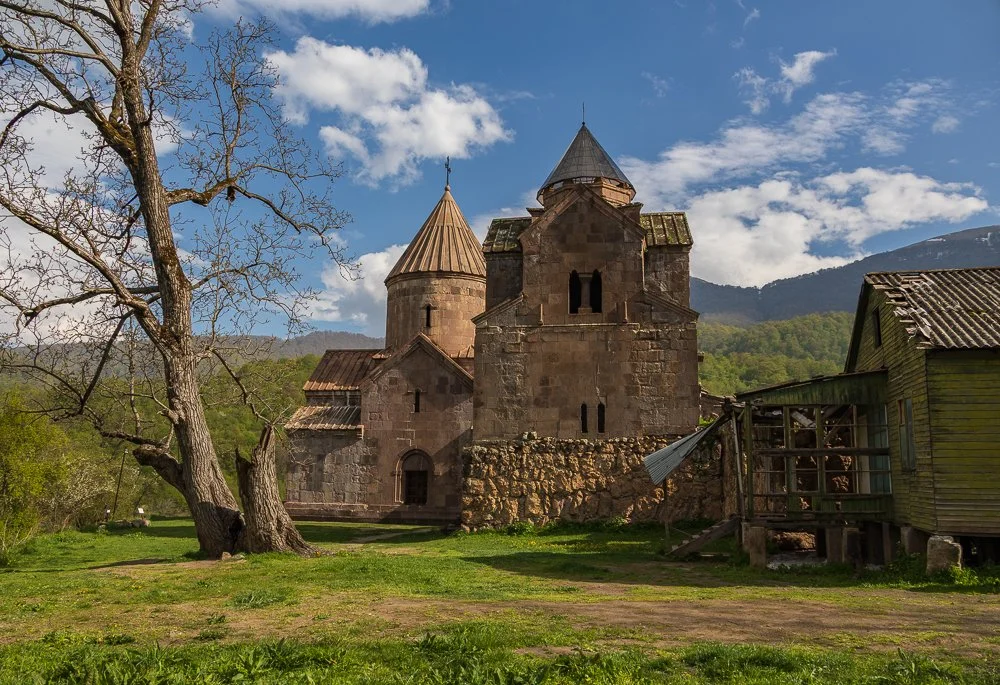
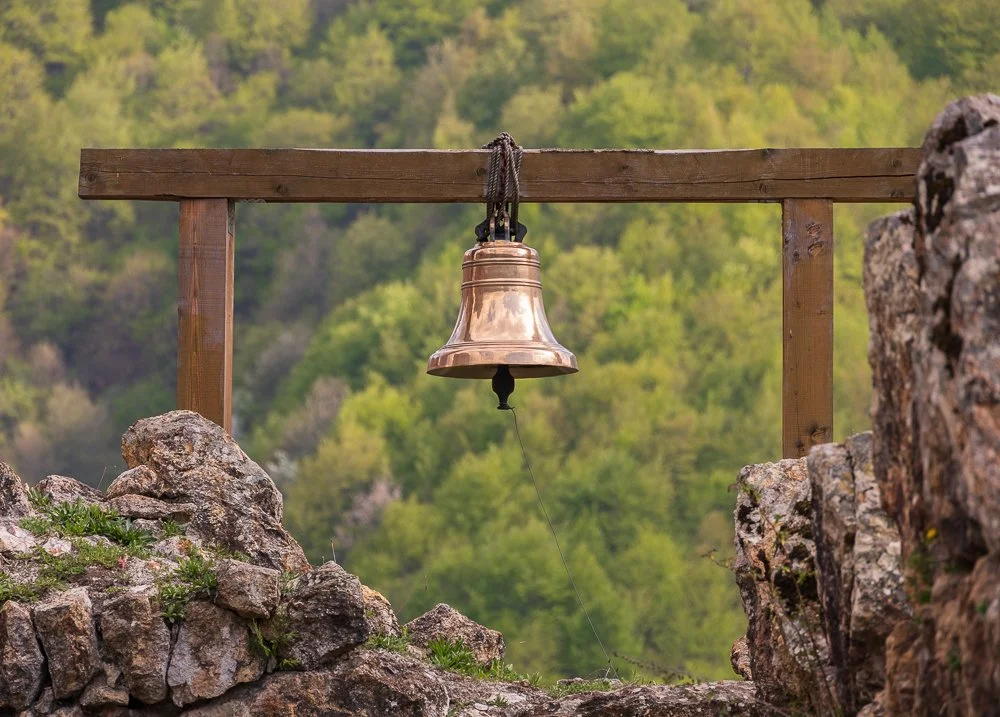
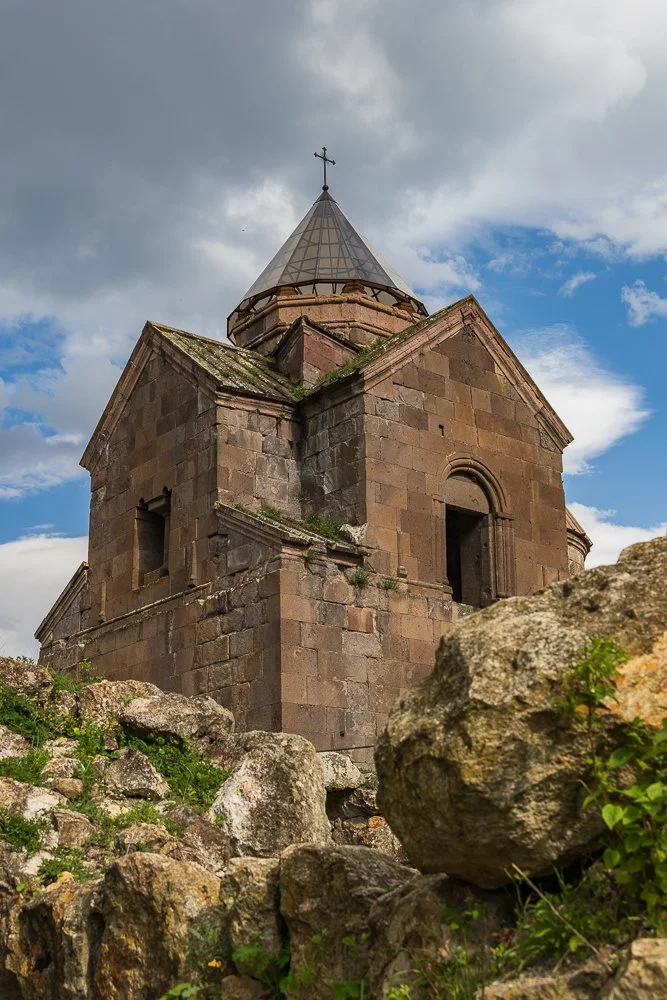
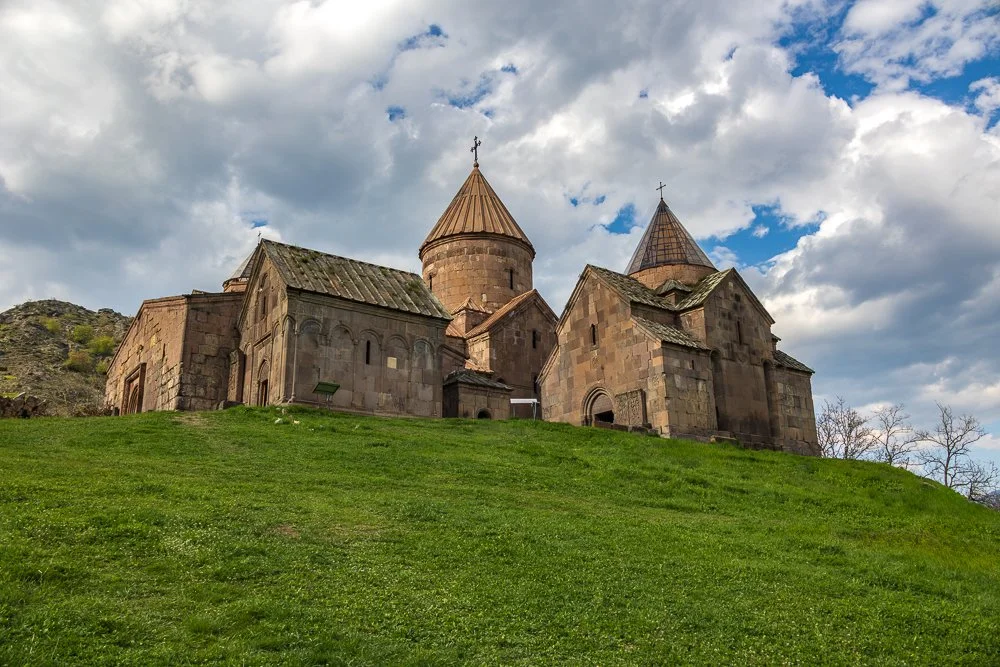
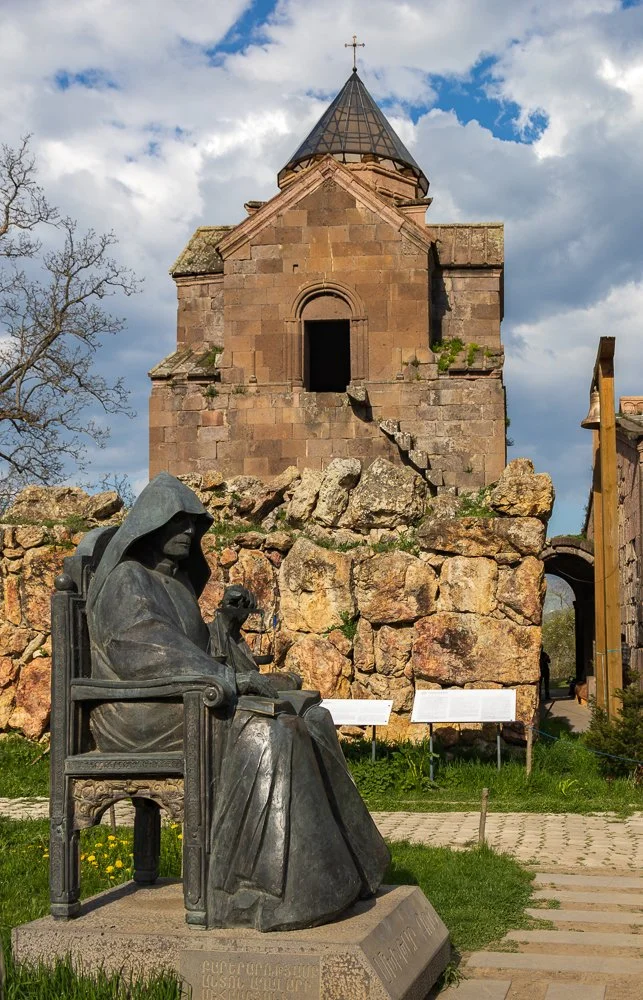
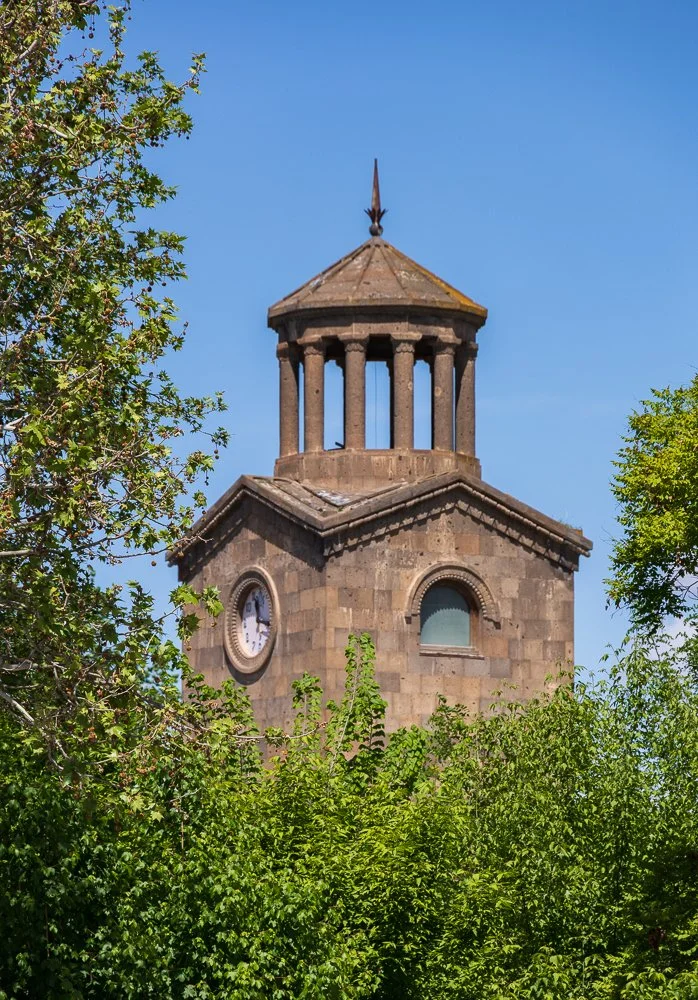
  Goshavank Monastery  was founded in 1188 by Mkhitar Gosh, a medieval Armenian scholar and jurist who wrote the country's first legal code. The complex includes several churches, a bell tower, a book depository, and former school buildings.
E13A6650-Edit-Edit.jpg
E13A6674.jpg
E13A6679.jpg
E13A6682.jpg
E13A6687.jpg
E13A6689.jpg
E13A6696.jpg
E13A6702-Edit.jpg
E13A6707-Edit.jpg
E13A6790.jpg
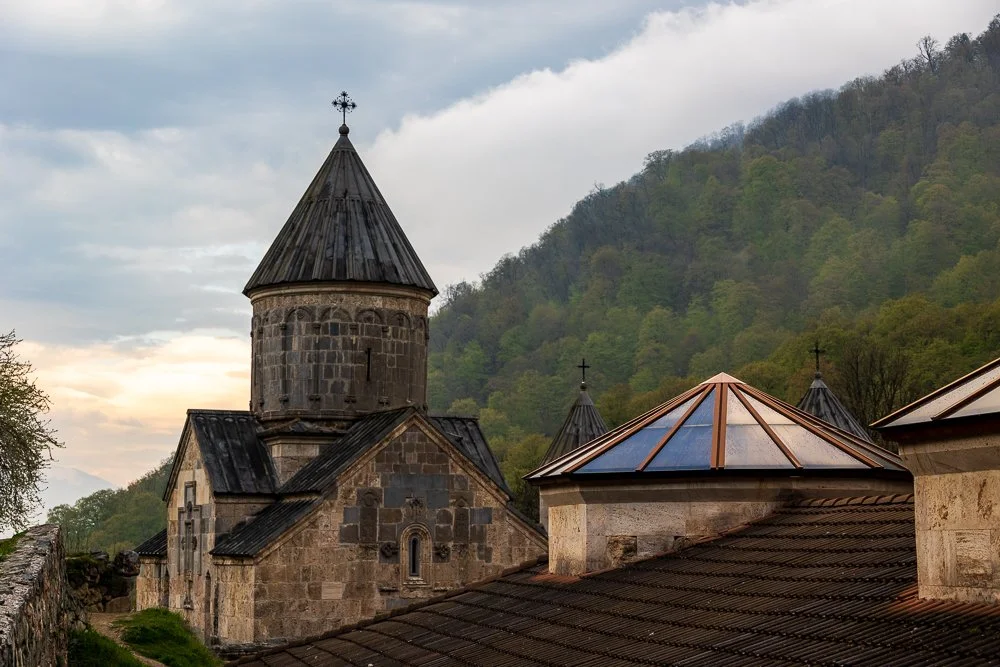
  Haghartsin Monastery  is tucked deep in the forest at the end of a long, winding road through Dilijan National Park. The name translates roughly as "soaring eagle." Legend says an eagle was seen circling the dome during the monastery's consecration
E13A6731.jpg
E13A6820.jpg
E13A6813.jpg
E13A6830.jpg
E13A6841.jpg
E13A6870.jpg
E13A6881-Edit.jpg
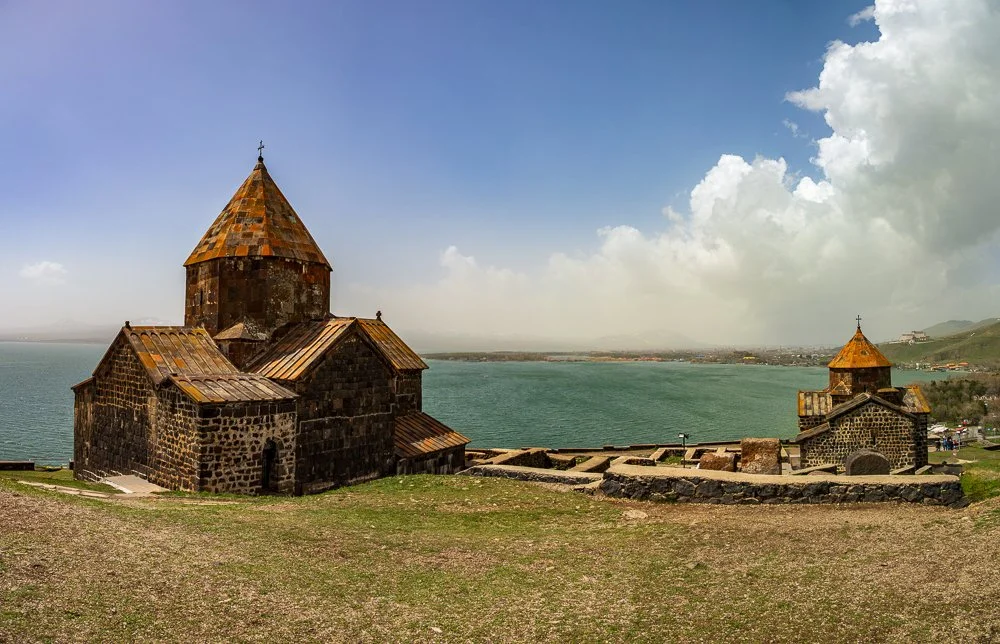
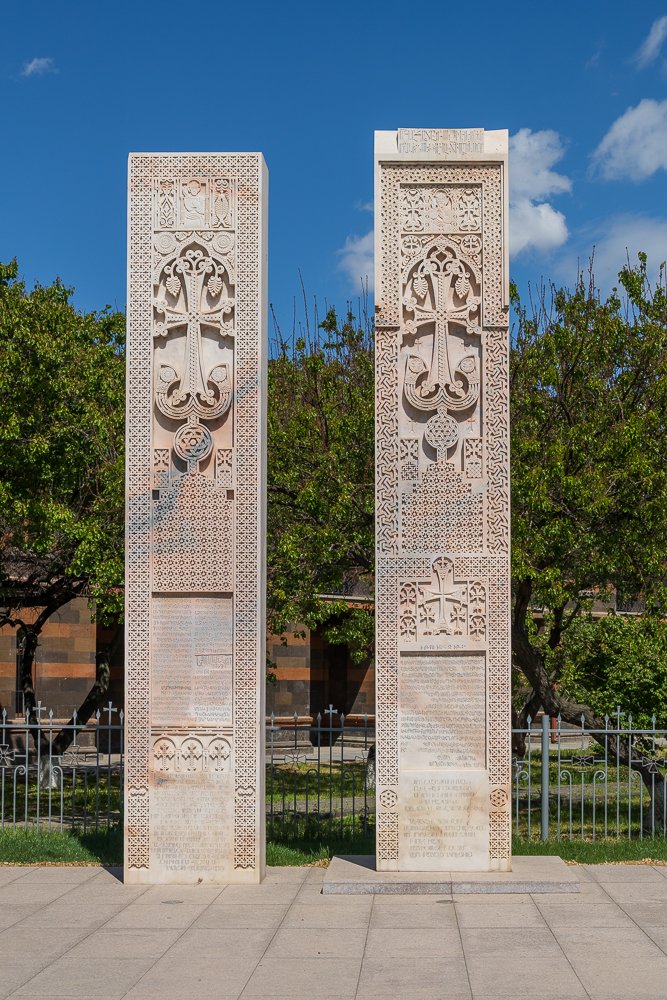
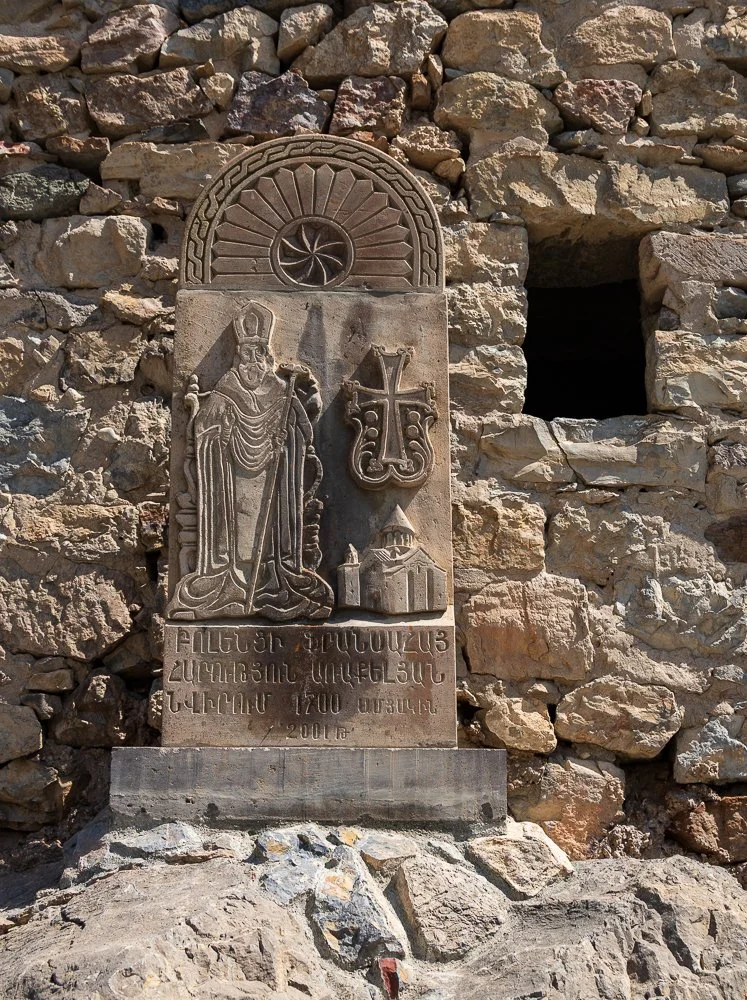
  Sevanavank Monastery , perched on a rocky peninsula above Lake Sevan. Founded in the 9th century, only two black-stone churches remain now, surrounded by khachkars and open sky. Lake Sevan is the largest freshwater lake in the Caucasus; Armenians c
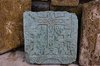
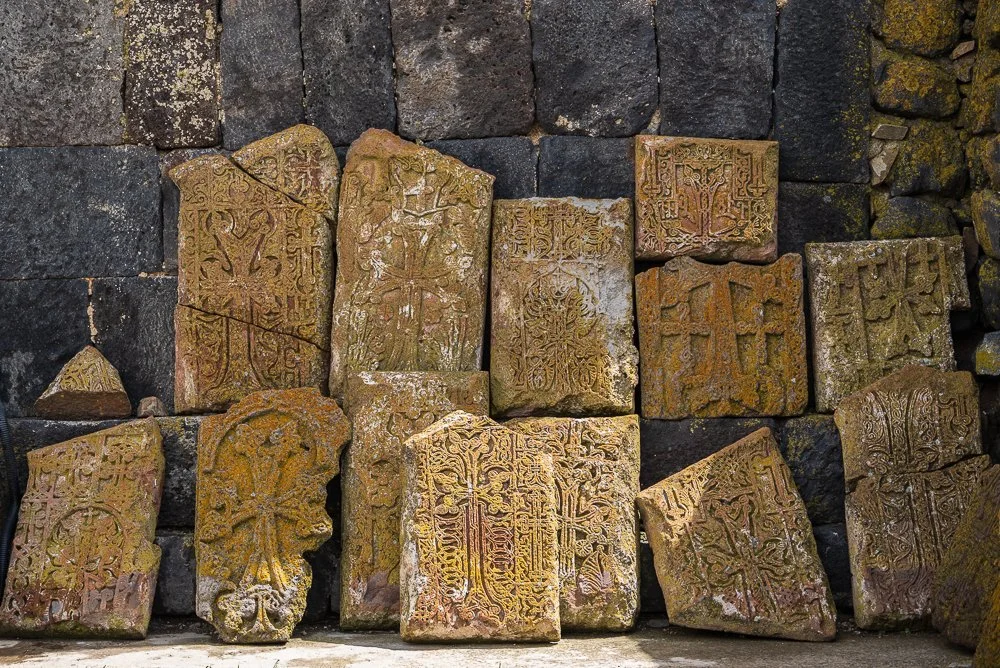
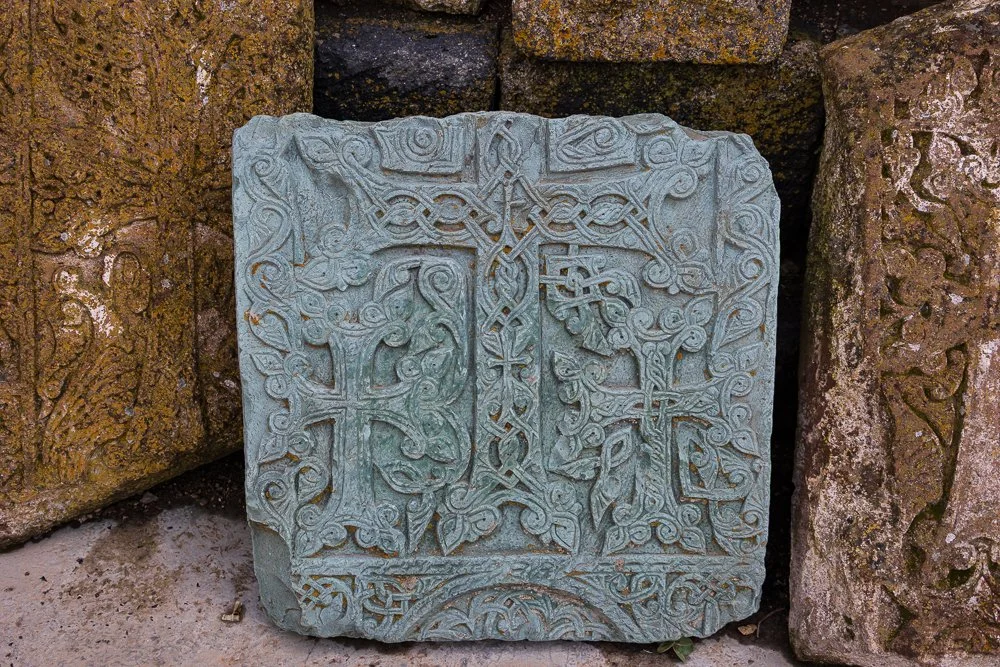
 kKhachkars for the first time: intricately carved Armenian cross-stones, each one slightly different.
E13A6865-Edit-Edit.jpg
E13A6961.jpg
E13A7709.jpg
E13A6984.jpg
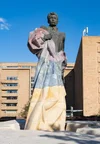
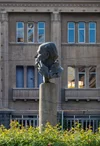
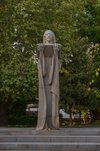
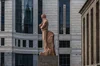
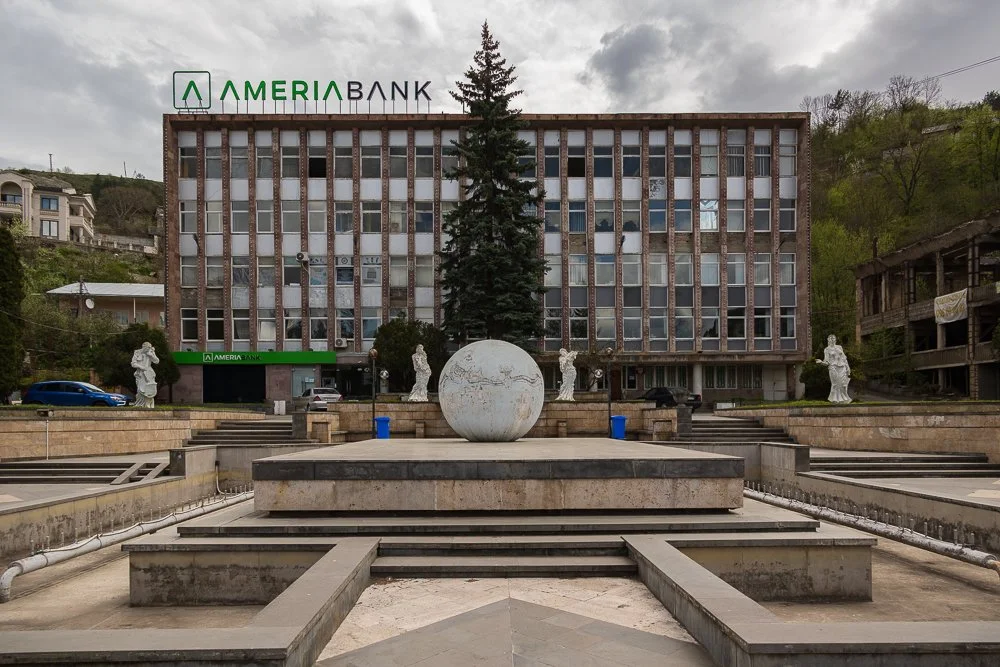
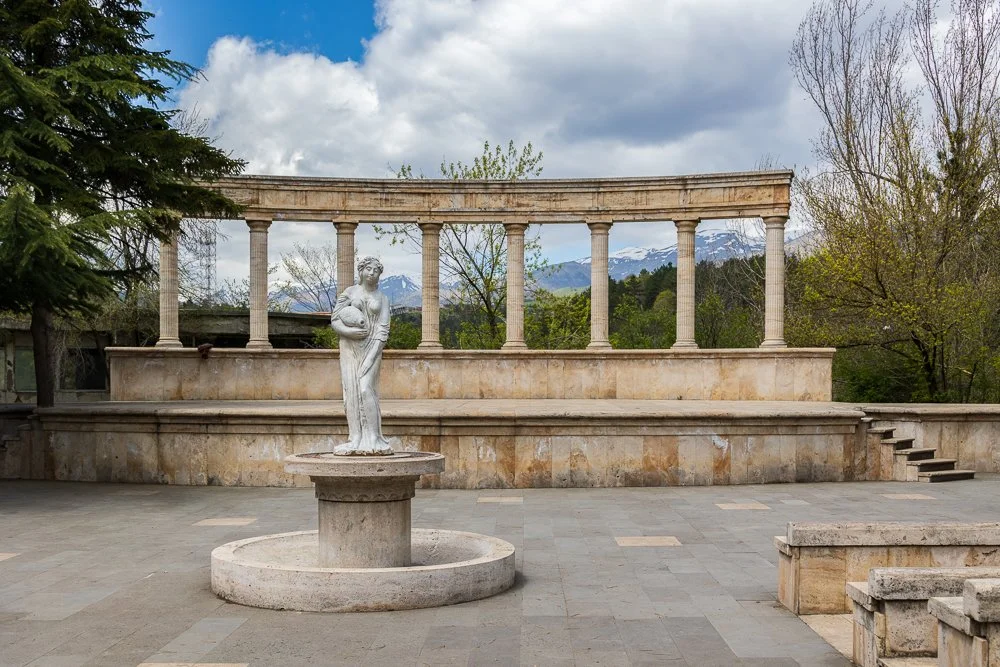
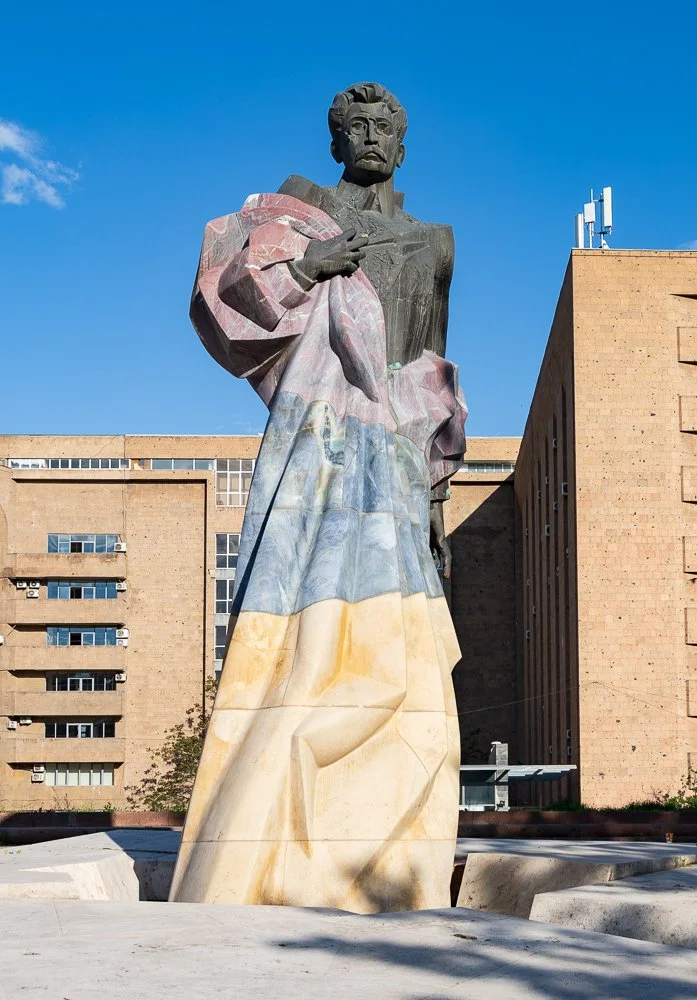
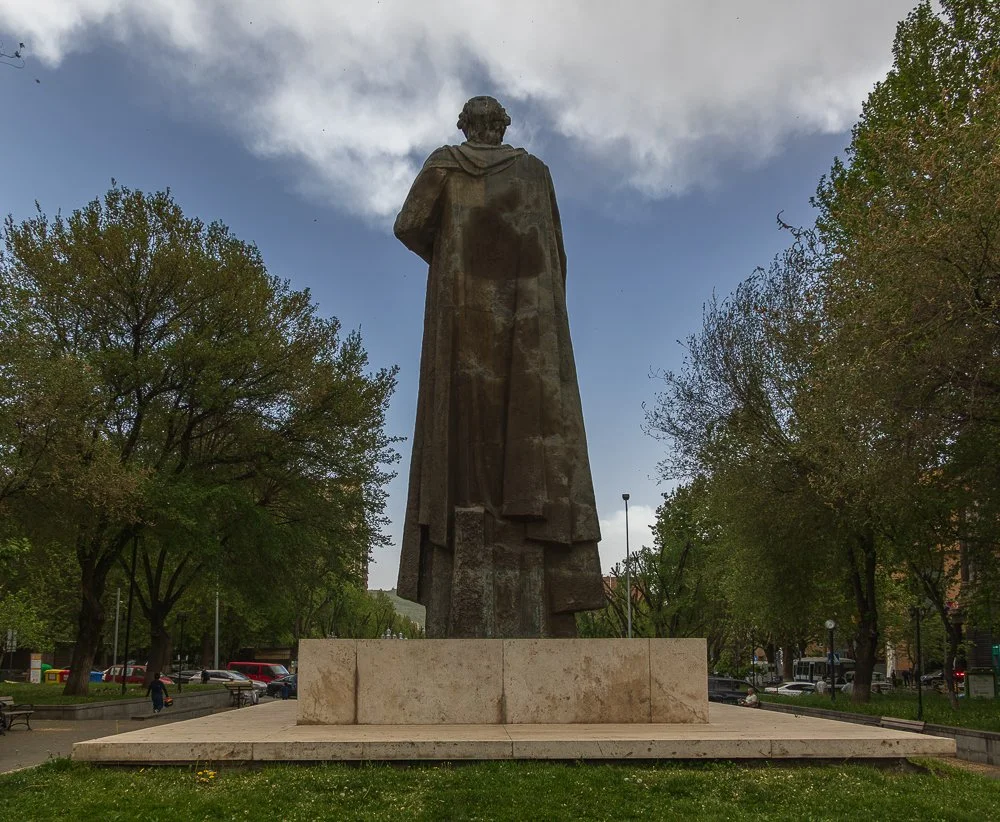
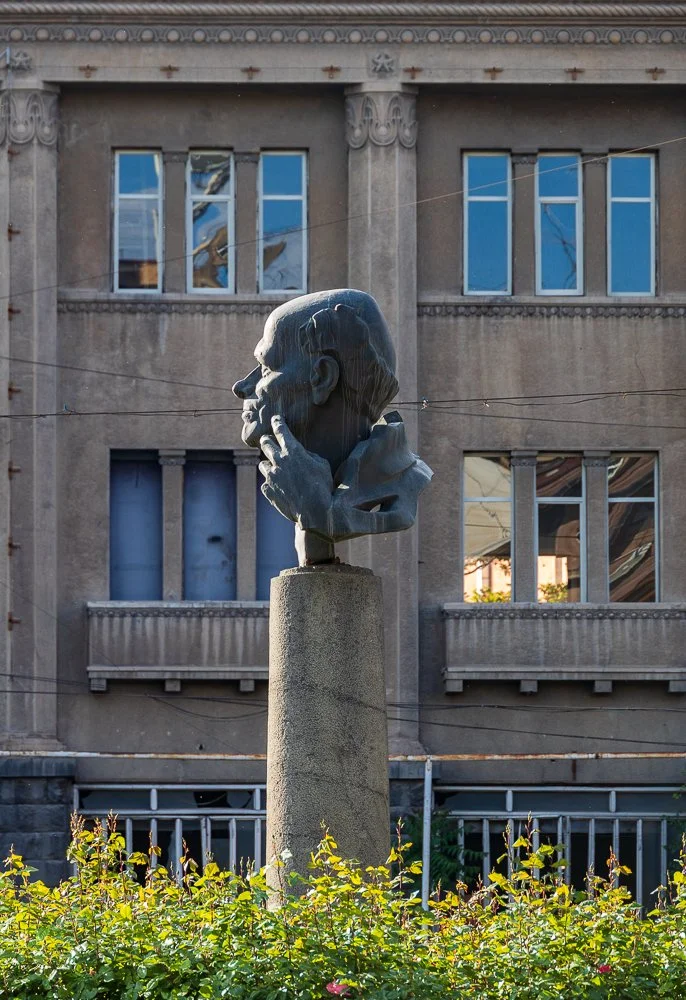
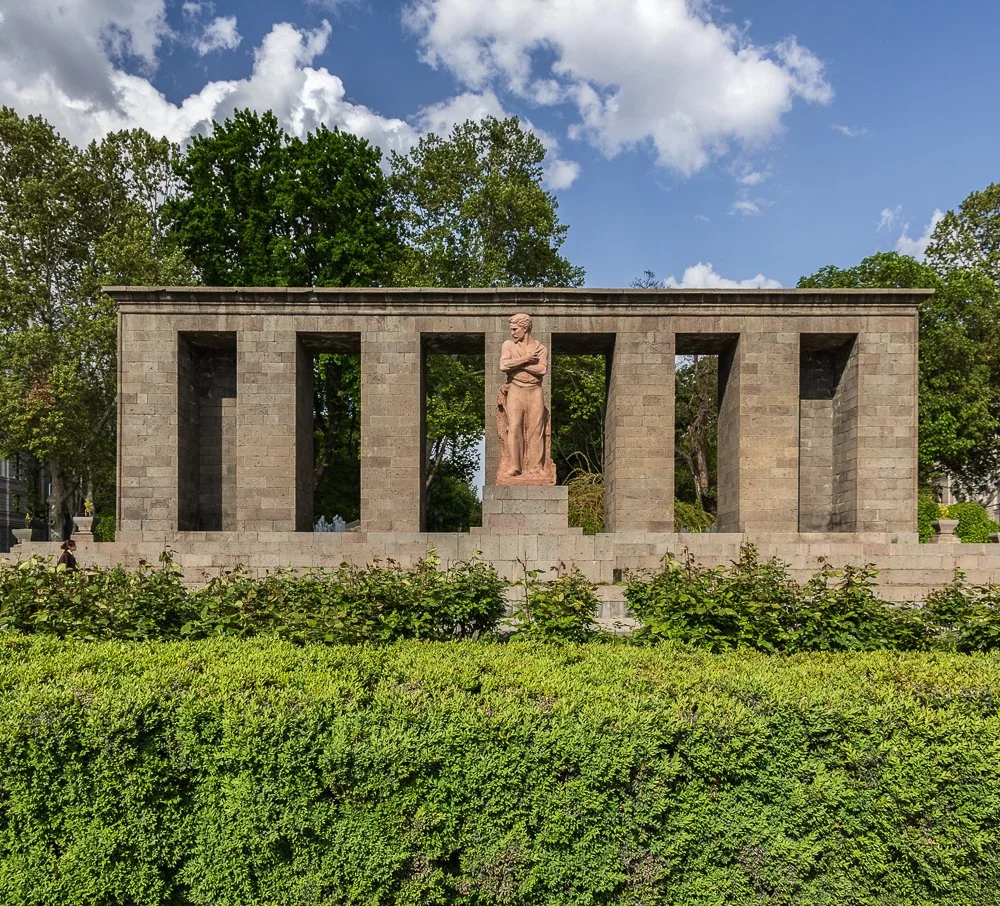
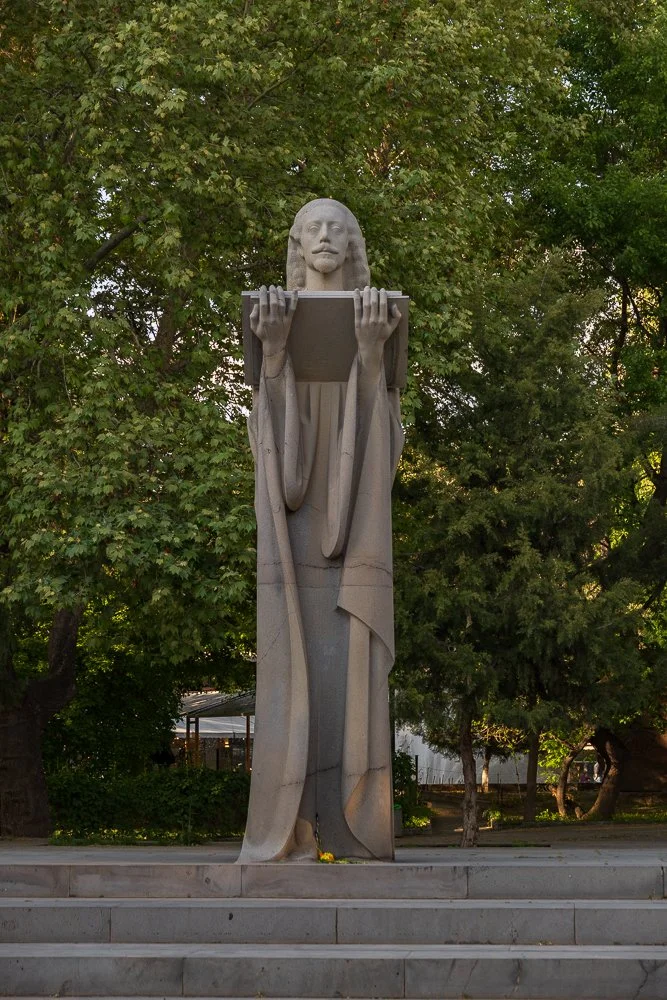
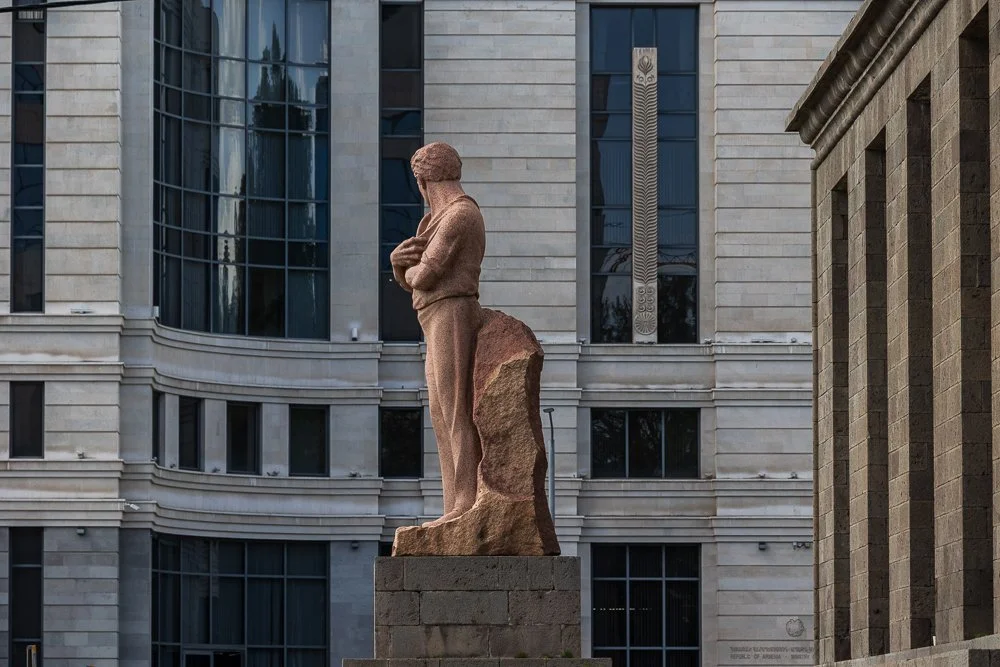
 The Soviet fingerprints are still visible if you know where to look, and I was looking. The broad boulevards, the scale of the public squares, the statues: serious figures in stone and bronze that carry the particular gravity of monuments built to m
  Yerevan  is one of the oldest continuously inhabited cities in the world, founded in 782 BC as the Urartian fortress of Erebuni, decades before the rise of Rome. It is home to just over a million people and has been Armenia's capital through empire
E13A7731.jpg
E13A7035.jpg
E13A7126.jpg
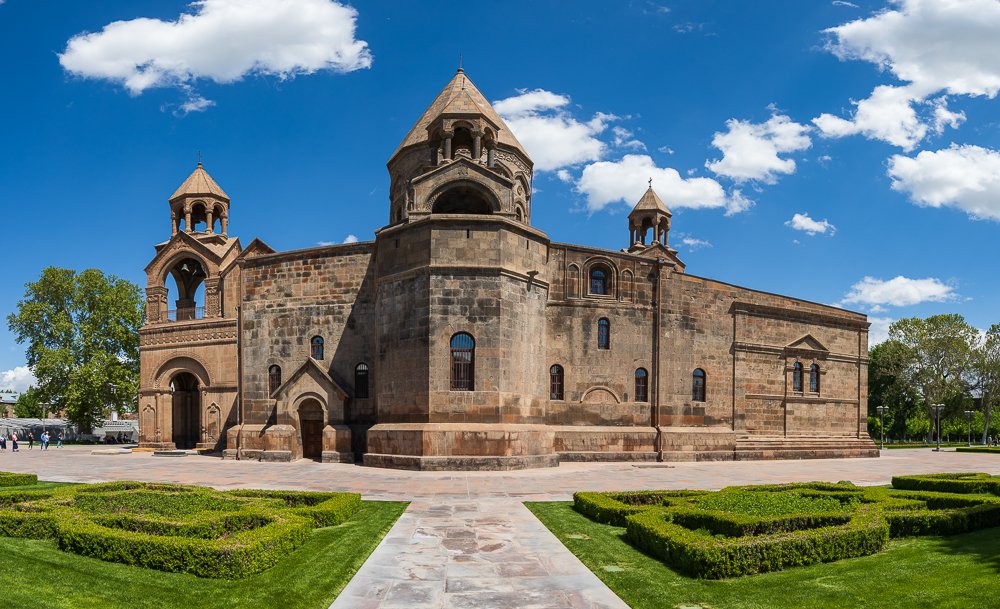
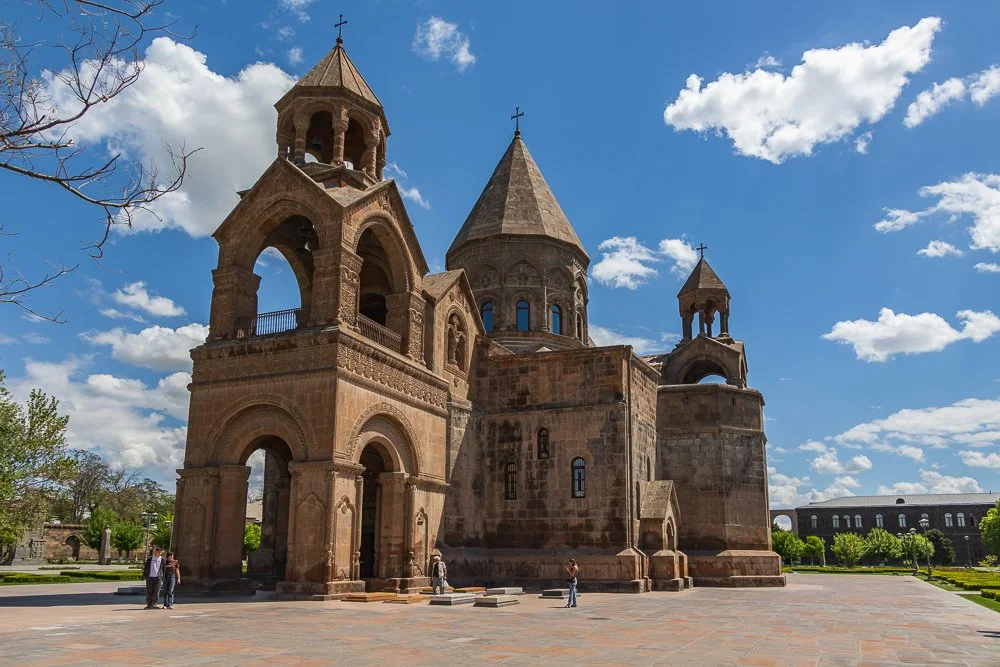
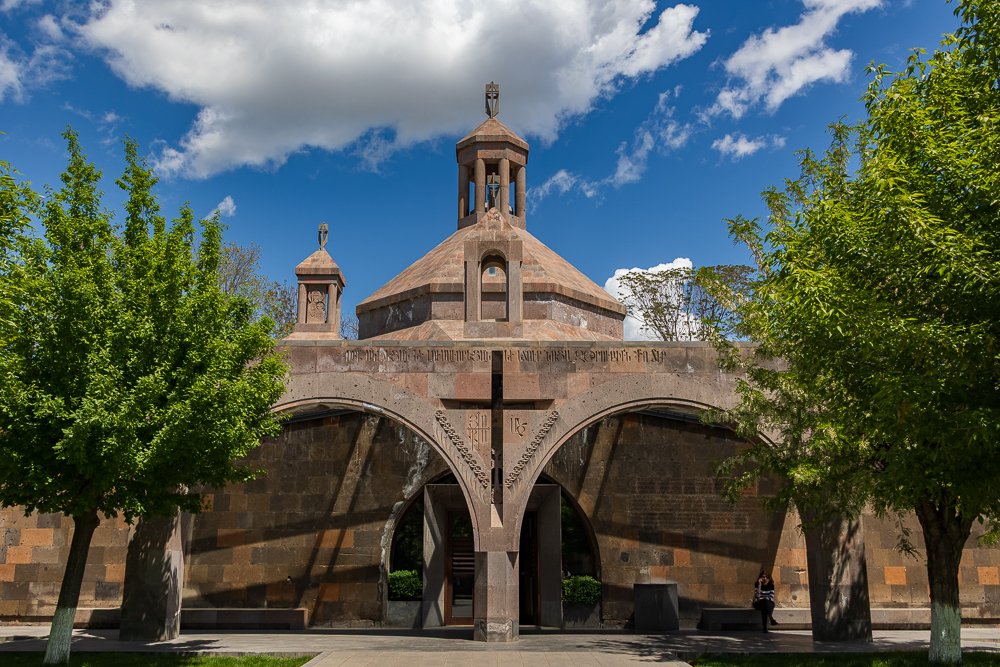
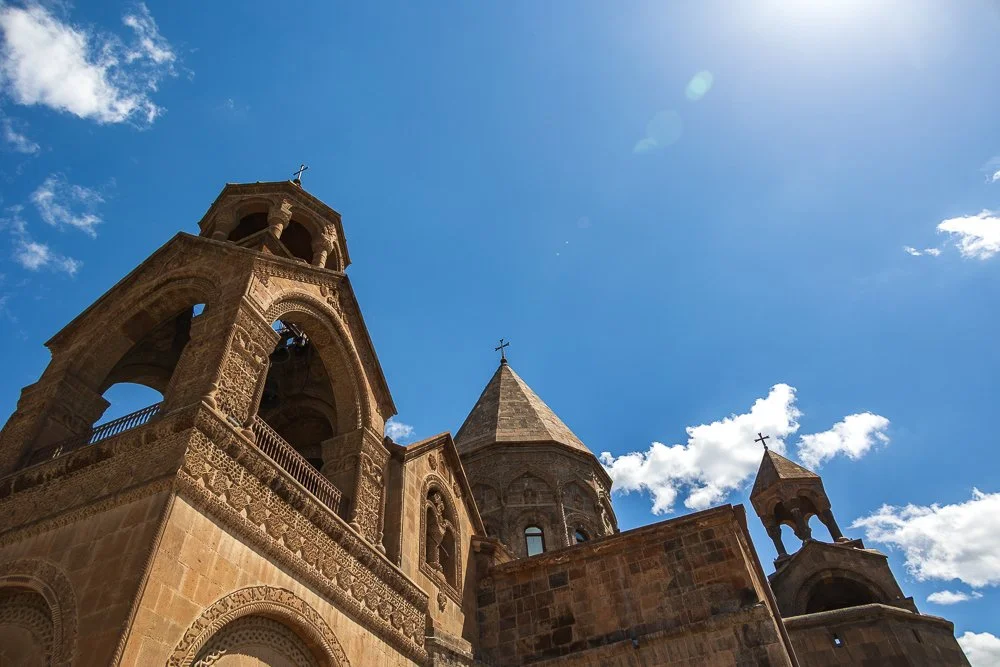
  Etchmiadzin Mother Cathedral  is sometimes called the Vatican of Armenia, on a considerably smaller scale but with the same weight. This is the mother church of the Armenian Apostolic Church, founded around 301–303 AD just after Armenia became the
E13A7132.jpg
E13A7150.jpg
E13A7154.jpg
E13A7156.jpg
E13A7164-Pano.jpg
E13A7157.jpg
E13A7202.jpg
E13A7220.jpg
E13A7365.jpg
E13A7203.jpg
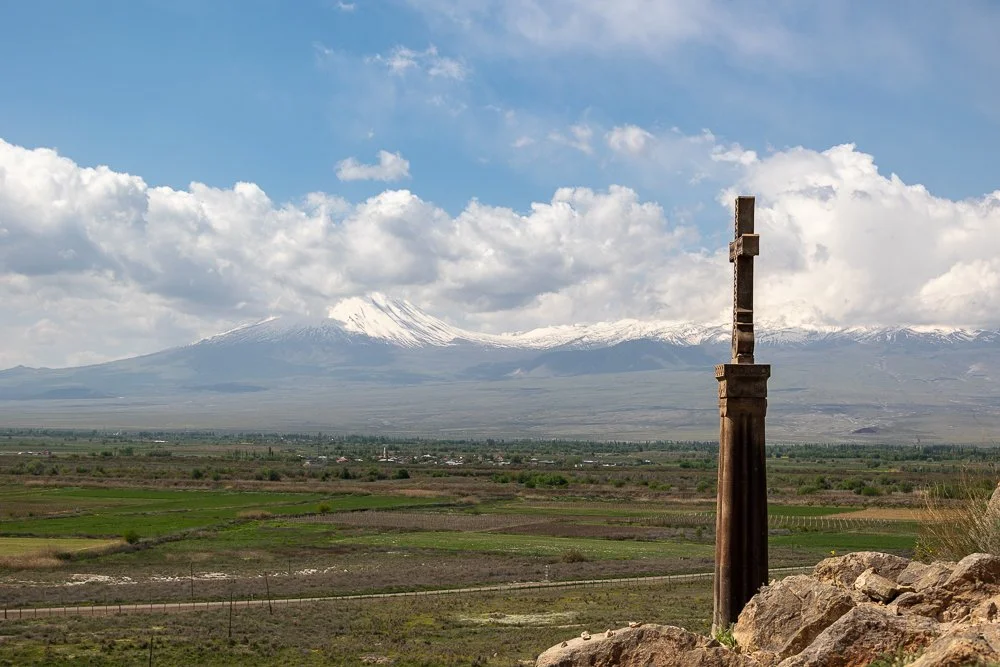
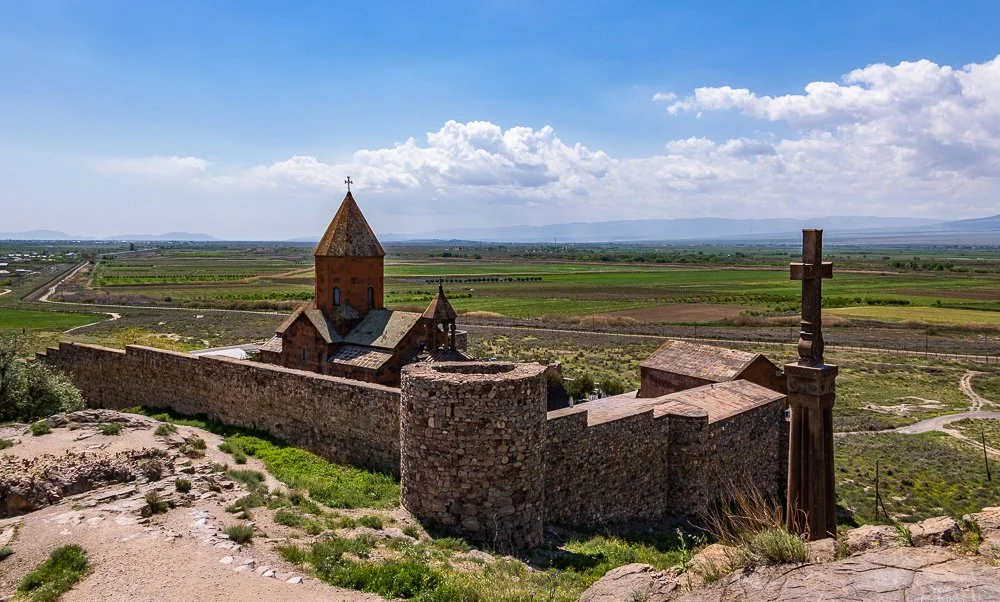
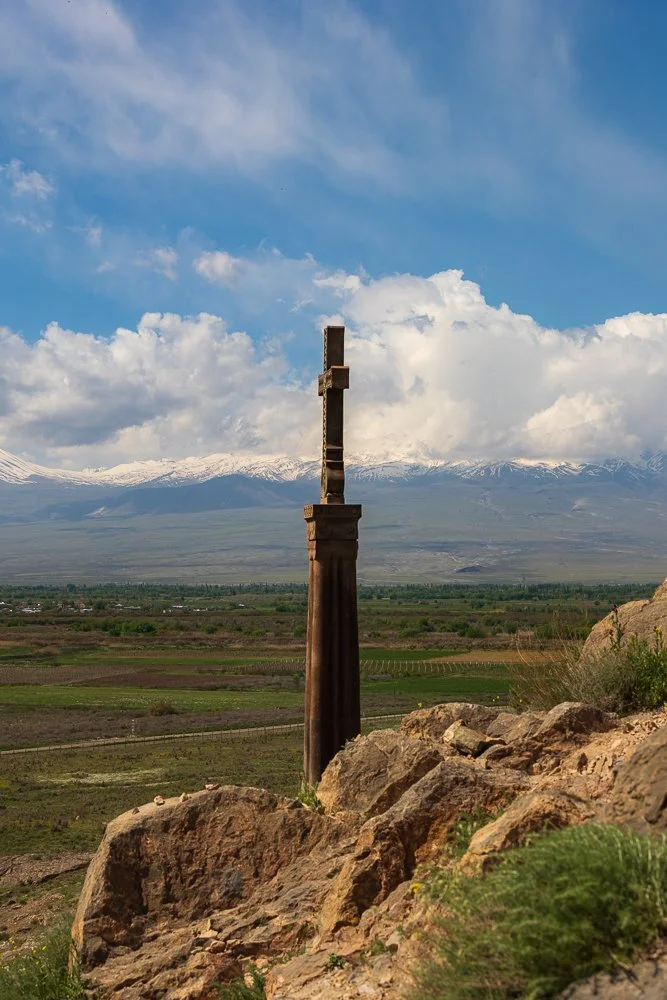
  Khor Virap Monastery  sits at the foot of Mount Ararat, directly against the closed Turkish border. The name means "deep dungeon." Saint Gregory the Illuminator was thrown into a pit here for refusing to renounce his faith and stayed there for thir
E13A7343.jpg
E13A7341.jpg
E13A7345.jpg
E13A7359.jpg
E13A7355.jpg
E13A7362.jpg
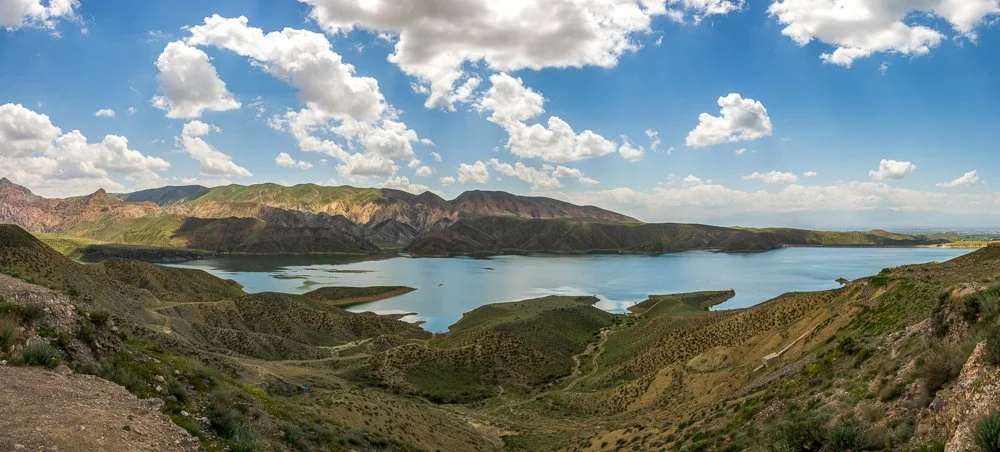
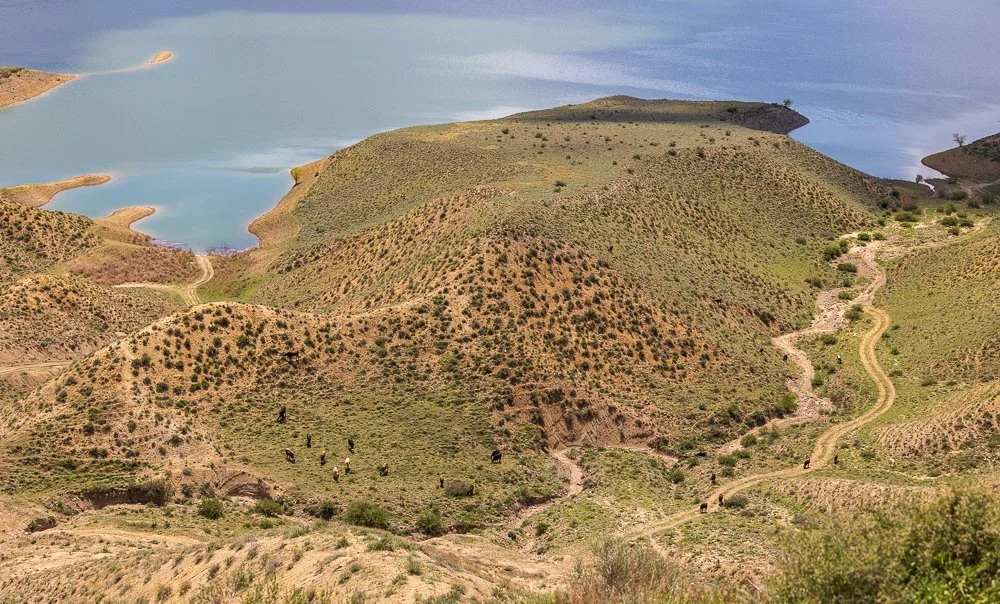
  Azat Reservoir:  Sitting at 1,050 metres above sea level in the basalt-walled gorge south of Yerevan. Built in 1976 to irrigate the Ararat Valley, it now serves a quieter second purpose: a place of stillness, dramatic cliffs, and water that holds t
E13A7440.jpg
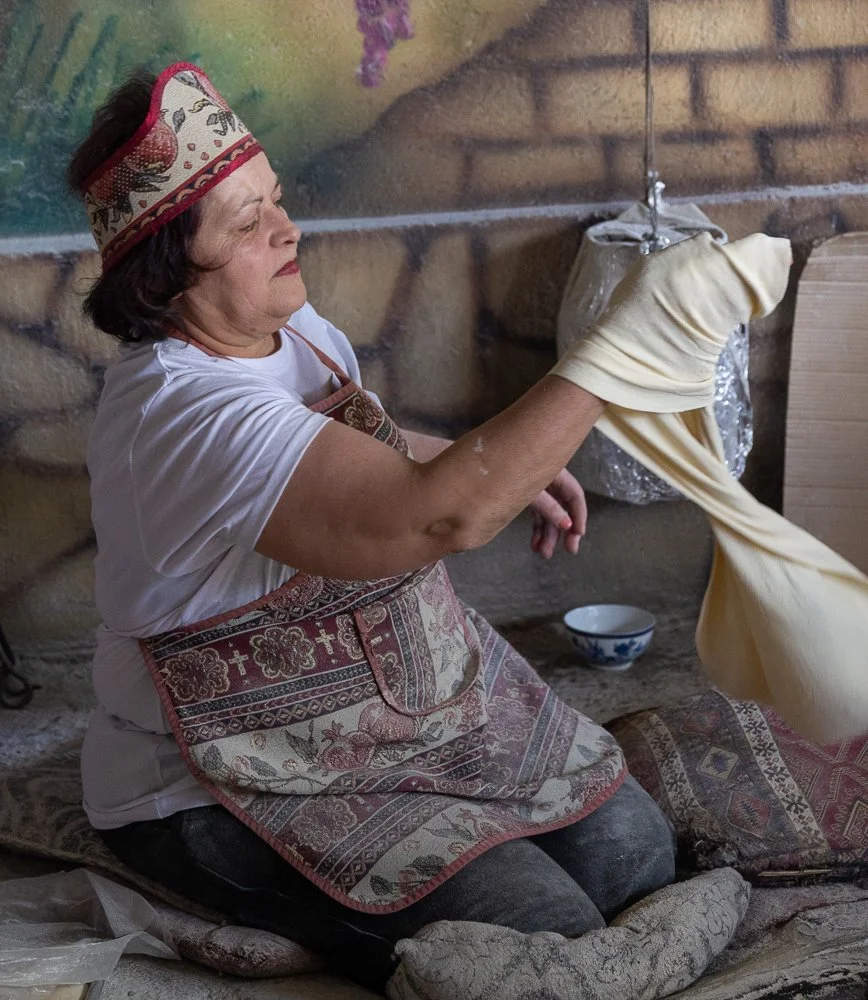
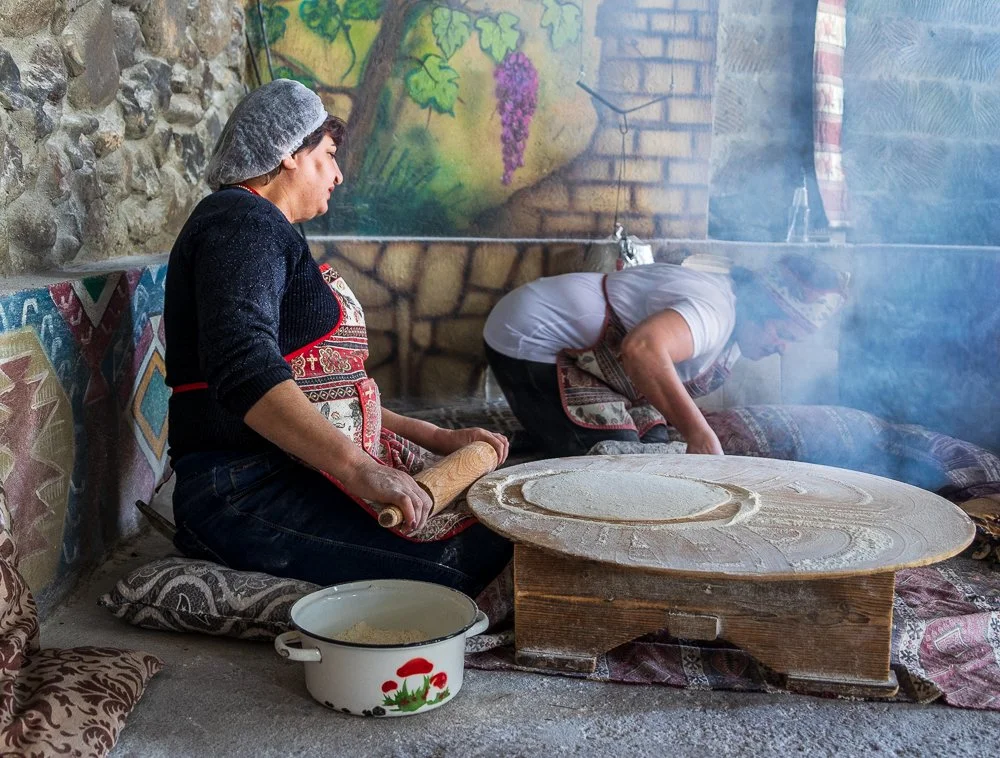
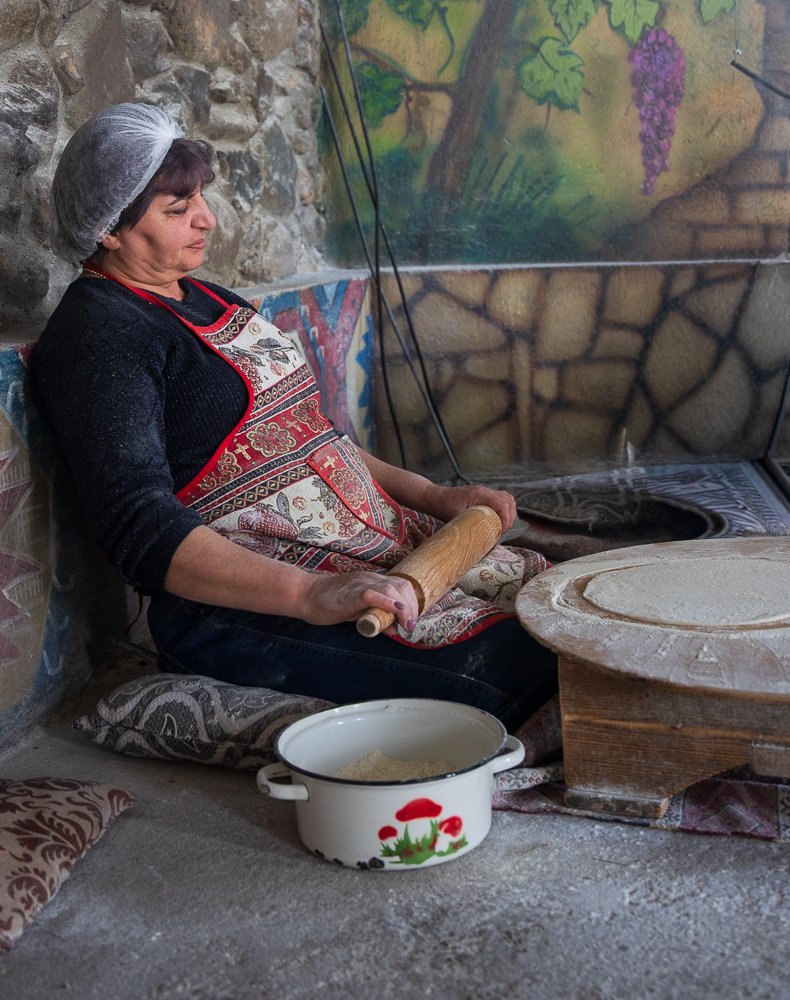
  Lavash  is Armenia's bread. Thin, soft, blistered, baked against the inside wall of a tonir, the traditional clay oven sunk into the ground. It's been made here for thousands of years, traditionally by women working together, three generations some
E13A7477.jpg
E13A7481.jpg
E13A7572.jpg
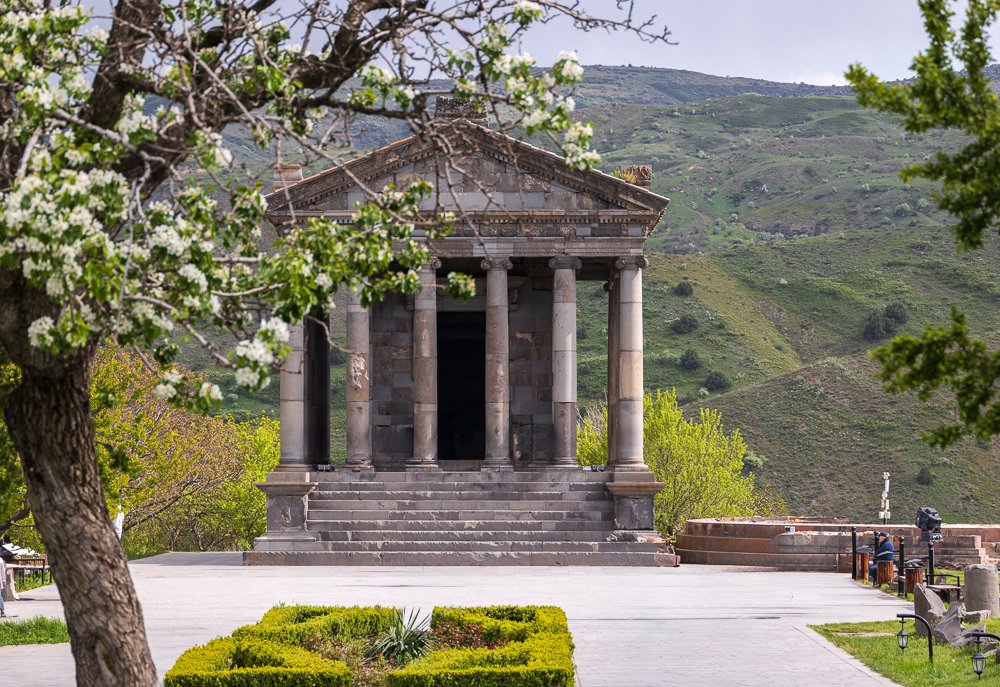
  Garni Temple  is the only standing Greco-Roman temple in the entire former Soviet Union. Built in the 1st century AD by King Tiridates I, perched on a cliff above the Azat River gorge, dedicated to the Armenian sun god. The same king who imprisoned
E13A7641.jpg
E13A7677.jpg
E13A7532.jpg
E13A7565.jpg
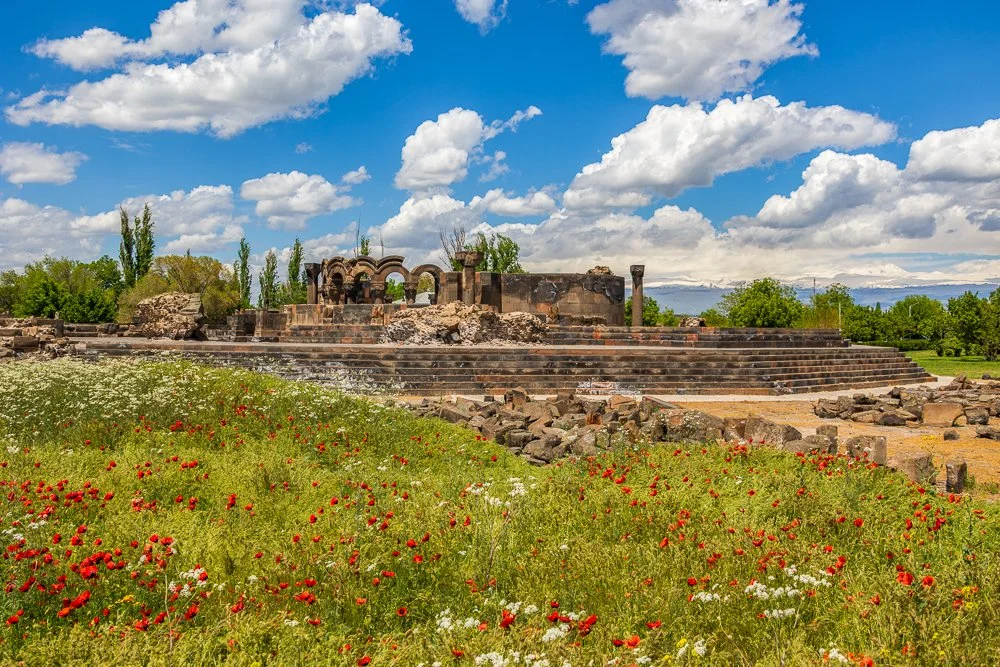
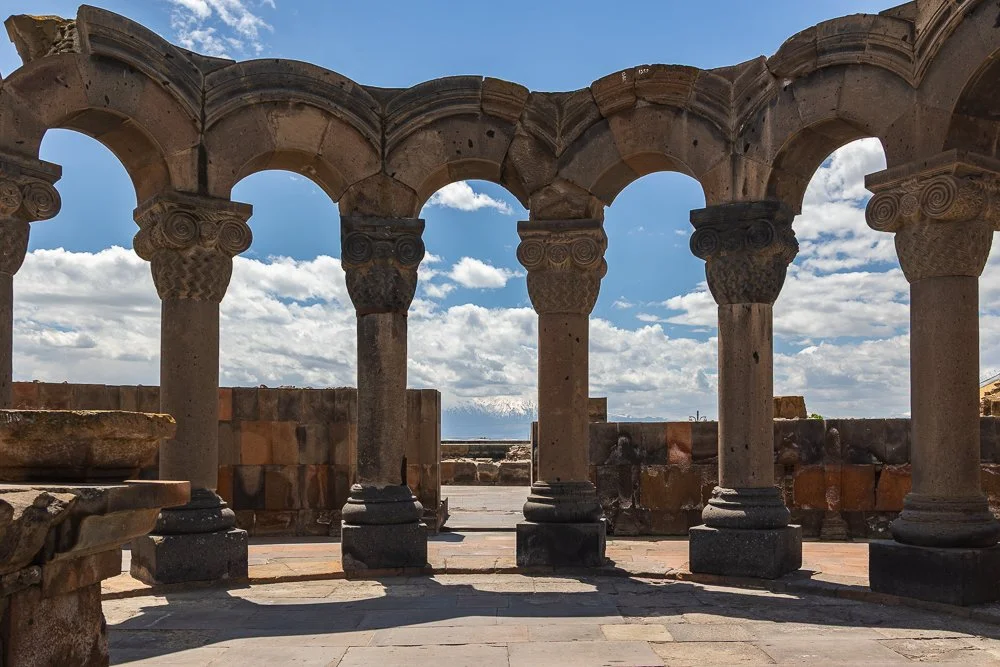
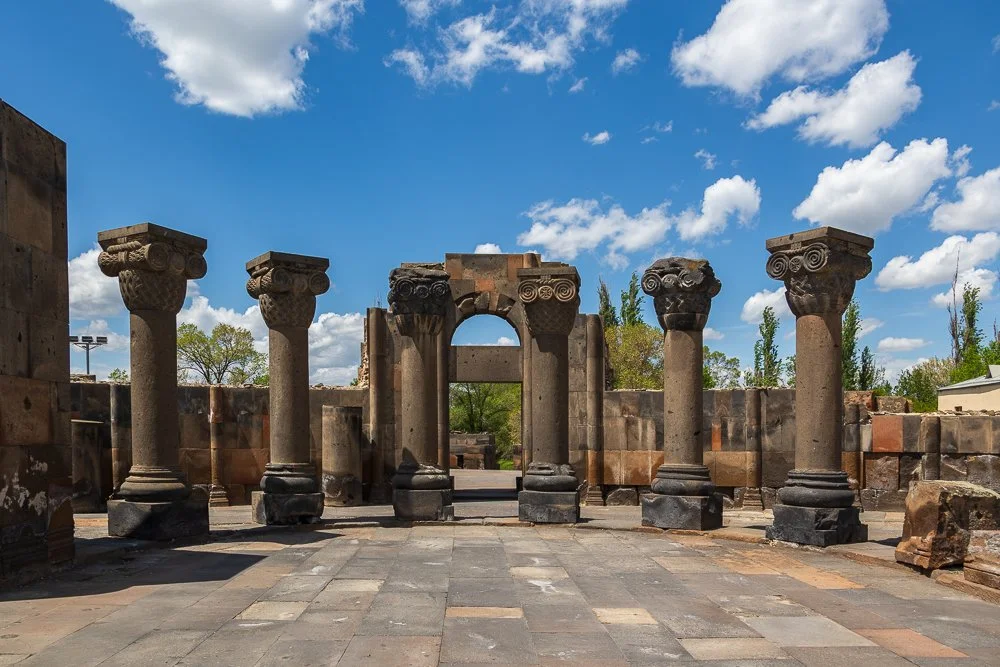
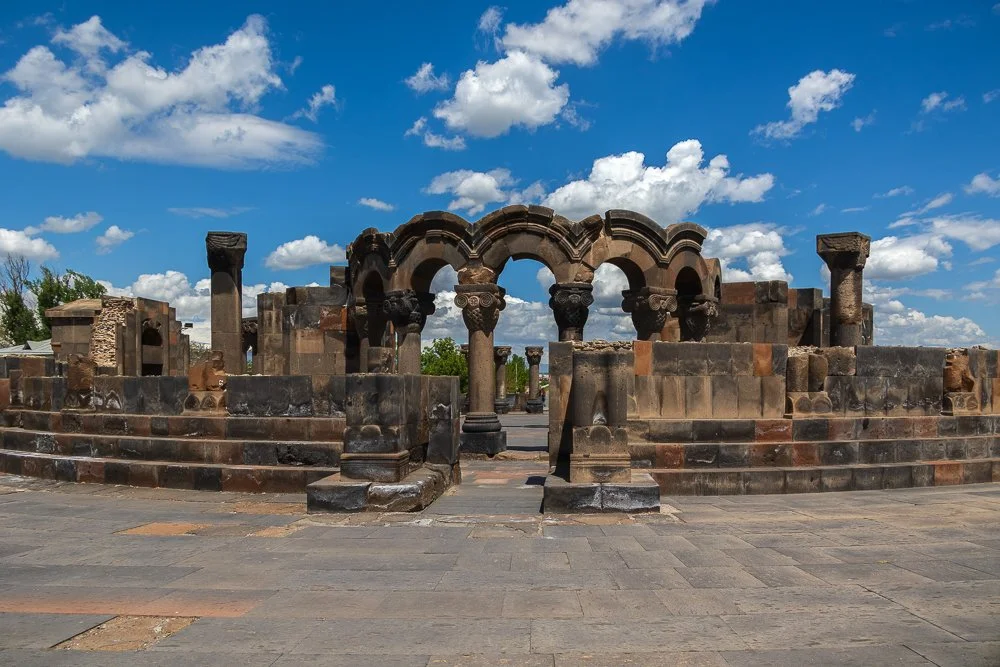
  Zvartnots Cathedral  built in the 7th century, once a three-tiered circular cathedral 45 metres tall, brought down by an earthquake in the 10th century and left in ruins for a thousand years. What remains stands in an open field, Mount Ararat rose
E13A7238.jpg
E13A7234.jpg
E13A7242.jpg
E13A7254.jpg
E13A7278-Edit.jpg
E13A7788.jpg
  Armenia  was the first country in the world to adopt Christianity as a state religion, in 301 AD, and within hours of crossing the border I understood I had underestimated what that actually means here. Monasteries are everywhere: on forested ridge
Armenia was the first country in the world to adopt Christianity as a state religion, in 301 AD, and within hours of crossing the border I understood I had underestimated what that actually means here. Monasteries are everywhere: on forested ridges, above deep canyons, carved into cliffs. I came for them. I was not disappointed.
  Haghpat Monastery  was founded in 976 AD by Queen Khosrovanuysh, sitting on a plateau above the Debed canyon. The twin powerhouse to nearby Sanahin: rival schools, rival scriptoriums, rival reputations.
Haghpat Monastery was founded in 976 AD by Queen Khosrovanuysh, sitting on a plateau above the Debed canyon. The twin powerhouse to nearby Sanahin: rival schools, rival scriptoriums, rival reputations.
E13A6155.jpg
E13A6232.jpg
 At its peak  Haghpat Monastery  housed over 500 monks with a famous library and schools of grammar, philosophy, theology, music, and medicine. It was the exterior I couldn't stop photographing: the defensive walls, the bell tower, the stone roofs. I
At its peak Haghpat Monastery housed over 500 monks with a famous library and schools of grammar, philosophy, theology, music, and medicine. It was the exterior I couldn't stop photographing: the defensive walls, the bell tower, the stone roofs. I wandered around and around. This was the quintessential monastery, exactly what I had come to Armenia to find.
E13A6242.jpg
E13A6220.jpg
E13A6002.jpg
  Sanahin Monastery  was founded slightly earlier, around 966 AD, by the same queen. The name means "this one is older than that one," a quiet dig at Haghpat. Also a major medieval centre of learning, with its own scriptorium, library, and academy.
Sanahin Monastery was founded slightly earlier, around 966 AD, by the same queen. The name means "this one is older than that one," a quiet dig at Haghpat. Also a major medieval centre of learning, with its own scriptorium, library, and academy.
E13A6005.jpg
E13A6258.jpg
E13A5978.jpg
E13A5847.jpg
E13A5853.jpg
 Inside  Sanahin  I barely moved. The floor of the gavit, the antechamber, is paved with engraved tombstones: clergy, nobility, and patrons buried beneath your feet. A thousand years underfoot. The light was extraordinary.
Inside Sanahin I barely moved. The floor of the gavit, the antechamber, is paved with engraved tombstones: clergy, nobility, and patrons buried beneath your feet. A thousand years underfoot. The light was extraordinary.
E13A5856.jpg
E13A5870.jpg
 The Sanahin complex consists of sacred and civil structures built in different periods. It includes churches, narthex halls, scriptoria (libraries), and mausoleums.
The Sanahin complex consists of sacred and civil structures built in different periods. It includes churches, narthex halls, scriptoria (libraries), and mausoleums.
E13A5873-Pano-2.jpg
E13A5942.jpg
E13A5949.jpg
  Akhtala Monastery  began as a defensive fortress before becoming a religious centre, set on a plateau above a river and partially surrounded by old fortress walls. Its 13th-century frescoes cover much of the interior, something rare in Armenian chu
Akhtala Monastery began as a defensive fortress before becoming a religious centre, set on a plateau above a river and partially surrounded by old fortress walls. Its 13th-century frescoes cover much of the interior, something rare in Armenian churches, blending Armenian and Georgian architectural styles.
E13A6054-Pano.jpg
E13A6071.jpg
E13A6084.jpg
E13A6094.jpg
E13A6102.jpg
E13A6132.jpg
E13A6137.jpg
E13A6144.jpg
E13A6159-Edit.jpg
E13A6301.jpg
E13A6317.jpg
E13A6320.jpg
E13A6346.jpg
E13A6360.jpg
E13A6363.jpg
E13A6404.jpg
E13A6412.jpg
 At  Odzun Monastery , a 6th-century domed basilica of pink stone sitting in the centre of the village, my timing was impeccable. A folk dance festival was underway outside the church, women and girls in traditional dress performing on the grass.
At Odzun Monastery, a 6th-century domed basilica of pink stone sitting in the centre of the village, my timing was impeccable. A folk dance festival was underway outside the church, women and girls in traditional dress performing on the grass.
E13A6432.jpg
E13A6444.jpg
E13A6465.jpg
E13A6469-Edit.jpg
E13A6530.jpg
E13A6537-Edit.jpg
E13A6539-Edit.jpg
E13A6546.jpg
E13A6558.jpg
  Dilijan  gets called the Switzerland of Armenia for its forested mountains and alpine air, and you can see why the moment you arrive. The town itself has a single cobblestone lane, Sharambeyan Street, where old wooden-balconied houses have become g
Dilijan gets called the Switzerland of Armenia for its forested mountains and alpine air, and you can see why the moment you arrive. The town itself has a single cobblestone lane, Sharambeyan Street, where old wooden-balconied houses have become guestrooms, workshops, cafés, and craft shops.
E13A6571.jpg
E13A6589.jpg
E13A6599.jpg
E13A6602.jpg
E13A6637-Edit-Edit.jpg
  Goshavank Monastery  was founded in 1188 by Mkhitar Gosh, a medieval Armenian scholar and jurist who wrote the country's first legal code. The complex includes several churches, a bell tower, a book depository, and former school buildings.
Goshavank Monastery was founded in 1188 by Mkhitar Gosh, a medieval Armenian scholar and jurist who wrote the country's first legal code. The complex includes several churches, a bell tower, a book depository, and former school buildings.
E13A6650-Edit-Edit.jpg
E13A6674.jpg
E13A6679.jpg
E13A6682.jpg
E13A6687.jpg
E13A6689.jpg
E13A6696.jpg
E13A6702-Edit.jpg
E13A6707-Edit.jpg
E13A6790.jpg
  Haghartsin Monastery  is tucked deep in the forest at the end of a long, winding road through Dilijan National Park. The name translates roughly as "soaring eagle." Legend says an eagle was seen circling the dome during the monastery's consecration
Haghartsin Monastery is tucked deep in the forest at the end of a long, winding road through Dilijan National Park. The name translates roughly as "soaring eagle." Legend says an eagle was seen circling the dome during the monastery's consecration.
E13A6731.jpg
E13A6820.jpg
E13A6813.jpg
E13A6830.jpg
E13A6841.jpg
E13A6870.jpg
E13A6881-Edit.jpg
  Sevanavank Monastery , perched on a rocky peninsula above Lake Sevan. Founded in the 9th century, only two black-stone churches remain now, surrounded by khachkars and open sky. Lake Sevan is the largest freshwater lake in the Caucasus; Armenians c
Sevanavank Monastery, perched on a rocky peninsula above Lake Sevan. Founded in the 9th century, only two black-stone churches remain now, surrounded by khachkars and open sky. Lake Sevan is the largest freshwater lake in the Caucasus; Armenians call it the Pearl of Armenia.
 kKhachkars for the first time: intricately carved Armenian cross-stones, each one slightly different.
kKhachkars for the first time: intricately carved Armenian cross-stones, each one slightly different.
E13A6865-Edit-Edit.jpg
E13A6961.jpg
E13A7709.jpg
E13A6984.jpg
 The Soviet fingerprints are still visible if you know where to look, and I was looking. The broad boulevards, the scale of the public squares, the statues: serious figures in stone and bronze that carry the particular gravity of monuments built to m
The Soviet fingerprints are still visible if you know where to look, and I was looking. The broad boulevards, the scale of the public squares, the statues: serious figures in stone and bronze that carry the particular gravity of monuments built to make a point.
  Yerevan  is one of the oldest continuously inhabited cities in the world, founded in 782 BC as the Urartian fortress of Erebuni, decades before the rise of Rome. It is home to just over a million people and has been Armenia's capital through empire
Yerevan is one of the oldest continuously inhabited cities in the world, founded in 782 BC as the Urartian fortress of Erebuni, decades before the rise of Rome. It is home to just over a million people and has been Armenia's capital through empires, Soviet rule, and independence.
E13A7731.jpg
E13A7035.jpg
E13A7126.jpg
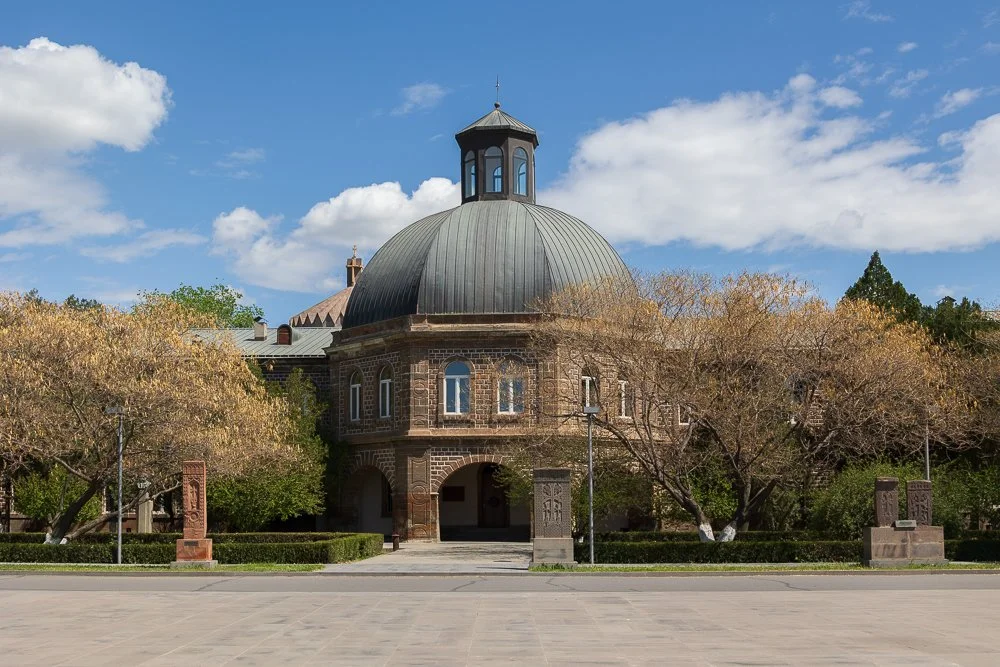
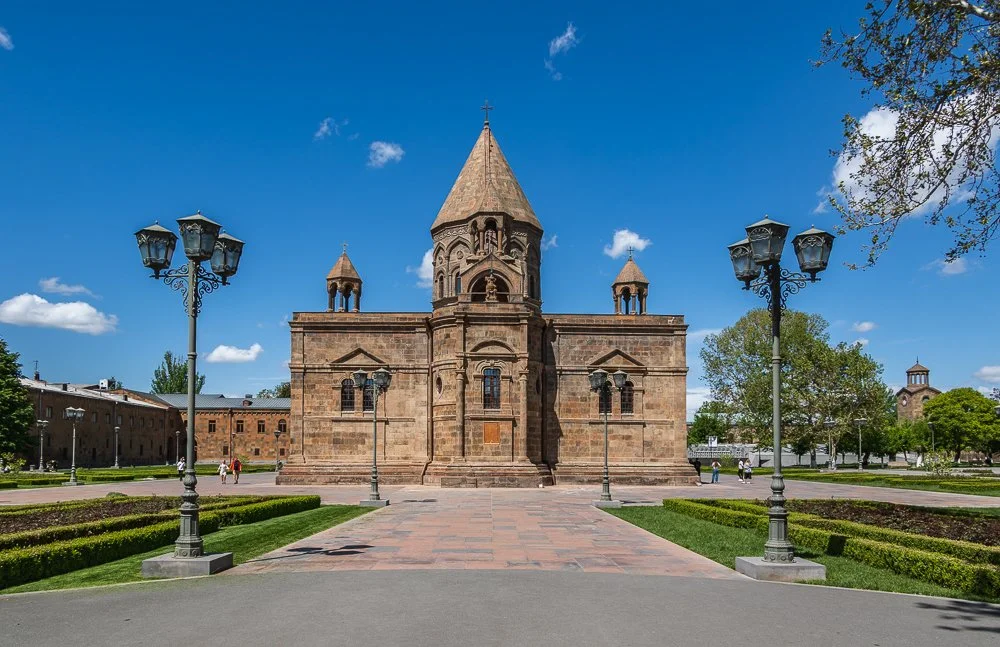
  Etchmiadzin Mother Cathedral  is sometimes called the Vatican of Armenia, on a considerably smaller scale but with the same weight. This is the mother church of the Armenian Apostolic Church, founded around 301–303 AD just after Armenia became the
Etchmiadzin Mother Cathedral is sometimes called the Vatican of Armenia, on a considerably smaller scale but with the same weight. This is the mother church of the Armenian Apostolic Church, founded around 301–303 AD just after Armenia became the first Christian nation. The complex includes the cathedral, the Catholicos's residence, monastic buildings, a theological seminary, and several museums.
E13A7132.jpg
E13A7150.jpg
E13A7154.jpg
E13A7156.jpg
E13A7164-Pano.jpg
E13A7157.jpg
E13A7202.jpg
E13A7220.jpg
E13A7365.jpg
E13A7203.jpg
  Khor Virap Monastery  sits at the foot of Mount Ararat, directly against the closed Turkish border. The name means "deep dungeon." Saint Gregory the Illuminator was thrown into a pit here for refusing to renounce his faith and stayed there for thir
Khor Virap Monastery sits at the foot of Mount Ararat, directly against the closed Turkish border. The name means "deep dungeon." Saint Gregory the Illuminator was thrown into a pit here for refusing to renounce his faith and stayed there for thirteen years, kept alive by a Christian woman who lowered bread down to him. Eventually the king fell ill, Gregory healed him, the king converted, and Armenia became the first Christian nation on earth.
E13A7343.jpg
E13A7341.jpg
E13A7345.jpg
E13A7359.jpg
E13A7355.jpg
E13A7362.jpg
  Azat Reservoir:  Sitting at 1,050 metres above sea level in the basalt-walled gorge south of Yerevan. Built in 1976 to irrigate the Ararat Valley, it now serves a quieter second purpose: a place of stillness, dramatic cliffs, and water that holds t
Azat Reservoir: Sitting at 1,050 metres above sea level in the basalt-walled gorge south of Yerevan. Built in 1976 to irrigate the Ararat Valley, it now serves a quieter second purpose: a place of stillness, dramatic cliffs, and water that holds the colour of the sky. Covering 2.85 square kilometres and holding 70 million cubic metres of water.
E13A7440.jpg
  Lavash  is Armenia's bread. Thin, soft, blistered, baked against the inside wall of a tonir, the traditional clay oven sunk into the ground. It's been made here for thousands of years, traditionally by women working together, three generations some
Lavash is Armenia's bread. Thin, soft, blistered, baked against the inside wall of a tonir, the traditional clay oven sunk into the ground. It's been made here for thousands of years, traditionally by women working together, three generations sometimes, mixing, rolling, slapping the dough onto the hot clay, peeling it off seconds later. 
E13A7477.jpg
E13A7481.jpg
E13A7572.jpg
  Garni Temple  is the only standing Greco-Roman temple in the entire former Soviet Union. Built in the 1st century AD by King Tiridates I, perched on a cliff above the Azat River gorge, dedicated to the Armenian sun god. The same king who imprisoned
Garni Temple is the only standing Greco-Roman temple in the entire former Soviet Union. Built in the 1st century AD by King Tiridates I, perched on a cliff above the Azat River gorge, dedicated to the Armenian sun god. The same king who imprisoned Gregory the Illuminator was the great-great-grandson of the king who built Garni (Tiridates I).
E13A7641.jpg
E13A7677.jpg
E13A7532.jpg
E13A7565.jpg
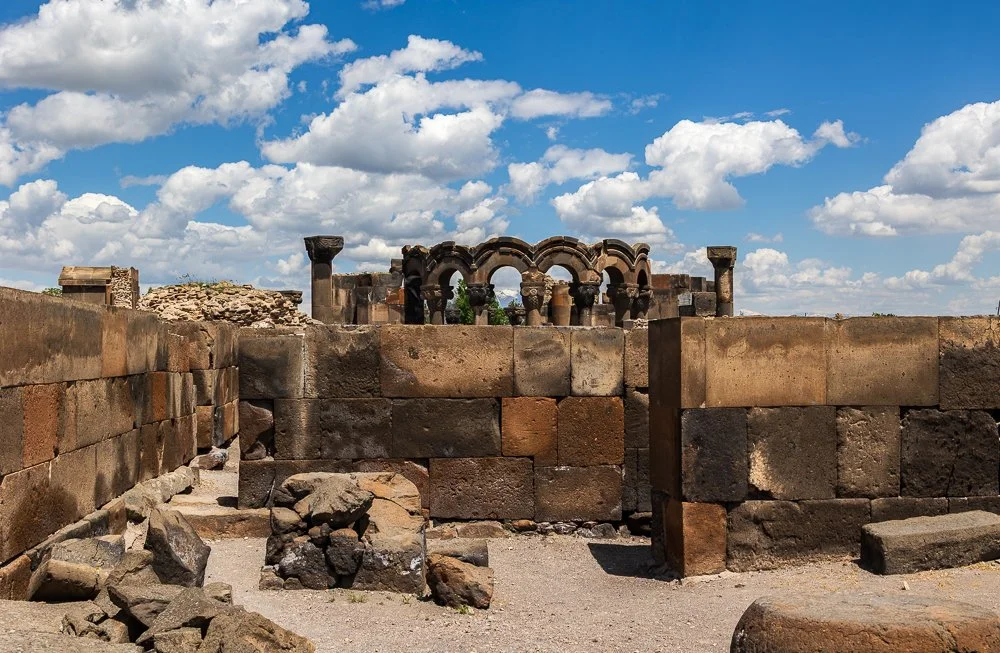
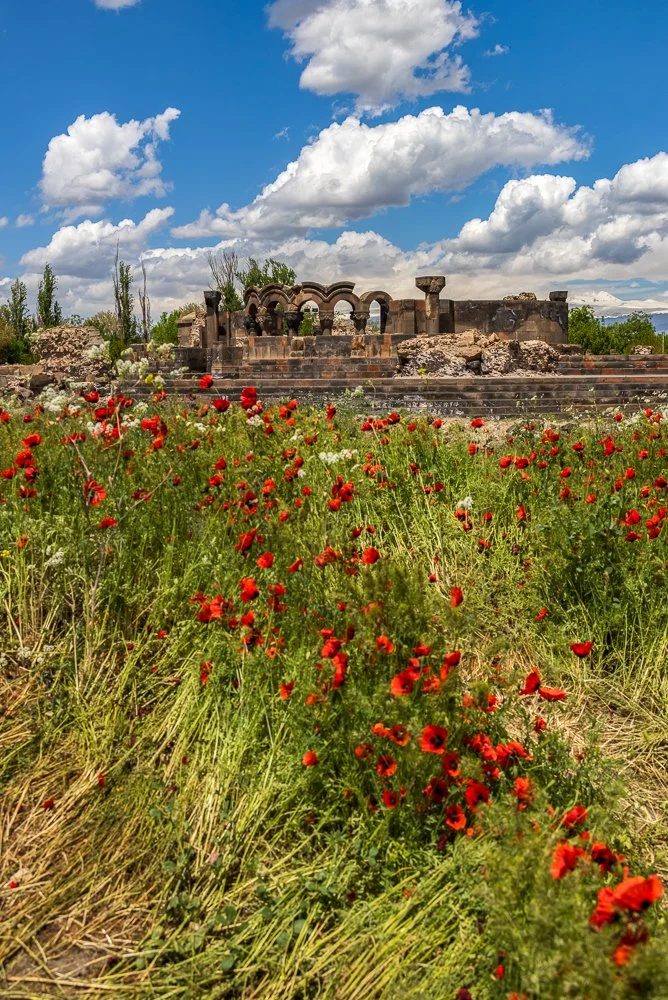
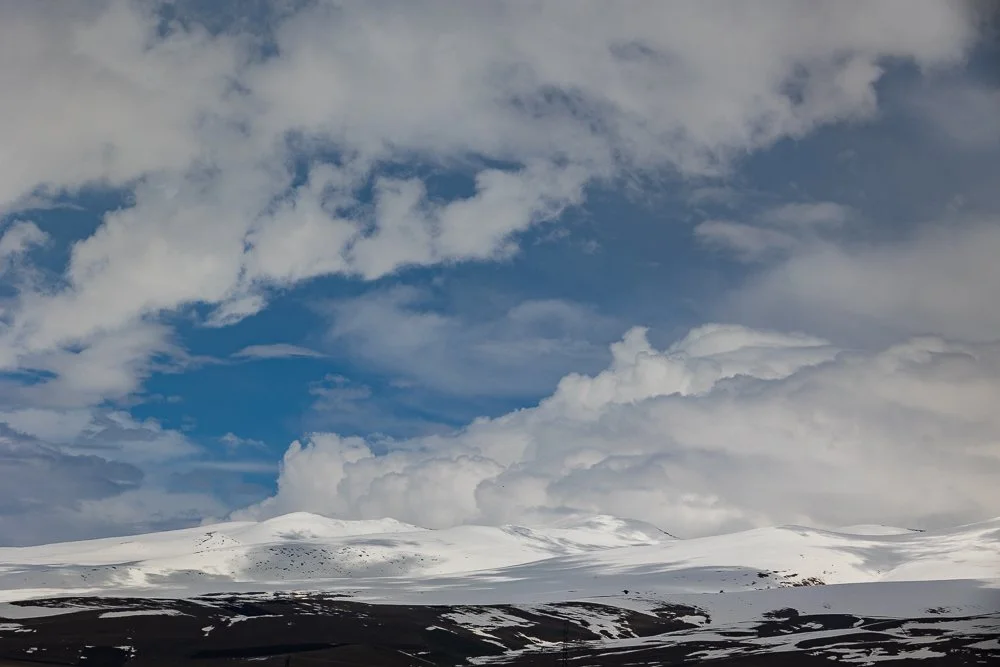
  Zvartnots Cathedral  built in the 7th century, once a three-tiered circular cathedral 45 metres tall, brought down by an earthquake in the 10th century and left in ruins for a thousand years. What remains stands in an open field, Mount Ararat rose
Zvartnots Cathedral built in the 7th century, once a three-tiered circular cathedral 45 metres tall, brought down by an earthquake in the 10th century and left in ruins for a thousand years. What remains stands in an open field, Mount Ararat rose clean on the horizon, twin-peaked and snow-capped.
E13A7238.jpg
E13A7234.jpg
E13A7242.jpg
E13A7254.jpg
E13A7278-Edit.jpg
E13A7788.jpg
info
prev / next