
Scroll using the arrows below:
Milestone Chronicles
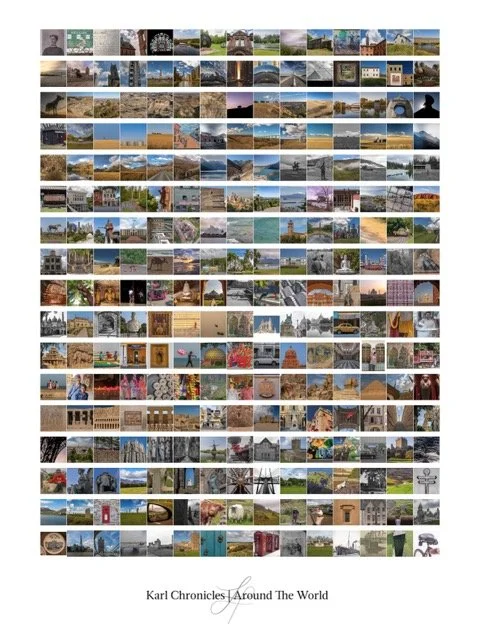
All 255 Karl Chronicles in one place, with a map of the road travelled. Wander back through the posts, revisit particular places, or discover the journey in a different order.
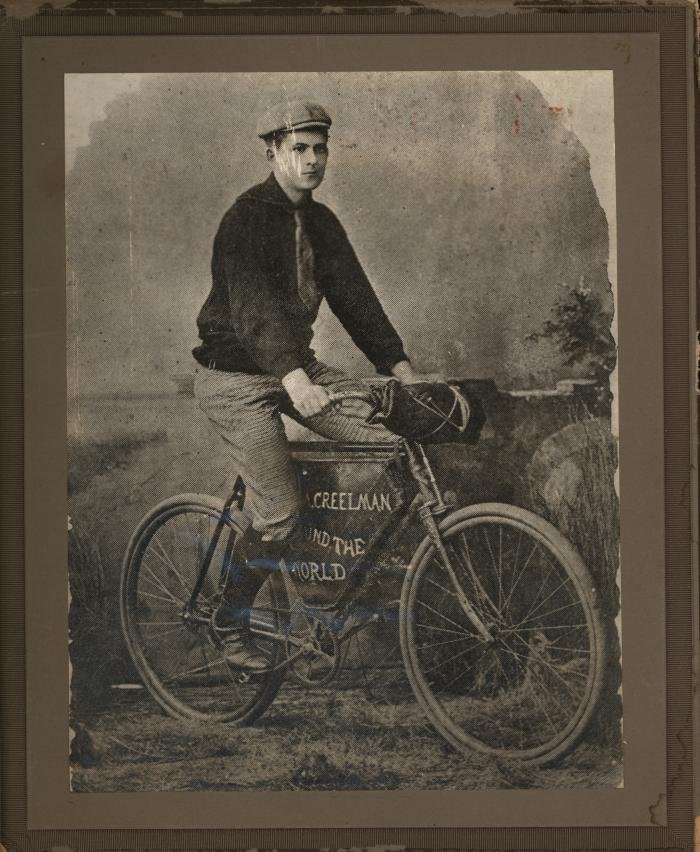
Over the last three years and eight months, I’ve posted a Karl Chronicle every Saturday at 9:00 am Atlantic Time—well, almost every Saturday. Time zones have occasionally thrown a wrench in my routine. Still, with a determination as strong as Karl Creelman’s, I’ve documented my journey as I follow in his footsteps around the world.
Dear Reader, you are cordially invited to an exclusive supper at the Explorers Club on the Upper East Side of New York City on December 21, 2024.
In celebration of the 200th Karl Chronicle, an unforgettable evening with adventurers, travel writers, photographers, and legendary explorers has been planned.
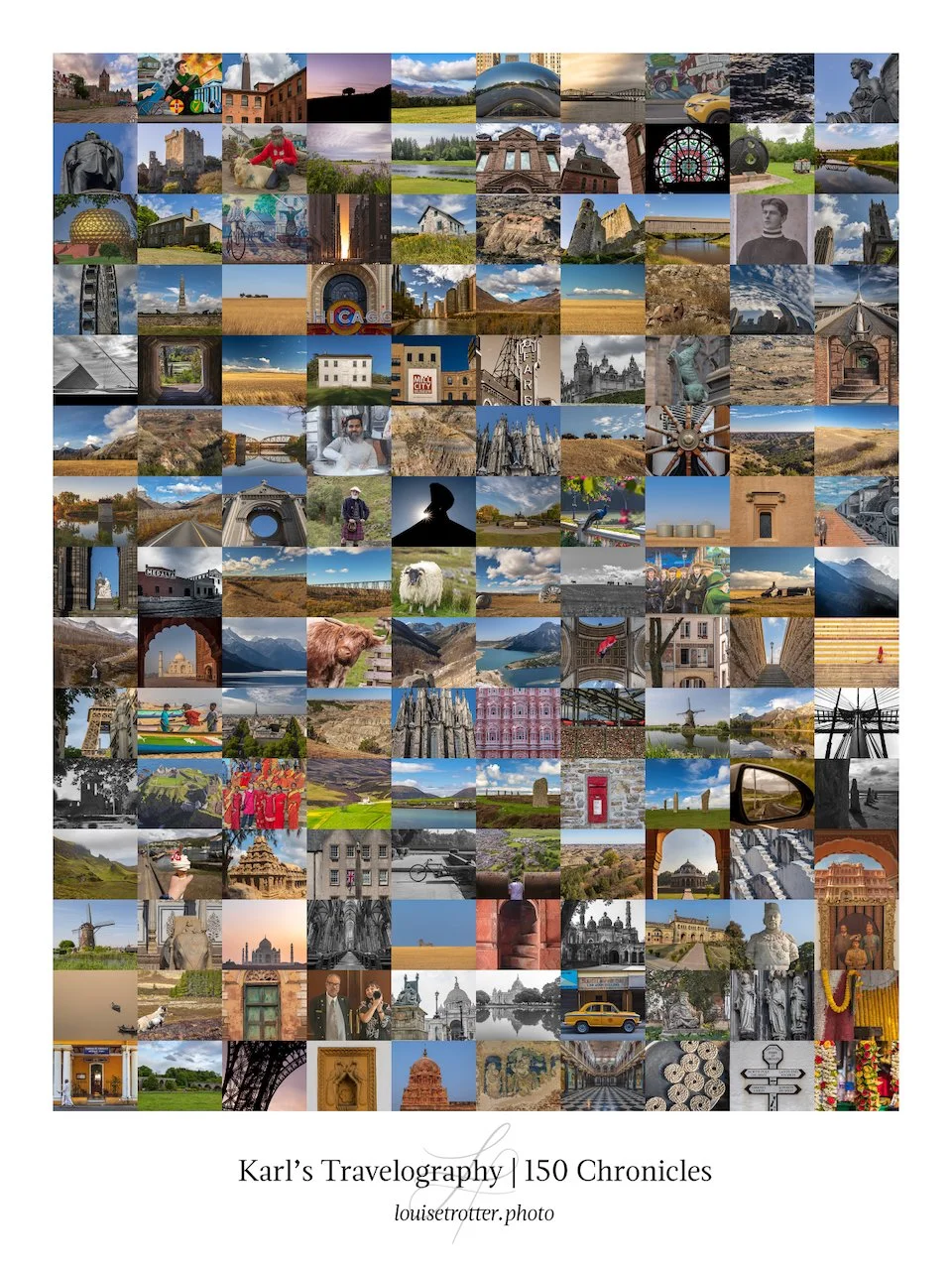
For three years, every Saturday morning I have posted a Karl Chronicle documenting my journey following Karl Creelman around the world. Last week was the sesquicentennial post with a very special (fictional) interview with Sir Michael Palin, Karl and me, I hope you enjoyed it!
Today Dear Reader is a complete summary of the highlights of the last 150 chronicles:

For this special sesquicentennial, I'm thrilled to share a fictional interview between our intrepid Nova Scotian explorers, Karl Creelman and Louise Trotter. This conversation, published in the December edition of Wanderlust magazine, occurred in the opulent Imperial Hotel in New Delhi—the last stop where Karl and Louise were together before Karl's journey to Bombay and Louise's detour to Jaipur.

If a picture is worth 1000 words, then, dear reader, I leave you 100,000 words.
In the continued celebration of my centenary post, I hope you enjoy 100 images of my journey to date. I have travelled from Karl's home in Truro, Nova Scotia, west to Ontario, south into Illinois, north through Wisconsin, North Dakota and Manitoba, and then west to British Columbia. I have travelled through Ireland and Northern Europe, and the current Chronicles document my journey in Scotland. These images accompany the stories outlined in my post last week, sharing 100 Highlights from 100 Chronicles.
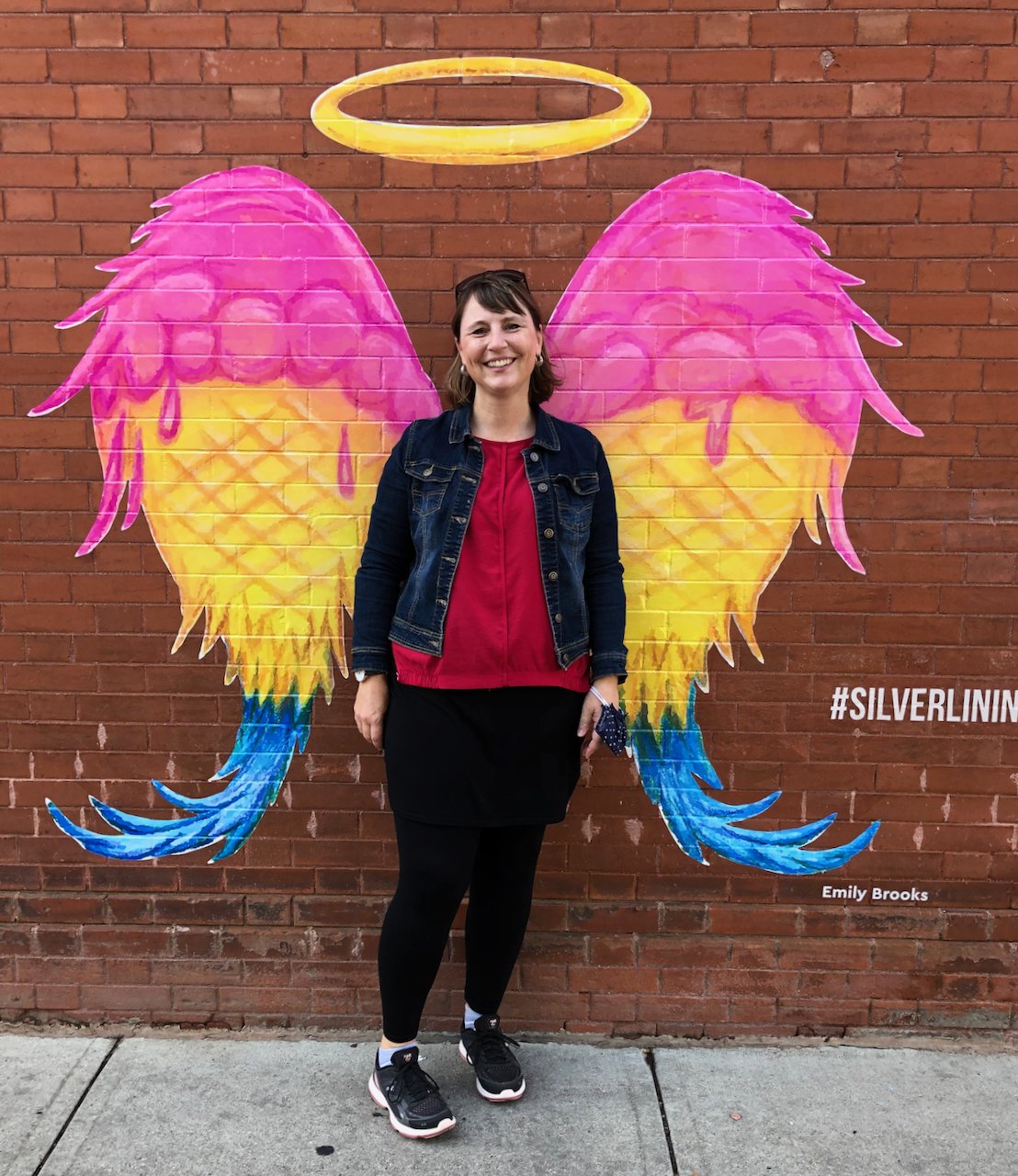
Dear reader, I’m travelling over 100 years after Karl returned from his trip around the world, and today marks my 100th Chronicle. Happy centenary post!
At this point in the Chronicles, I have travelled 8200km from Karl's home in Truro, Nova Scotia, west to Ontario, south into Illinois, north through Wisconsin, North Dakota and Manitoba, and then west to British Columbia. I have travelled through Ireland and Northern Europe, and the current Chronicles document my journey in Scotland.

For the last year, every Saturday I have posted a Karl Chronicle documenting my journey following Karl Creelman around the world. Today Dear Reader is Blog #50! To date we have travelled about 3000 km from Truro, Nova Scotia to North McGregor, Iowa, a mere fraction of our total journey planned around the world.
Scroll using the arrows below:
Leg 16 Homecoming
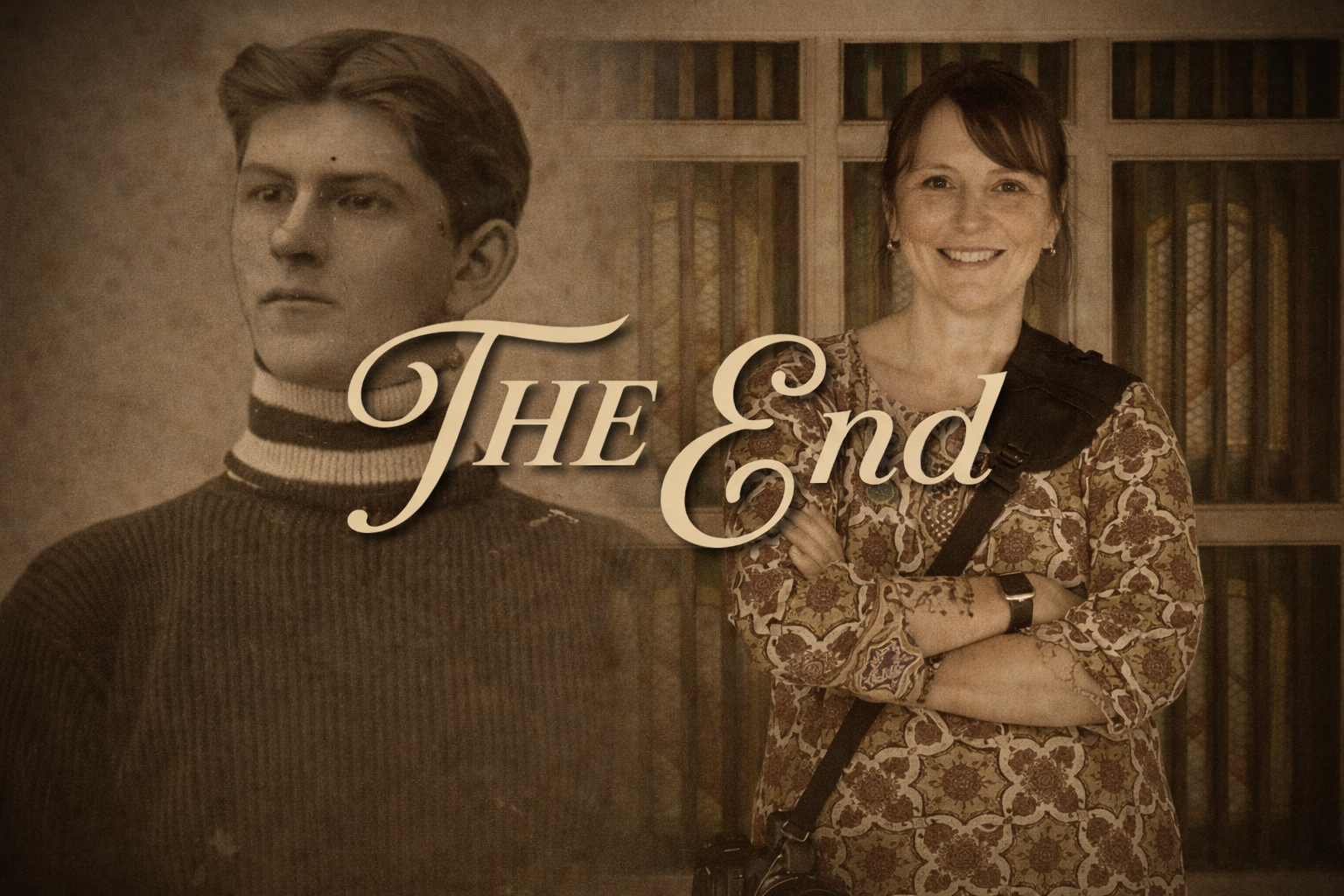
This final Chronicle reflects on legacy, not only as family lineage, but as story, trace, and impact. It considers what Karl left behind: descendants, records, photographs, and a journey significant enough to surface again more than a century later.
Drawing on books, archives, and personal encounters, this Afterword places Karl within the broader history of cycling, travel, and social change, while also acknowledging how following his path reshaped my own life as a traveller, photographer, and storyteller.
It closes the Karl Chronicles not with an ending, but with gratitude — for Karl, for the journey, and for the readers who travelled alongside it.
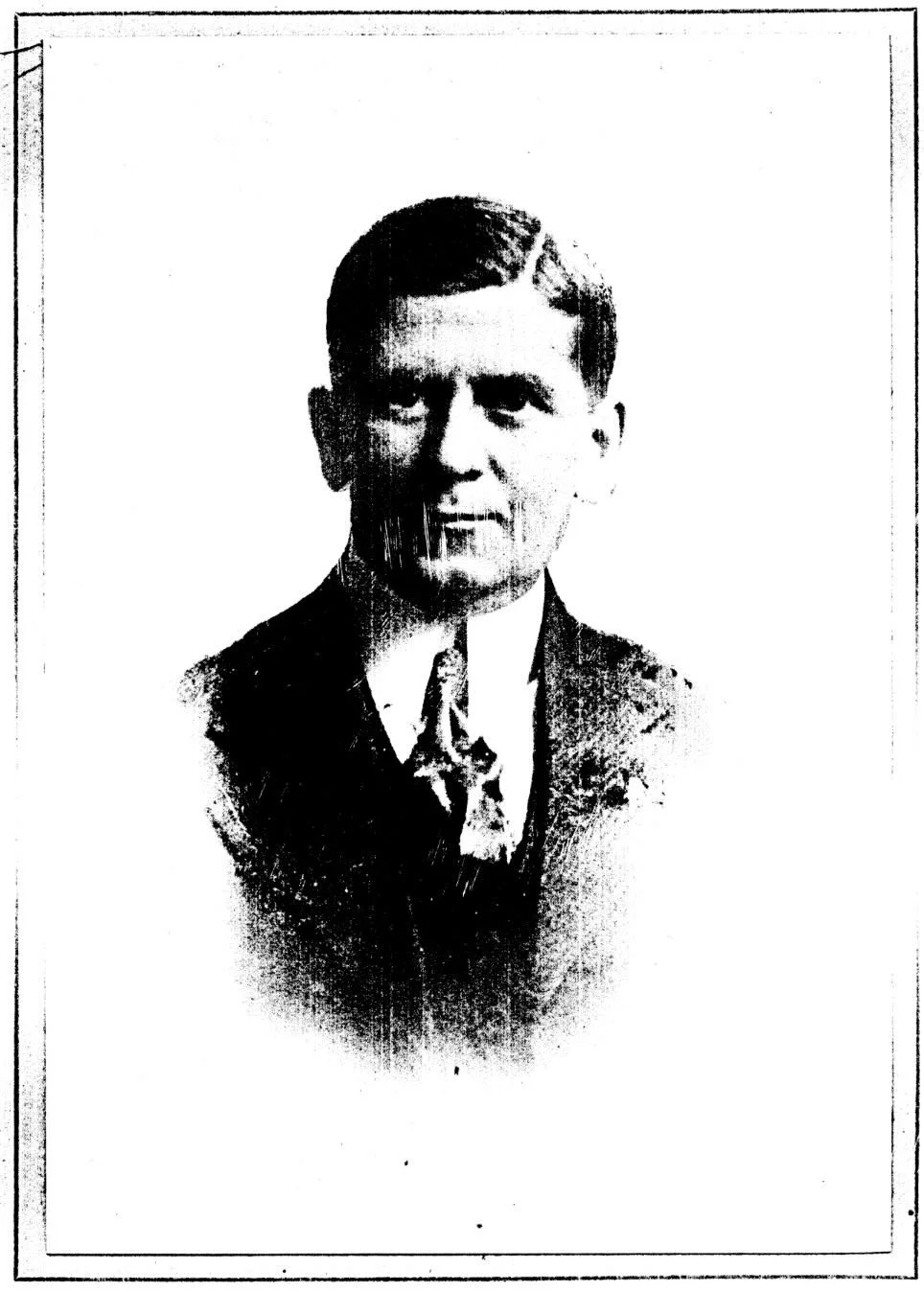
This Chronicle traces what came after Karl Creelman’s death — the lives of those who carried his name forward.
Drawing from estate records, marriage certificates, newspaper notices, and family accounts, this post follows Karl’s wife Marjorie, their daughter Margaret, and the generations that followed. It is a story marked by remarriage, loss, separation, and reconnection — including a decades-long search by Karl’s grandson to uncover his mother’s identity and his connection to the globetrotting grandfather he never knew.
The Epilogue brings Karl’s family history to a close, documenting what became of his descendants and how fragments of his story resurfaced generations later. It leaves us at the threshold of what comes next — not Karl’s life, but the life shaped by following his trail.
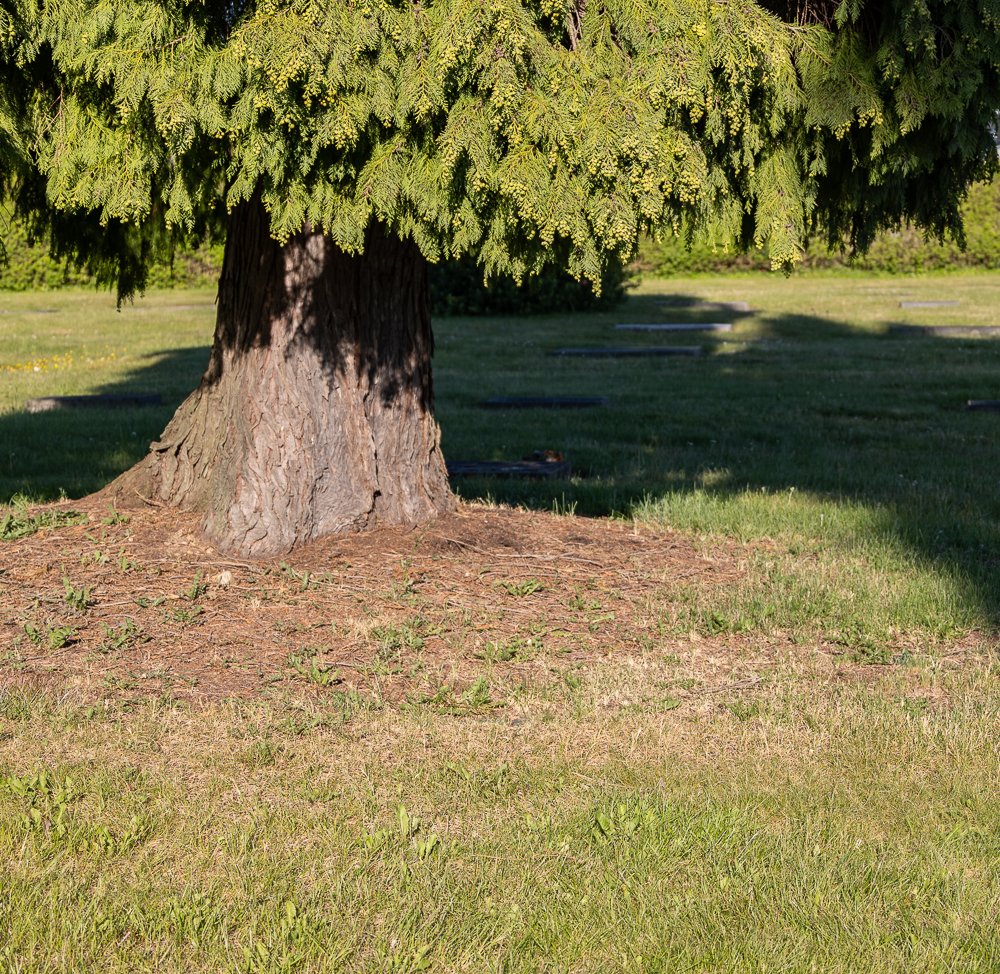
Karl was laid to rest at Ocean View Burial Park in British Columbia, a non-sectarian cemetery designed to be peaceful rather than monumental. With the help of cemetery records and staff, I was able to locate the exact plot where Karl is buried.
Though there is no stone at his resting place in Burnaby, Karl’s name is not unmarked. It is carved into his family’s granite monument in Truro, Nova Scotia, alongside his parents and siblings.
This Chronicle reflects on how we remember the dead, the meaning of marked and unmarked graves, and the quiet dignity of where Karl rests and where his name endures.
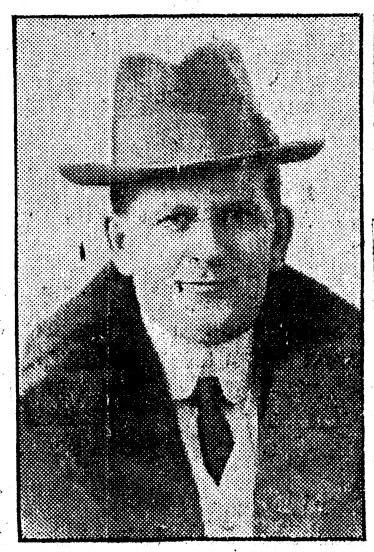
From rail work on the Prairies to life in British Columbia, newspaper clippings trace how Karl carried his world tour with him long after the bicycle was set aside. Even decades later, it remained the defining chapter of his life.
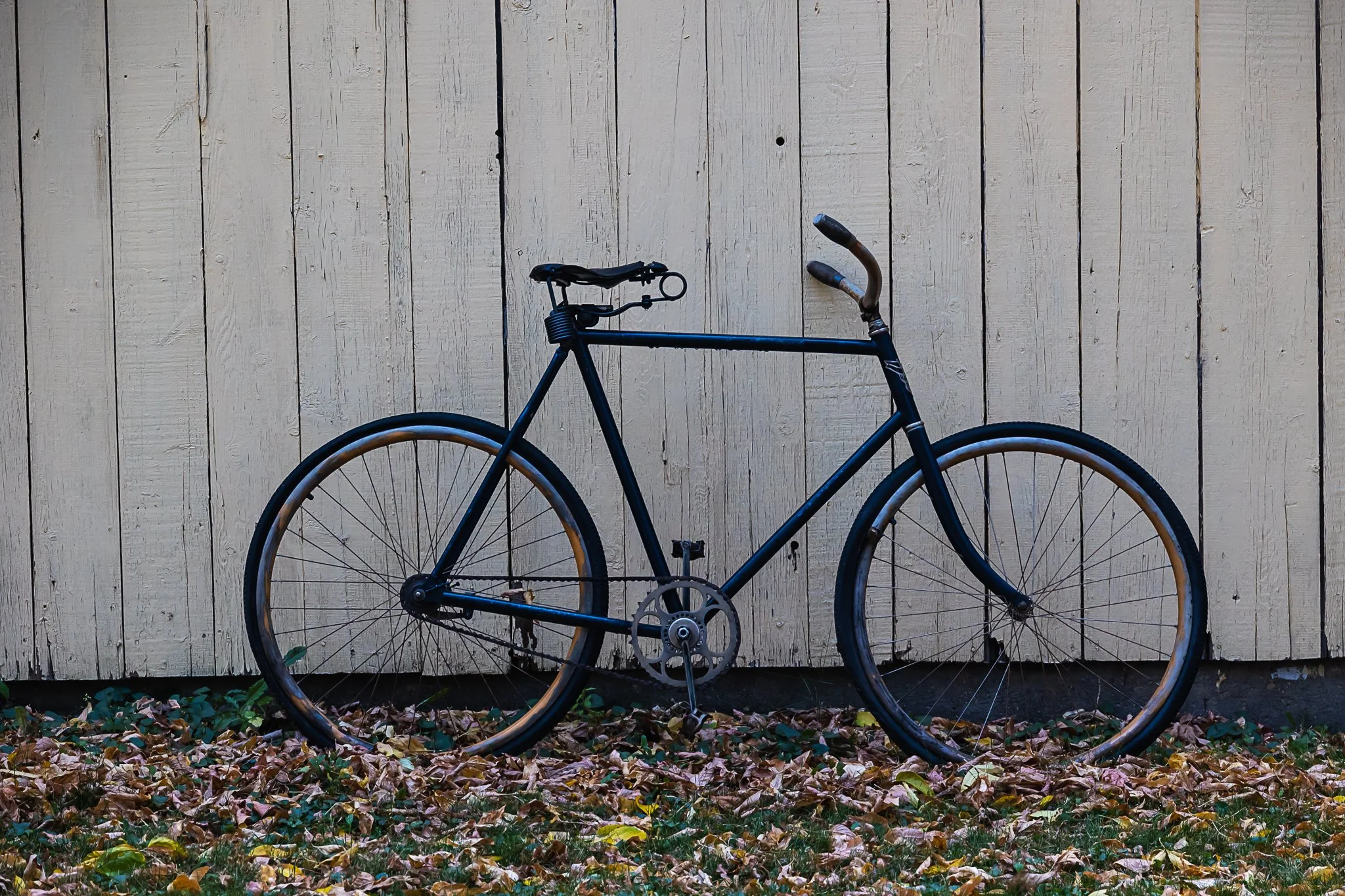
After years on the road, Karl’s next chapter begins in Winnipeg: marriage, railway work, and the heartbreak and hope of early parenthood. A tender look at the life he built after circling the world.
That mural set off a journey I never expected: five years, five continents, and more than 250 blog posts tracing a 21-year-old Nova Scotian who circled the globe on a bicycle in 1899.
Now, at this milestone post, I’m inviting you to join the story.
Welcome to the GlobeTrotter Time Capsule — a collection of mementos from Karl’s world, from my own, and from you, the readers who have travelled with us. Inspired by the great World’s Fairs and the long tradition of documenting life for future generations.
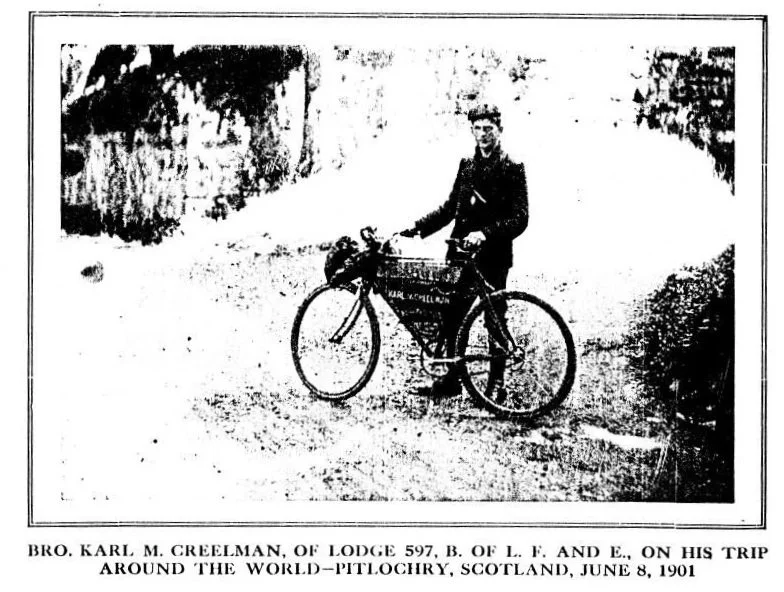
After his triumphant return to Nova Scotia, Karl didn’t stay still for long. This week’s Chronicle follows him west—through Winnipeg, Arizona, New Mexico, and California—as he worked as a mechanic, miner, sailor, and locomotive fireman before settling (briefly) in Winnipeg and joining the Brotherhood of Locomotive Firemen.
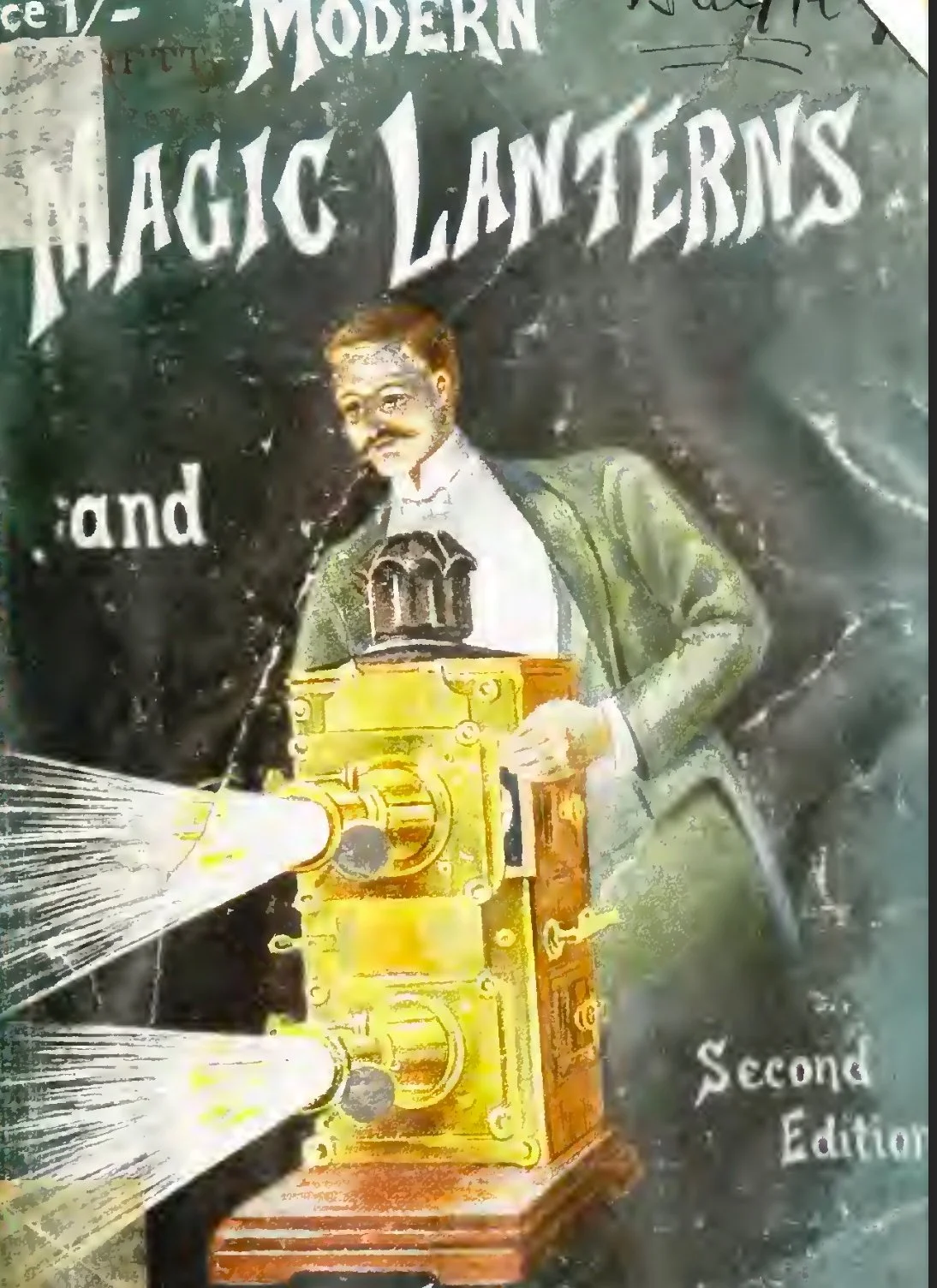
Karl’s lectures weren’t just talks — they were illuminated, literally, by magic lantern slides that transported audiences around the world.
This week’s post explores how those early projectors shaped Karl’s storytelling, and how modern presentations (even with a PowerPoint clicker) still echo that flicker of light.
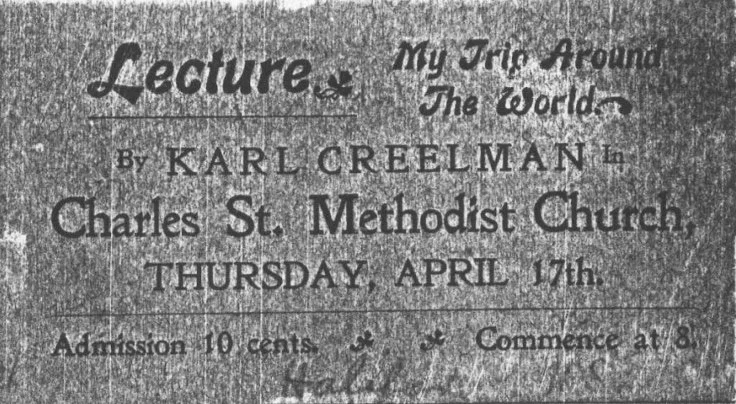
After his triumphant homecoming and packed lecture at Truro’s Opera House, Karl didn’t rest for long. Within days, the lecture circuit was underway.
Over four months, Karl delivered more than twenty lectures across Nova Scotia, filling halls and church basements, charming audiences from Stewiacke to the shore.
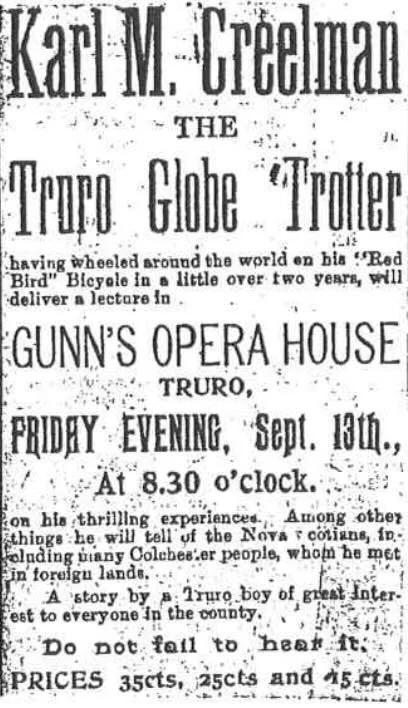
Nine days after his return, Karl was scheduled to give a lecture in his hometown.
The audience was captivated. The Daily News reported that Karl spoke clearly and without nervousness, mixing humour and observation as he traced his route with a globe at his side. The evening closed with “God Save the King” and the cheers of a town still amazed that their local cyclist had indeed circled the world.
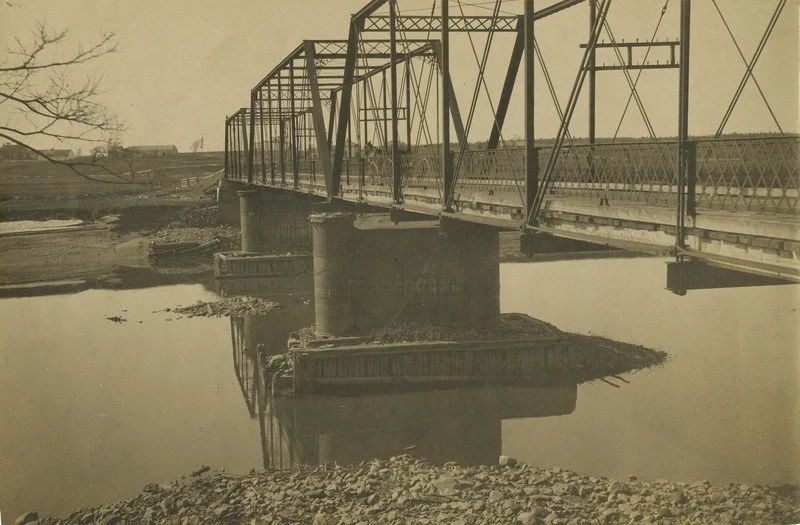
About five miles out of town, twenty cyclists formed a guard of honour to escort him the rest of the way. Karl had travelled over 50,000 miles, a journey that took 2 years, 3 months, and 24 days. He had cycled 16,000 miles, walked 2,000, and sailed more than 34,000.
During his travels around the world, Karl wore out 15 pairs of shoes, 5 sets of tires, and 3 bicycle chains.
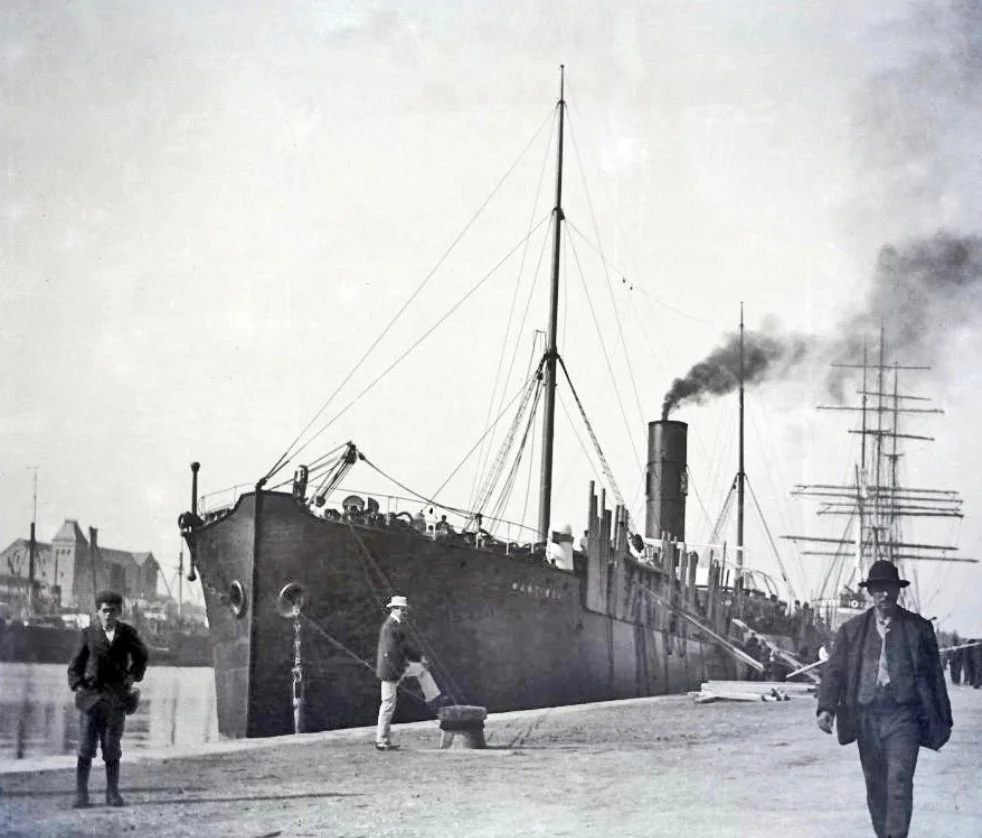
Karl left Truro, Nova Scotia, on May 11, 1899, cycling across North America (through both the Dominion of Canada and parts of the U.S.), through Australia—from Victoria to Queensland—and continued his journey by bicycle through Sri Lanka, India, Egypt, Scotland, Ireland, Holland, Belgium, Germany, France, and England.
Scroll using the arrows below:
Leg 15 Sri Lanka

Sri Lanka was meant to be three weeks; it became two.
And somewhere between Colombo and Kandy, I met Chandana—the driver who became the quiet constant of this final stretch of Karl’s route.
From WhatsApp messages to morning greetings months later, his kindness stitched this journey together.

But beneath that surface, the seeds of Sri Lanka’s modern challenges were already being sown, though likely invisible to travellers like Karl. Language, religion, and identity were beginning to polarize. English-speaking Tamils often held civil service jobs, while Sinhalese Buddhists were experiencing a revival of religious and cultural pride. These early divisions would, over the coming decades, deepen into conflict.

During Karl’s ride between Colombo and Kandy, he noted passing the tea plantations along the way. Today’s post takes us just outside Kandy, Sri Lanka, where I visited the Ceylon Tea Museum and explored the history of a drink that has been central to both Empire and everyday life.

Kandy takes its name from the Sinhala word Kanda, meaning “mountain,” an apt reflection of its hilly, inland location in central Sri Lanka. The Kingdom of Kandy, founded in the late 15th century, was the last Sinhalese kingdom to fall, resisting Portuguese and Dutch forces before finally succumbing to British colonial rule in 1818. While other kingdoms fell by the early 1600s, Kandy held out for two more centuries.

From water buffalo at dusk to playful monkeys at dawn, Habarana Village felt like the heart of Sri Lanka.
It was the perfect base for exploring Sigiriya, Dambulla, and Minneriya National Park — where I finally saw Sri Lanka’s famed elephants. Karl, meanwhile, was pedalling past cinnamon gardens on his way inland.

Sigiriya’s Lion Rock. 1,200 steps. I made it to the Lion’s Paws — 900 up — before heat, crowds, and common sense made me stop. No regrets.
The next morning, first in line at Dambulla. Five caves, 150 Buddhas, murals everywhere. Quiet, cool(ish), magical.
Karl kept moving inland. I got happily sidetracked.

While Karl was eager to escape the bustling port of Colombo and pedal into Sri Lanka’s interior, I wanted to stay and wander. My starting point? The past. I spent my time exploring the city’s layered colonial history, searching for buildings and places that shaped Colombo 125 years ago when Karl arrived.
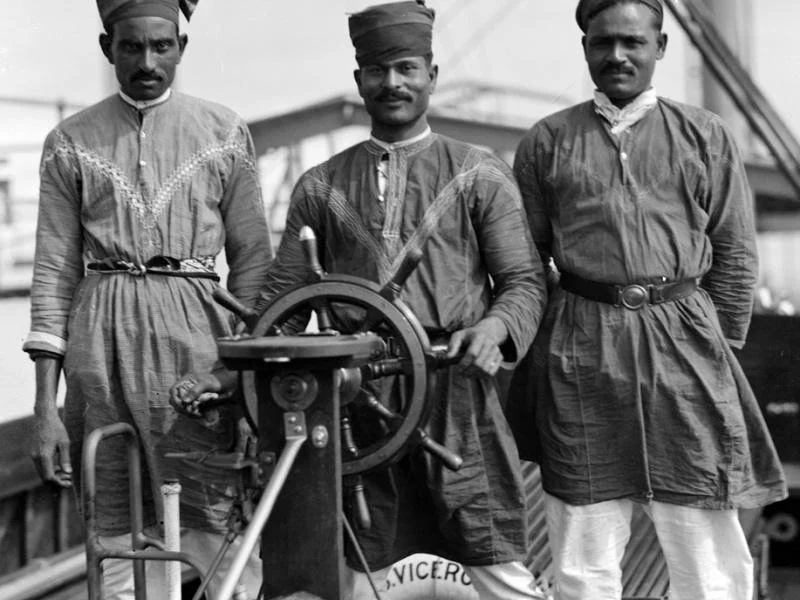
After 26 gruelling days tending 230 horses aboard the S.S. Bezwada, Karl was “done with ship life.” When they docked in Colombo on October 4, 1900, he was ready to explore.
But first—chaos. A bucket of bran slipped from his hands and straight into the curry lunch some sailors were having on the deck.
Karl appreciated they were angry, but he had to continue, feed the horses and then step ashore.
Ceylon awaited.
Scroll using the arrows below:
Leg 14 Australia

Karl arrived in Melbourne on a battered lumber ship after 87 days at sea — Christmas, New Year’s, and his 22nd birthday all spent aboard the Ivy. From there, he cycled through Victoria and New South Wales, faced Australia’s worst roads, and pushed north through Queensland, worn down but determined.
I took the same route with some sidetracks through New Zealand, Uluru, a stop to see the Big Pineapple, Bowen’s Big Mango, and a retreat to Port Douglas.
Karl left Australia weary, backtracking for weeks before finally working his way aboard the S.S.
Bezwada with 230 wild horses bound for India.

From Newcastle, Karl boarded the S.S. Bezwada — and 230 wild Walers. His days ran from 5 a.m. to 8:30 p.m., feeding, watering, and wrangling the unbroken horses bound for India’s Bengal Lancers.
En route, the ship hit a reef, leaked, and even caught fire before reaching Thursday Island. Despite kicks, bites, and long hours, Karl managed to get his lot “somewhat tamer” before the next leg to Colombo.

Karl reached Townsville, aiming for a ship to China — but the Boxer Rebellion had changed everything. Australia’s naval forces were deployed, and ships were full. He turned back.
In Brisbane, he lectured again and found a spot working on a cargo ship to Sydney. He was ill for most of the journey, earned two shillings, paid one for his discharge papers, and got an “O.S.” stamped in his book: Ordinary Seaman.
Eventually, he arrived in Newcastle, where he gave another talk — this one featuring phonographs, violin solos, and a serio-comic number.

Banana plantations, croc-spotting, and barefoot beach walks — I may have wandered off Karl’s path, but I found my groove in Far North Queensland.
Port Douglas was the perfect place to wind down my Australian chapter: quiet, lush, and just humid enough to make every swim feel earned. Between flat whites and Four Mile Beach, river cruises through the mangroves, and yes, a few crocodiles (seen from a very safe distance), I found space to reflect — and write a love letter to my most loyal travel companion: the banana.

In 1900, Karl reached Townsville after battling rough tracks, wild heat, and a plunge into a creek with alligators nearby.
He was “heartily sick of Australia,” he wrote — and I started to feel the same. I followed his path north, but cyclone warnings, flash floods, and a six-hour drive through sugarcane fields made the journey unforgettable.

Karl travelled from Mackay to Bowen, arriving on Sunday, June 30. From there, he wrote a letter to his sister Mattie. At first glance, his route cycling inland to Charters Towers before heading to Townsville might seem like an odd detour. But in fact, it was a smart move: the North Coast railway connected Bowen to Charters Towers, making the journey more efficient for a cyclist able to follow the tracks.
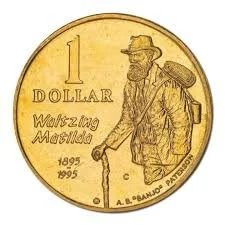
In Australia, the term was different: they were called “swagmen” or “swaggies,” named after the rolled-up bundle, the “swag” they carried.
So, whether you call it tramping, swagging, or waltzing Matilda, Karl wasn’t just observing; he was seeing echoes of himself. A man in motion. A vagabond of sorts, living, in many ways, off the generosity of strangers.

Karl left Rockhampton with a studio portrait in hand, dengue in his system, and dingoes tracking him in the bush.
Despite the odds, he made it to Mackay—where the town hosted a concert in his honour (initially a “smoke concert,” it was opened to women thanks to local support). After his second public lecture, the night ended in dance, applause, and admiration for the young cyclist’s grit.
Alongside the fanfare, Karl was learning: about Queensland’s sugar industry, its complicated history of labour, and the agricultural backbone of towns like Mackay. He wrote home to his younger sister, sending her a postcard of cane fields and workers, adding simply: “You never saw sugar cane growing did you…”

Karl saw the mine—but to understand the full force behind Mount Morgan’s success, I visited the Mount Morgan Railway Museum.
Once an engineering marvel carved through the Razorback Range, the Mount Morgan Railway transported coal, timber, machinery—and even millions of gallons of water—to power the richest gold mine in the world.
Rail Coordinator Eve-lyn Rogers, this week’s Guest Chronicler, brings this fascinating story to life—revealing how this rail line didn’t just serve the mine, it sustained an entire town.

In a letter to the Truro newspaper, Karl recounted a question he heard repeatedly while visiting Rockhampton: "Have you seen the Mount?" He admitted he hadn't, but once he asked around, he learned the locals meant Mount Morgan—“a mountain of gold” located 35 miles away, and discovered just 15 years prior.

By June of 1900, Karl M. Creelman wasn’t just cycling north through Australia — he was stepping into a new role: public speaker. The local press covered the entire evening, and the Montreal Star and the Truro Daily News later picked up the story.

Karl pedalled into Bundaberg at ten minutes to one on May 24th—just in time for a bite to eat before heading straight to the post office to have his travel book attested. No time wasted.
![A spoonful of [cane] sugar - Karl Chronicles - Post #223](https://images.squarespace-cdn.com/content/v1/5764075d414fb5b78c13d72f/1748564917157-POEMRYNI35FXVXII88WZ/E13A6106.jpg)
Karl stopped in Maryborough in 1900 to rest — a quiet pause in a town bustling with industry, sugar cane, and steam trains.
I arrived expecting history and architecture… and instead was greeted by Mary Poppins.
Yes, Maryborough is the birthplace of P.L. Travers, creator of the magical nanny herself. The traffic lights even change from red umbrella-down to green umbrella-up. 🖤☂️
I wandered through The Story Bank museum, marvelled at 19th-century civic buildings, visited the old Post Office to get my Karl book stamped, and imagined Karl raising a pint at the Post Office Hotel in 1900.
Sugar, steam, and just the right dash of whimsy.

Karl left Brisbane on May 1st and arrived in Gympie on May 20th. According to the local papers, the roads Karl travelled between these two locations were the worst he had encountered so far.
As for me — it also took some time to reach Gympie, but for a very different reason. I was happily sidetracked, taking advantage of travelling through Australia’s famous “Sunshine Coast.”
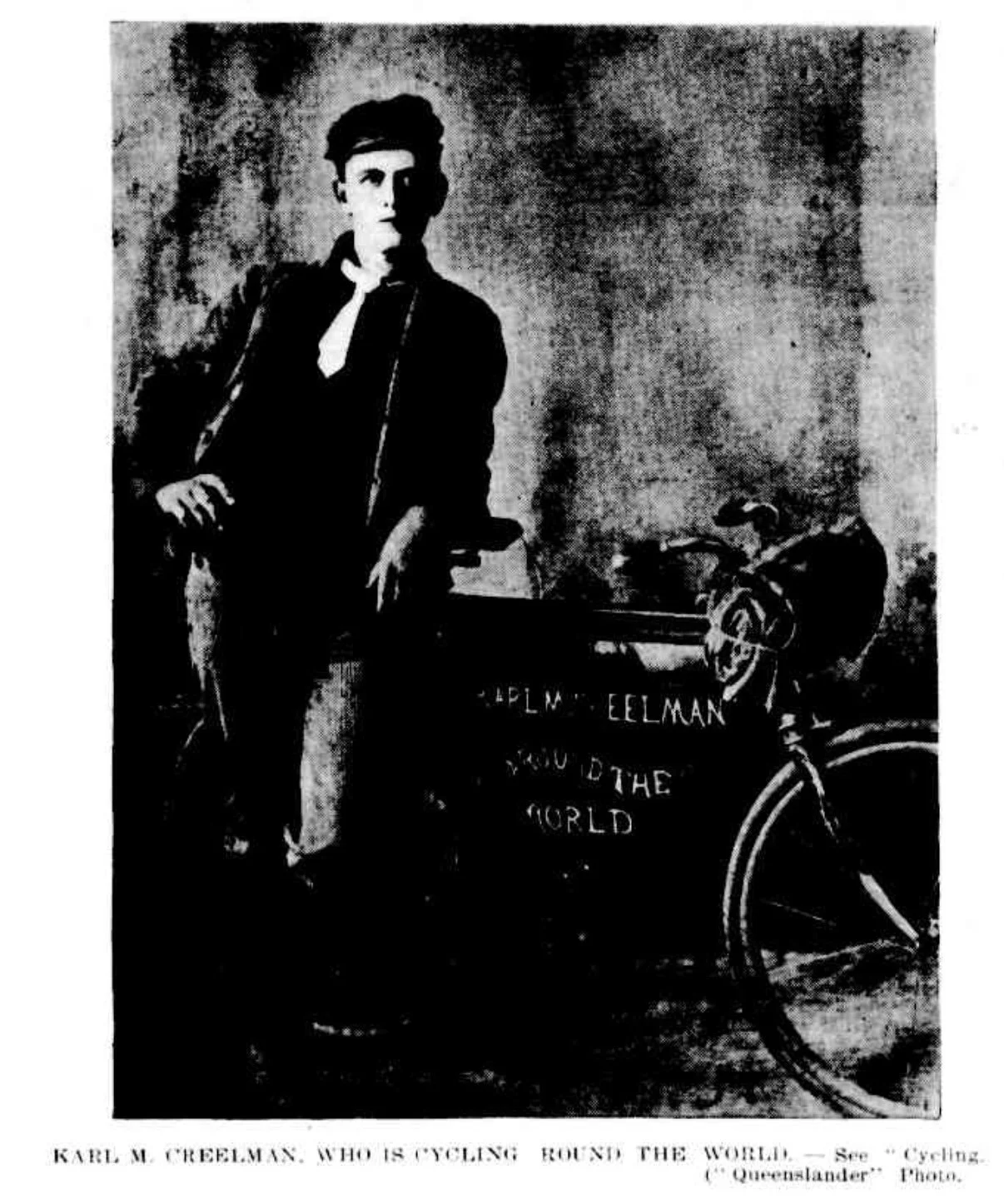
When Karl rode into Brisbane in May 1900, he was greeted by Mr. Dusinbury from the Goold Company. The local bicycle agent showed Karl around the sights of Brisbane and also took him for a visit to the Observer office, the local newspaper where he was met with a photographer.

While Karl’s actually from Truro, not Toronto, I’ve enjoyed reading these old newspapers. For my dedicated readers, you’ll know Karl is rather silent regarding food. He rarely mentions what he eats, only noting the fresh fruit or meals he sees others enjoying along the way.
That said, I thought exploring what Karl could have been eating during his travels in Australia might be fun. I came across this excerpt from The Table, a regular column in the Muswellbrook Chronicle, featuring these seven recipes:

Karl wrote a letter to the Truro News on April 4, 1900, from Newcastle: "Arrived from Sydney this afternoon, and as the rain is coming down too much for travelling, I will drop you a line, just to let you know everything is going ok."
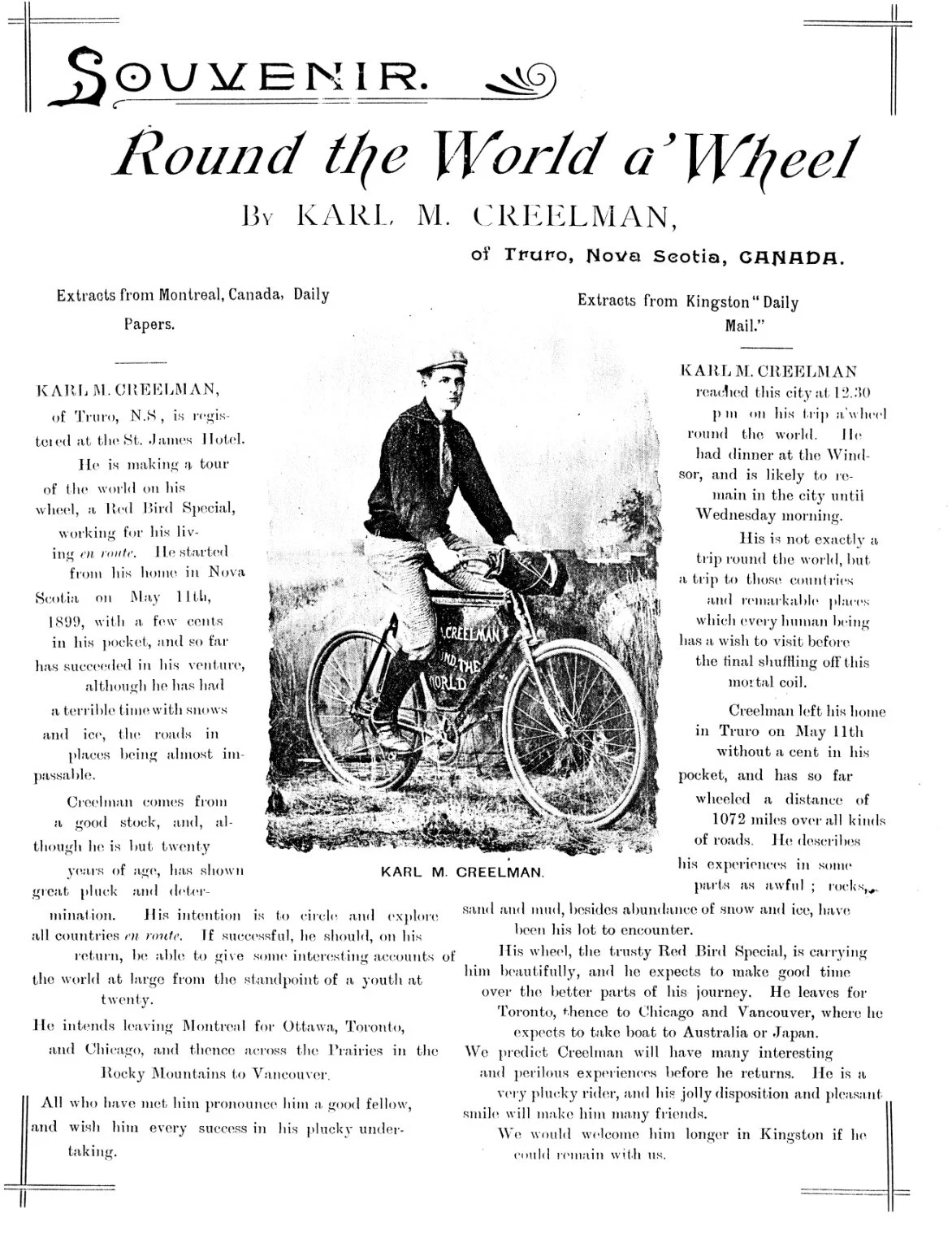
He may have been underestimated initially, not appreciating his pluckiness. But as these newspaper excerpts show, Karl proved himself time and again across continents with each mile pedalled on his trusty Red Bird.

When Karl arrived in Australia, his Red Bird bicycle was already causing quite a stir in the local cycling community. In a letter he wrote to the Canada Cycle and Motor Company* from Sydney on April 4, 1900, Karl sang the praises of his trusty bicycle:
"After some 5,400 miles sometimes through the roughest of country, with eight or nine hundred miles on the railway track in different parts of Canada and the United States... The 600 miles in Australia from Melbourne to Sydney is extremely rough, rocky country and altogether I have ridden over 6,000 miles on this 'Red Bird'. Today it is as good as new except the enamel being knocked off in places, and I would not exchange it for a new wheel of any other make. I am satisfied I can ride the same wheel until my trip is finished."

“Karl M. Creelman, the cyclist from Nova Scotia who is wheeling around the world on his bicycle and who has been the guest of the Rev. H. A. Robertson, Balmain, these last two weeks, left the GPO., George-street, yesterday morning for Parramatta, thence to Queensland, going as far north as Cooktown, thence to Japan and China.”

Karl visited many of the same tourist sites that remain popular today. For this chronicle, I’d like to extend some hospitality and share the sights of Sydney—both the places Karl explored and one iconic landmark that hadn’t yet been built in his time.

"On arriving at Sydney I was hunted up by Rev. H.A. Robertson, missionary to Erromanga who made me go to his house at Balmain, one of the suburbs of Sydney, where I stayed, and was used with the greatest of hospitality. I felt right at home and was sorry to take to the 'bush' again for Queensland. They showed me the sites of Sydney: the Zoo, the Botanical Gardens; also took me to see and hear the organ in the city hall - the largest organ in the world. Thirty-six years ago Mr. Robertson came to Australia in a sailing ship, 'The Dayspring', but I think they were a better class of people aboard of her than on the one I was on."

The best way to get from Melbourne to Sydney today is the A1 Coastal Route—winding along Australia’s southern coastline, with ocean views and sleepy beach towns. That’s the way I would have gone. But in 1900, Karl didn’t have that option. The A1, otherwise known as the Princes Highway wouldn’t be built until 1920, which left the Hume ‘Freeway’—now the M31—but at the time it was barely more than a track through the bush. Karl’s route was the same overland path first mapped in 1824 by Hamilton Hume and William Hovell, later worn in by drovers, mail coaches, and an increasing number of long-distance cyclists.

Just days before Karl’s arrival, the Department of Public Health of New South Wales published an eight-page handbook on March 1, titled Prevention of Plague: Instructions to Householders. At the time, the transmission of the disease was poorly understood, and authorities believed it had been introduced by diseased rats, with the potential for widespread devastation.

From crocodiles and snakes to sharks, jellyfish, spiders, and wild dogs, Australia has no shortage of animals that could theoretically ruin your day—or your life. As a tourist, you have to be pretty savvy when differentiating between venomous and non-venomous, or between a cute stray dog and a baby-snatching dingo.

Described as a rebel and outlaw by some and a folk hero by others—bush battler, underdog, part-gentleman, part-larrikin, and fiercely loyal to his family—Ned Kelly stood as a complex figure.

The 1880 exhibition was considered the greatest show Melbourne had seen, attracting more than three million visitors and bringing cultures, technology, and ideas from across the world. Thirty-three nations participated, and over 32,000 exhibits were displayed, including contributions from Great Britain, France, Germany, India, Japan, China, the USA, and all Australian colonies.

The horse races at Flemington Racecourse in Melbourne around 1900 were grand affairs, embodying the charm and excitement of the Victorian era. Flemington was already a prestigious venue, home to the iconic Melbourne Cup, which had been running since 1861 and was firmly established as "the race that stops a nation."

So, having embarked on a harrowing 87-day voyage aboard the leaky lumber ship Ivy, enduring gruelling work, severe storms, and challenging conditions, Karl sailed from Vancouver to Melbourne, Australia. Despite learning valuable seamanship skills, Karl vowed never to work on a sailing ship again after being underpaid and mistreated, marking the end of his voyage to Australia.
Leg 13/14 Travelling to Australia

The South Island greeted me with its dramatic landscapes—a place where snow-capped peaks rise above fjords, pristine waterfalls tumble into deep valleys, and dolphins play in turquoise waters. Known for its untamed wilderness and striking beauty, the South Island is a photographer’s paradise.

Karl’s original plan included visiting New Zealand. You might recall Chronicle Post #4 and the Truro Daily News article from March 18, 1899, titled "Truro Boy Will 'Wheel' The World." His proposed route was ambitious and originally included New Zealand.
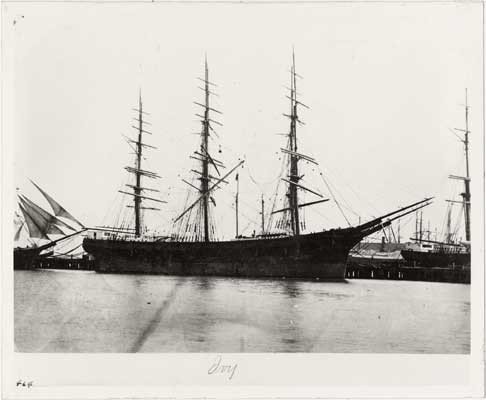
Shortly after gifting a young mountain cat to the Vancouver hotel proprietor, Karl set sail for Australia. Over six months and ten days had passed since he departed Truro, Nova Scotia. By then, Karl had cycled more than 5,300 miles and walked over 700 miles due to poor road conditions. His adventures so far included having his brand-new suspenders stolen in Chicago, getting lost between Swift Current and Moose Jaw, Saskatchewan, and being chased by “vicious-looking ranch cattle” near Fort Macleod, Alberta. But the voyage to Australia would become one of Karl’s greatest challenges yet.
Scroll using the arrows below:
Leg 13 Out West

Two years later, I’m reconnecting with Karl’s path, starting in Crowsnest, BC, to complete the final North American leg of his journey. Over the past 23 posts, we’ve followed Karl across rugged terrain, burgeoning towns, and rich historical landscapes. Let’s take a moment to retrace some highlights from this chapter of his adventure:
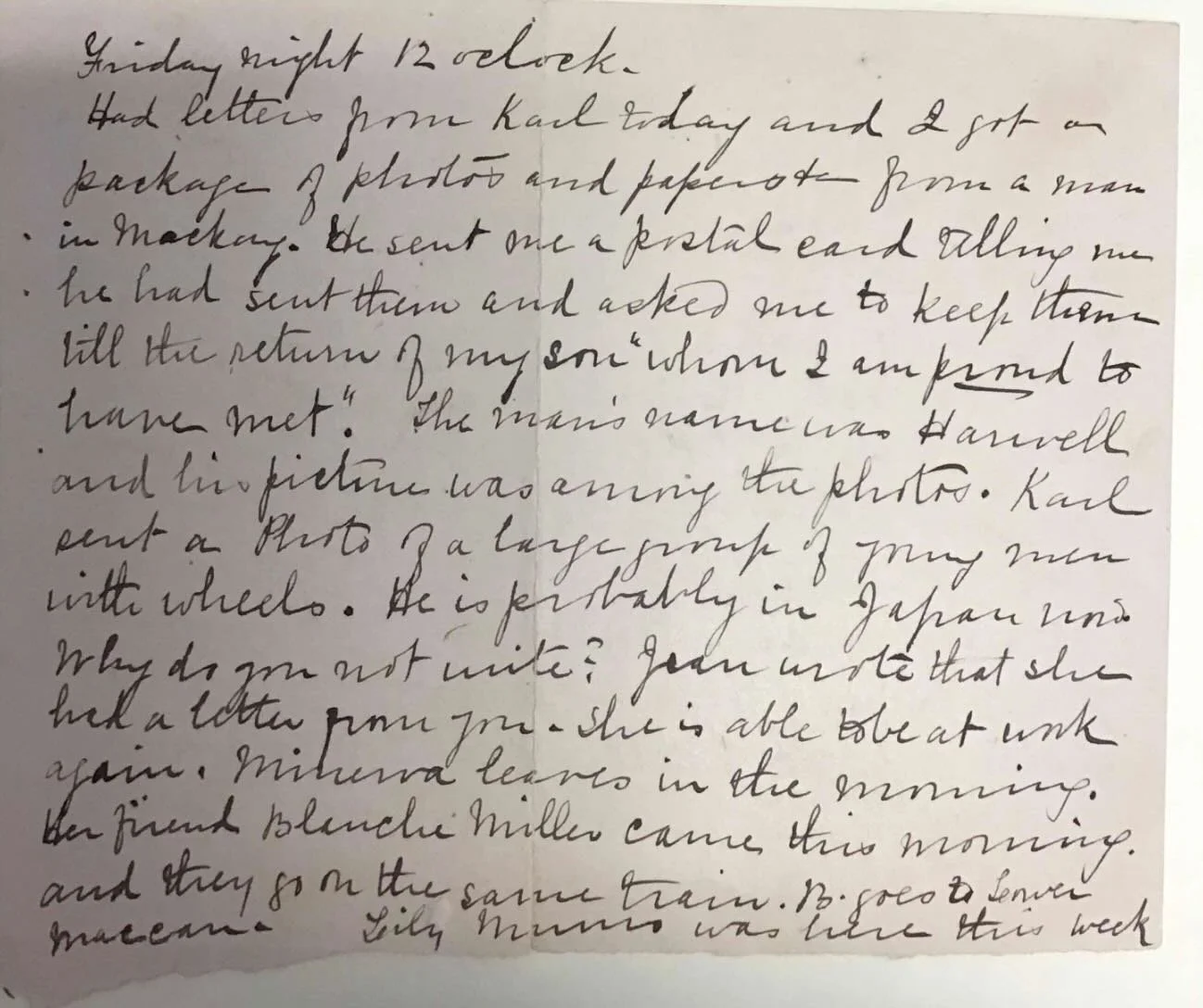
t the time, Karl was wrapping up his travels in Vancouver and seeking passage on either the Empress of Japan or the Empress of China. However, due to the Boer War, he altered his plans and arranged to sail aboard the Ivy for Sydney, NSW, Australia, working his passage “before the mast.”

While Karl stood in awe of the majestic mountains and prairie skies, I was equally captivated by the massive roadside oddities along my journey across North America. These giant sculptures are as iconic as they are whimsical, part of a longstanding tradition of novelty architecture.

Port Moody is about 13 miles east of Vancouver. During the fur trade, the Hudson’s Bay Company used Port Moody to bring supplies to Fort Langley. But in 1881, as the Canadian Pacific Railway (CPR) built the 3200km track across Canada, Parliament decided that the Western Terminus would be Port Moody.

Karl wrote four letters to his sister, Mattie, during his stay, using the hotel’s stationery, which proudly advertised itself as "The Most Central and Oldest Established Hotel in the City," located directly across from the Hudson’s Bay Outfitting Stores. At the time, the Oriental was owned by John Meikeljohn and managed by Harry Edwards, a fellow Nova Scotian from Halifax.

On November 13, 1899, the Vancouver World published the following article they titled: A Talk with Creelman:
Karl M. Creelman the young man who is traveling around the world on a bicycle, gave the world a call yesterday afternoon. A decidedly interesting youth is this Nova Scotian and judging from what he has already gone through is grit to the backbone, and as game as a race horse.

When Karl passed through, the area was booming with sawmills, tapping into Washington’s rich timber resources. By 1926, the first pulp and paper mill was built and operated until 2001. During my visit, I photographed the old pulp and paper mill industrial site, featuring the 438,000-pound Acid Ball and the iconic Digester Tanks.

Mt. Erie offered another breathtaking vantage point, leading me through a forest trail to its summit, the highest point on the island. I ended my trip at Cap Sante Park, with stunning views of the marina and the surrounding landscapes.

After leaving Seattle, Karl cycled northbound to Vancouver while I took a detour through Whidbey Island and Fidalgo Island. Nestled between Seattle and Vancouver, these islands are rich in history, especially connected to Captain George Vancouver.

Karl arrived in Seattle six months after the great fire of June 1889. Although there was an immediate commitment to rebuild the city after the destruction, it was far from being the vibrant city it is today.

Similar to the blame placed on Mrs. O’Leary and her cow, the cause of the Seattle fire was allegedly a woodworking assistant who overheated a glue pot in a carpentry shop on June 6, 1889. The glue boiled over and ignited the floor covered in turpentine and wood chips. Many businesses were below grade, and the streets were planked with wood, making it difficult to extinguish the fire, which burned for 12 hours.

Originally called Icicle Flats, the area was settled around 1885 as a trading post between the first European settlers and the local Indigenous Americans. However, by 1890, Icicle Flats grew as gold, timber, and fur seekers flooded the region, and the town was renamed Leavenworth. The railroad's arrival at the turn of the century fueled rapid growth, transforming it into a bustling logging hub. But the town's fortunes declined sharply when the railroad rerouted its tracks. For over thirty years, Leavenworth hovered on the brink of becoming a ghost town as businesses shuttered and families moved away in search of better opportunities.

Before Spokane was founded in 1873, the Spokane First Nations lived along the Spokane and Columbia rivers, relying on these waterways for fishing and gathering. Their lives changed dramatically as white settlers arrived, leading to conflicts and establishing a much-reduced reservation in 1881.

In December 1896, two railway lines connected Rossland, Canada, to Spokane, Washington. A train station and port of entry were established, named Sheep Creek after a nearby stream. Karl’s travel book includes a Canadian Customs stamp dated October 15, 1899, from Sheep Creek, when he crossed the Canadian border into America.

The Knights of Pythias was the first fraternal society to receive a charter under an act of Congress in the United States. And perhaps, dear reader, it’s heartening to think that Karl Creelman became part of this tradition. This Canadian traveller found friendship and support within those walls, his room, board, and writing paper offered as a small act of charity by this noble fraternity.

Hard-rock mining in Rossland was gruelling work. The miners had to dig and drill deep into the earth, often descending over 1000 feet (305 metres) into the ground. To reach these depths, hoist systems became essential, as they allowed miners and their equipment to be lowered into the shafts and raised back up with loads of ore. While this method was far more effective than earlier ones, such as ladders or buckets, it still carried significant risks.

A flurry of mine establishments soon followed on Red Mountain, with operations like Centre Star, War Eagle, Josie, and Black Bear extracting gold, copper, silver, and zinc. Then, a building boom ensued, with homes, schools, churches, saloons, courthouses, and shops rapidly filling the new city’s landscape.

"...I have visited the famous LeRoi mines here and at Moyie I saw the newly discovered lead and silver mines. There is any amount of copper, gold, silver and lead, in nearly every hill in this great country and it will not be long till British Columbia will be the greatest mining country in the whole world."

You see, dear reader, the recent opening of the American West in 1865 after the American Civil War had led to social anarchy that sometimes spilled over the border. All the land west of the Mississippi River to the Pacific Ocean was considered the Wild West for a reason. The frontier was a place of regular gun battles, outlaws ruling in small towns, banks routinely robbed, and brawls in saloons were commonplace.
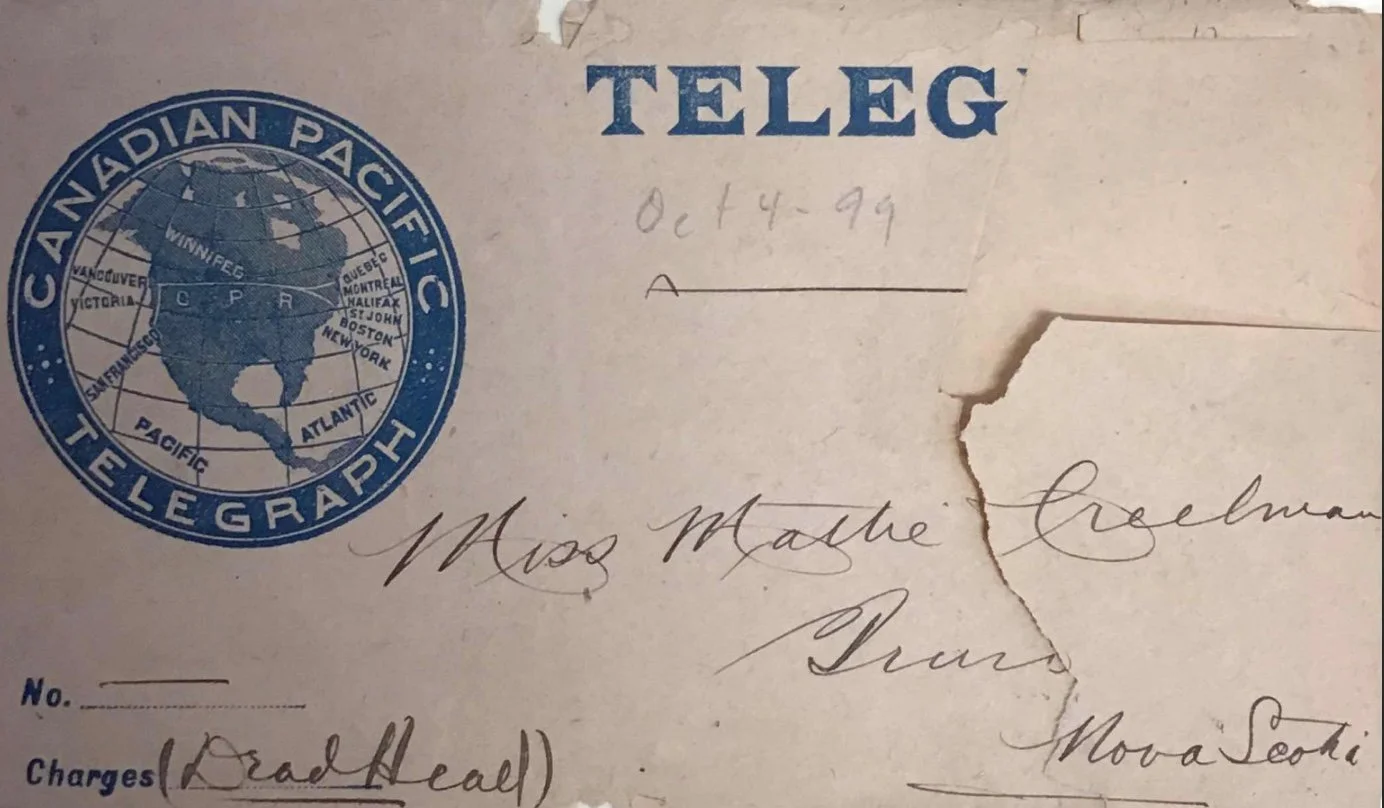
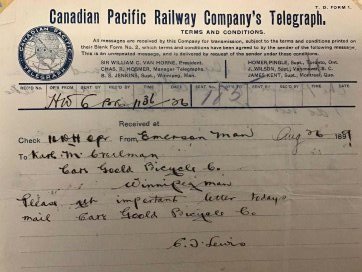
On October 4, 1899, Karl wrote a letter to his younger sister Mattie from Moyelle (now Moyie), British Columbia. He used telegram paper from the Canadian Pacific Railway.

Karl was having difficulty travelling through British Columbia due to railway construction and recent forest fires. Despite these challenges, his timing improved as the railway stations in Elko and Cranbrook had been established just the previous year, providing Karl with better riding conditions.

Before Karl’s journey, William Fernie, a prospector, expected to find coal in this valley area due to earlier discoveries at Crowsnest Pass and information provided to him from the First Nations people of British Columbia. Fernie arrived in 1887, working to raise money to mine coal and build the railway so that he could export the coal.

It was reported in some of the local papers that during this portion of his ride, he met with an “exciting adventure and was attacked by a drove of Western Range wild cattle”.
Scroll using the arrows below:
Leg 11 / 12 England & Wales
Having completed Karl's journeys through Ireland (Leg 3) and Scotland (Leg 8), this last journey (Leg 12) was to revisit all the locations he explored in England and Wales. I started in London, then travelled by train to Wales, progressing west and north, crossing into England at Chester, and meandering through the northeast, retracing Karl's path to the border of Scotland.

Dear reader, although there may be some bias in my opinion, the Northumberland coast—the 100-kilometre stretch of coast from Cresswell in the south to Berwick-upon-Tweed in the north—has the most beautiful landscape in England. Miles and miles of seemingly never-before-explored beaches dotted with majestic castles, idyllic villages, seaside restaurants, and cozy pubs. So, before crossing the northern border to Scotland, I sidetracked to visit Bamburgh Castle and Holy Island.

“The Duke of Northumberland resides at Alnwick in a large stone castle, on top of which are some iron figures of men, with rifles in their hands, put there as a sign to the Scotchmen that in the castle they were always on the watch for the foe, in the days of the bitter struggles between the people of England and Scotland.”

Just now, England, with its green fields, stone walls, hedges, gentle hills, trout streams, and an occasional clump of trees, makes an ideal country for tourists, especially cyclists, as the roads are smooth and of a good hard surface. Every mile or so one comes to a village or a small town, which, with their long stone terraces no more resembles a town of America, than an egg resembles an apple.

(Daily News Hull, England)
ROUND THE WORLD ON A BICYCLE
Mr. K. M. Creelman in Hull
Interesting Interview - April 28, 1901
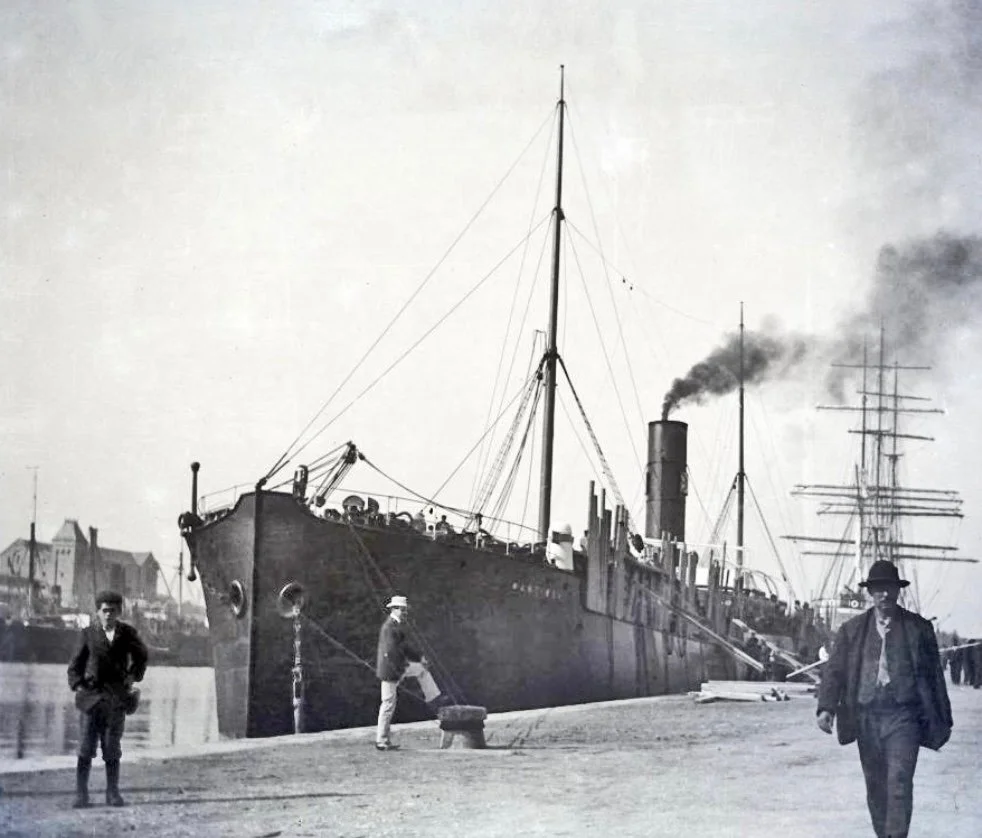
In Karl’s documentation, there is a page dedicated to his journey titled SS “Mantinea”, dated August 29, 1901, St John, N.B., certifying that "Karl M. Creeman shipped on board the above-named vessel from Manchester on the 14th of August 1901, and that she sailed from Eastham Locks on the 16th at 10 pm and arrived in St John on the 29th at 1:30 am, covering a distance of 2719 miles in 12 days and 3 ½ hours." Signed by JB. Kehoe, Master.
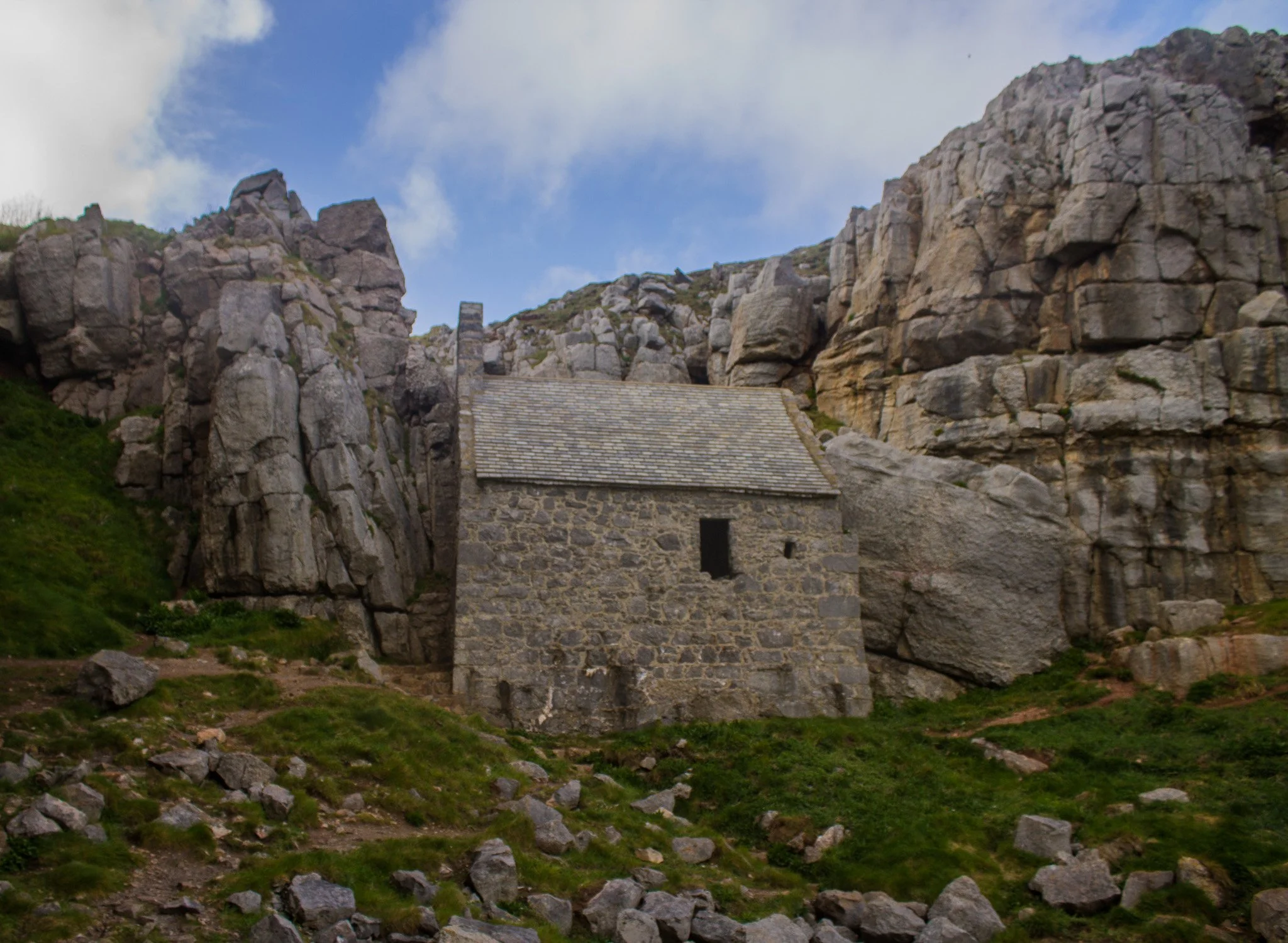
I wasn’t in a rush when I travelled through Wales. While it's true that Karl's trip started in Cardiff and ended in Chester, instead of travelling from south to north like him, I opted for a clockwise journey, making stops in Tenby, Pembrokeshire, Aberystwyth, Snowdonia, Portmeirion, Caernarfon, Llanfairpwllgwyngyllgogerychwyrndrobwllllantysiliogogogoch*, Conwy, and finally to Chester.

Karl's journey from the station led him to the New Sea Lock Hotel, a hotel from the mid-nineteenth century situated adjacent to the sea lock of the Glamorganshire Canal. Constructed sometime between 1840 and the late 1850s, it stood in company with an older hotel and together, they were fondly dubbed the "New and Old Sea Lock Hotels."

In August 1901, Karl pedalled from London, England, to Cardiff, Wales. And guess what? I wasn't the first time traveller to visit Wales. Did you know, dear reader, that Cardiff is the home of Doctor Who? So, imagine my surprise when, as I was leaving my Cardiff hotel, the camera slung over my shoulder, the TARDIS materialized right in front of me with its trademark wheezing and groaning.

Although I can’t find anything documenting his visit to Greenwich, I have a copy of Karl’s tram ticket from London to Greenwich. So, I also opted to travel to Greenwich and visit the Greenwich Royal Observatory.

While Karl was travelling through India, Queen Victoria died on the Isle of Wight after a 64-year reign, the longest in British history at the time. She was succeeded by her son, Edward VII, who began the transition to the Edwardian era.
Four months later, Karl arrived in England on April 27, 1901.

Upon leaving Egypt, Karl had travelled 11,100 miles by land and 25,150 miles by sea. Karl’s ship the S.S Cousius Arbib left Alexandria on April 10th, arrived at Malta on April 14th, “touched” Gibraltar on April 19th, and then arrived in Hull, England on April 27, 1901.
Scroll using the arrows below:
Leg 10 Egypt

Karl anchored in Port Said, Egypt, by March 14, 1901, having earned his passage aboard the SS Warrington Hall through the Suez Canal. This waterway, connecting the Mediterranean Sea to the Arabian Sea and the Indian Ocean through the Red Sea, shaved off a staggering 7,000 km from the journey, translating to about 15 days of travel. At this point, Karl had covered 11,100 miles by land and an impressive 25,150 miles by sea, gearing up for explorations through Egypt.

Situated in the royal quarter, this remarkable library housed approximately 700,000 scrolls. In their quest for knowledge, the Ptolemies acquired and sometimes pilfered scrolls from visiting ships, envisioning the library as a beacon of enlightenment.

Following in Karl's footsteps, I ventured into the 65-foot deep shaft leading to the Catacombs of Kom el-Shaqafa in Alexandria. Discovered in 1900—just a year before Karl's visit—these catacombs, one of the largest Roman burial sites in Egypt, are a testament to the city's rich history, echoing the burial practices of ancient Egyptians.

Karl arrived in Alexandria from Cairo on April 4, 1901. The Alexandria of today and of Karl’s visit differ greatly from the ancient city. Located in the northwest of Egypt alongside the Mediterranean Sea, it is today the country's main seaport, boasting a population of over four million.

After immersing myself in the Temples of Aswan, I continued my northward journey along the Nile River to Luxor, eager to unravel the secrets held by Karnak Temple and the Mortuary Temple of Queen Hatshepsut.

The pulse of life in Egypt reverberated along the Nile's banks—nourishing, offering fertile land, and serving as a vital corridor for construction materials. This chronicle unfolds against some of Egypt's most illustrious temples.

The Great Sphinx, a colossal sculpture measuring 240 feet (73 metres) in length and 66 feet (20 metres) in height, is among the world's largest. Combining a lion's body with a human head adorned with a royal headdress, the statue was meticulously carved from a single piece of limestone over an estimated three-year period by a workforce of 100 using stone hammers and copper chisels.

Continuing the journey past the museums, for another seven miles on the tram car, one arrives at the foot of the range of hills on which are the Giza Pyramids, the Sphinx and old tombs. On alighting from the tram, the visitor (if he is a European and looks like a tourist) is immediately surrounded by a host of donkey and camel boys who offer to take him up the steep, winding road to the foot of the Pyramid for the small sum of 5 piastres (one shilling) or two if they can’t get five.

Moving beyond the splendour of the tombs in the Valley of the Kings, we find the early Egyptian kings' burial sites, marked by the ingenious construction of mastabas — mounds that formed the foundation for the first pyramid. This inaugural pyramid, widely recognized as the Step Pyramid or Saqqara Pyramid, was my initial stop on the west bank of the Nile River.

Mummification is preserving a person's or animal's body after death by deliberately drying or embalming the flesh. Typically, this procedure involves extracting moisture from the deceased body and employing chemicals or natural preservatives, like resin, to desiccate the flesh and organs.

Amidst the anticipation for the new GEM unveiling its treasures from King Tutankhamun's tomb, I couldn't resist veering off course to explore the actual Tomb of Tutankhamun in the Valley of the Kings. Nestled on the west bank of the Nile, near the former city of Thebes, now Luxor, this expansive dry valley with its dense limestone caves and tunnels served as the final resting place for Ancient Egyptian pharaohs and nobility.

As the Grand Egyptian Museum inches toward its long-awaited opening, albeit behind schedule, a renewed focus on "repatriation" efforts is gaining momentum, spearheaded by the renowned Egyptian archaeologist and former Minister of State for Antiquities Affairs, Dr Zahi Hawass. Fondly dubbed 'the real-life Indiana Jones.'

Karl's visit 122 years ago, where he explored an older museum in Giza and timed his experience just ahead of the inauguration of the brand-new museum in Cairo, carries a significant layer of irony. I, too, had the chance to explore the "new museum" in Cairo, but my excitement was deftly dampened as the promised Egyptian museum in Giza, initiated years earlier, faced substantial delays.

Cairo is often called the "City of 1,000 Mosques," and from that birds eye view at the top of the Citadel I couldn’t count all the mosques but I certainly heard them. The timing of my visit coincided with the call to prayer, or the adhan.

According to the World Health Organization, almost one-third of road fatalities in Egypt are pedestrians, equating to 700 people are killed each year while crossing streets in Cairo alone. The death rate among pedestrians is increasing and overall about 12,000 Egyptians lose their lives as a result of a road traffic accident and over 50,000 are non-fatally injured with some resulting long-term disability.

It was reported in the Truro news on March 23, 1901, “Karl M. Creelman has arrived at Bombay, and at last reports was about to sail for Port Said or Suez. He was subjected to certain health examinations at Bombay (now Mumbai), on account of the Bubonic Plague raging there. Near Bombay he met Miss Hooper, of Fredericton, N. B., a sister of Mrs Adams of this town. After arriving at Suez, he intends to proceed to Alexandria.”
Scroll using the arrows below:
Leg 9 India

So, here's to the adventure that was—an odyssey through cold marble floors, impromptu origami artistry, and the lingering fragrance of mysterious oils. Beyond an awkward massage's bizarre twists and turns, there's a valuable lesson in embracing the unfamiliar, finding humour in discomfort, and, perhaps most importantly, cherishing the great stories that emerge from life's detours.
For three years, every Saturday morning I have posted a Karl Chronicle documenting my journey following Karl Creelman around the world. Last week was the sesquicentennial post with a very special (fictional) interview with Sir Michael Palin, Karl and me, I hope you enjoyed it!
Today Dear Reader is a complete summary of the highlights of the last 150 chronicles:
For this special sesquicentennial, I'm thrilled to share a fictional interview between our intrepid Nova Scotian explorers, Karl Creelman and Louise Trotter. This conversation, published in the December edition of Wanderlust magazine, occurred in the opulent Imperial Hotel in New Delhi—the last stop where Karl and Louise were together before Karl's journey to Bombay and Louise's detour to Jaipur.
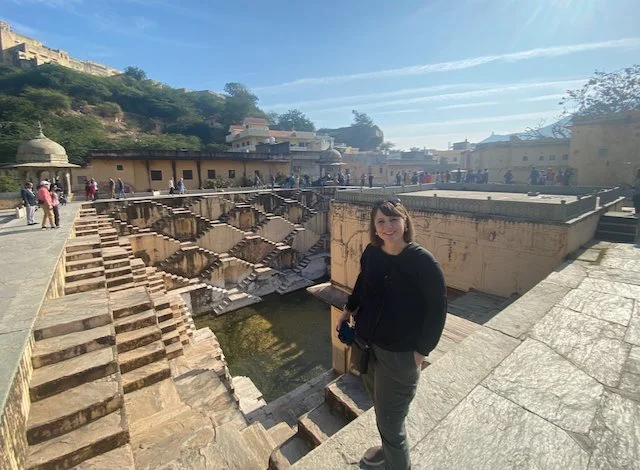
This marks the concluding Chronicle of my Indian adventures, recounting "what we saw along the way." The journey through India has been the lengthiest leg thus far, spanning 32 posts. Ironically, it brings me back to this time last year when I was gearing up to embark on the Indian chapter. I've thoroughly enjoyed revisiting the captivating moments of my time in Incredible India every week, and I hope you have too.

Today, we might associate the Pink City with a community straight out of Barbie Land. However, well before Greta Gerwig's blockbuster movie adorned a Malibu landscape in Barbie's signature colour, the original and authentic Pink City emerged in Jaipur, India.
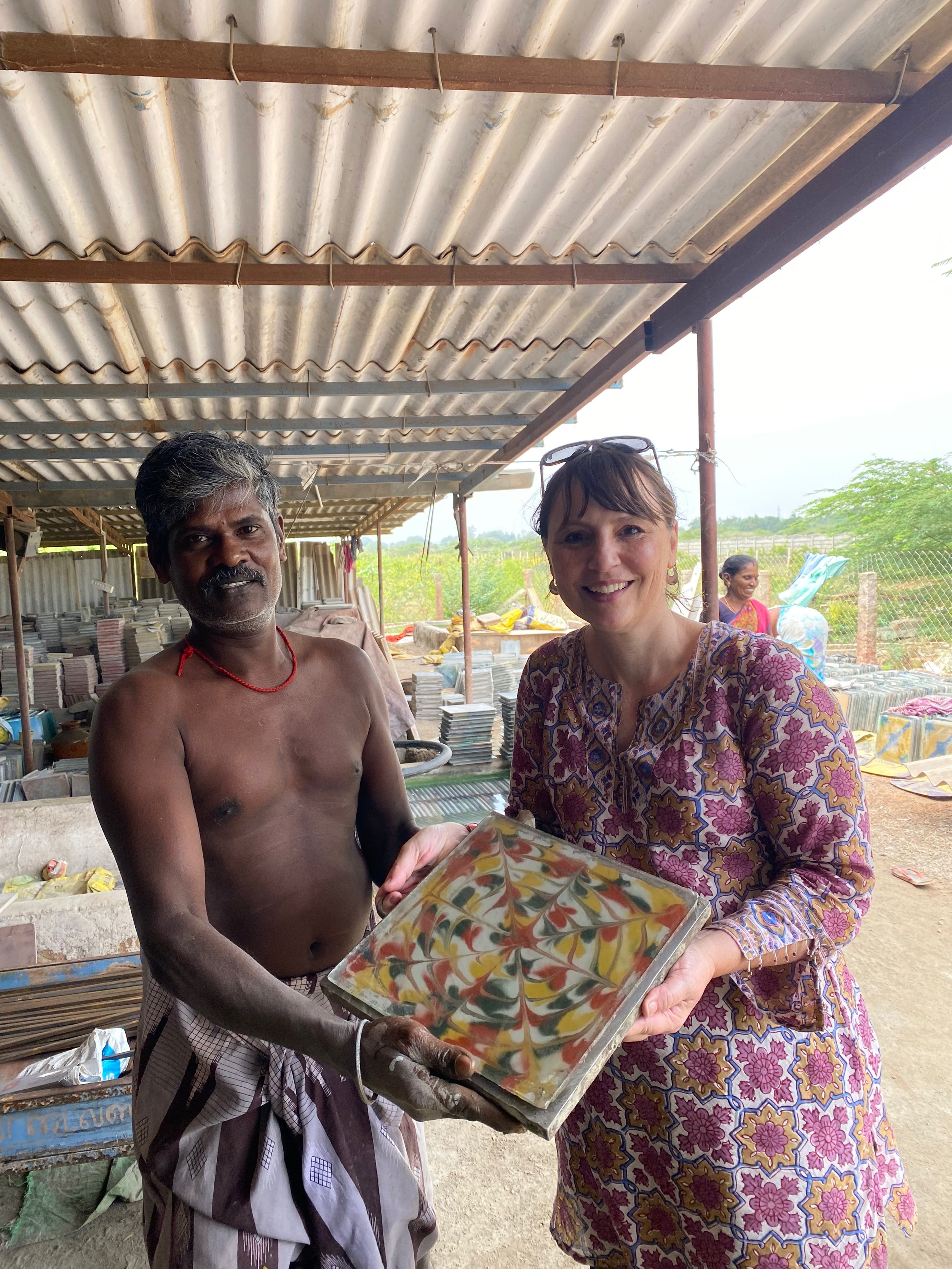
During my Indian travels, three authentic experiences stood out, shaping the narrative of my journey. These included observing and actively participating in making murukku savoury snacks, learning the intricate art of Athangudi tiles, and discovering the age-old craft of transforming coconut husks into rope.

While many Western tourists are directed toward the lively streets with their array of street food vendors, risking the infamous "Delhi belly," I sought a different experience. My yearning to wander led me to discover another facet of Delhi, prompting explorations of the Red Fort, Humayun's Tomb, and Lodi Gardens.

This red sandstone fortress, now recognized as a UNESCO World Heritage Site, stands proudly along the banks of the Yamuna River, a testament to its construction in 1565 under the patronage of Akbar, India's inaugural Mughal emperor. Today, it is more commonly identified as the renowned Agra Fort.

Approximately 20,000 skilled workers contributed to Shah Jahan's vision to immortalize his eternal love for Mumtaz Mahal. You can truly sense that love in the intricate details and the flawless perfection of this symbol of devotion.

The "dream in marble" undeniably stands as a shrine of love, conceived by Shah Jahan as an enduring tribute to his beloved wife, Arjumand Banu Begum, who tragically passed away while giving birth to their 14th child. The Taj Mahal is considered one of the most outstanding architectural achievements, capturing the Mughal style of architecture combining Persian, Indian and Islamic styles.

Cawnpore, known as Kanpur today, was an influential British garrison with barracks housing 7,000 soldiers. During the First War of Independence in 1857, 900 British were besieged within the fortifications for 22 harrowing days by rebels under the leadership of Nana Sahib.

Lucknow, often called the city of Imambaras, reflects its historical significance as the capital of the Nawabs during the 18th and 19th centuries. Imambaras come in various sizes, typically including a mosque, assembly halls, separate prayer areas for men and women, and beautifully manicured gardens.
Two famous Imambaras grace Lucknow's landscape: the Chhota Imambara, affectionately known as the Palace of Lights, and Bara (big) Imambara.

In total, 855 British soldiers, 712 Indian soldiers, and 153 volunteers were defending 1,280 civilians in the Residency against a rebel force of almost 8,000. In November 1857, the defenders and civilians were evacuated from the Residency, which was then abandoned.
There was extensive damage to the Residency, evident when Karl observed the bullet holes and buildings falling to ruin in 1901. Today, most of the buildings are ruins, and the complex is now a historical site by the Archaeological Survey of India. In addition to being able to visit the buildings, there is also a cemetery for the 2,000 soldiers who lost their lives during the siege.
It was a fascinating historical site, and I’ve laid out a virtual tour for you dear reader, with some of the notable buildings of the Residency:

One of the largest temples in India, Brihadeeswarar was built during the Chola period in 1010 AD and, similar to Mahabalipuram, is an example of Dravidian architecture. The temple is part of the UNESCO World Heritage Site known as the “Great Living Chola Temples”.
Brihadeeswarar Temple, meaning "Big Temple," earns its title from the towering vimanam (temple tower), which ranks as the world's tallest at a remarkable height of 66 meters. Adding to its stature is the Kumbam (apex or bulbous structure atop), carved from an astonishing 80-ton block of granite. The temple resides amidst fortified walls constructed in the 16th century. Upon entering the temple complex through the ornate gateway, one encounters the monumental stone Nandi — the sacred bull of Lord Shiva — a figure of profound significance and the second largest in India.

Within the expanse of the UNESCO-designated World Heritage site, the Mahabalipuram Group of Monuments are architectural marvels, encompassing temples, rock-cut caves, and sculptural reliefs. Built between 700 and 728 AD, the architecture of the 40 monuments is complemented with intricate carvings of Hindu deities, mythological scenes and stories from Hindu scriptures. Most striking are the monolithic rathas — temples sculpted in chariot forms — chiseled from a singular block of rock.

Notwithstanding excluding those songs, I unearthed the other ten of Karl's referenced songs, extracted from diverse renditions. These songs have become my latest playlist, called "Karl's Songs." Admittedly, the archival recordings are of poor quality and generally, the songs are unlikely ever to rival my current themed playlists. But the marvel of Karl's songs lies in its existence.

As the evening sun began to set, the festive spirit of Christmas Eve enveloped the atmosphere. The palace gardens came alive with scheduled entertainment: traditional local musicians and dancers, merry holiday tunes, and even the possibility of a surprise visit from Santa Claus. Finding a comfortable spot on a patio lounger, I had a perfect view of the upcoming performances, including the anticipated appearance of the man in the red suit.

Ramnagar Fort was built by Maharaja Balwant Singh in 1750 using cream coloured sandstone. It’s an example of Mughal style architecture, which most famously is depicted in the Taj Mahal. The typical architectural details include curvy balconies, towers, big courtyards, carved pillars and buttresses, and ornate carvings. The fort extends over 7.2 hectares along the eastern bank of the River Ganges, which feeds a moat surrounding the property to prevent enemy attack.

My room on the second floor of the Nadesar Palace was lovely, and I couldn't help but notice the old photographs hanging on the walls, probably of the Royal family and past guests. It excited me to take out my camera to capture those memories and experience the upcoming carriage ride.

My master plan to meet the Maharaja of Varanasi was carefully crafted based on a couple crucial facts that I unearthed through diligent research and Karl's previous visit.

Prior to British colonization, India was a land of diverse "princely states," each governed by their rulers under the vast umbrella of the Mughal Empire. During the British arrival, around 350 families held sway over one-third of India, while the remaining territories were under the control of the Mughals and other prominent kingdoms.

I am now only 700 miles from Calcutta, and have been here seven weeks with malarial fever, and also with attacks of ague and another kind of fever. I am just about as weak as there is any need for, and I do not know when I will be able to take to the road again. Was in a local hospital for nearly two weeks, then I left and had not got more than a mile until I came to the cantonments where the Black Watch Regiment, 42nd Highland Brigade is stationed.

Traditionally, disease-carrying mosquitoes were predominantly found in developing countries with hot, arid climates, stagnant streams, and standing water, which provided ideal breeding conditions. However, due to the effects of climate change, the numbers and geographical range of disease-spreading mosquitoes have been significantly impacted. The mosquitoes that can carry Malaria infect over 200 million people annually, of which there are 400,000 deaths every year.
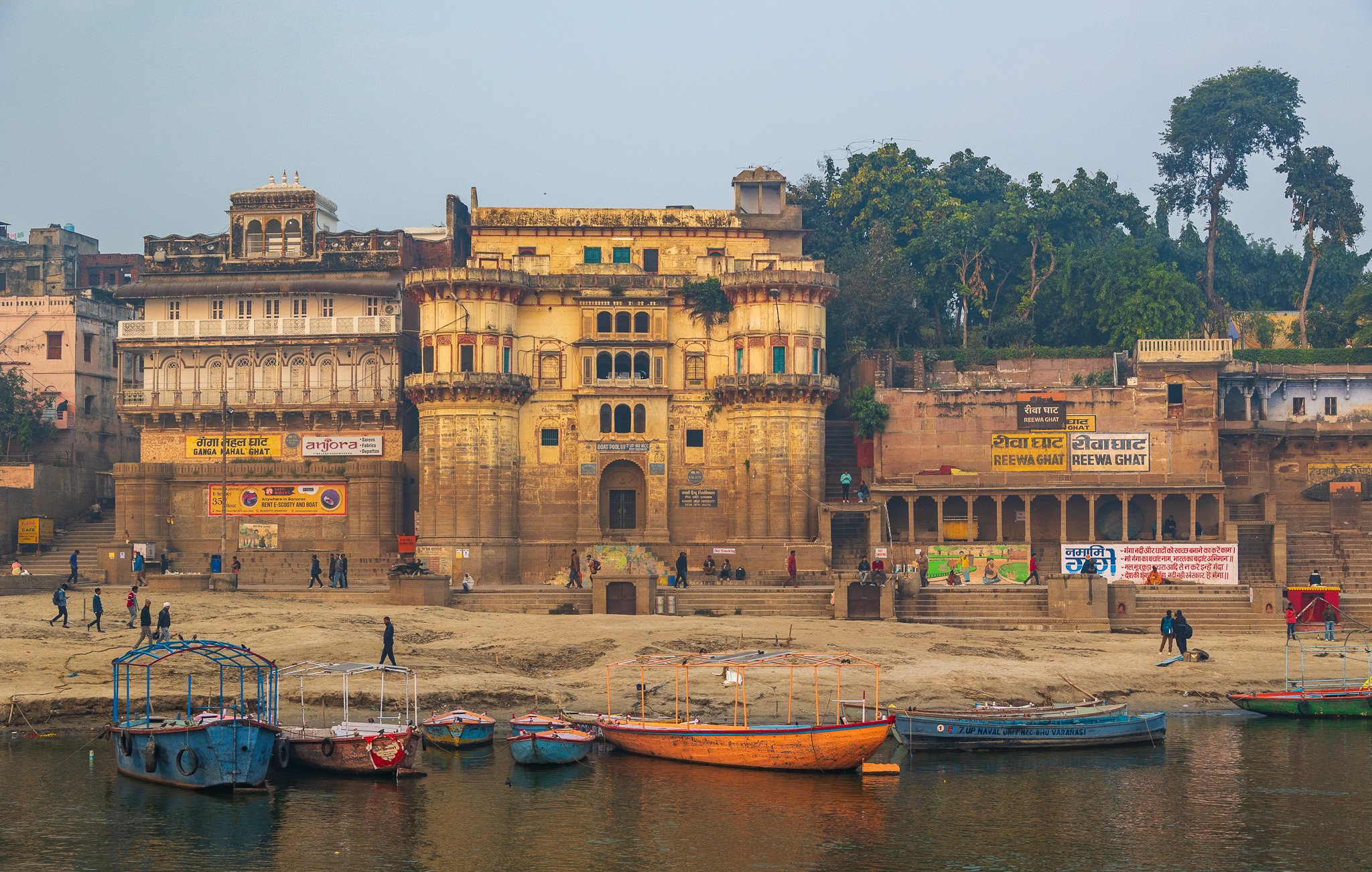
The River Ganges, also known as the River Ganga, is revered as the Goddess Ganga herself. Bathing in its waters is believed to absolve one of all sins, and the deceased's ashes are scattered in the river to attain salvation. Varanasi (then Benares), an ancient city that has thrived for over 5,000 years, holds a special place for accessing the Ganges.

“Karl Creelman, a young man of 23, started on his bicycle “the Red Bird” from Nova Scotia on the 11th of May, 1899. Creelman is now on his way to Bombay on his splendid machine built by Goold and Co., of Ontario. He arrived at Ghazipur looking quite fit, and seems to have a better time of it in India up to the present. Creelman knows but five words of Hindustani with the aid of these, assisted by signs, he says he has got along very well. He left Ghazipur this morning for Benares, intending to cycle down to Bombay”.

In India, water quality has long been a health concern due to historical practices of discharging industrial effluents from mills, slaughterhouses, and other industries into rivers. Additionally, reports suggest that around 70% of India's sewage is dumped into rivers daily, polluting both surface water and groundwater, which supplies water to 40% of the population.

Hailing from the villages of the Chettinad region in Tamil Nadu, the Chettiars were initially renowned as merchants and traders. However, as the British Empire expanded its influence in India, their businesses evolved, embracing banking and money lending, ultimately pioneering modern banking practices. From around 1875 to 1925, the Chettiars held indirect control of India's economy, amassing vast fortunes.

Integral Yoga, which aims to manifest a higher consciousness on Earth through the transformation of human nature and daily activities. Ashramites, devoted followers, engage in various practices such as gardening, farming, operating guesthouses, healthcare, engineering, art, and education. Within this serene community, approximately 2000 members embrace a life of service and spiritual growth.

As Karl passed through Chandernagore, a small commercial city under French rule since 1816, he documented a part of India’s history that piqued my interest. Chandernagore was once considered part of French India, under the political control of the governor-general in Pondicherry, until it gained independence in 1950.
Intrigued by the allure of "French India," I decided to make a detour to Puducherry, formerly known as Pondicherry or "Pondy." The city is divided by a canal, separating the French Quarter and the larger Tamil Quarter to the west.
Leg 8/9 Travelling to India & Arriving in Kolkata

Life happens on the streets of Kolkata.
In a city with a population of almost 15 million, it’s estimated that about 300,000 live on the streets. Living on the streets is not the same as living in slums or bustees (registered slums) — the reality for a third of the population of Kolkata. Street living is actual street living, the place where people sleep, cook, eat, bathe, and perform all the ordinary routines of life.

Today, many of these colonial buildings in Kolkata are in a state of disrepair, with some crumbling and derelict, while others remain functional. Despite their decline, a few of these structures continue to attract tourists, including a new grand memorial building, constructed after Karl's visit.
Join me on a journey back in time as we explore the most significant colonial buildings in Kolkata.

During my travels to Kolkata, I made it a point to visit the site of the former guardroom that represented the event which triggered the British Empire's retribution and the continued growth of their Imperial conquest. However, locating the “Black Hole of Calcutta” proved quite difficult, and once I did, there was nothing significant to see.

The horses that Karl cared for were moved to “Waler Corner”, where the Indian Army officials and Australian horse traders would meet next to the Grand Hotel in Kolkata. And while Karl arrived in India and promptly needed to find a Tailor,* my luggage arrived with me in India, so I made my way to the Grand Hotel.
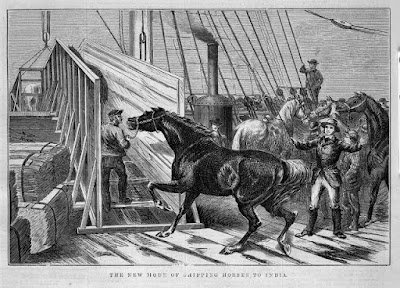
On September 9 1900, Karl left Newcastle, Australia on the SS Bezwada steamship to Kolkata (then Calcutta).To pay for his passage to Kolkata, Karl was employed as a ‘hostler’ with three other men, and they were in charge of 230 Waler horses bound for duty with the regiment of the Bengal Lancers. Karl worked 15 to 16 hours a day with what he describes as “wild, unbroken horses”. He would say he fared well, “barring half a dozen kicks and about as many bites received from the animals”.

Being unable to travel to China, Karl finally found a passage from Australia to India. Karl wrote a series of letters from the ship to his mother, Mrs Eben R. Creelman. Excerpts of those letters were published in the local Truro News.

In 1900 Karl travelled to India from Australia, but that wasn’t his original plan.
Karl was keen to visit China and Japan but couldn’t get a passage from Australia. The Boxer Rebellion was underway at the time — the rise of a secret organization in China opposing Western influence and imperialism.
Scroll using the arrows below:
Leg 8 Scotland

Upon arrival in Scotland, he had already travelled 11,000 miles on the Red Bird, 1,300 miles on foot, and 31,000 miles by sea. He was on his third suit of clothes and ninth pair of boots and had worn out three sets of bicycle tires.
Enjoy the stories and the photos of our travels through Scotland from Edinburgh to John O’Groats and west to Glasgow, this is what we saw along the way.

In 1901 the international exhibition was to take place in Glasgow, Scotland. The exhibition was on 73 acres of land at Kelvingrove Park. The structures on the sprawling site included a new Art Museum, an Eastern Palace, buildings for the various displays, a grand concert hall that could seat 3,000, cafes and restaurants, and various foreign pavilions.
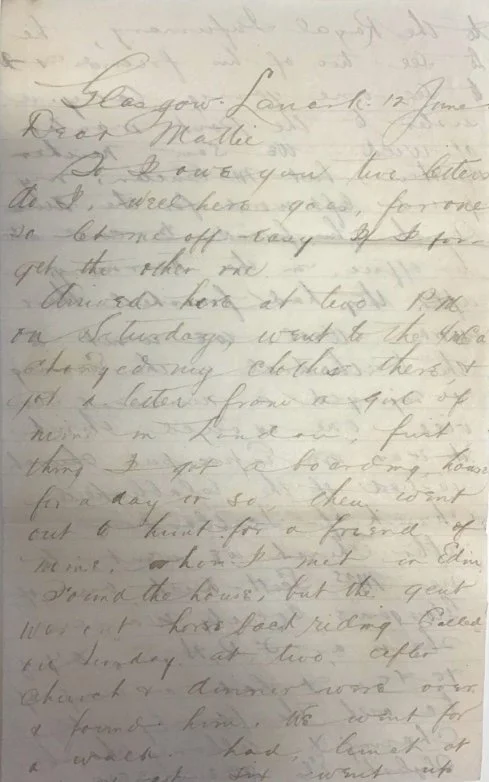
On June 12, 1901, Karl wrote a letter from Glasgow to his younger sister Mattie. This was letter 43 of 44 letters that are preserved in the archives. It was written on blank paper, without bearing the stamp or watermark of a hotel or other business.

Reported in the Aberdeen Firsthand News: “Creelman, a bright and vigorous looking young fellow will return by the West Coast to Glasgow “doing” the Trossachs en route.
The Trossachs, located within the boundaries of Stirling and Perthshire, is a vast National Park of over 1800 sq km. The area is full of braes (hills), glens (valleys), lochs (lakes), munros (mountains above 3,000 ft), corbetts (mountains 2,500-3,000 ft) and burns (large streams).

In 2019, season 9, the writers took the audience to the Isle of Lewis in Scotland’s Outer Hebrides. The midwives travel to Lewis to support a remote community with limited access to health care and to provide safe childbirth. Travelling on their trusty bicycles, the midwives cycle through the blackhouse village and one of the Sisters has a test of faith amongst the neolithic stones of Callanish.

After arriving in John O’Groats at northeast Scotland's last bit of land, Karl did a u-turn on his bicycle and started cycling west across the highlands.
I kept going east to Orkney.

“Karl Creelman the young Nova Scotian who has been making a trip round the world awheel has reached John O’Groats house in the north of Scotland”.

A reporter from another Inverness newspaper, the Northern Scot, asked Karl specific questions related to his journey biking around the world.

In 1899, Simon Joseph Fraser, the 14th Lord Lovat, established the “Lovat Scouts”, a unit of highlanders for the British Army to fight in the Boer war. The training grounds for the unit was Lovat’s home of Beaufort Castle. The Lovat Scouts were disbanded after the Boer war but then shortly reinstated and reformed into two battalions, one with sharpshooters becoming the British Army’s first sniper unit.
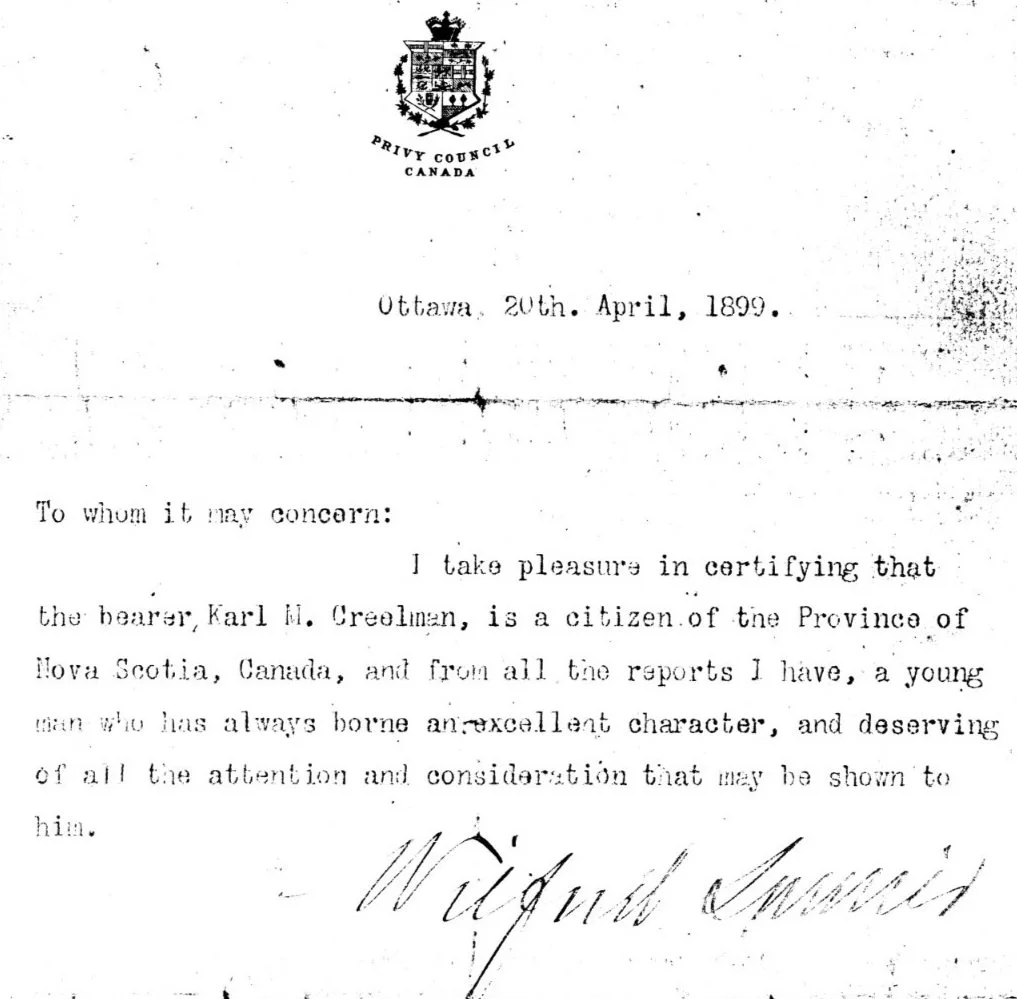
Karl’s “credentials” consisted of five separate letters from distinguished Canadians endorsing his character as he set out around the world…

In that same letter to the newspaper, published on June 25, 1901, about Arbroath, Karl concludes by writing: “The next town of importance reached was Stonehaven, about which I will tell you in my next letter”.
I couldn’t find a record of a supplementary letter in the newspaper about Stonehaven. The letter may not have been received or not received in time to be published. But I did stop in Stonehaven, and knowing Karl’s interests when he arrives in a historic town, I suspect his letter would read something like this:

In his letter to the newspaper published on June 25, 1901, he writes: “along a good road for nineteen miles, and Arbroath is reached, which contains the extensive ruins of a Tyronensian Abbey founded by William the Lion and dedicated to Thomas Becket in 1178. The Catherine wheel window is the only entire portion of the old Abbey of Aberbrothock, all the rest having gone to ruin. The “Bell Rock” twelve miles southeast of Arbroath can be seen on a clear day. This rock took its name from a bell, which was suspended on it by the Abbot of Arbroath, as a warning to mariners. The rock now has a lighthouse on it, 115 feet high.”

Arriving in Dundee on May 15, 1901, Karl wrote: “Arriving at Dundee …there is nothing of much interest in the city, although at the time I went through, a couple of polar ships were being fitted up, and they attracted considerable attention. The ‘America’ is to make a search for the north pole, and the ‘Discovery’ is being sent to find the South Pole.”

“Continuing east down the northern side of the Forth, through Alva, Dollar and other small towns, and past Rumbling Bridge, Kinross was finally reached, a nicely situated town on the west bank of Loch Leven.
A quarter of a mile from the nearest point of the west shore, on a rocky islet stands “Lochleven Castle,” which belonged to the Kings of Scotland…It served as a prison for Queen Mary, after her surrender at Carberry Hill, until she escaped, assisted by young Douglas. In all these towns people are only too willing to point out all places of interest and to tell all they know concerning them. The people of Kinross will point out the exact spot where Douglas dropped the keys of the Castle into the water, as he was helping Queen Mary in her escape.”

“Run, and you'll live... at least a while. And dying in your beds, many years from now, would you be willin' to trade ALL the days, from this day to that, for one chance, just one chance, to come back here and tell our enemies that they may take our lives, but they'll never take... OUR FREEDOM!”

Stirling, 36 miles from the Forth bridge, is, so the Stirling people say, the most historic town in Scotland. The castle, situated on a very high hill in the centre of town, originated no one knows when, and it was a prominent stronghold in the ancient wars during the career of Bruce and Wallace.
If a picture is worth 1000 words, then, dear reader, I leave you 100,000 words.
In the continued celebration of my centenary post, I hope you enjoy 100 images of my journey to date. I have travelled from Karl's home in Truro, Nova Scotia, west to Ontario, south into Illinois, north through Wisconsin, North Dakota and Manitoba, and then west to British Columbia. I have travelled through Ireland and Northern Europe, and the current Chronicles document my journey in Scotland. These images accompany the stories outlined in my post last week, sharing 100 Highlights from 100 Chronicles.
Dear reader, I’m travelling over 100 years after Karl returned from his trip around the world, and today marks my 100th Chronicle. Happy centenary post!
At this point in the Chronicles, I have travelled 8200km from Karl's home in Truro, Nova Scotia, west to Ontario, south into Illinois, north through Wisconsin, North Dakota and Manitoba, and then west to British Columbia. I have travelled through Ireland and Northern Europe, and the current Chronicles document my journey in Scotland.

Mr Karl M. Creelman, the young Nova Scotian, who is making a cycling tour ‘round the world, passed through Falkirk on his journey northward on Tuesday afternoon…Mr Creelman is a sturdy hardy-looking young man of 23 years who talks of his travels in a quiet, unostentatious manner. Pleasant in manner, he chats very freely. Questioned by an Advertiser representative during the brief period he was in town, some interesting particulars were elicited. He started from his native town of Truro, Nova Scotia, where his parents reside, on the 11th of May, 1899, having been on the road now for just over two years, his object being, as he himself put it, “to have a look round and gain a bit of experience”.

Karl spent a few days enjoying the sights of Edinburgh, and I did the same, but in this part of my journey, I had company. In Edinburgh I met up with my two Aunties who travelled to Scotland by train from northern England so we could spend some time together.

Sir Walter Scott, born in Edinborough in 1771, is a celebrated Scottish author. Scott is the second-most quoted writer in the Oxford English Dictionary after William Shakespeare. His early work was primarily poetry, but his most famous work was his Waverley Novels, a series of historical novels showcasing his knowledge of Scottish history and the landscape he loved.

The Creelman’s arrived in Nova Scotia from northern Ireland after offers of land from the British Government. Land Agent Colonel Alexander McNutt of the British Army placed an advertisement in the local Belfast newspaper in 1761, promising opportunities not available in Ireland. A small group of the passengers travelled to Nova Scotia to scout out the land that was being promised.
Scroll using the arrows below:
Leg 7 Europe (Belgium to France)

On July 13, 1901, Karl boarded the S.S. Princess Josephine, travelling 80 miles across the English Channel from Dover, England, to Ostend. Three hours later, Karl arrived on the Continent.
Over two years had transpired since he departed Nova Scotia, and biking through the Continent was his final adventure before returning to England to cross the Atlantic Ocean and return to Canada. Karl commenced his travels in Belgium, then proceeded to the Netherlands, Germany and France.

“... with strong headwinds, with heavy rains, making cycling awfully hard, 150 miles being the amount I covered in a whole week’s stead travelling. Getting tired of this, when within 100 miles of Paris, I suddenly turned at a right angle to the Paris road and took a straight course for Dieppe, through the cities of Amiens and St. Quentin, where I went aboard the SS Paris for New Haven”.

The Eiffel Tower is synonymous with Paris, and one of the most iconic landmarks in the world, let alone France. The Eiffel tower construction started on January 26th, 1887 and was completed in a mere two years, two months and five days.

The first Tour de France race was held in 1903, just two years after Karl travelled through France. The race consists of 6 stages lasting 19 days with 21 riders, both professional bikers and amateurs.

At this point in my travels following Karl around the world, there is no mistaking that I’m walking around in the 21st century. However, my perspective changed while in Cologne and I went back to the past on a historical virtual reality time ride.

Although I crossed a different bridge over the Rhine River 120 years after Karl, our view upon arriving in Cologne is the same. The central, dominant landmark in Cologne — then and now — is the Cologne Cathedral.

Since 2008, couples have placed a love lock on the fence and would throw the key into the Rhine. Thousands of love locks have been placed on the bridge, a tourist designation for romantics to declare eternal love.
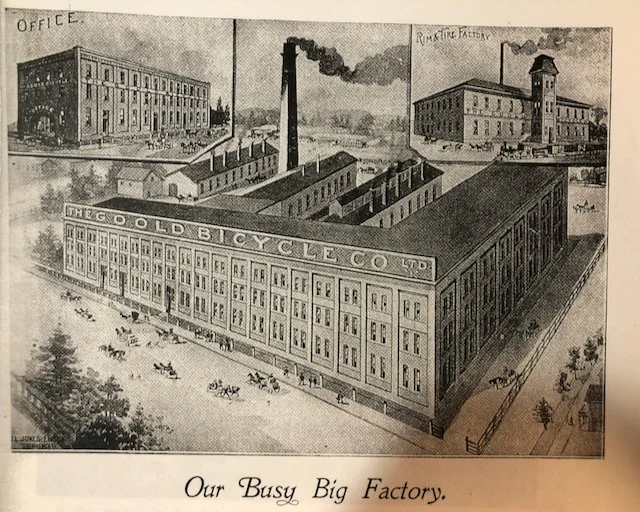
While researching the Red Bird bicycles, I got my hands on a copy of the 1899 Brantford Red Bird catalogue produced by the Goold Bicycle Company. The catalogue has a bright red cover with a woman wearing her Victorian dress while riding a Red Bird. The Goold Co. personalized its business by offering an anthology in the catalogue detailing ‘why’ a consumer should want to buy that new Red Bird model.

Dear Reader, last week in Karl Chronicle #86, we ended with me staring wide-eyed at a bike that may have been Karl’s when he cycled around the world. Gordon, the owner of the bike, couldn’t say for certain that it was Karl’s bike, but he couldn’t say for certain that it wasn’t!
So, the moment you’ve been waiting for — answers to the questions I bet you’ve been wondering about all week.

While I was travelling for this leg of the journey, there was a follow-up story through the Saltwire Network that appeared in the local Nova Scotia newspaper updating their readers on my adventures. That article made it into the hands of Gordon Troop. Gordon emailed to tell me he came across the article and wanted to let me know that he is an “antique bicycle nut” and –– are you holding onto your seat dear reader? –– “happens” to have the bicycle that Karl rode around the world!

Albert Sutherland Royaards, born in 1855, was the first Dutchman who made long duration road trips aboard a bicycle.
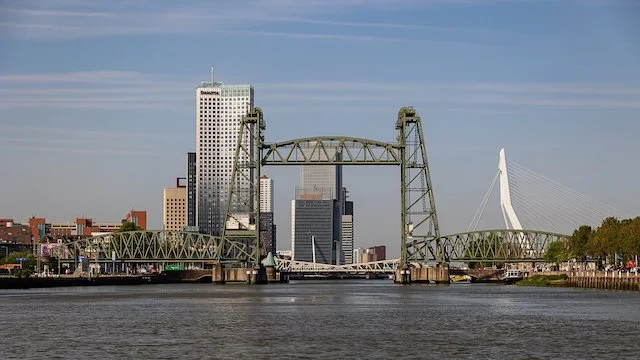
Our time together flew by. My questions about Albert morphed into questions about Wim, and I found his life story even more interesting than Albert’s. Wim is accomplished in the fields of creative arts, linguistics and writing. From teacher to writer to language consultant to a lecturer to cabaret performer to TV presenter to board game creator. With over 123 published books to his credit, from the first Dutch “COVID-19 romance”, to a children’s book about Vincent Van Gogh, to a book about villages in the Netherlands in the 1950s, which then became a TV series starring Wim.
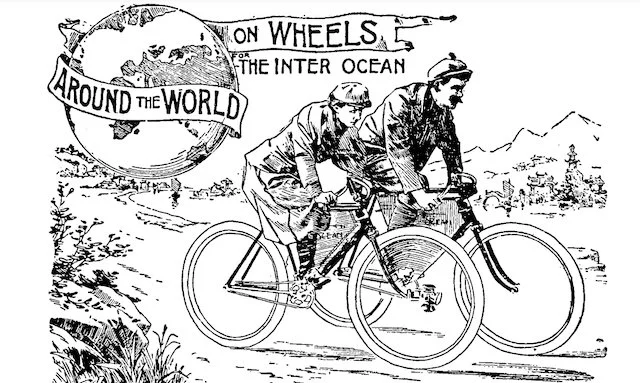
When Karl arrived in the Netherlands, it wasn’t the Red Bird but the Omafiet (aka “Grandma Bicycle” or “Grandma-bike”) that was popular with the wealthy Dutch. The Omafiet is a comfortable, upright bicycle that accommodates any ability and all ages. It didn’t take long before the Omafiets became more affordable, and the Dutch started constructing dedicated bike paths for this two-wheeled revolution.

When you walk down the streets of Belgium, it’s hard to choose which chocolate boutique to buy your chocolate from: The Best Belgian Chocolates, Finest Belgian Chocolates, Chocoholic, Chocolaterie, Pur Chocolate, The Chocolate Line, etc.
Perhaps dear reader, the answer is not to choose but to try them all!

Upon arriving in Ostend, Karl immediately went to Bruges, and on July 13, 1901 his book was stamped by the postmaster with the accompanying handwritten note: Im Brugge aangekomenaan 13 Juli 1901 am 8.10. There is a notation written by Karl next to those words that say: “Flemish Language”.

So although my last Karl Chronicle summarized our travels through the Canadian Prairies, you now find me meeting up with Karl in Europe. Or, more appropriately — as we go back 120 years — I’m meeting Karl on the “Continent”.
Scroll using the arrows below:
Leg 6 Prairies (Winnipeg to Alberta)

Well, Dear Reader, this has been quite the leg of our journey through the Prairies. I’ve followed Karl for 1400 kilometres from Emerson, Manitoba, south into the United States then northwest to Waterton National Park, Alberta.

The national park was established in 1895 when the federal government protected a 54 square mile area and today is considered a world heritage site for scenic value and diverse flora and fauna.

When the Canadian Pacific Railway stretched across to the west coast of Canada, access to markets further afield were now obtainable. There was a “beef bonanza”, and interest in land and ranching grew exponentially as this new economy thrived.

On September 24, 1899, Karl wrote a letter to sister Mattie from Lethbridge, Alberta on The Hotel Lethbridge stationary. The stationary included a photo of the hotel and advertised it as being “strictly first-class” offering rates of $2 per day from the Proprietors Henderson & Downer.

Thanks to the Saskatchewan River, clay was deposited around the footprint of Medicine Hat. The quality of the resource was found to produce excellent bricks and pottery.

Following Karl’s adventure around the world, my journey, over 120 years later taps directly into my planning acumen. Four years of research into this project required retrospectively plotting out Karl’s itinerary — his route, observations, quotes, encounters, and mishaps — all the details captured from countless newspaper articles, the post stamp book, and letters to Mattie. Then, and only then, could I plot out my itinerary, a mirror image (as much as possible) detailing where to go and what I need to see, with extensive notes highlighting historical facts and other significant events.

Let’s be honest, dear reader; the mosquito is one of those creatures for which there is little positive regard. Sure, it is a great food source for birds, frogs and bats, but for humans, it’s a nuisance at best and, at worst, a conduit for severe disease.

In a letter to the Truro newspaper, dated November 12, 1899, Karl wrote: “I came through the wheat fields of Minnesota, North Dakota, Manitoba and Assiniboia, and it is so lonely around there one would go crazy in a short time”.
The Canadian Prairies stretch from Ontario west to the foot of the Rockies in British Columbia. But t’s the provinces of Manitoba, Saskatchewan, and Alberta that we associate the term “Prairies”.

In 1899 Karl travelled through the Assiniboia District of the North-West Territories, and six years later, in 1905, it became the province of Saskatchewan. Then in 1906, Regina was named the capital of Saskatchewan, a significant improvement for this geographical area that was originally called ‘Pile of Bones’.

Qu’Appelle is located about 50km east of Regina and used to be the end of the Canadian Pacific Railway and the hub for distributing grains and other goods. As the primary distribution centre for the North-West Territories, the town was expected to be the headquarters of the Assiniboia District. However, politics changed, and instead, Regina was the territorial capital. Then as the railway extended further west, the significance of Qu’Appelle declined.

The hunting of the Prairie Chicken and the increase in agricultural land started the population's demise. Today, we no longer have any Prairie Chickens in Canada, with the last unconfirmed sighting in the 1990s. Populations of the birds still exist in some US states on managed prairie land — while less than ½ million remain, I did have a sighting.

On September 7, 1899, Karl wrote a letter to his sister Mattie from Wolseley, Assiniboia, NWT.
Today we know it as Wolseley, Saskatchewan, but in 1899, Wolseley was in the provisional district of Assiniboia, North-West Territories (NWT). The other NWT Districts included: Alberta, Athabasca, Saskatchewan (to the north of Assiniboia), Franklin, Ungava, Yukon, Mackenzie, and Athabasca.

I also left Winnipeg to travel West, but I wanted to stop first in Portage La Prairie, Manitoba, as it is the home of the world’s largest Coke can! Don’t worry dear reader; a future Karl Chronicle is coming documenting all the “world’s largest” encounters I had travelling across North America, but first back to Portage La Prairie.

“Ah! Manitoba! That hidden gem at the heart of the country! When you are here, don’t let its industrial sights trick you into missing out on its treasures. For a heart filled with history, visit Saint-Boniface and Saint Norbert and for some nature and magic, take a walk through Le Bois-des Espirits in Saint-Vital. Enjoy your journey!” Barbara, Tourisme Riel.

But this central geographical spot in the heart of Canada was considered the most appropriate spot to develop a new museum. The Canadian Museum for Human Rights, located in Winnipeg, is the world’s first museum dedicated to exploring the subject of human rights. The museum's mandate is to promote respect for others, encourage reflection and dialogue, and serve as a positive force for change in the world.
I feel like I have an autocorrect text mishap at least daily, either on receipt or on sending. Still, I’d maintain that the errors are worth the ability to have instant messaging with anyone, anywhere, anytime.

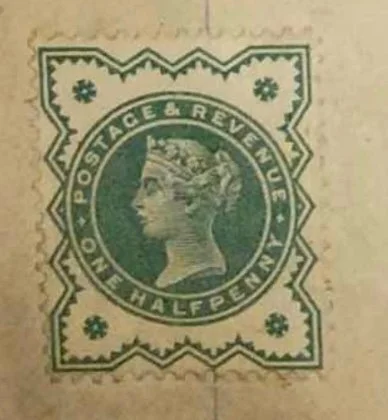
Manitoba was Canada’s fifth province, but at that time, it was one-eighteenth of its current area — a mere 100 square miles and was known as the “postage stamp province”. It was the starting place for the expansion of Canada’s western provinces due to the economic prosperity from the production of grains and the arrival of the railway.
Leg 5 MidWest (Chicago to North Dakota)
Scroll using the arrows below:

On this leg of our journey through the midwest, Karl and I travelled over 1500 kilometres from Chicago, Illinois to Grand Forks, North Dakota.
Stay tuned next week for Leg 6 as we start travelling through the Prairies of Canada.

The Red River is almost 900km long, starting around the Minnesota and North Dakota border, flowing north through Manitoba into Lake Winnipeg. The river is between a broad valley at the bottom of a former glacial lake — Lake Agassiz. During the ice age, the lake started as ice and then melted back up to Canada, leaving a low flat plain and the Red River.

The Truro Daily Newspaper shared a letter from Karl’s journey from Fargo to Grand Forks, North Dakota, but prefaced the information with the following statement:
“In almost its entirety, we have seized the following most interesting letter from our Globe Trotter that was only intended for private perusal. It is too interesting to keep. It will be seen that our G.T (Globe Trotter) was then at North Dakota, and we do wish we could urge upon him to give us his future address, as far as possible as so many friends in Truro and elsewhere want to write to him”.


By the 1800s, North McGregor was a hub of activity as bushels of wheat, barley, oats and corn from throughout Iowa and Minnesota were sent through the city en route to Lake Michigan. The trains full of grain originally crossed the mighty Mississippi by ferry — taken apart at North McGregor — then placed on steamboats over the river to Prairie Du Chien then eastwards.
For the last year, every Saturday I have posted a Karl Chronicle documenting my journey following Karl Creelman around the world. Today Dear Reader is Blog #50! To date we have travelled about 3000 km from Truro, Nova Scotia to North McGregor, Iowa, a mere fraction of our total journey planned around the world.
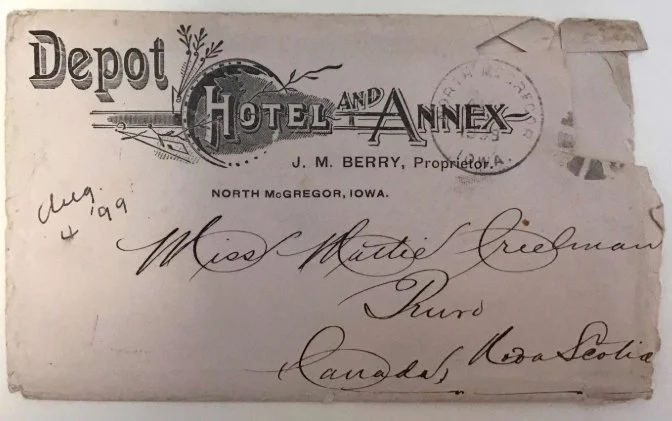
On August 4, 1899, after arriving in North McGregor, Iowa, Karl checked into the Depot Hotel and then used the hotel stationery to write letters to his family, first to sister Mattie and then to his Father.

The main garrison and supply depot for the British forces was Ladysmith, and this town was the primary target for the Boers. The battle of Ladysmith started on October 30, 1899, and continued for 118 days. Over the course of the siege, 800 British soldiers were killed and another 800 captured by the Boers.

He shared with the Truro newspaper that in Wisconsin there were some good roads for biking. Still, there was one thing he did not like. “Wherever there happens to be a bicycle path alongside the road, some person will tie their cow onto the fence and let them stroll across the path leaving the rope for the wheelmen to run over”.

So I headed into the centre of the city, following the trail of cars and foot traffic heading towards the Milwaukee public market. The public market was bustling: people flowing out carrying takeout, an outside patio full of locals lingering over brunch, and inside it was a frenzy of activity.

I’m in the Central Camera Company photographic emporium, Chicago’s oldest camera store, in business since 1899. Hoping to learn more about Karl’s cyclone camera, I emailed the store outlining Karl’s story. Then a few days later, I followed up with a phone call before arriving in Chicago asking to speak with Don Flesch, the store’s third-generation owner.
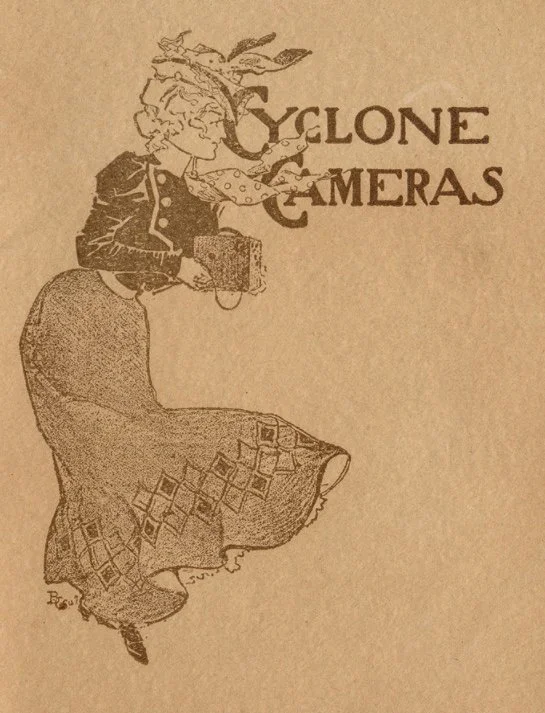
In 1897, the Western Camera Manufacturing Company of Chicago started producing magazine cameras housed in wooden boxes with a leather cover. The cameras would hold 12 plates ranging in size from 2½×2½ to 4×5 inches –– they called their camera the Cyclone.

This time, crime was influenced by access to drugs, first psychedelics of the ‘60s then crack cocaine of the ’80s. Gangs and turf wars again proliferated but this coincided with more capacity in the jails and improvements in the penal system allowing for quicker and longer sentencing. By the year 2000, there were fewer criminals on the street and less criminal activity in Chicago.

Scroll using the arrows below:
Leg 4 Quebec & Ontario

Karl’s new Red Bird bicycle seemed to propel him much faster through Ontario. After leaving Chatham, he travelled to Windsor, took the ferry for Detroit, and started biking on Michigan Avenue, continuing the 285 miles heading straight for Chicago. Before crossing the ferry, Karl had travelled from Nova Scotia over 2,000kms through the Maritimes then completed this leg of the journey from Rivière-du-Loup, Quebec to Windsor, Ontario.

The bicycle evolved dramatically in the 1890s, and the new design had wheels of equal size — as opposed to the penny farthing — and inflatable tires — as opposed to wooden or solid rubber tires. The bicycle was safer, cheaper and therefore accessible to everyone, and it sparked a craze.

Kingston is one of the oldest cities in Canada and was initially Canada’s capital city from 1841 to 1844. It’s a vibrant, walkable city, and to our appreciation, it has more restaurants per capita than any other city in Canada.

November 10, 1813, when 8,000 American troops arrived in Williamsburg, Ontario. At the same time, 2400 British / Canadian troops arrived in Morrisburg, Ontario and got into position on some farmland behind two ravines. The farmland belonged to John Crysler, a wealthy loyalist and a Captain in the militia.

When Karl arrived in Montréal, it was the biggest city in British North America, a busy metropolis, an important port amid expansion and prosperity. But Karl did not seem very enthusiastic about Montréal. He reports that the trip from Trois-Rivières to Montréal was “not very interesting” with “dry, rough, sandy roads” and that he only stayed in Montréal because it was raining.

Van Horne chose the hotel’s location to entice elite travellers to stay at the lavish hotel, then venture on the C.P.R. rail across Canada to another city and hopefully another C.P.R. hotel. Construction of the hotel commenced in 1892 based on a design by American architect Bruce Price applying the “Châteauesque” style borrowing those elements from the Renaissance to include pitched roofs, elaborate towers and turrets, and ornate gables.

This place is built on a cliff and the fortifications are 242 feet above the level of the river: all the public buildings are very large and handsome, and are built of stone and granite; a wall runs from the forts and surrounds the old city, in which are gates into the new one. Inside this wall, on the cliff is the wide public promenade, known as the Dufferin Terrace, and on this terrace, where the residences, of the old French Governors, once stood attends the Chateau Frontenac, the large C.P.R. hotel which is a magnificent structure.

On June 8, 1899, Karl travelled to Rivière-du-Loup via the Madawaska River and along the Temiscouata railway. In his report to the Truro Daily News, Volume 9, No. 161, he wrote:
“The road was not very good at all, and after that, for the next 51 miles, it was frightful for miles there was nothing to wheel on except a cow path, and for 35 miles it was principally uphill, or up a succession of hills. The sun was just setting as I reached the top of the mountain, and as I had to reach Rivière-du-Loup, I had no time to lose.
Scroll using the arrows below:
Leg 3 Ireland

A mere 19 days after Karl arrived in Ireland, he had covered 800 miles right around Ireland, ending up back where he started in Waterford.

During Karl’s visit, the statistics show that both Dublin and Belfast — cities in the same country — had similar-sized populations of about 350,000 people. Today, Belfast is the capital of Northern Ireland, with a population of 600,000, and Dublin is the capital of the Republic of Ireland, with a population of 1.1 million.

At 2:20 a.m. on April 15, 1912, the R.M.S Titanic sank into the Atlantic Ocean about 650 kilometers south of Newfoundland, Canada. Although the port of St. John’s in Newfoundland was closer, it was hard to reach and not equipped to support a search and rescue operation. Instead, Halifax, Nova Scotia, located 1100 kilometers west of the wreckage, was critical for the recovery. Subsequently, three cable ships, the Mackay-Bennett, Minia and Montmagny were immediately deployed.

The White Star Line, established in 1869, was primarily a shipping company focusing on services within the North Atlantic. Fuelled by competition with its rival, the Cunard Line, the two shipping companies spurred each other to innovate faster transatlantic travel and enhance their passenger experience.

Historically, Belfast was nicknamed “Linenopolis” a reference to the importance of the Irish linen industry, one of Ireland’s major economic exports. Interestingly, during Karl’s visit, the linen industry was equally as valuable as the Harland and Wolff shipyards. It wasn’t until ten years later when the world’s largest and most luxurious passenger ships were built

So this “wonderful natural production” was, in fact, an ancient volcanic eruption over 50 million years ago, resulting in the 40,000 interlocking basalt columns that comprise the Giant's Causeway. It’s beyond impressive, whereby the hexagonal columns appear like stepping stones going into the sea and rise to 12 metres high in some places.

You can find everything in Galway. It’s a vibrant city centre where you can meander along cobbled streets to the various independent shops and restaurants or follow your ears to the sound of live music from one of the many pubs. Or walk alongside the River Corrib to the Spanish Arch, part of the medieval wall, to protect the city’s quays.

The Blarney Castle we see today is the third castle erected on this site built in 1446 by Dermot McCarthy, the King of the Province of Munster. The Castle houses the infamous Blarney stone that you can kiss to receive the gift of the gab — eloquence or persuasiveness or flattery.

Ireland is one of those places that seems to be on everyone’s “bucket list,” and those who have made the journey are never disappointed. There’s something enticing about Ireland; it’s a magical place where you believe that there is a chance of encountering a fairy or leprechaun.
Scroll using the arrows below:
Leg 2 New Brunswick

On May 17th, 1899, Karl entered New Brunswick travelling west then north, biking approximately 650km until he reached the Quebec border on June 8th, 1899. I can’t imagine how Karl’s legs were feeling at this point, well, actually, I can, and it validates my decision not to complete my journey on a bicycle, but I am glad this was his mode of transportation.

I create my itinerary with the full intention to see it through, but I will also indulge any whimsy in getting sidetracked. I may have been less inclined to get sidetracked if I, like Karl, was riding a bicycle when travelling, but that’s not the case. Consequently, “Sidetracked” will become a regular feature of the Karl Chronicles, as I anticipate there will be lots of sidetracks on this adventure, starting now, in New Brunswick.

Practically speaking, the design and structure of a covered bridge was to extend the life of the wooden timbers supporting the bridge — keeping them dry and protected from inclement weather. But today the covered bridge evokes feelings of nostalgia, sentimentality and romance. There is something about these covered sanctuaries that provide the perfect location for covert meetings, stolen kisses

So while it’s true, as per Karl’s report that 1000 workers were involved in this project, it wasn’t to construct the largest pulp and paper mill, in fact, that was never the plan. Grand Falls is the largest waterfall east of Ontario’s Niagara Falls, and the power from the waterfall was harnessed to generate electricity. The project was completed in 1931 and included a tunnel dug 26 feet across and a half-mile long, 200 feet beneath the town of Grand Falls, connecting the dam to the four turbines generating about 66 megawatts (89,000 h.p.).

Woodstock is known as New Brunswick’s First Town as it was the first incorporated town in the province on May 1, 1856. Proud of its history, Woodstock offers a Heritage Walking Tour to stroll through the past to see some of the original 19th Century Victorian Heritage homes. I decided to complete this walk while visiting Woodstock and photographed those homes that would have been present during Karl’s visit.


On August 14th, 2020, I too left Nova Scotia to follow Karl’s journey. I mapped out my itinerary to mirror Karl’s and set out early that morning for New Brunswick, super excited for what felt like the official start of my travels.
Scroll using the arrows below:
Leg 1 Nova scotia

The following summarizes where we went and What We Saw On The Way on Leg 1 of our journey following Karl through Nova Scotia.

The Isthmus of Chignecto served Karl’s adventure well and serves me well every time I travel from Nova Scotia to New Brunswick.


While Karl sat in the First Baptist Church in Amherst — still in his home province of Nova Scotia — his eventual travel to the other territories and colonies of the British Empire must have felt worlds away. But it was only a mere 15 years later that the world would seem to get much closer to Nova Scotia.

“I arrived at Amherst at 12 o’clock in good time for dinner at the Terrace Hotel. I found Amherst a lively little town and I put in a fine time there. I ran across McGregor Patterson, manager of the Electric Light Plant who called and took me to his church Sunday morning.”

Renamed as Londonderry, there is little left of that mining town, albeit some remnants of coke ovens, a small interpretive centre with mining artifacts on the former Londonderry Iron Works and some of those original Truss Bridges scattered through the Province.

Three days after he departed Truro, Karl wrote a letter home to his younger sister Mattie (Marta Creelman) itemizing what he had packed…

Could there be a more legitimate “Globe Trotter” than an adventurer who bears the surname Trotter?
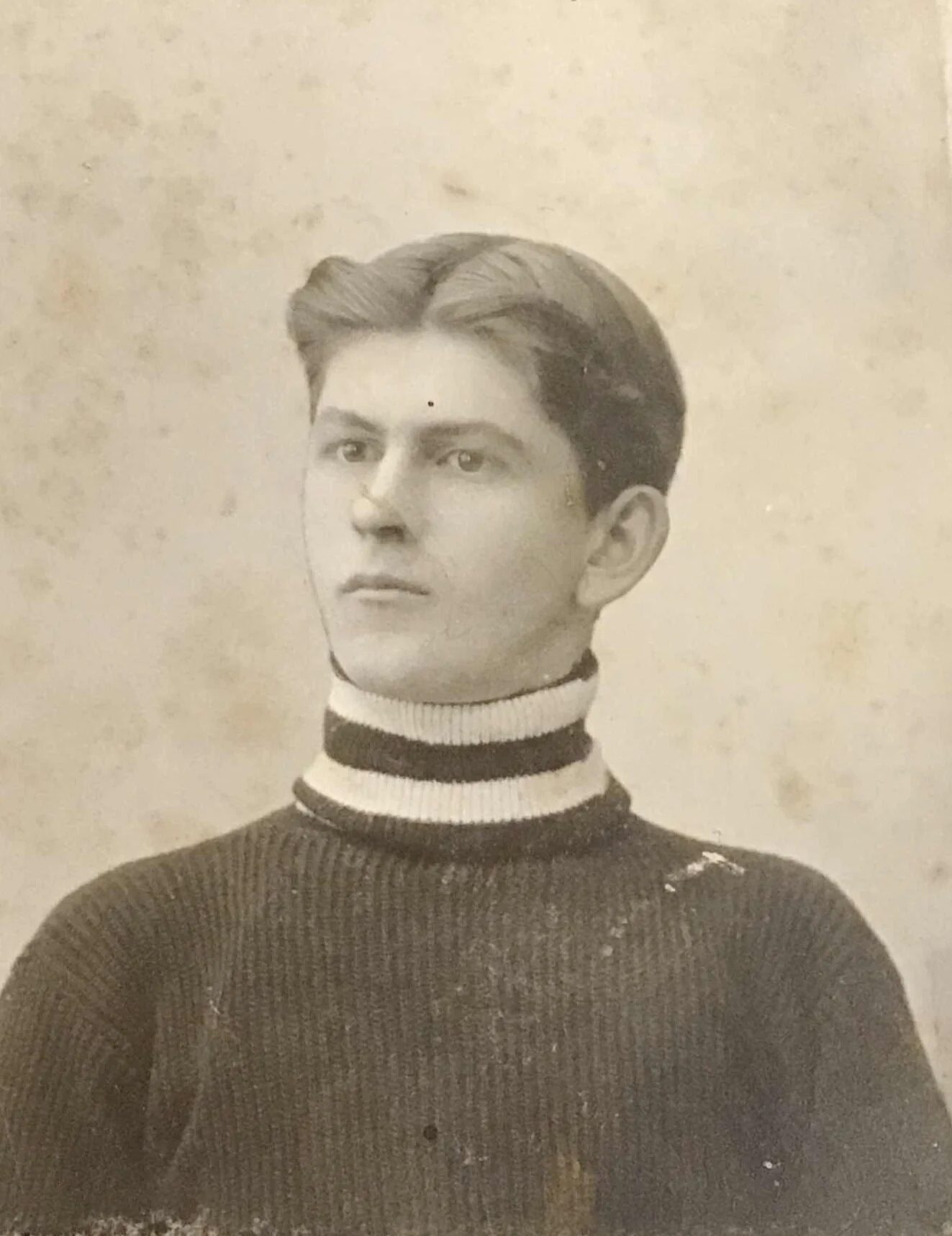
On March 18, 1899, in the Truro Daily News, sandwiched between an ad for DISH CLOTH SOAP (only 25 cents for a long bar and a nice dish cloth on offer from S.M. Bentley & Co) and an ad that read: Ladies (in large bold type) If you are fond of delicious new confectionery, call and see our stock of chocolates, snow flakes chocolates, creams, mixed candies - all of the best from proprietor J.M. O’Brien, there was an article reporting on the character and background of Karl Creelman.

These days it’s infrequent that we travel for the journey. We are much more inclined to travel as a means to an end, a way to arrive at our destination.

Planning a trip around the world requires significant preparation for the expected and the unexpected. Scheduling travel and arranging accommodation must be done while taking into account transportation logistics, budget, and health and safety risks.

It’s the part of the story that’s missing for me, my passion, the visual element — the photos of Karl’s journey — and that’s when it became clear, my quest: to follow Karl’s trail around the world and photograph the places he visited.
All 255 Karl Chronicles in one place, with a map of the road travelled. Wander back through the posts, revisit particular places, or discover the journey in a different order.