Vardzia
Vardzia
E13A8152.jpg
 At its peak the complex housed some 2,000 monks across 19 levels. An earthquake in 1283 sheared away half the cliff. Ottoman invasions burned the manuscripts. Shepherds moved in after that, which is why many of the chambers are still blackened insid
E13A7857.jpg
E13A7999.jpg
E13A7992.jpg
E13A7901.jpg
E13A8034-Pano.jpg
Kutaisi
Kutaisi
E13A8225.jpg
E13A8259.jpg
E13A8154.jpg
E13A8239.jpg
Churchkhela
Churchkhela
E13A8196.jpg
Tskaltubo
Tskaltubo
E13A8318.jpg
E13A8291.jpg
E13A8369.jpg
E13A8496.jpg
E13A8396.jpg
E13A8348.jpg
E13A8380.jpg
E13A8365.jpg
E13A8367.jpg
E13A8555.jpg
E13A8344.jpg
E13A8467.jpg
E13A8355.jpg
E13A8481.jpg
 Remants of Sanatorium Gelati, built for children, with this mosaic playground still intact.
E13A8410.jpg
E13A8458.jpg
E13A8483.jpg
E13A8552.jpg
E13A8541.jpg
Motsameta Monastery
Motsameta Monastery
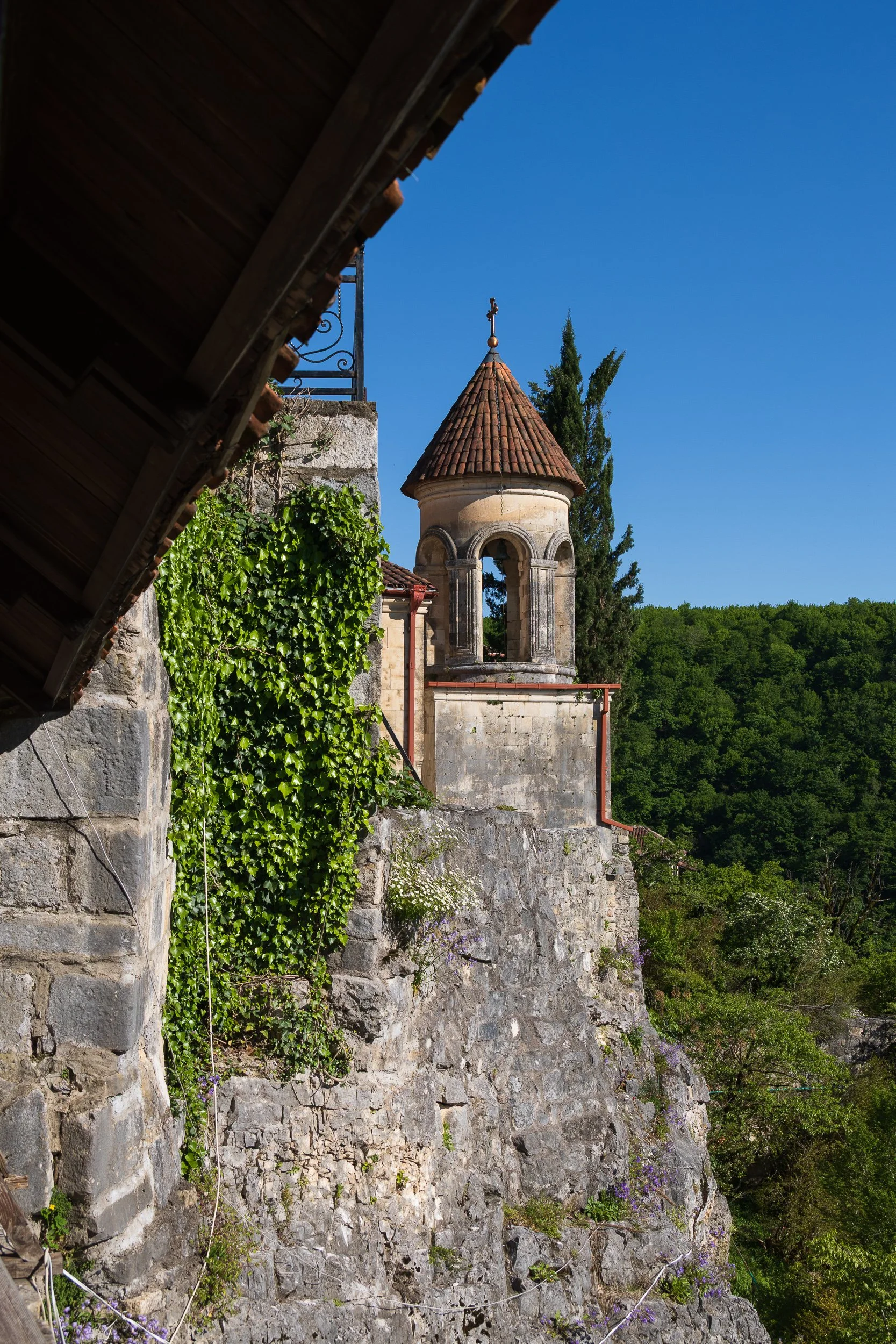
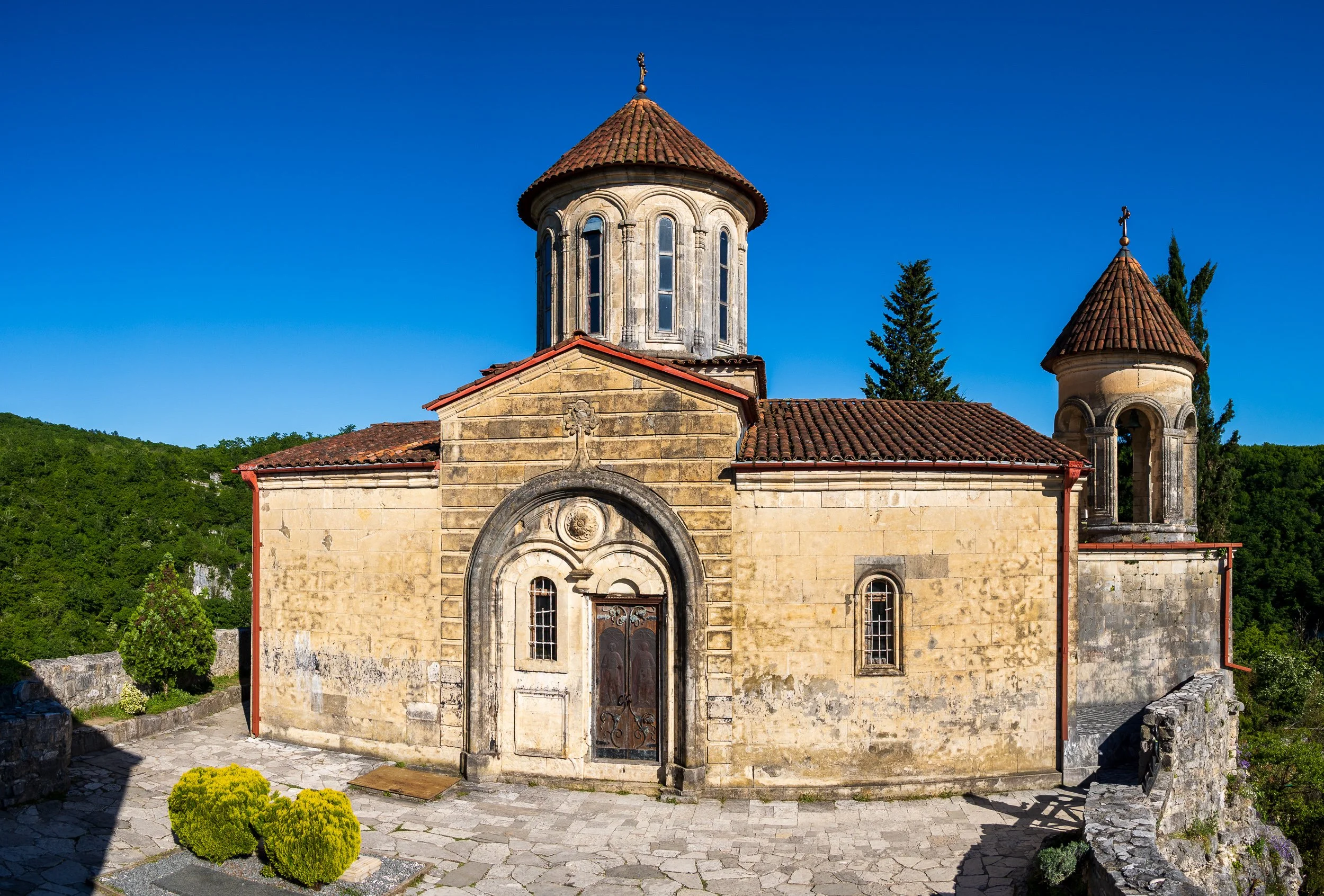
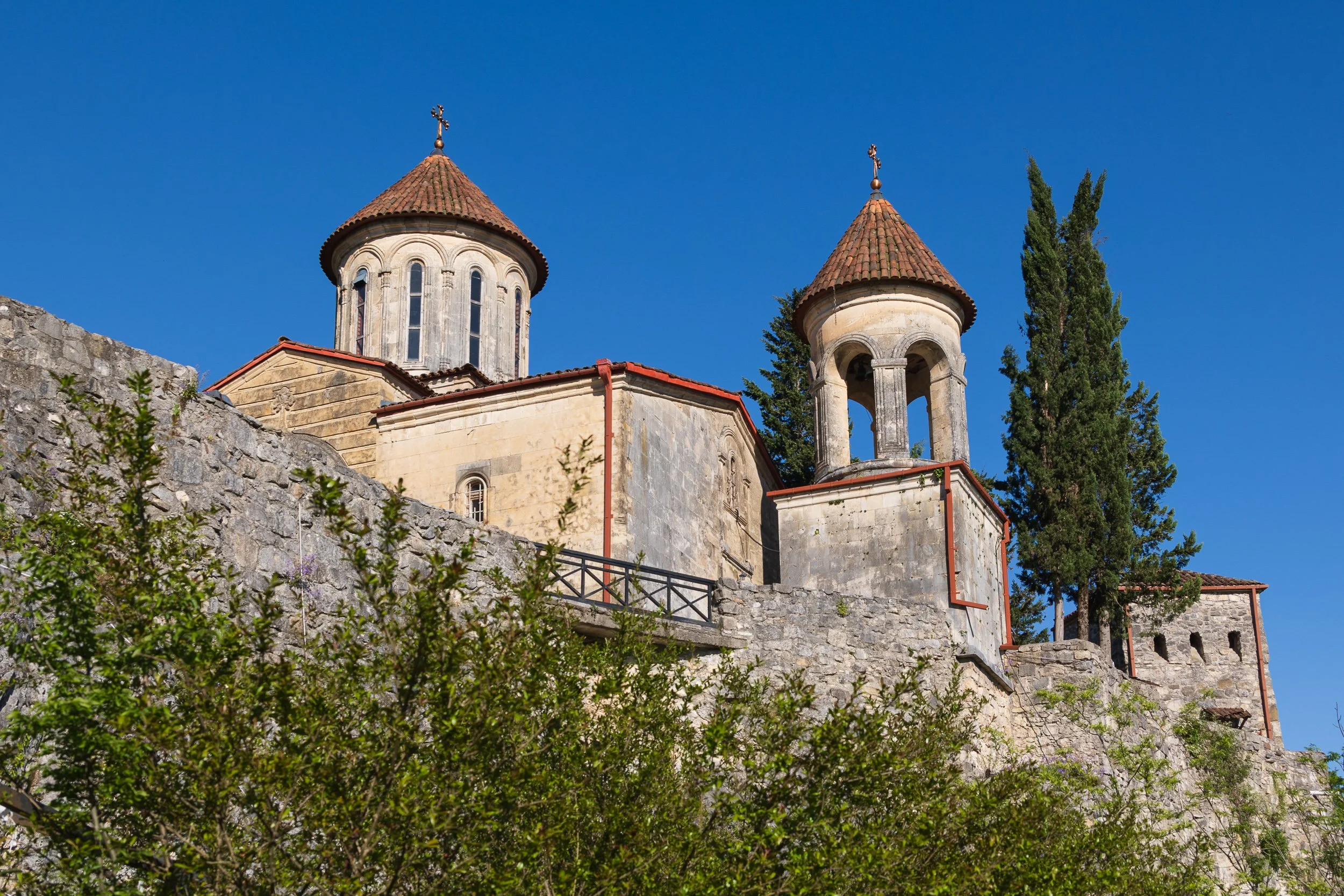
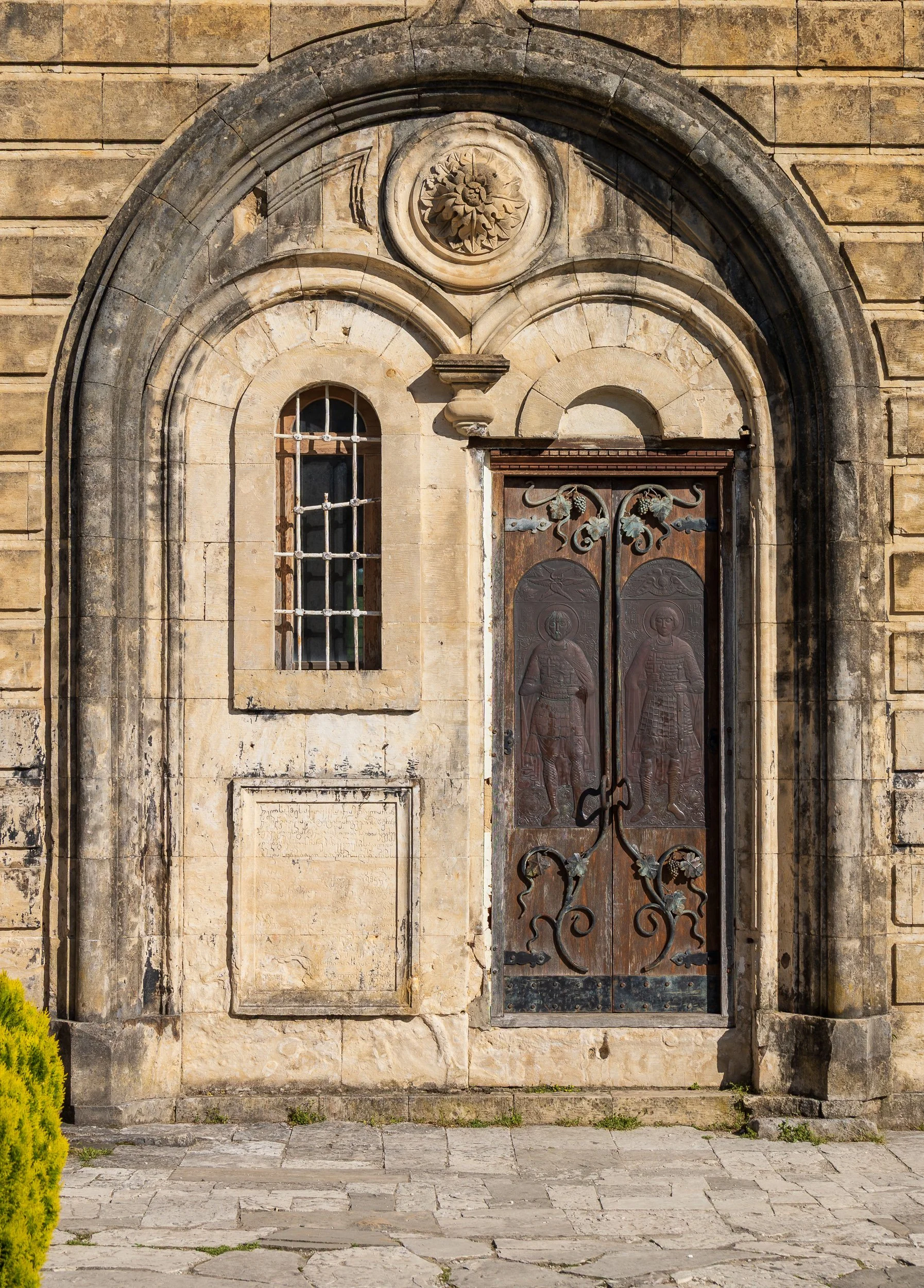
 Motsameta Monastery: The name translates as "Place of the Martyrs," earned in the 8th century when two noble brothers, David and Constantine, refused to convert to Islam under Arab invasion, accepted torture and death instead, and were thrown into t
E13A8582.jpg
E13A8641.jpg
E13A8626.jpg
E13A8583.jpg
E13A8611-Pano.jpg
Uplistsikhe
Uplistsikhe
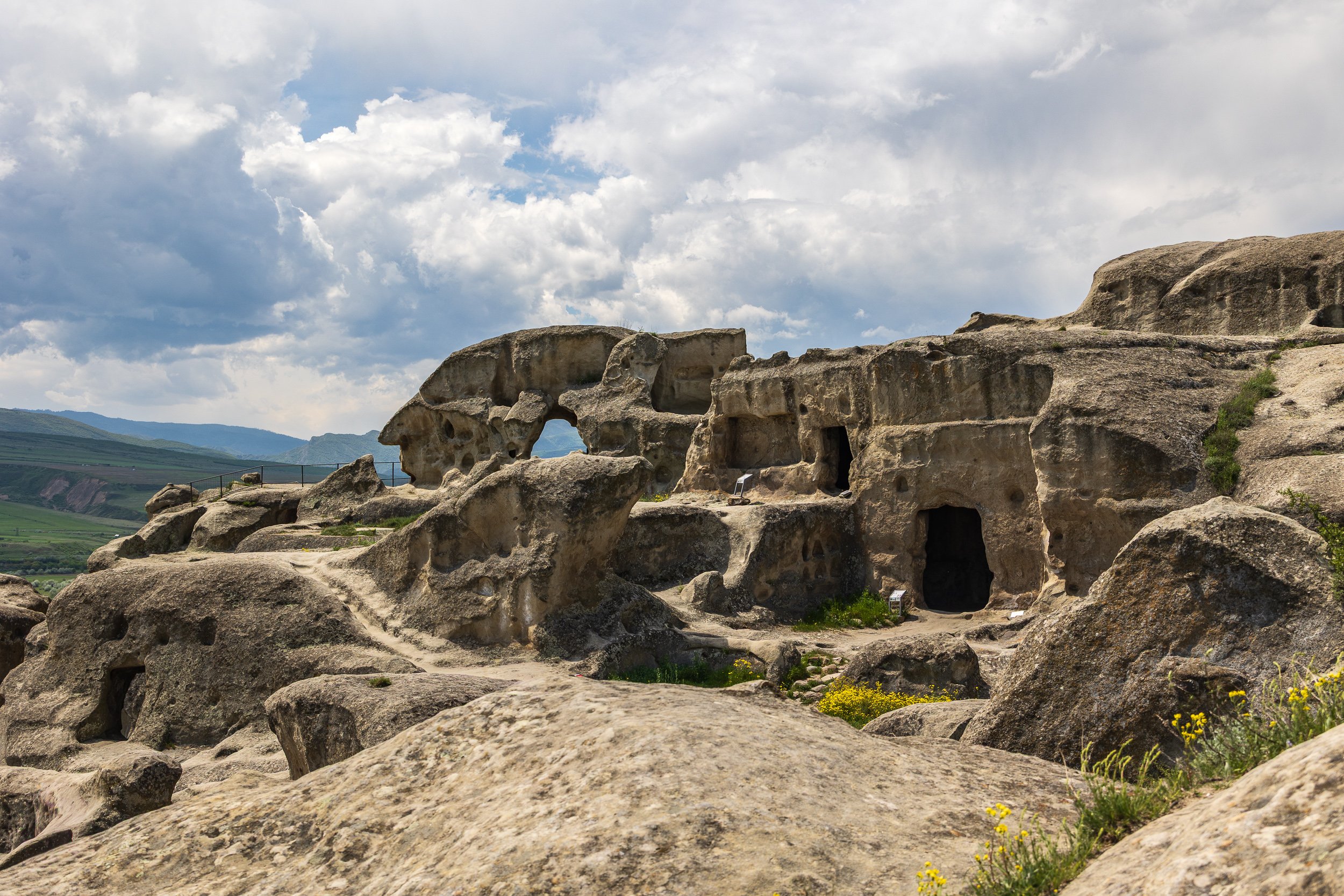
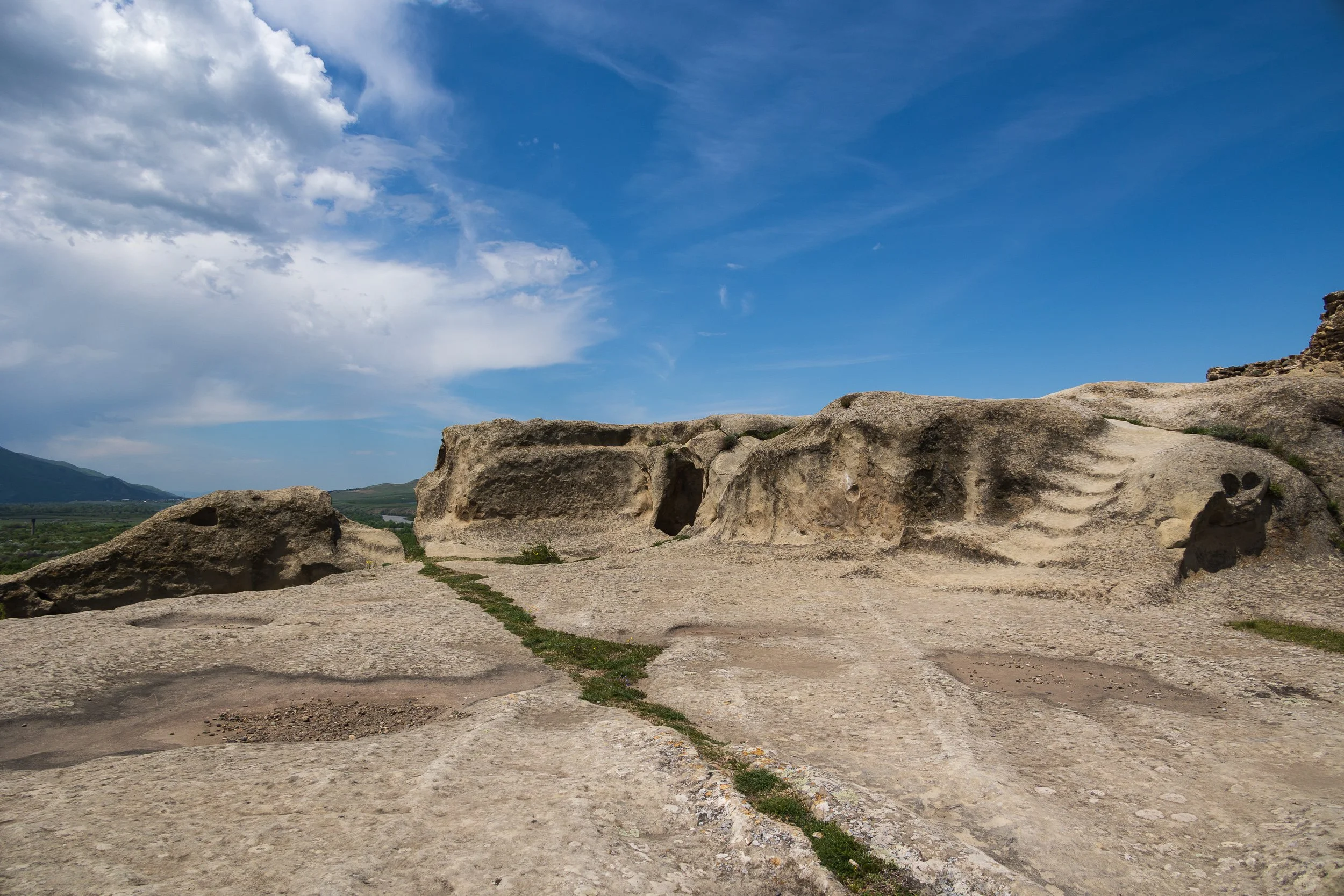
 150 remaining caves out of a larger complex spanning 8 hectares. Notable remnants include ancient wine cellars (marani), a Hellenistic-style amphitheater, pharmacies, prisons, and the Hall of Queen Tamar
E13A8713.jpg
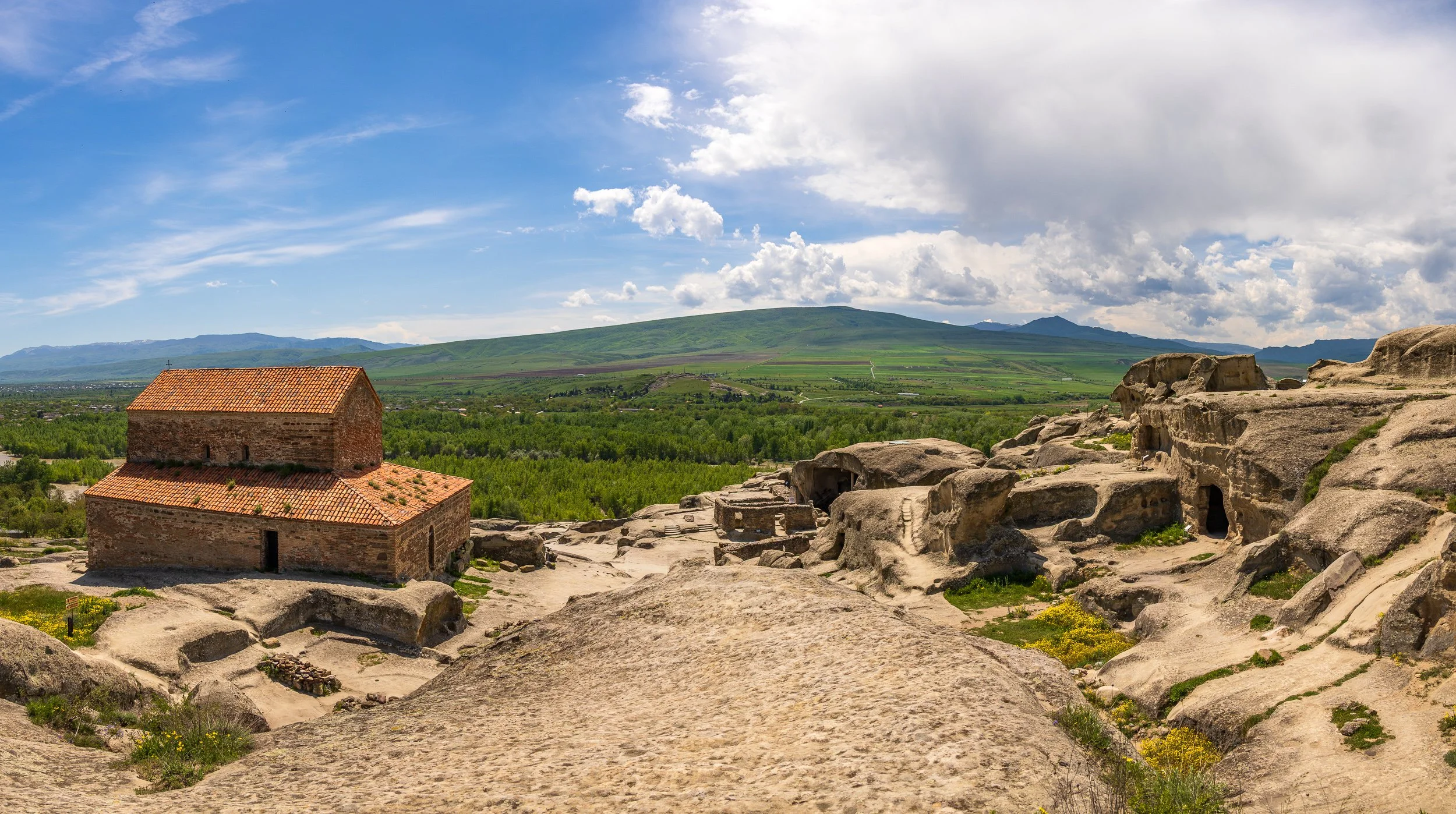
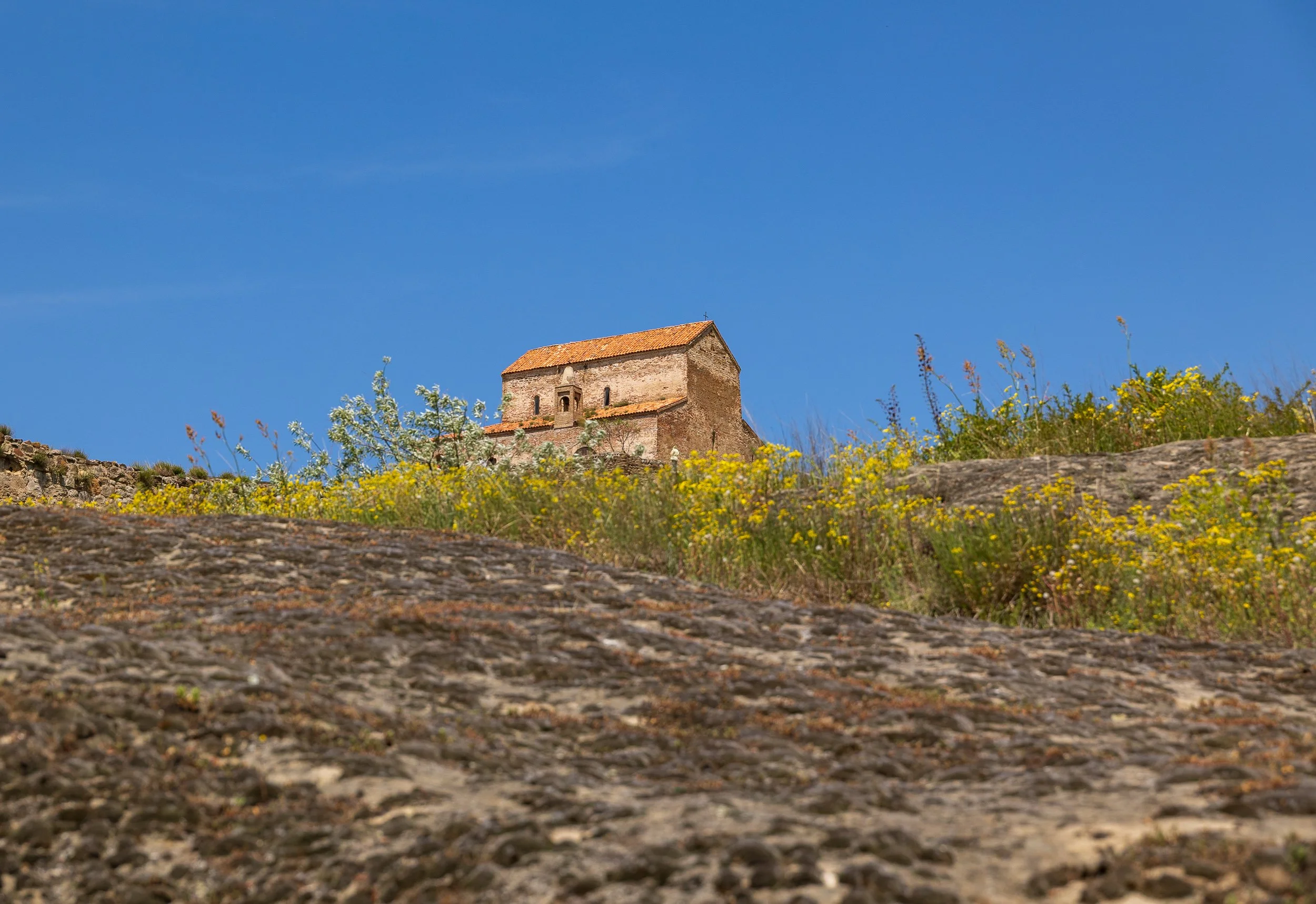
 Near the top of the hill sits the 10th-century Uplistsuli Church, a triple-church basilica built directly over the ruins of a former pagan sun temple.
E13A8806.jpg
 Many of the grand ceremonial spaces feature dramatic tunnel-vaulted ceilings. The soft sandstone has been carved with geometric squares and ribs, creating deep recessed panels called coffers.
E13A8786.jpg
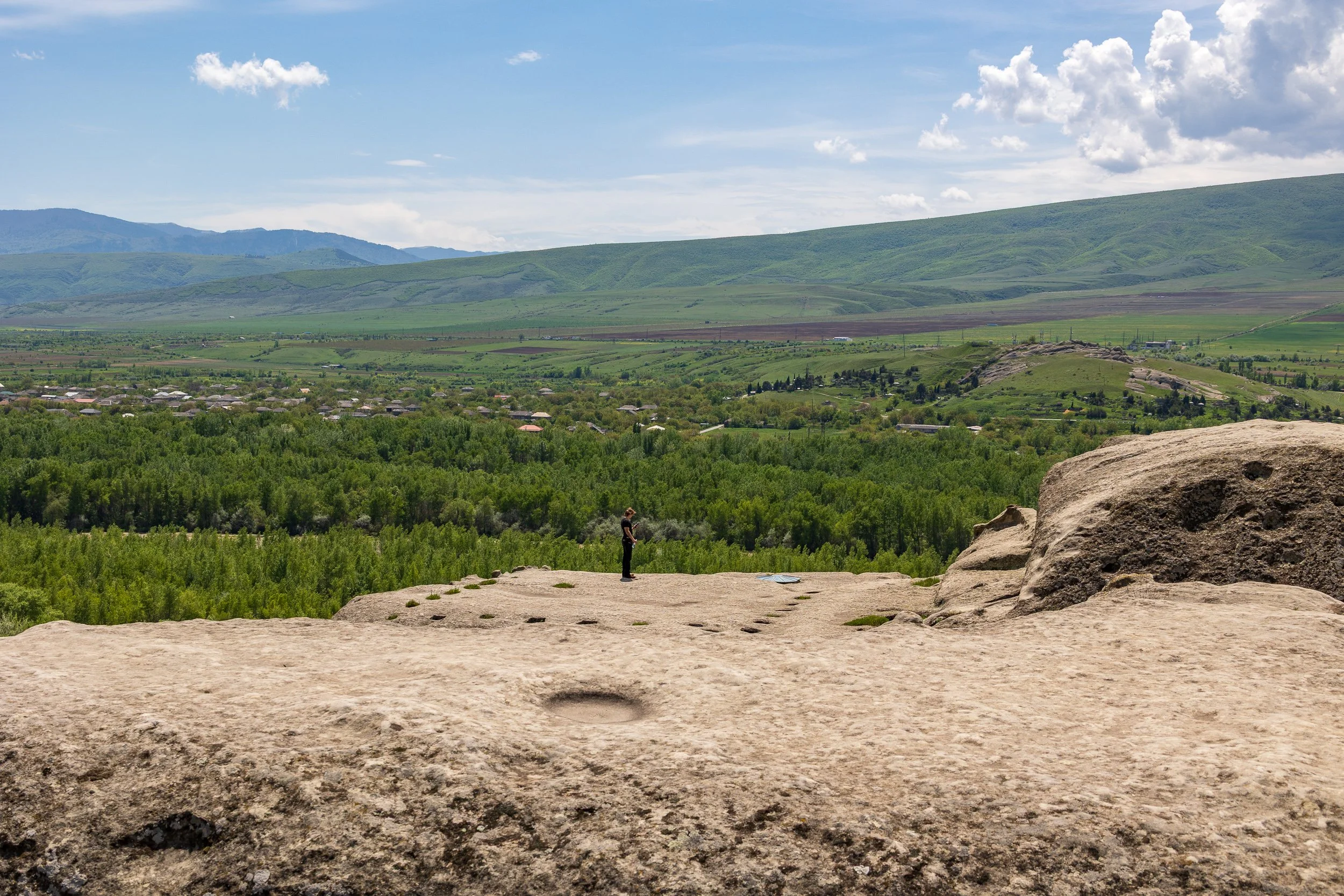
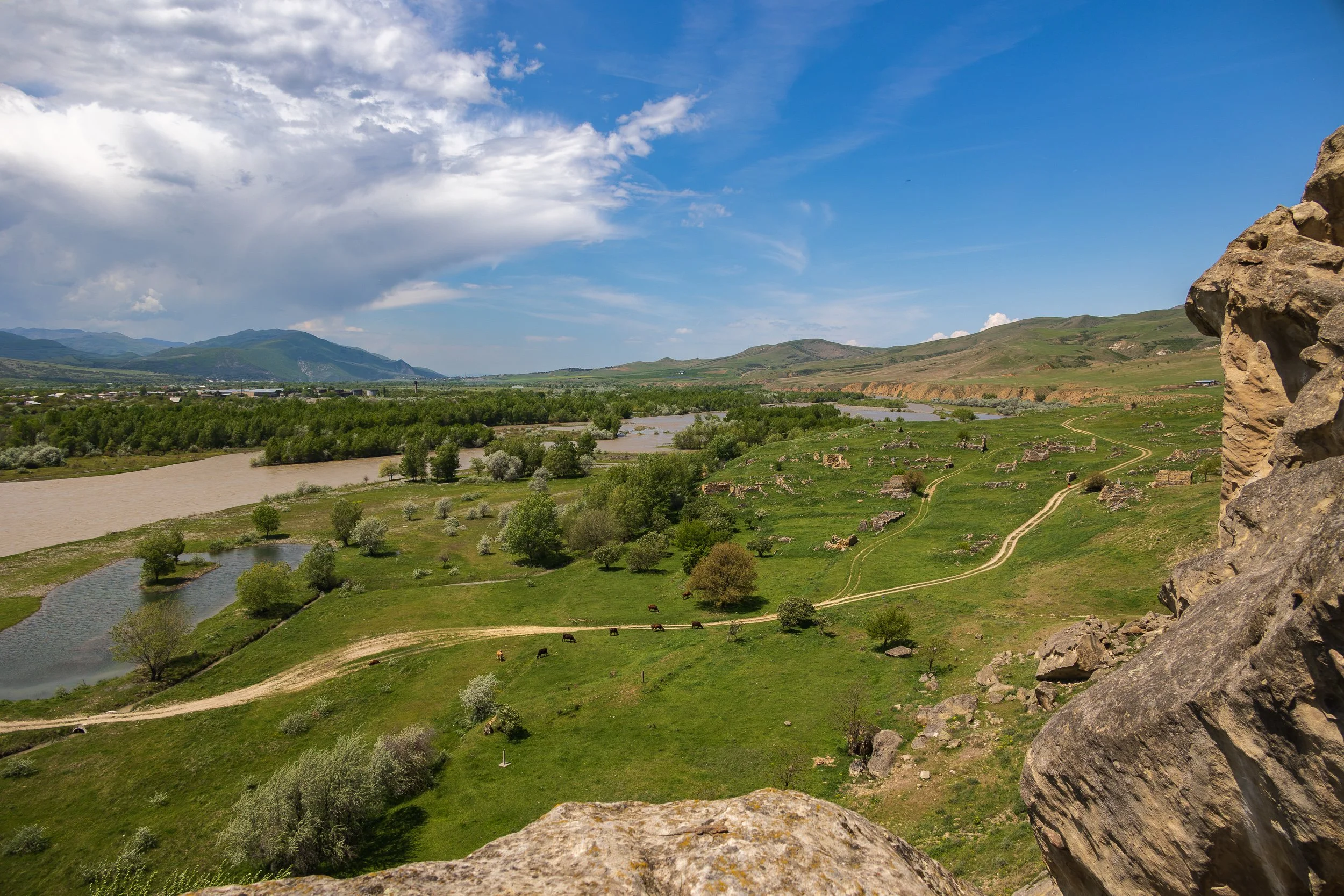
 Views looking down and out from the ancient rock-hewn caves of Uplistsikhe, Georgia, feature sweeping, panoramic vistas of the winding Mtkvari River basin and the sprawling rural valleys.
E13A8771-Pano-Edit.jpg
E13A8669.jpg
 The ruins of the newer, abandoned village of Kvakhvreli are visible tucked within the scrubland below the cliff face.
Tblisi
Tblisi
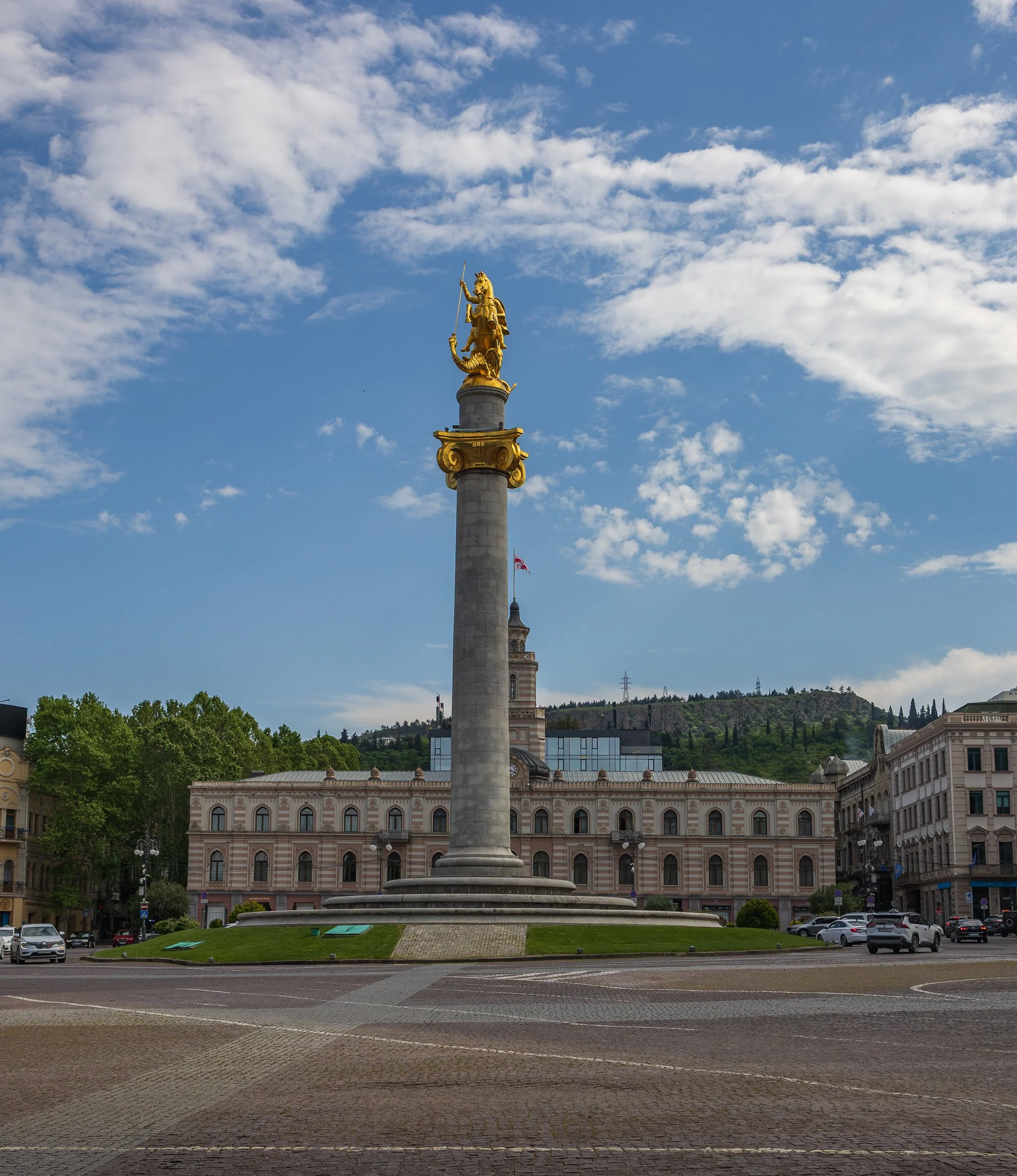
 The Freedom Monument stands at the centre of the roundabout in Freedom Square, gold against the Tbilisi skyline.
E13A9191.jpg
 Stamba Hotel, a repurposed publishing house
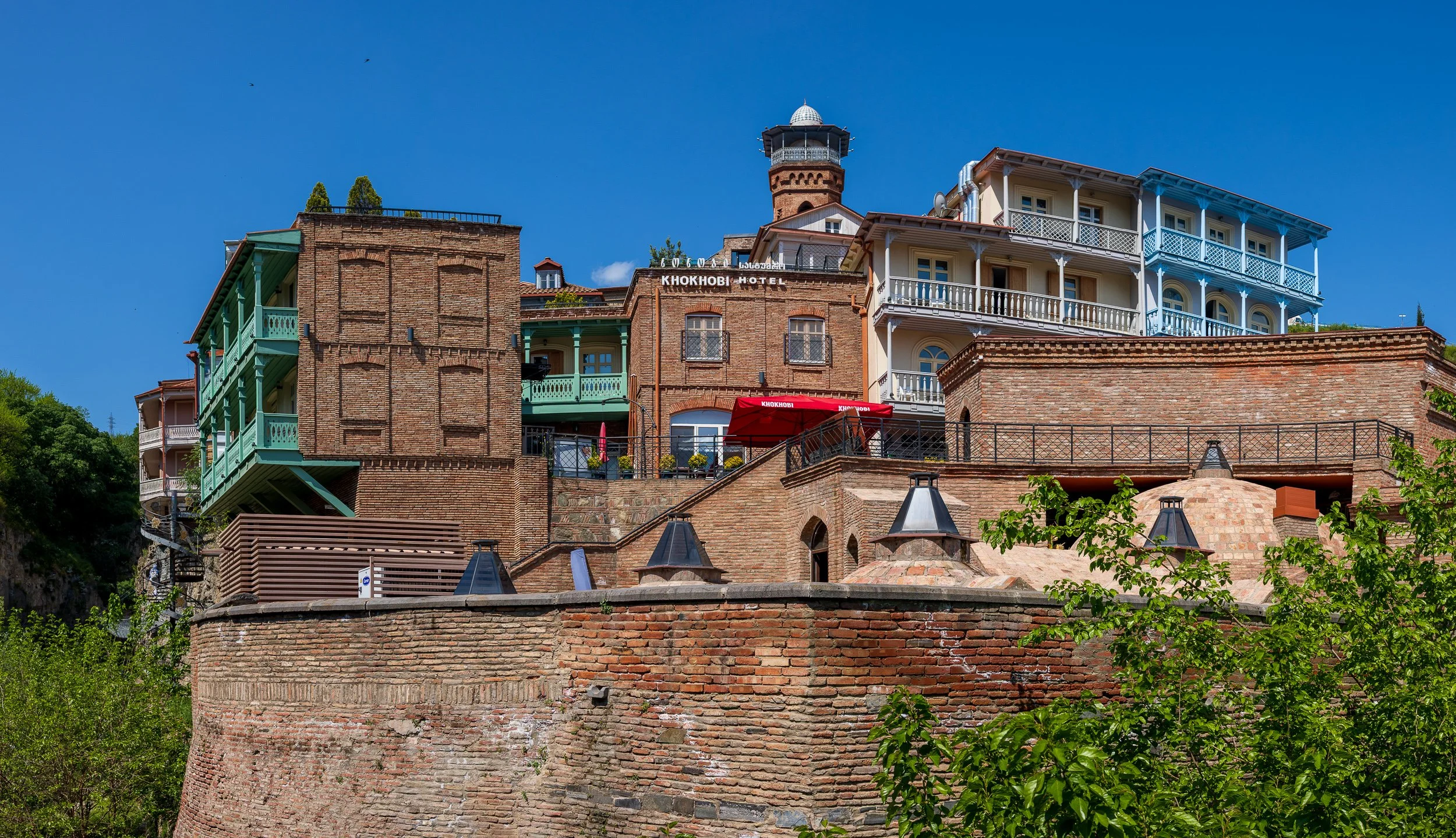
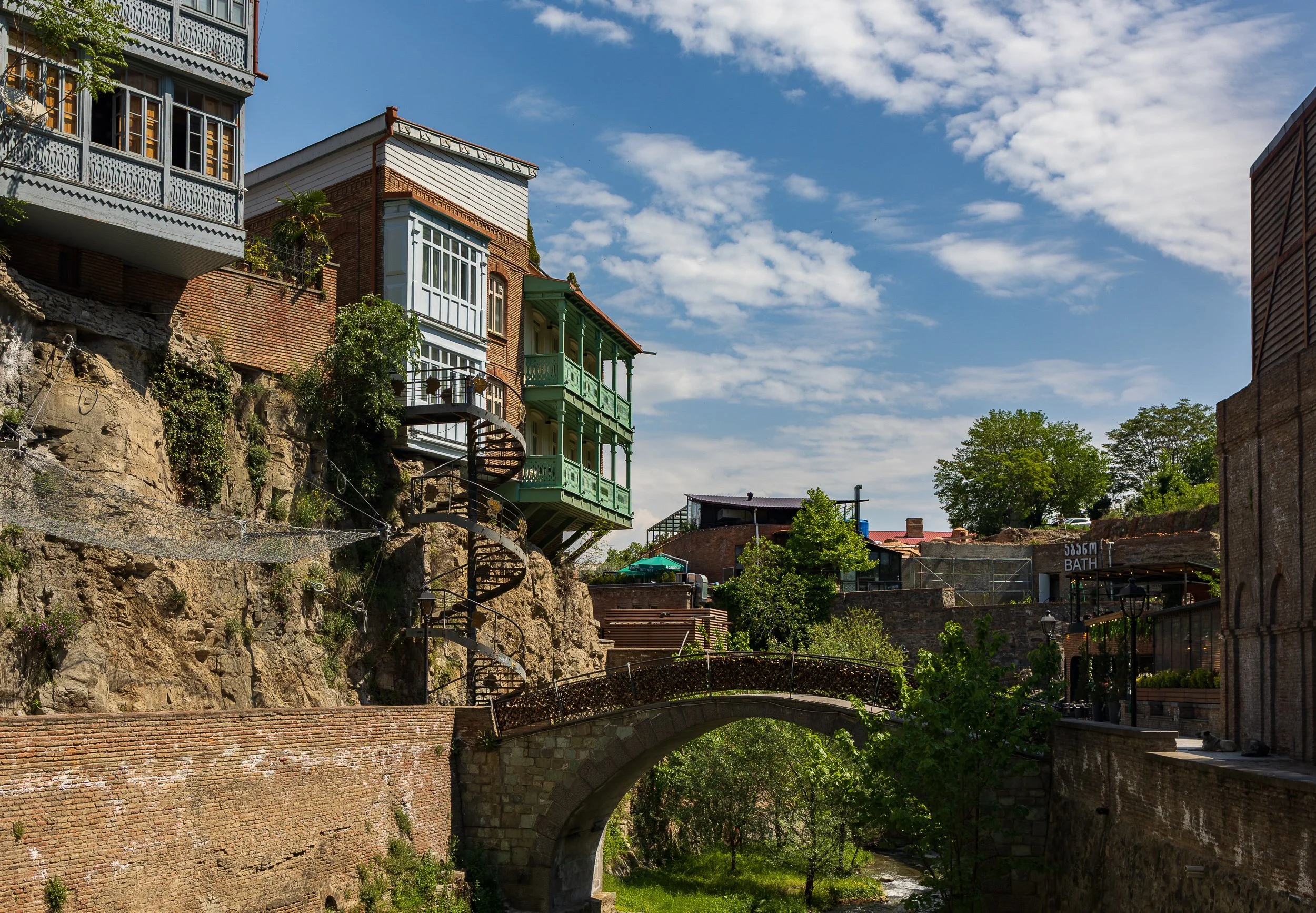
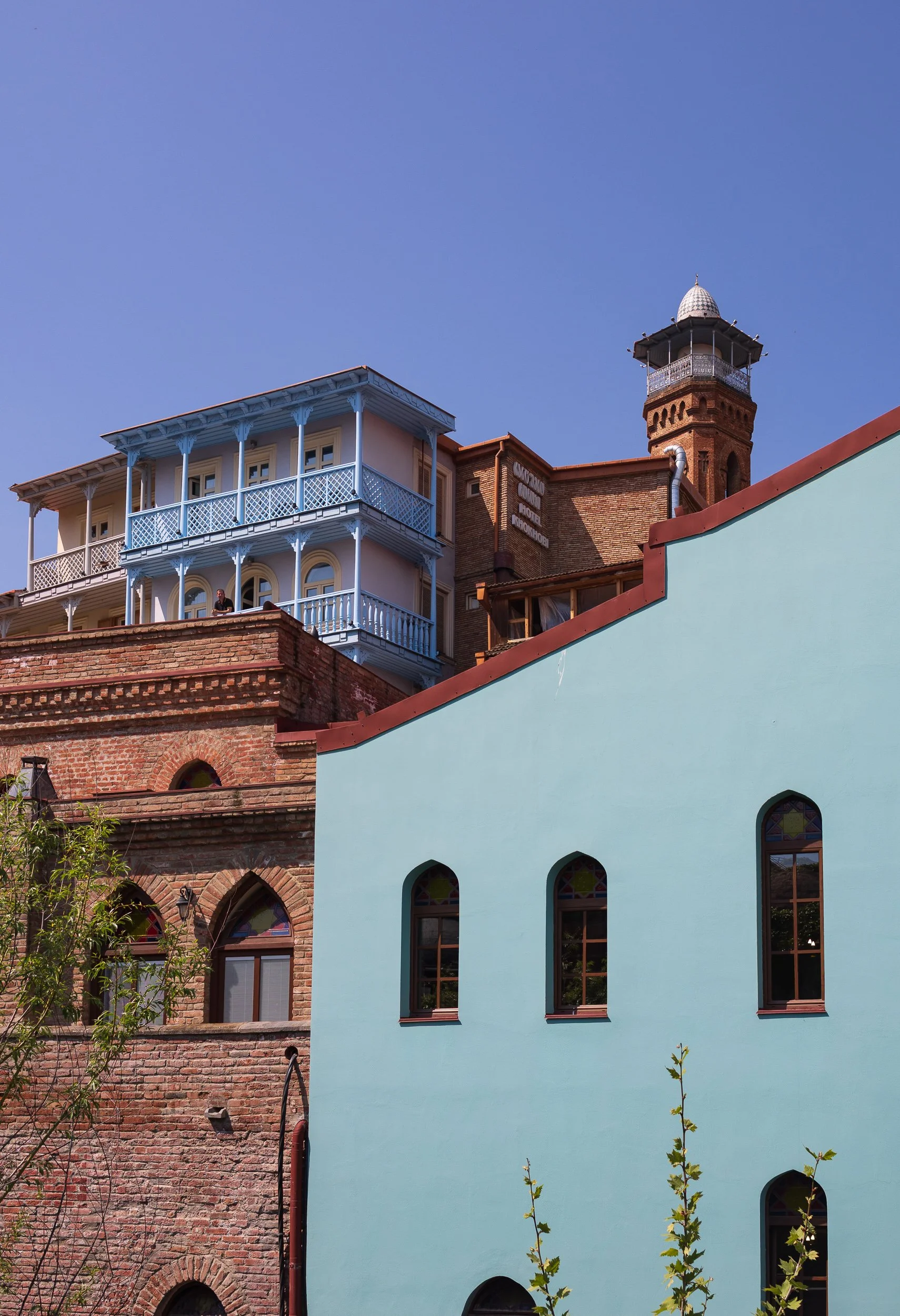
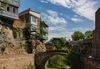
 Old Town balconies - Carved wooden balconies cling to the cliffside in Tbilisi's Old Town, layered brick and timber stacked above the rock.
E13A9118.jpg
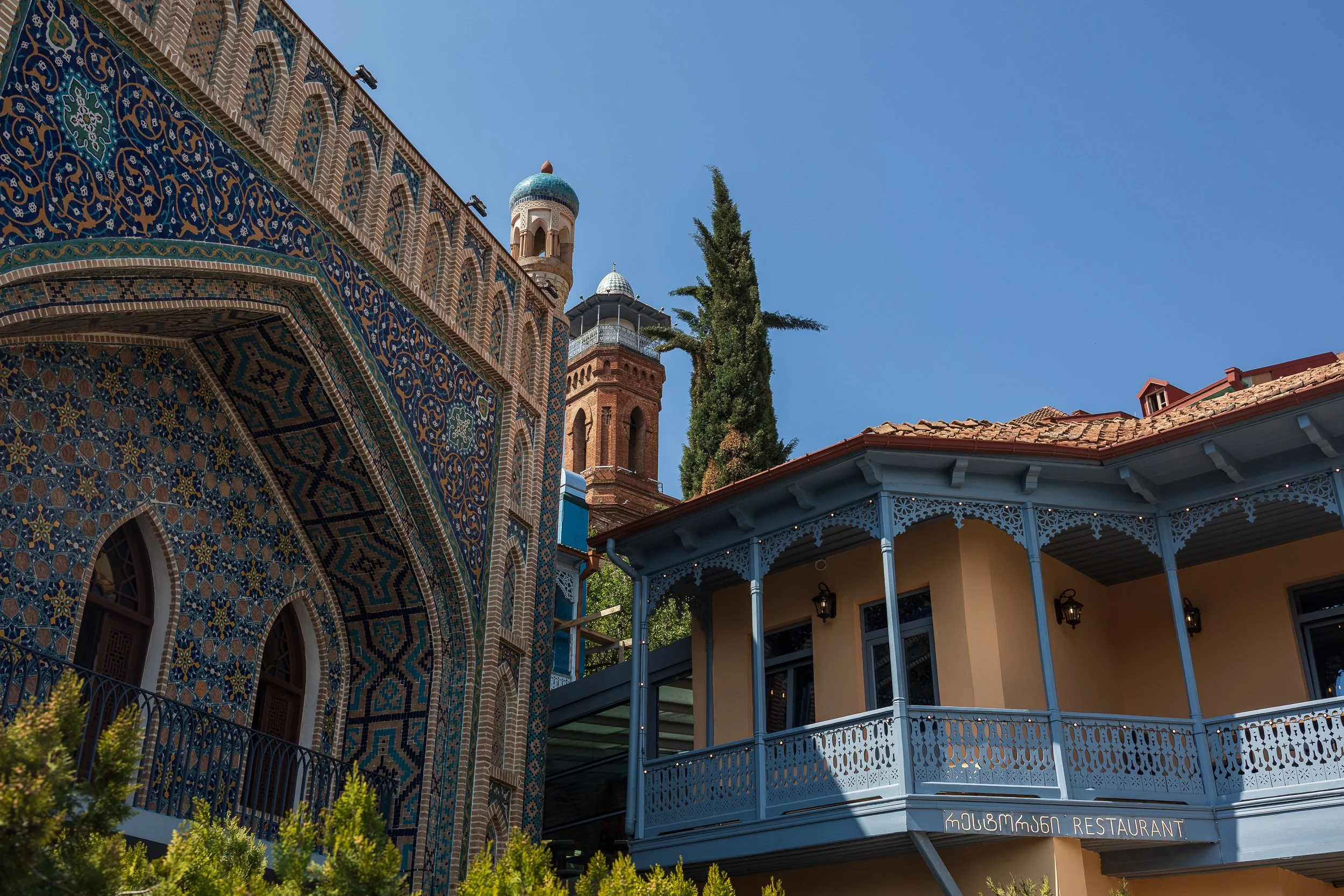
 Jumah Mosque, the only surviving mosque in Tbilisi, where Sunni and Shia worshippers pray side by side beneath the same roof.
E13A9074.jpg
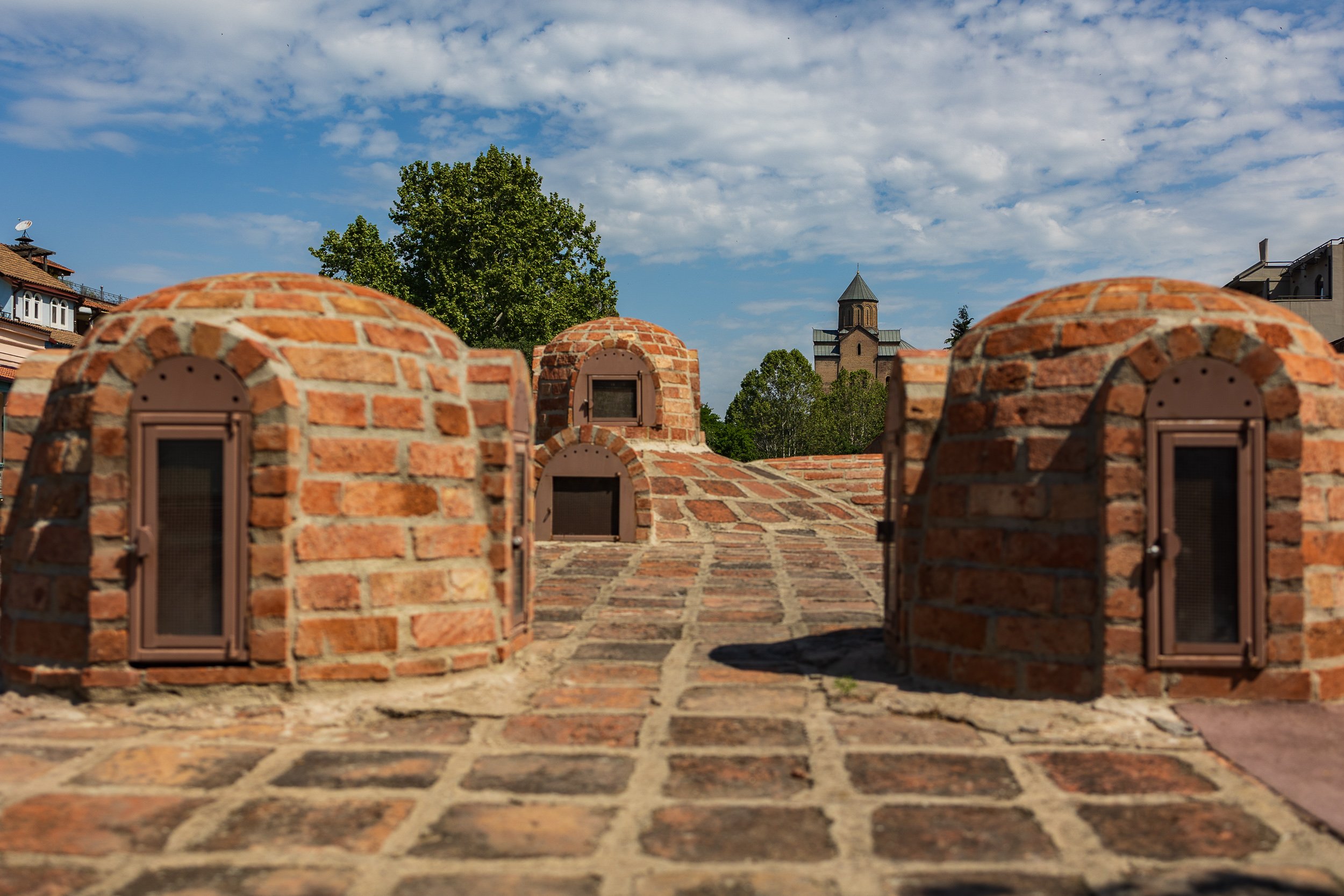
 Abanotubani, the sulphur bath district, domed brick bathhouses built into the hillside, still in use after centuries.
E13A9326.jpg
E13A8992.jpg
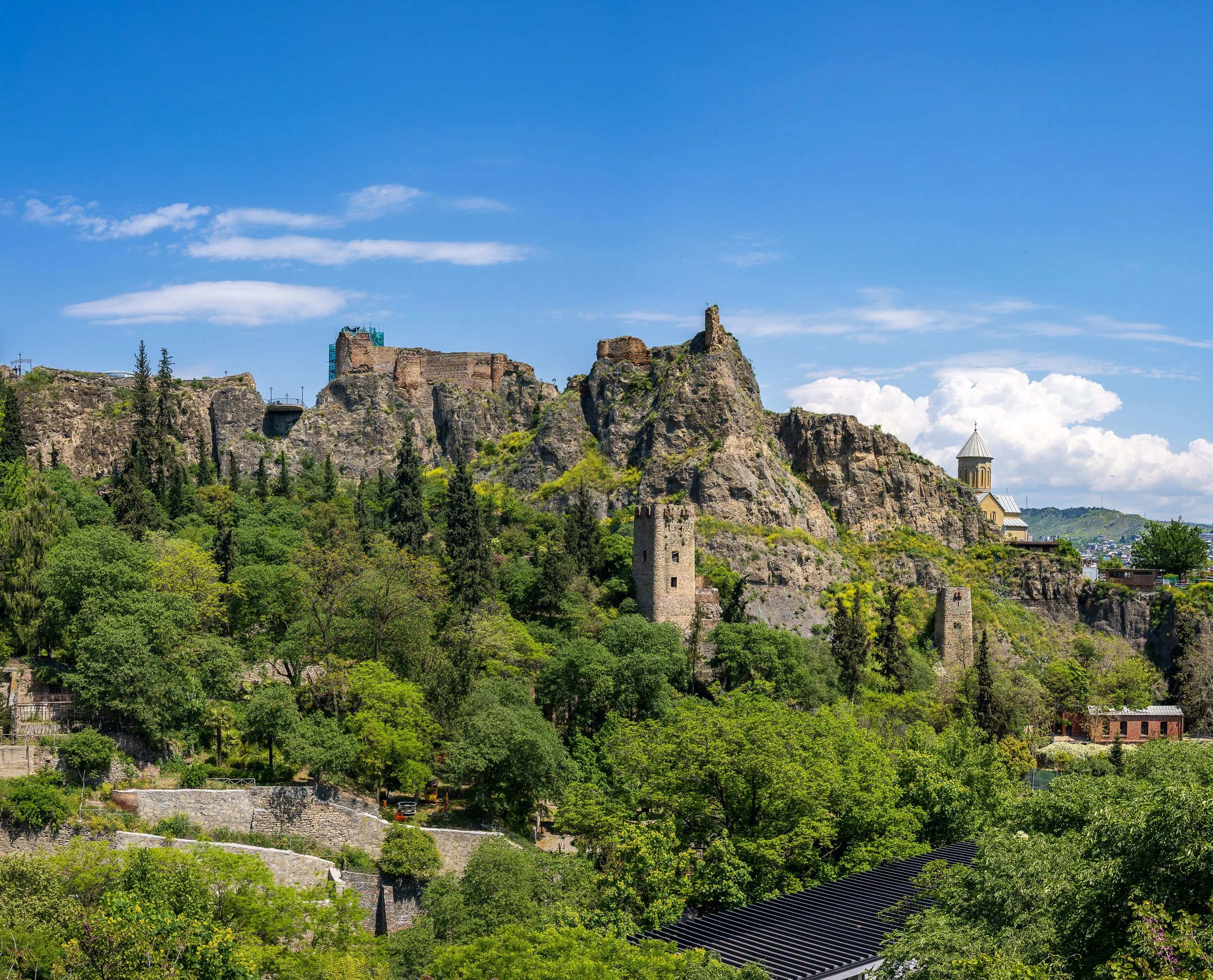
 Narikala Fortress, brick and stone walls climbing the hillside above Old Tbilisi, watching over the city for over a thousand years.
E13A9004.jpg
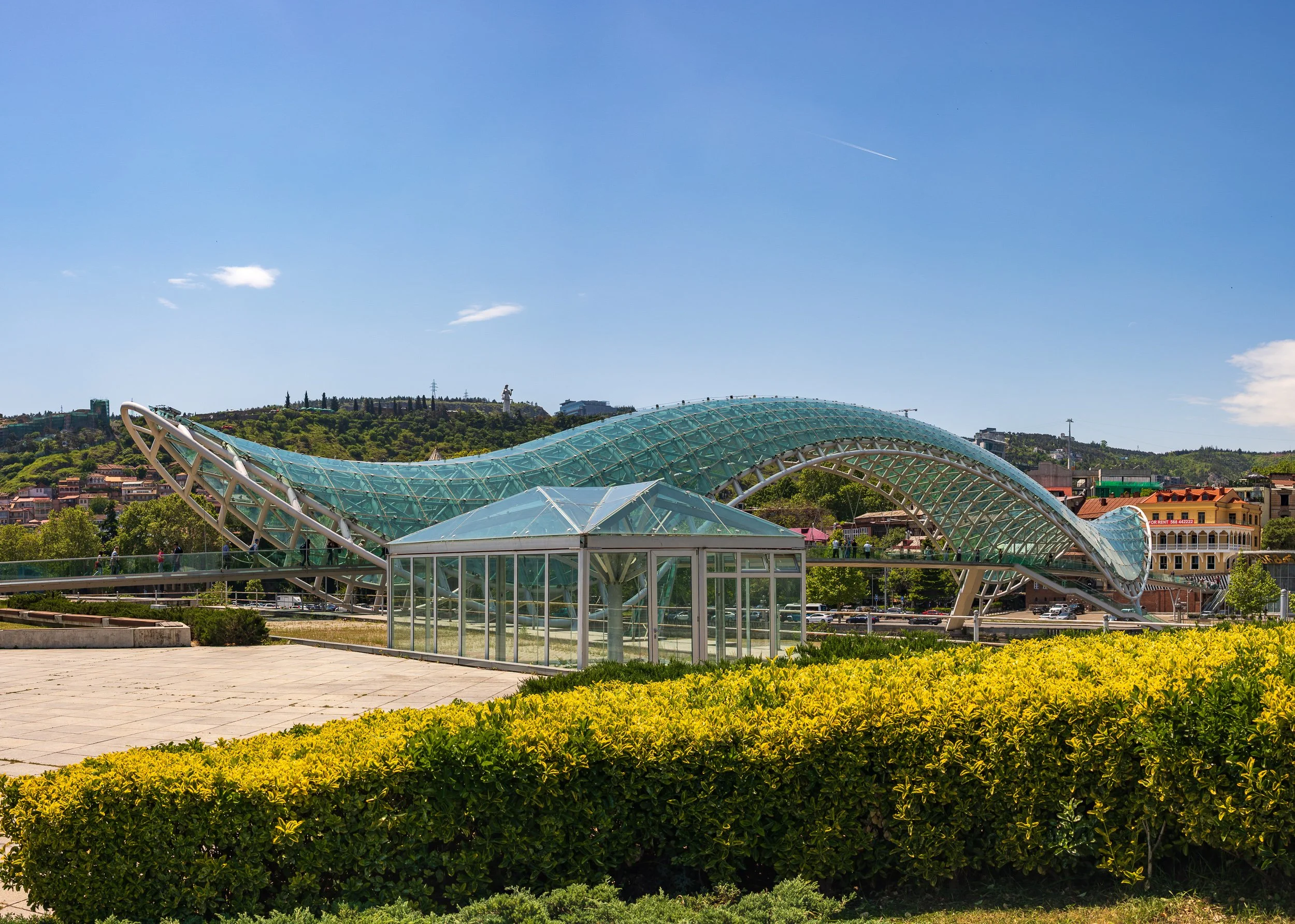
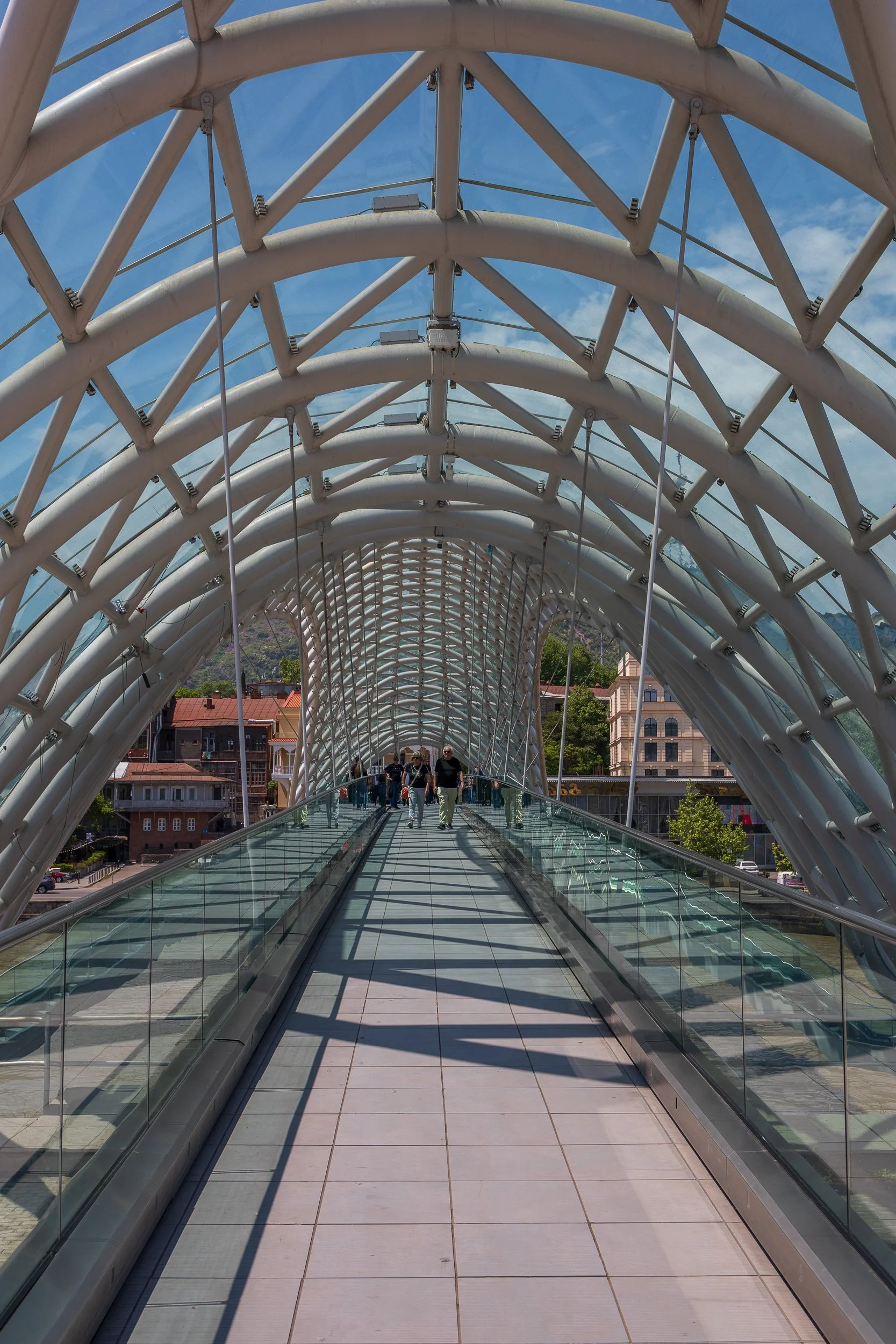
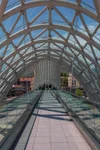
 Bridge of Peace -   A glass and steel canopy arcs across the Mtkvari.
E13A9245.jpg
E13A9269.jpg
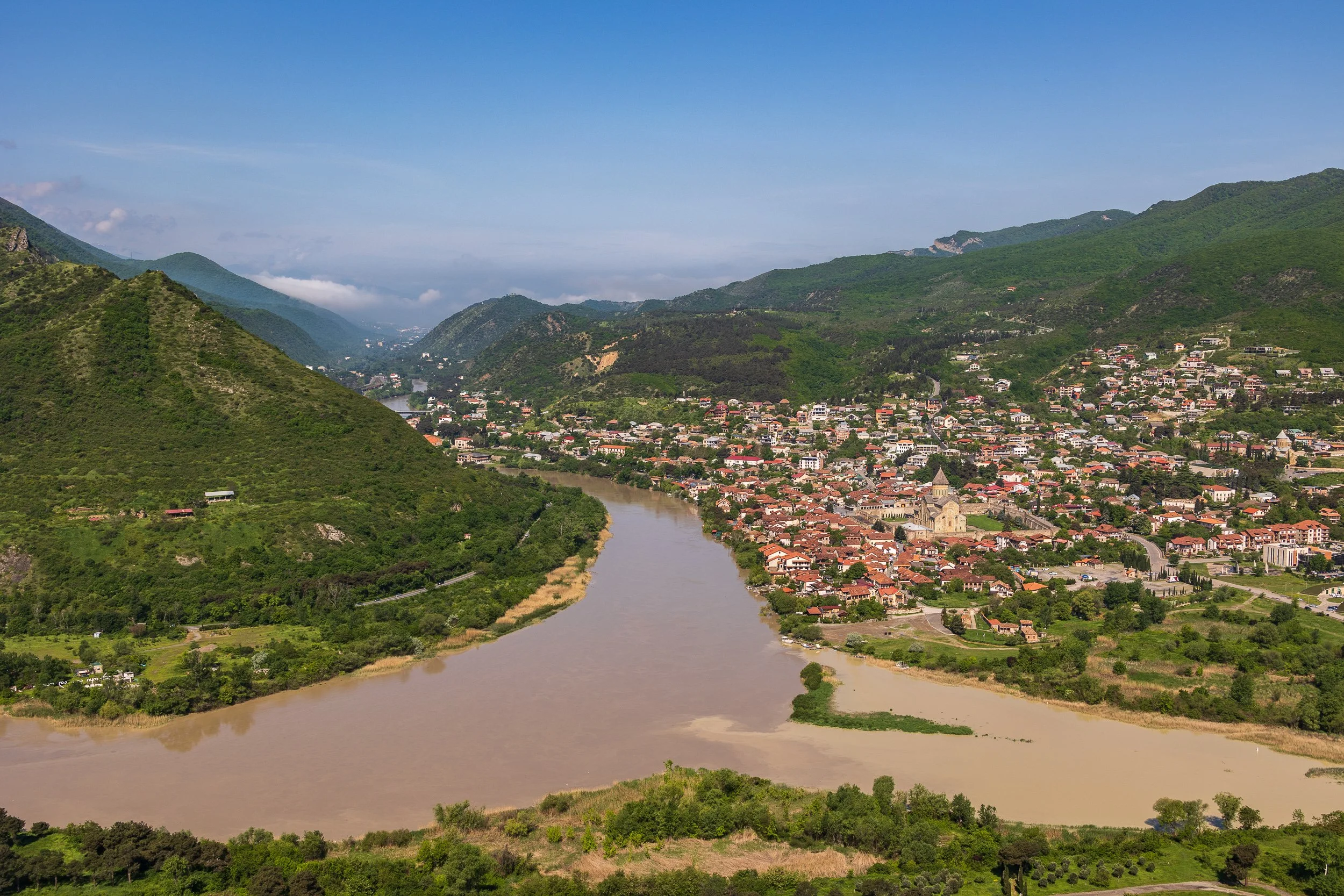
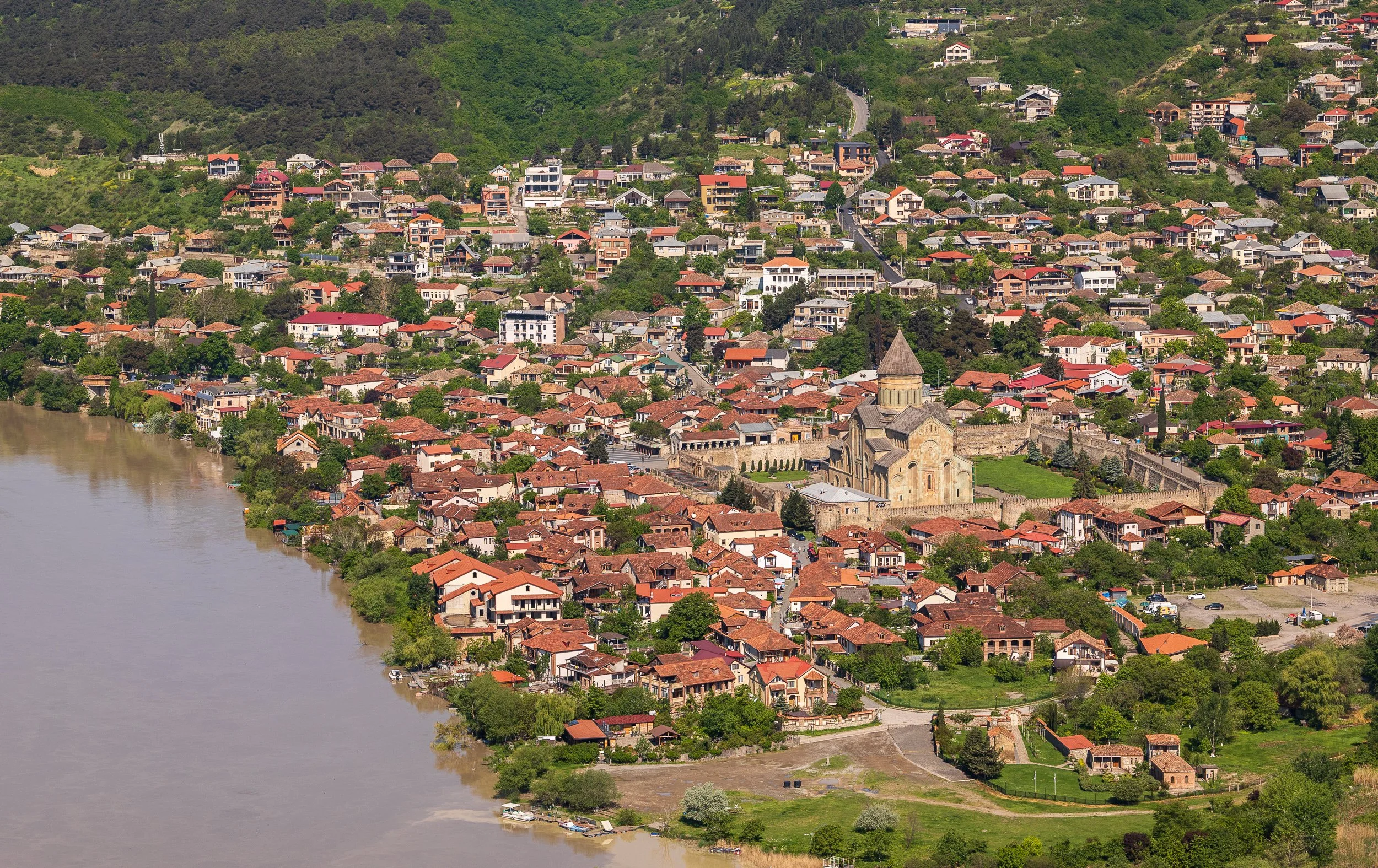
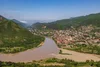
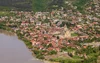
 Mtskheta (the town, from Jvari) - red rooftops crowding the riverbank, the cathedral and its walls at the centre.
 One of the oldest continuously inhabited towns in the world, founded around the 1st millennium BC, with archaeological evidence of settlement going back even further.
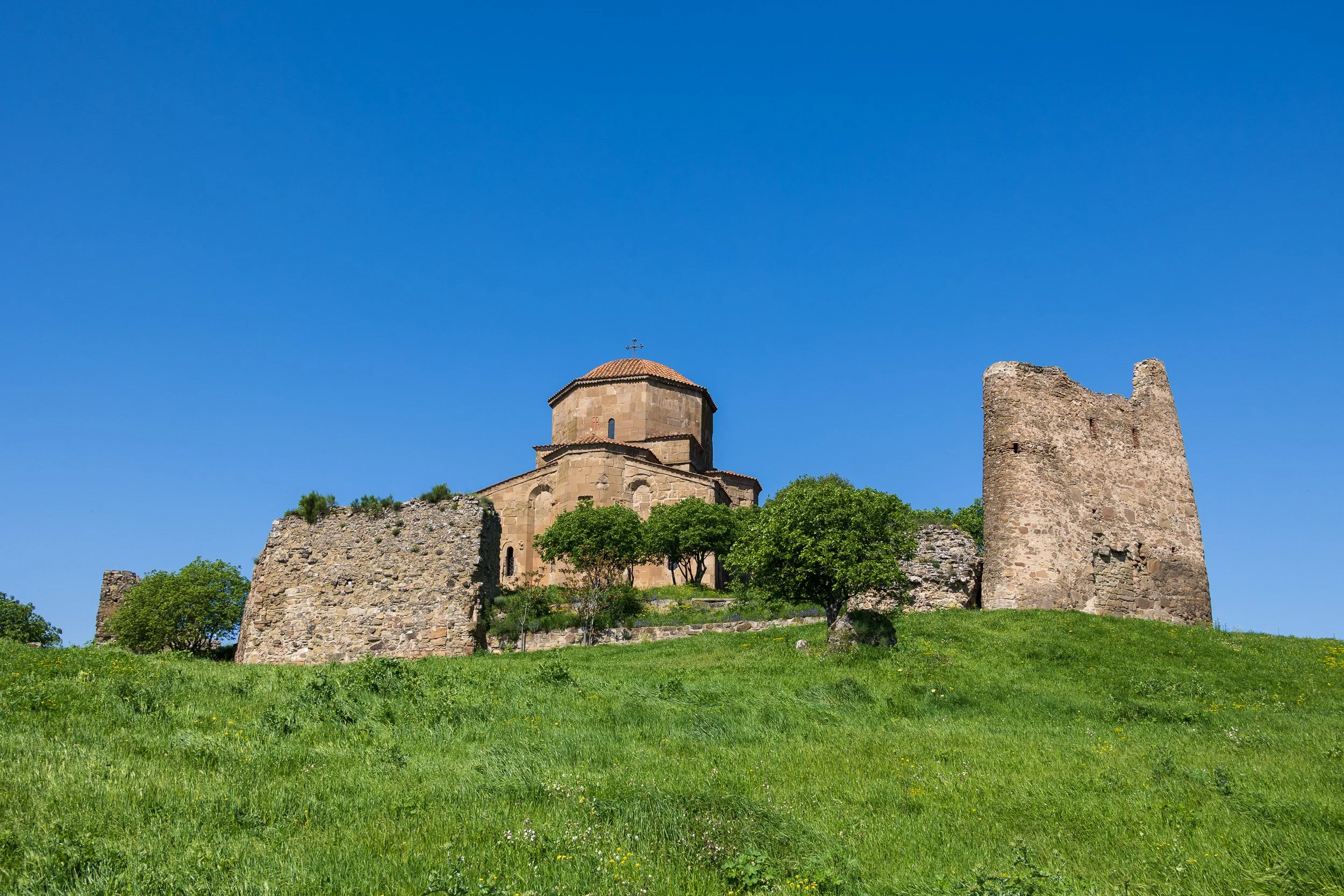
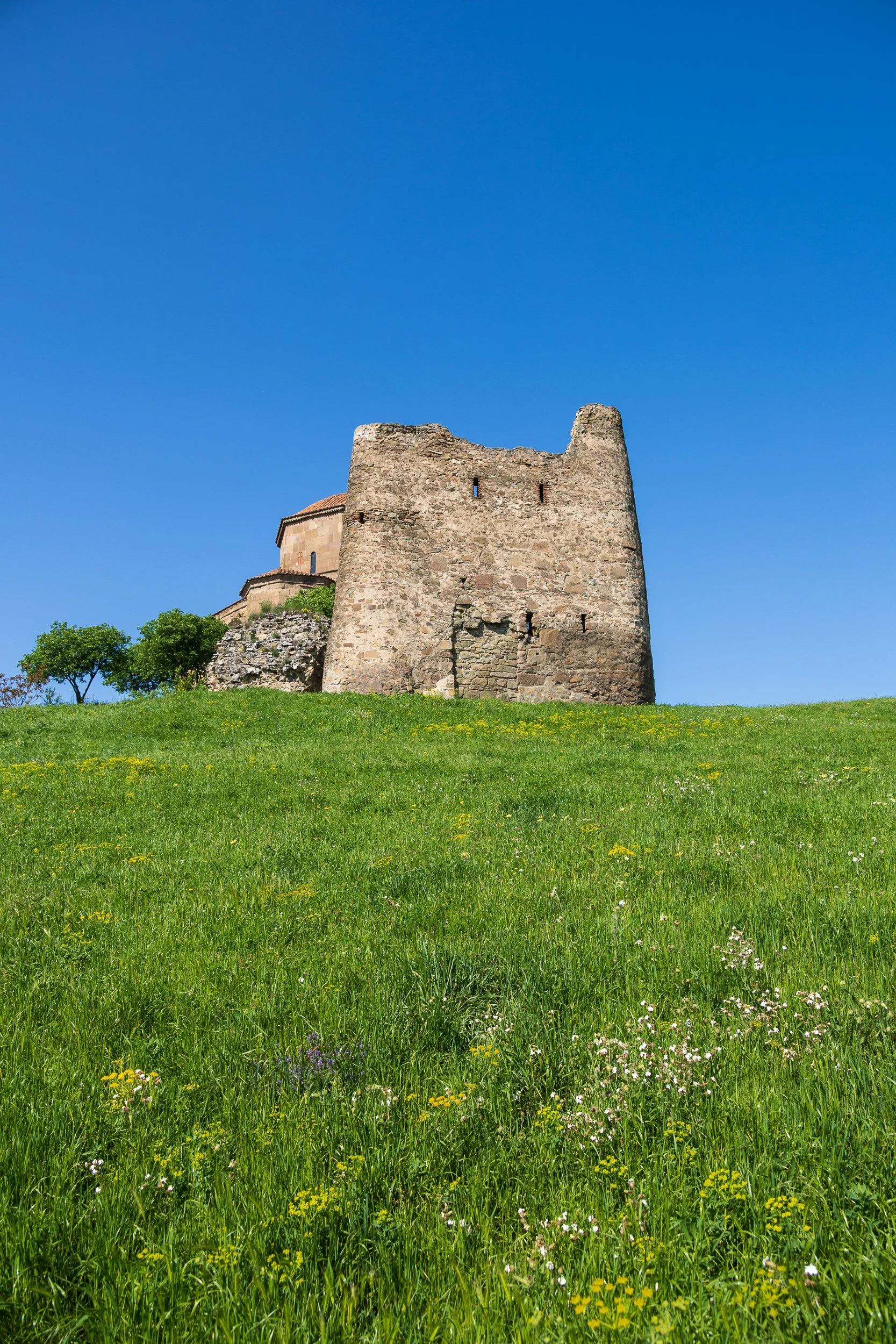
 Jvari Monastery - A 6th-century monastery on the hilltop above Mtskheta, where the Mtkvari and Aragvi rivers meet.
E13A9431.jpg
E13A9375.jpg
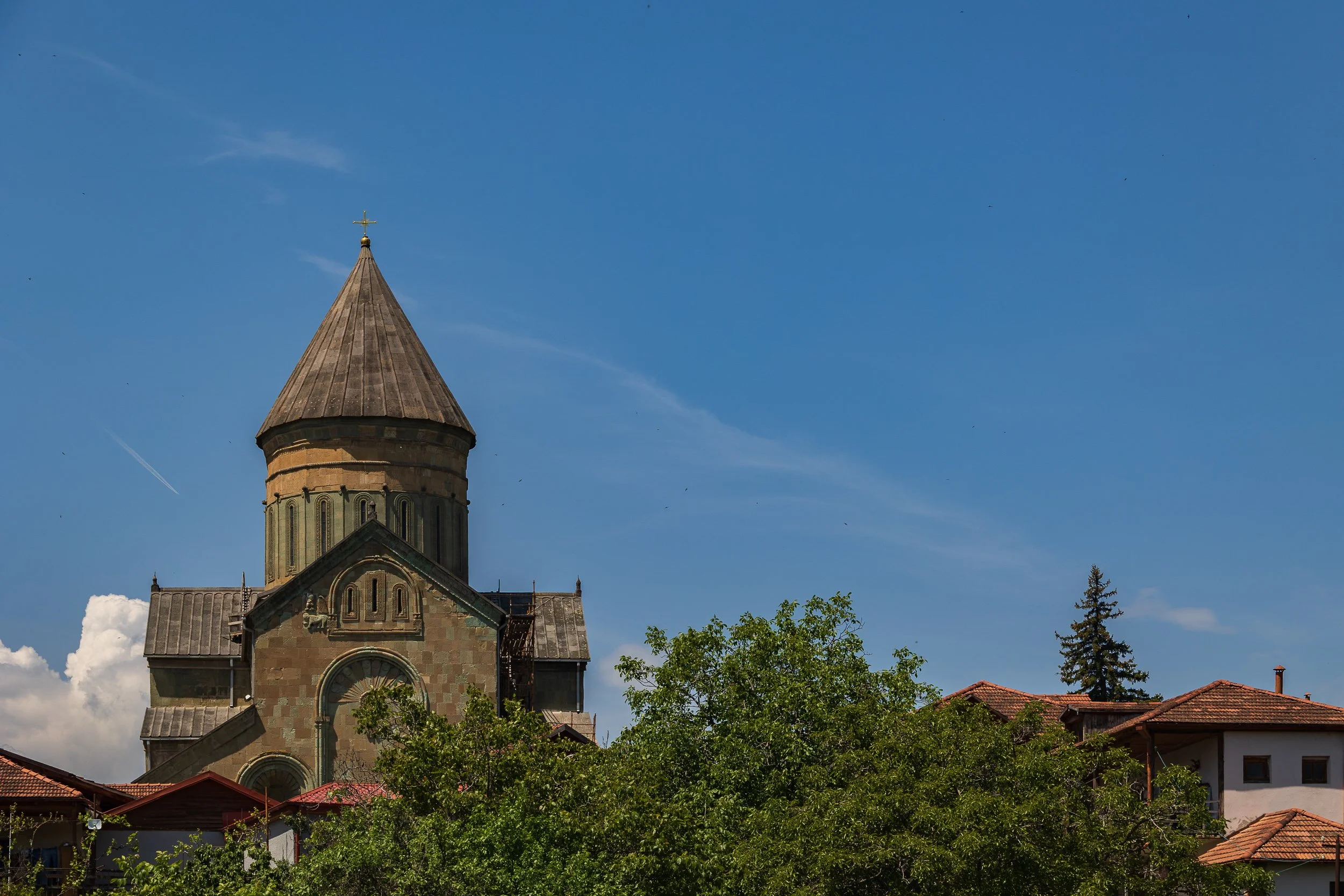
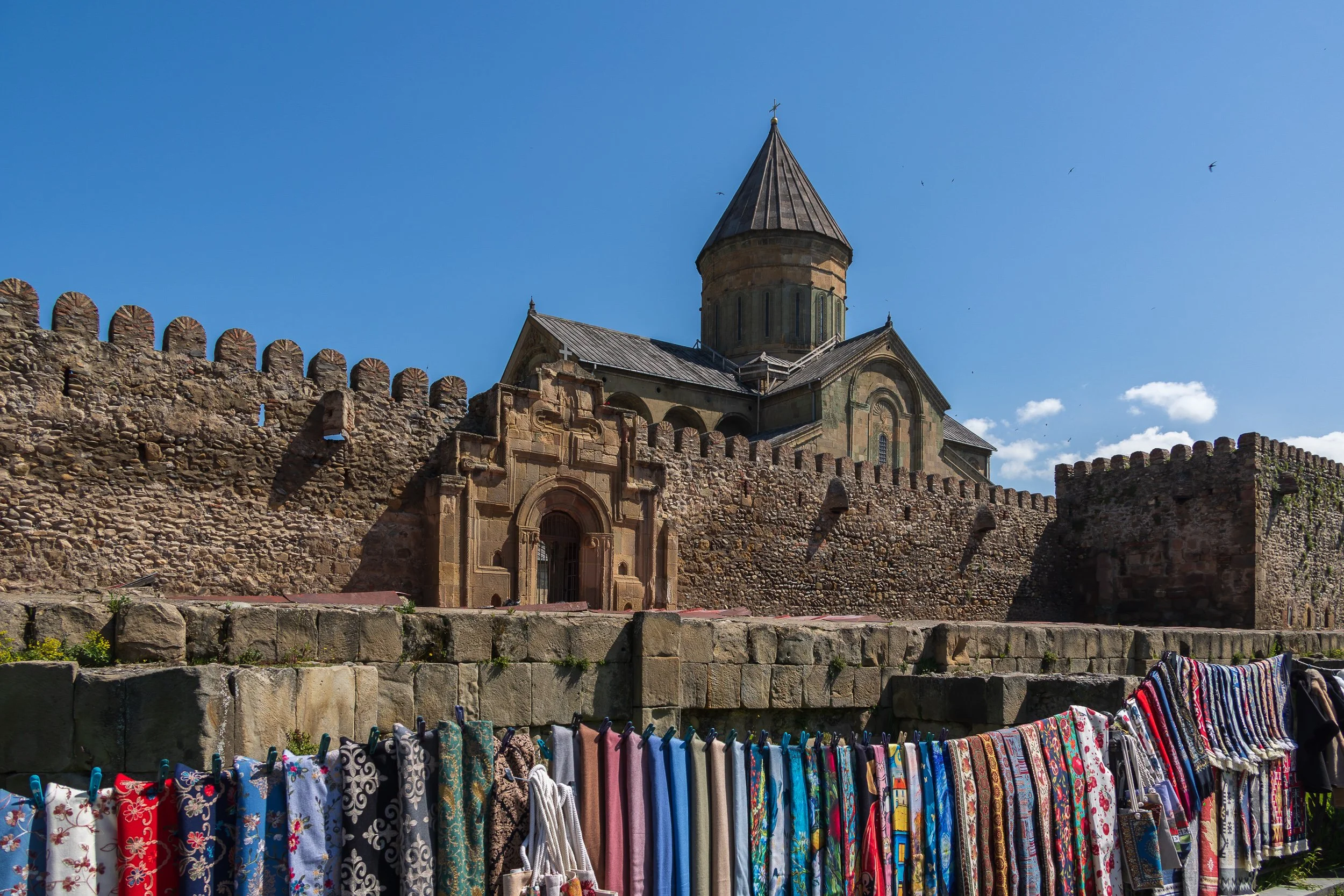
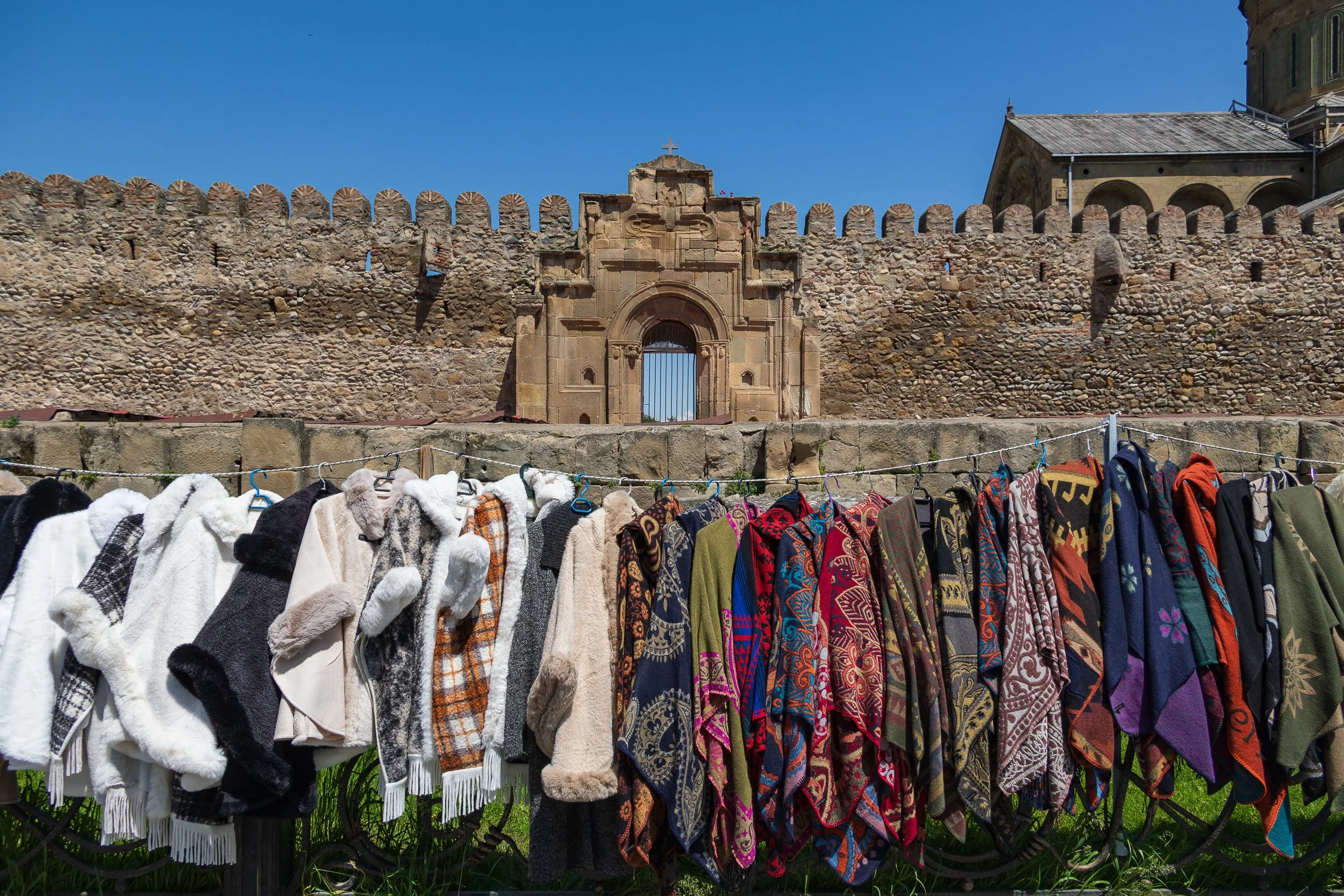
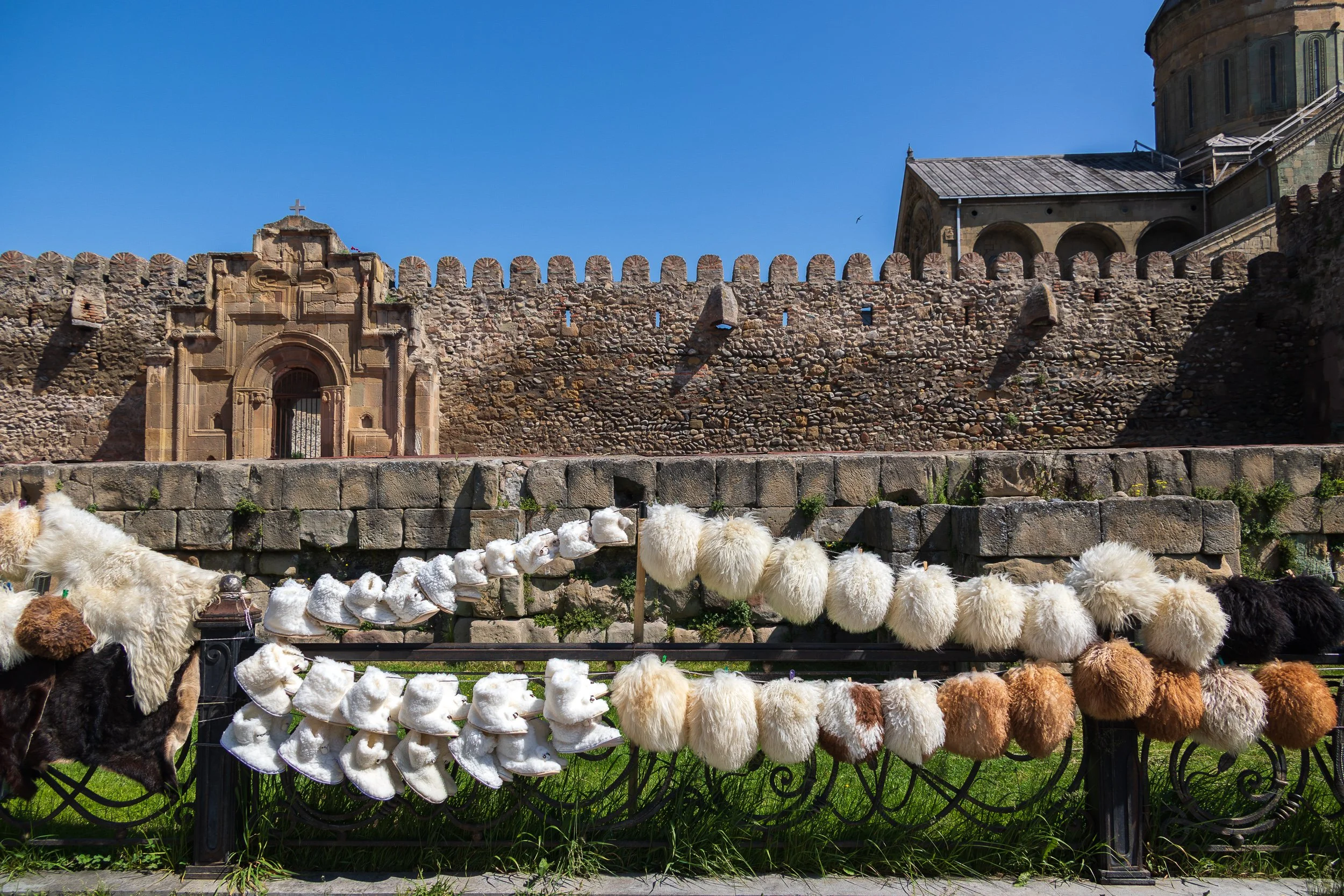
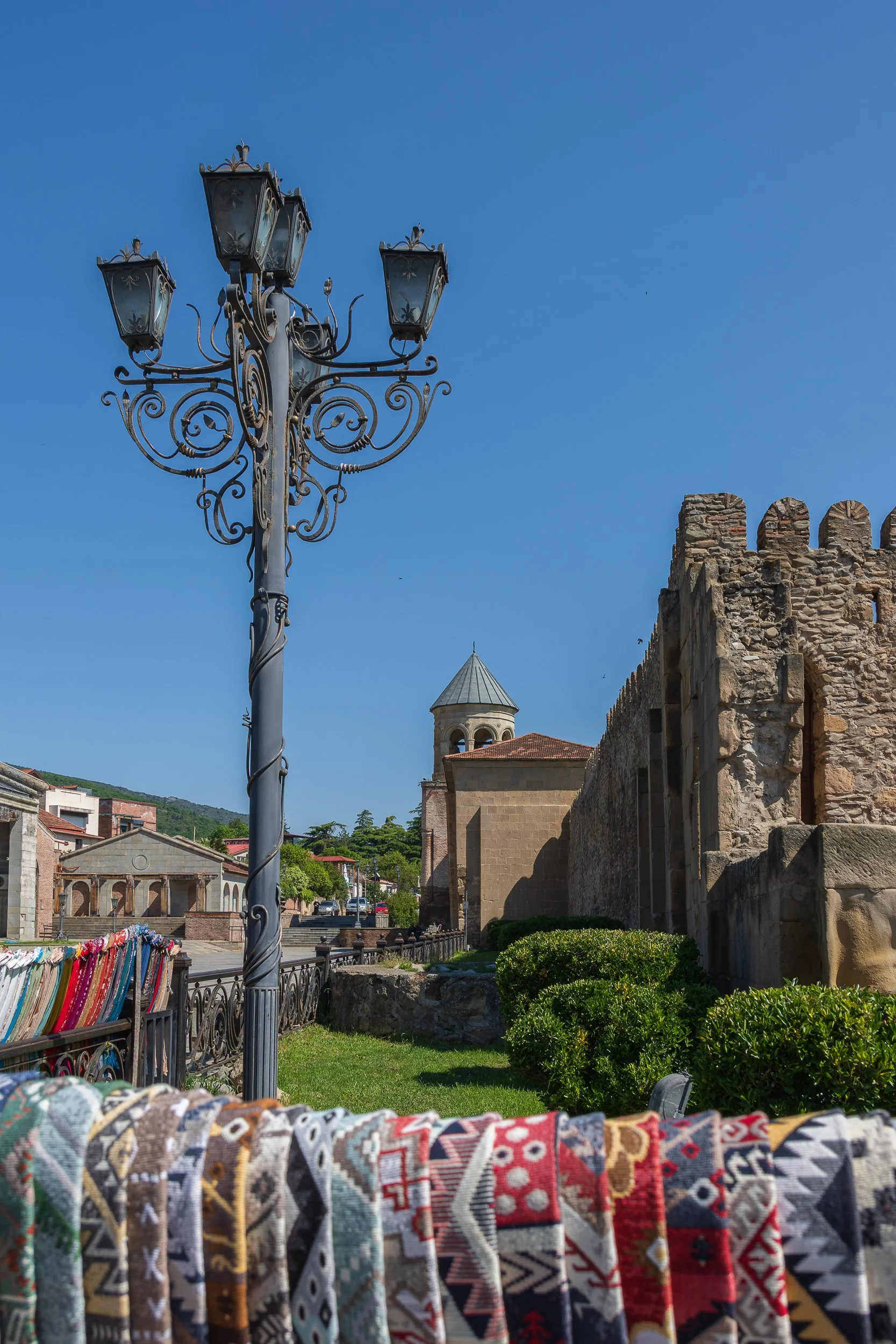
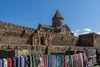
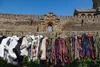
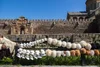
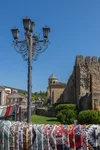
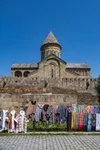
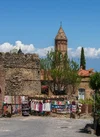
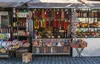
 Mtskheta (cathedral/vendors) - Svetitskhoveli Cathedral rises above the old fortified walls, vendors hanging carpets, bags, and souvenirs along the fence below.
E13A9576.jpg
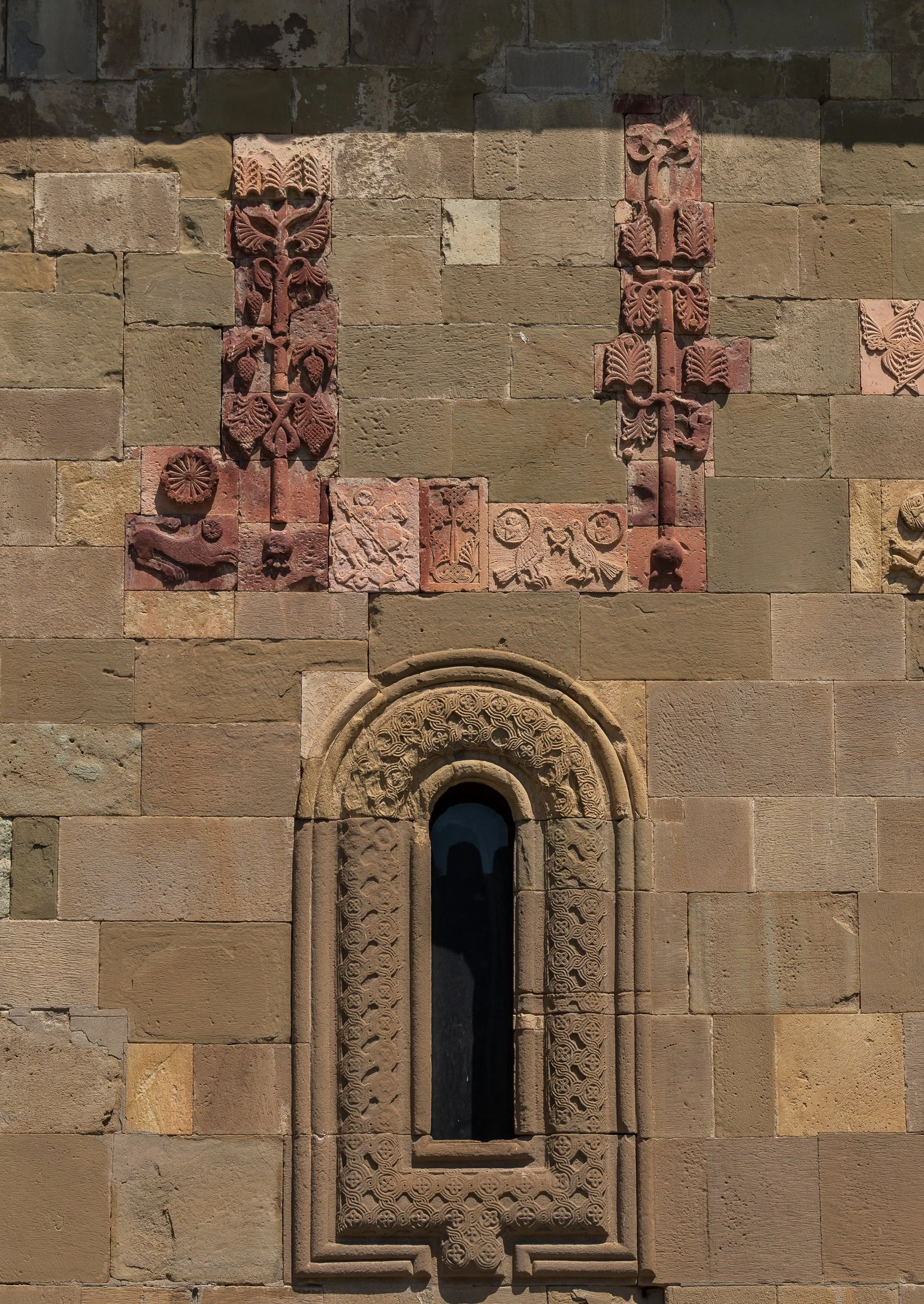
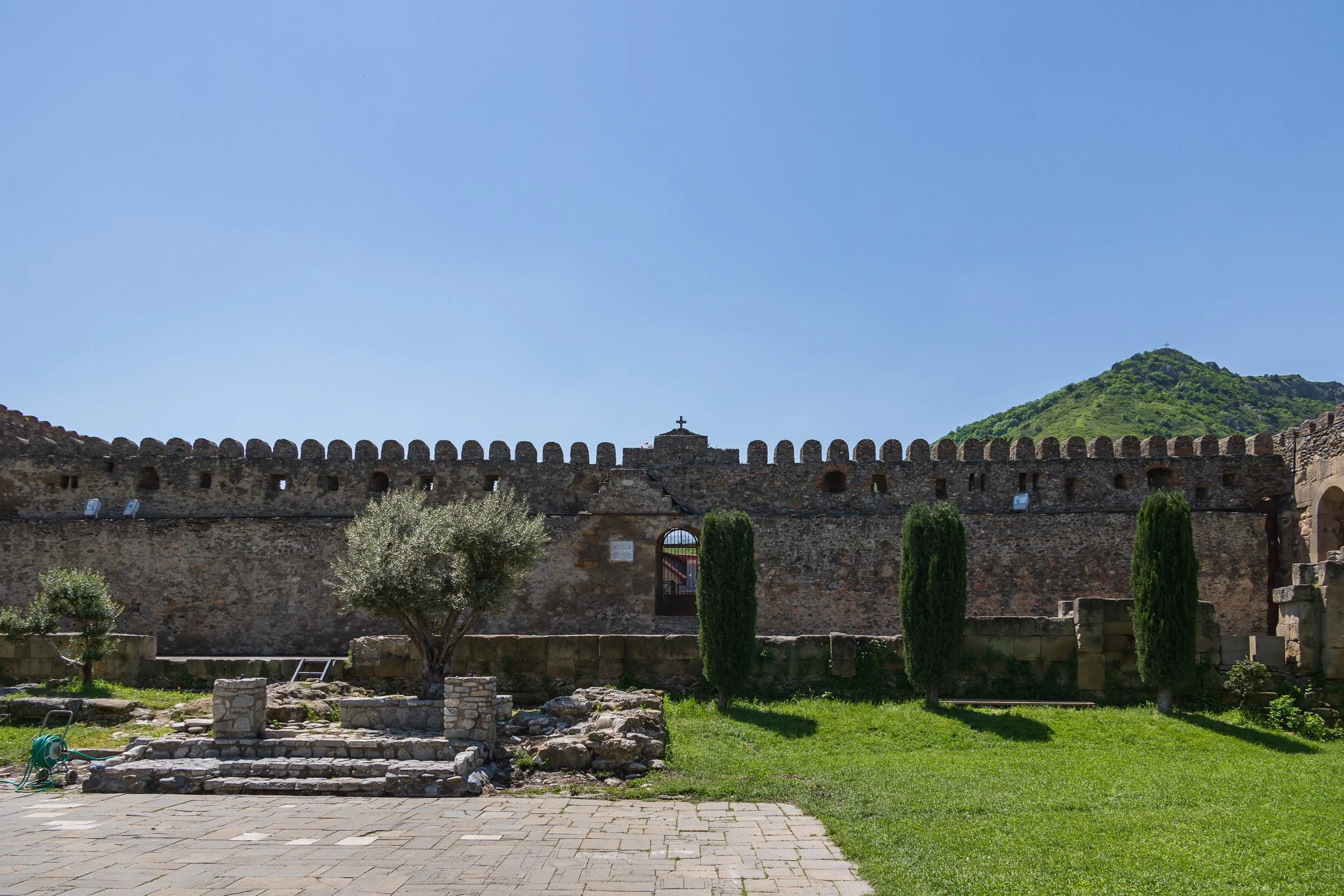
 Capital of the early Georgian Kingdom of Iberia from the 3rd century BC to the 5th century AD. The capital later moved to Tbilisi, but Mtskheta remained the spiritual and cultural centre of the nation. Its historic monuments, Jvari Monastery, Svetit
 Mtskheta remains the spiritual and cultural centre of Georgia.
E13A9612.jpg
E13A9449.jpg
E13A9457.jpg
E13A9583.jpg
E13A9546.jpg
E13A9605.jpg
E13A9580.jpg
Chronicles of Georgia
E13A9712.jpg
E13A9708.jpg
E13A9694.jpg
E13A9691.jpg
E13A9664.jpg
E13A9639.jpg
E13A9742.jpg
Bodbe Monastery
Bodbe Monastery
E13A9766.jpg
E13A9752.jpg
E13A9748.jpg
Sighnaghi
Sighnaghi
E13A9827.jpg
E13A9851.jpg
 Sighnaghi -The heart of a winemaking tradition stretching back 8,000 years, using the qvevri method: fermenting and aging in clay amphorae buried in the earth, a practice UNESCO has listed as Intangible Cultural Heritage.
E13A9871.jpg
E13A9832.jpg
E13A9861.jpg
E13A9834.jpg
E13A9439.jpg
E13A9725.jpg
Vardzia
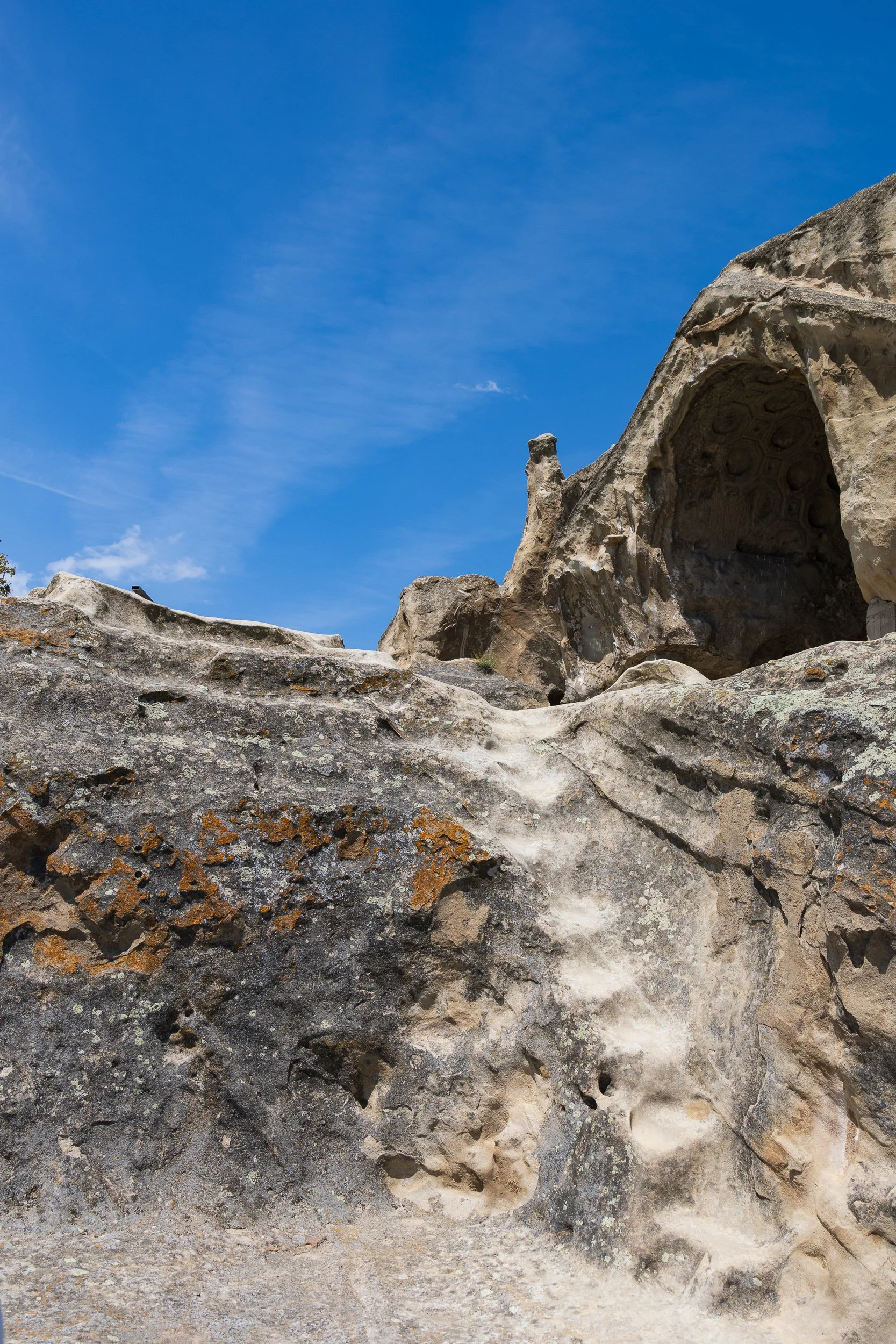
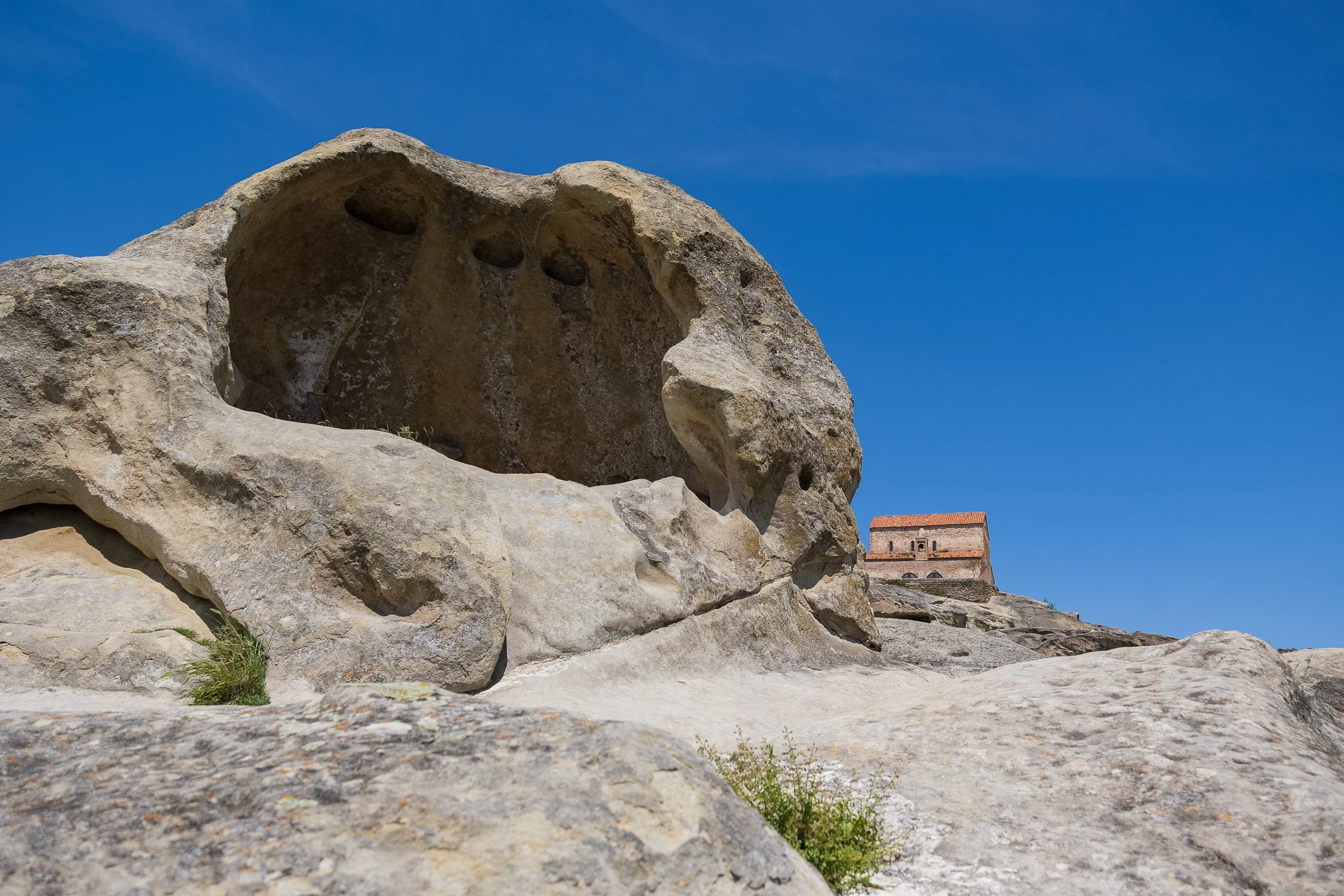
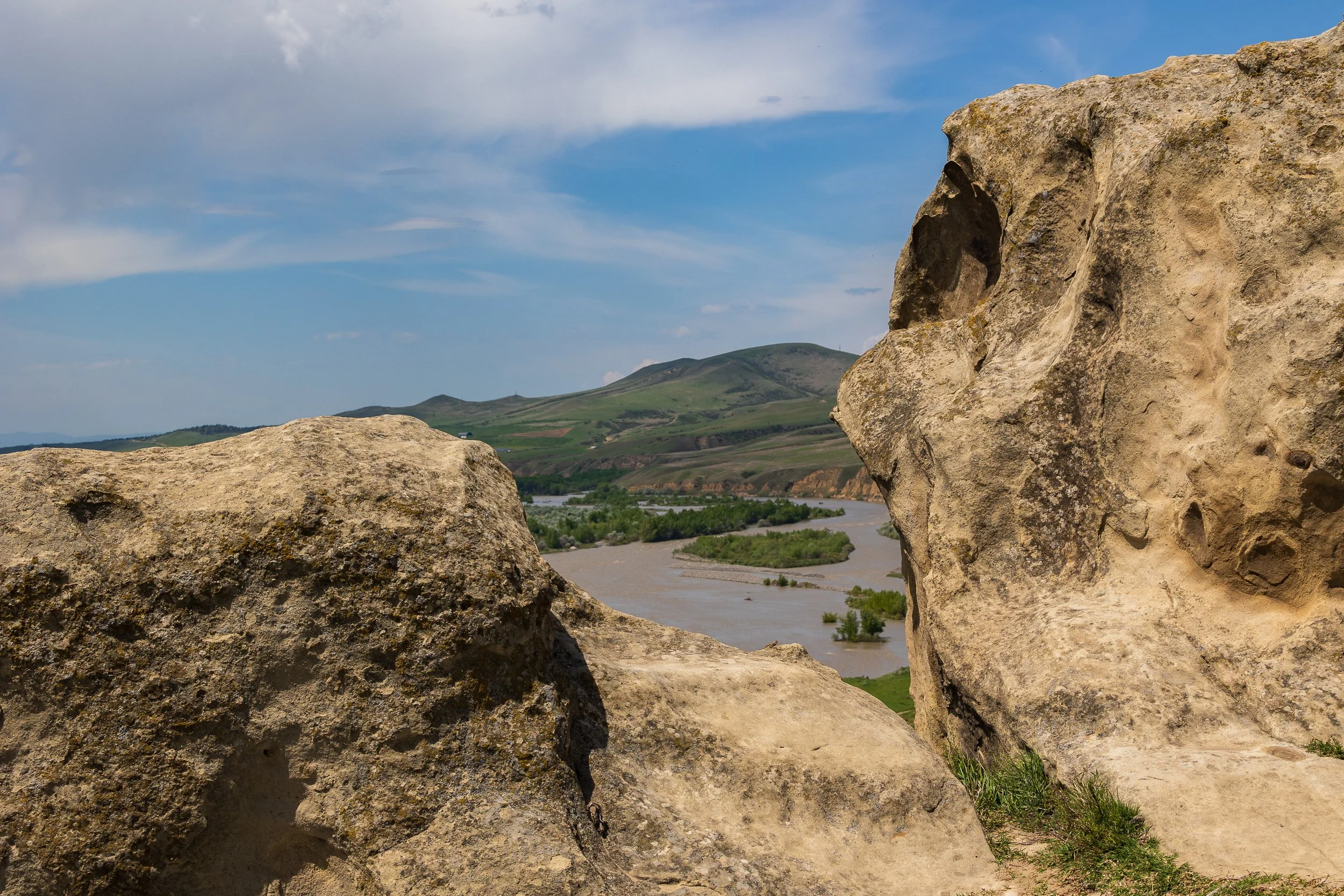
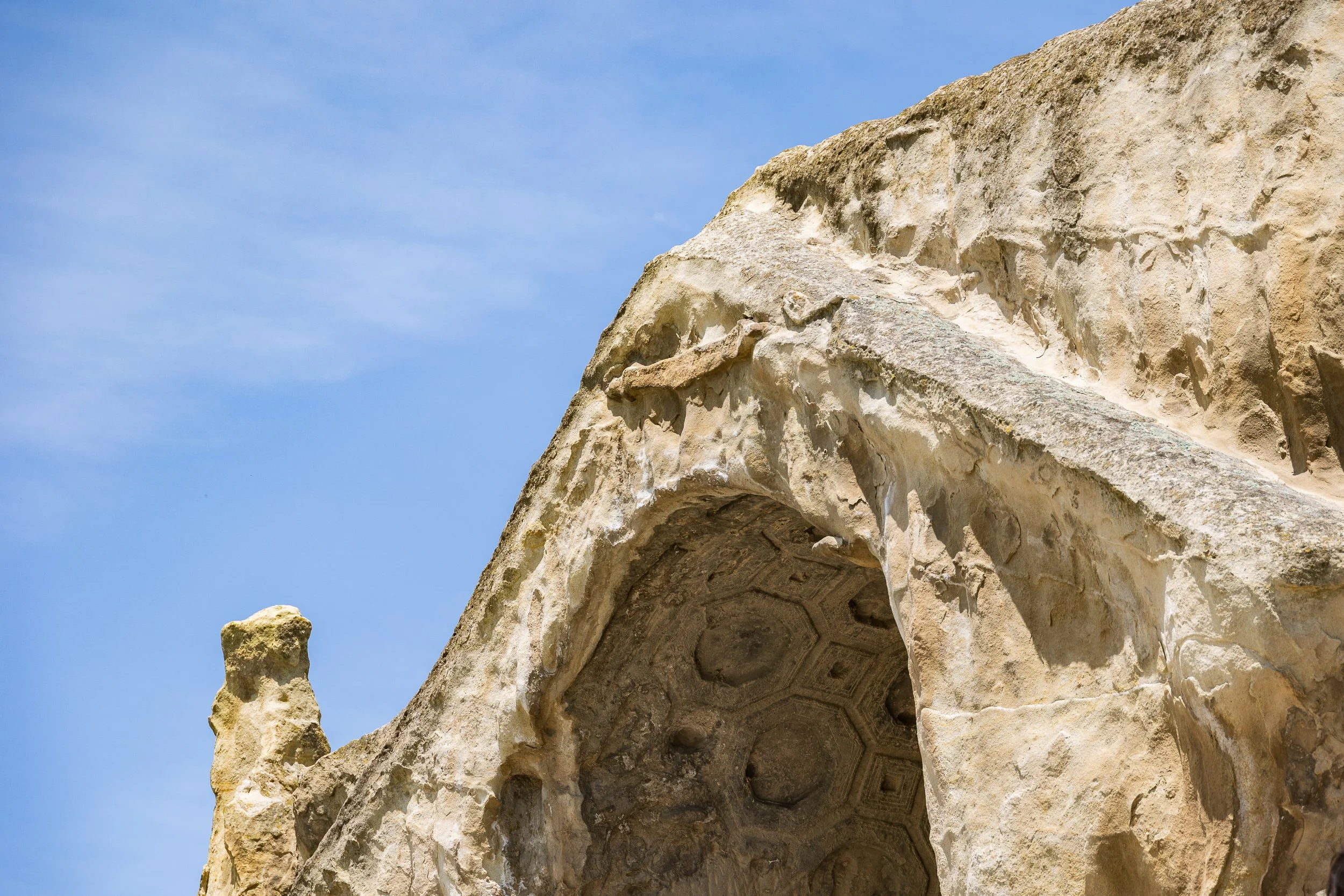
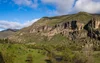
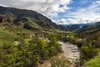
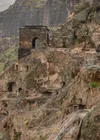
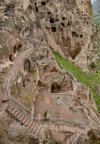
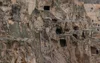
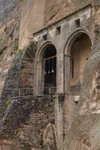
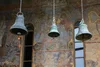
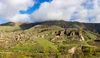
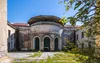
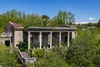
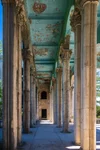
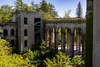
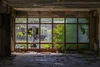
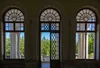
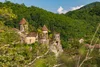
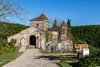
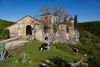
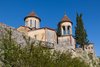
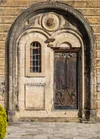
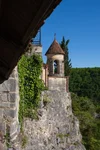
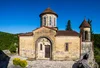
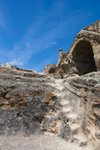
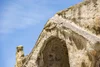
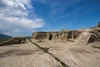
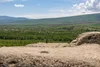
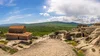
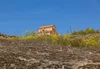
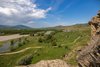
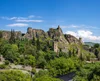
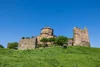
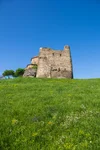
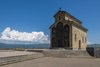
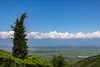
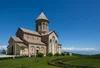
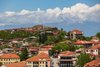
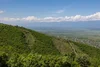
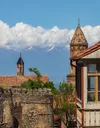
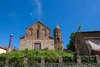
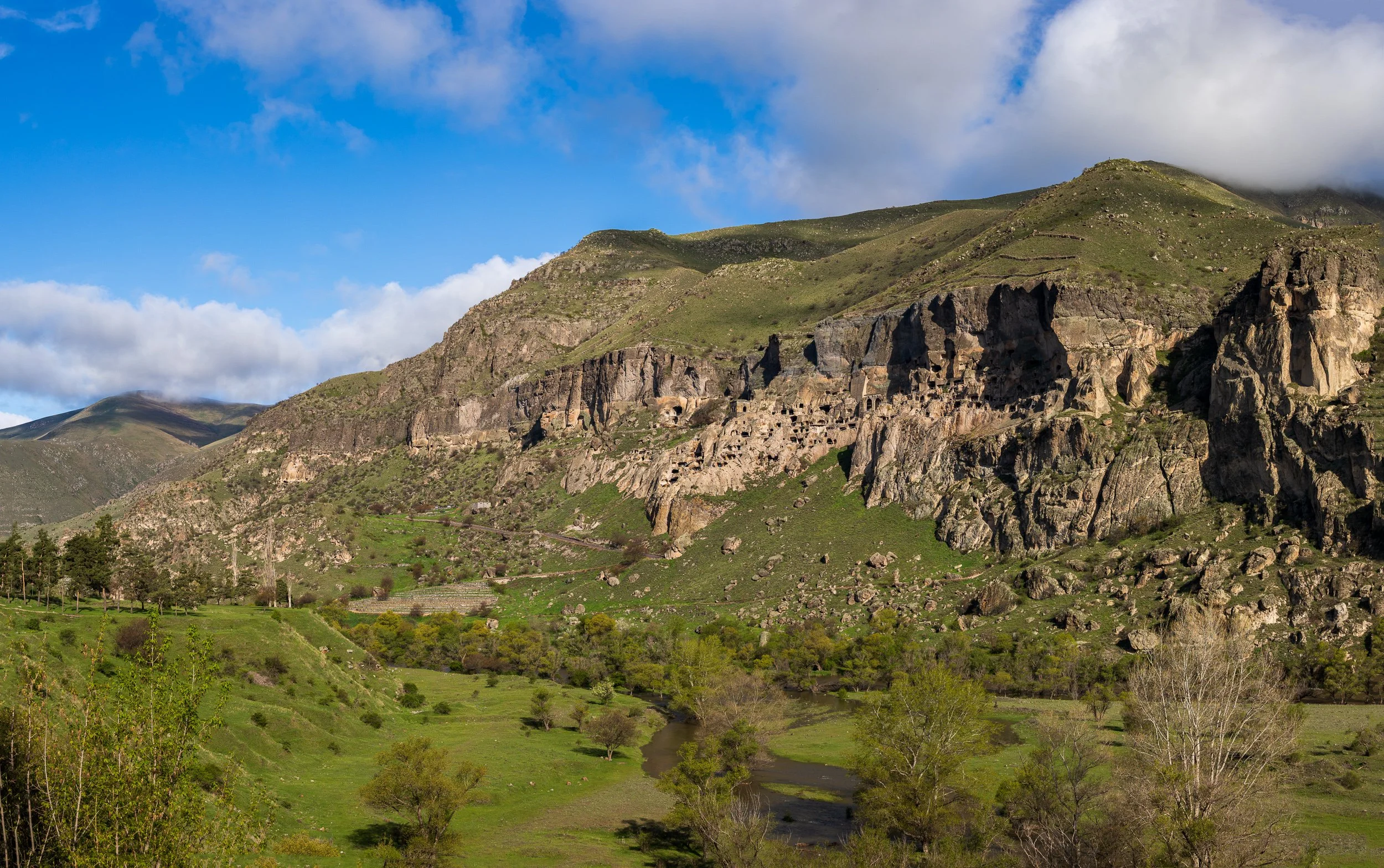
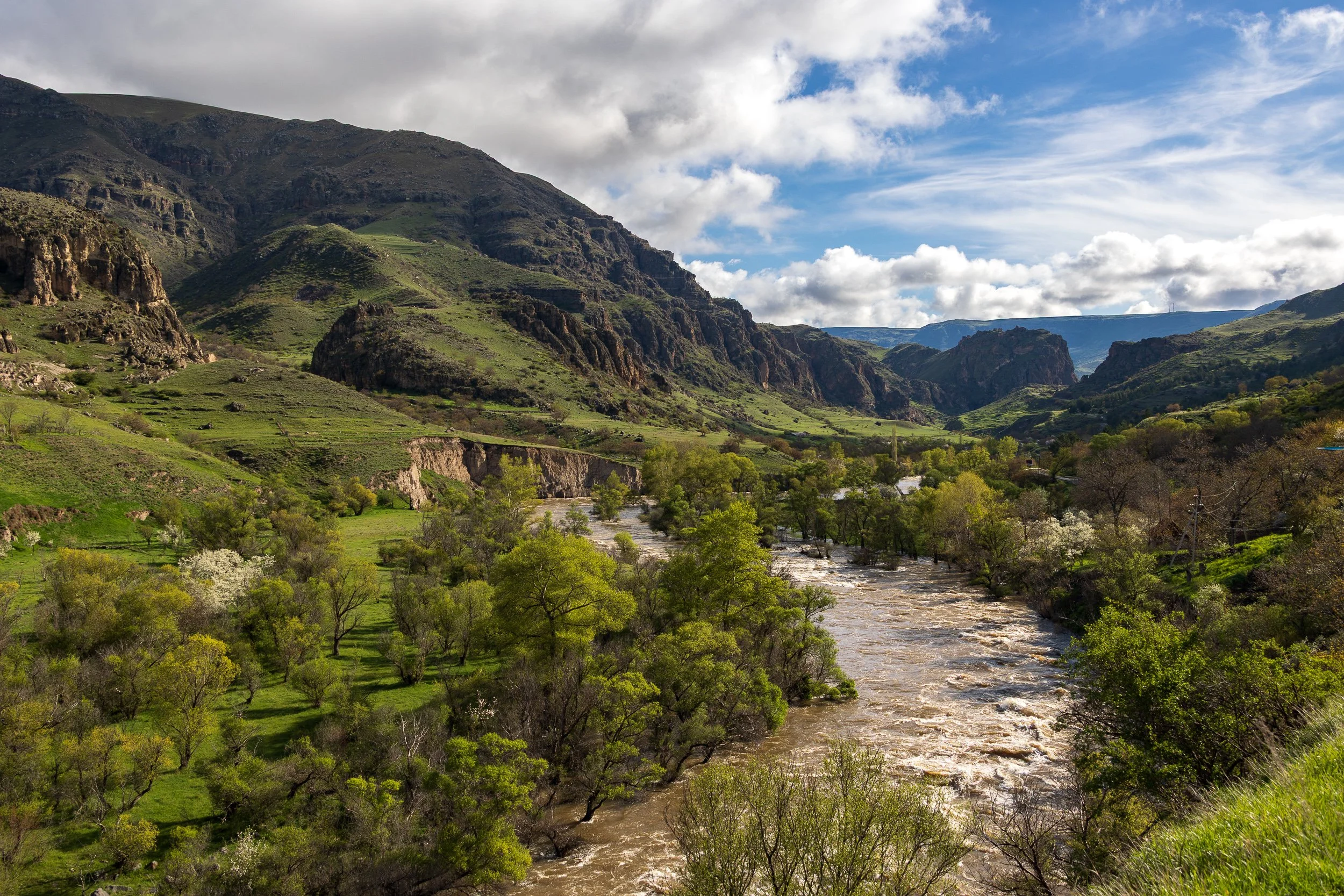
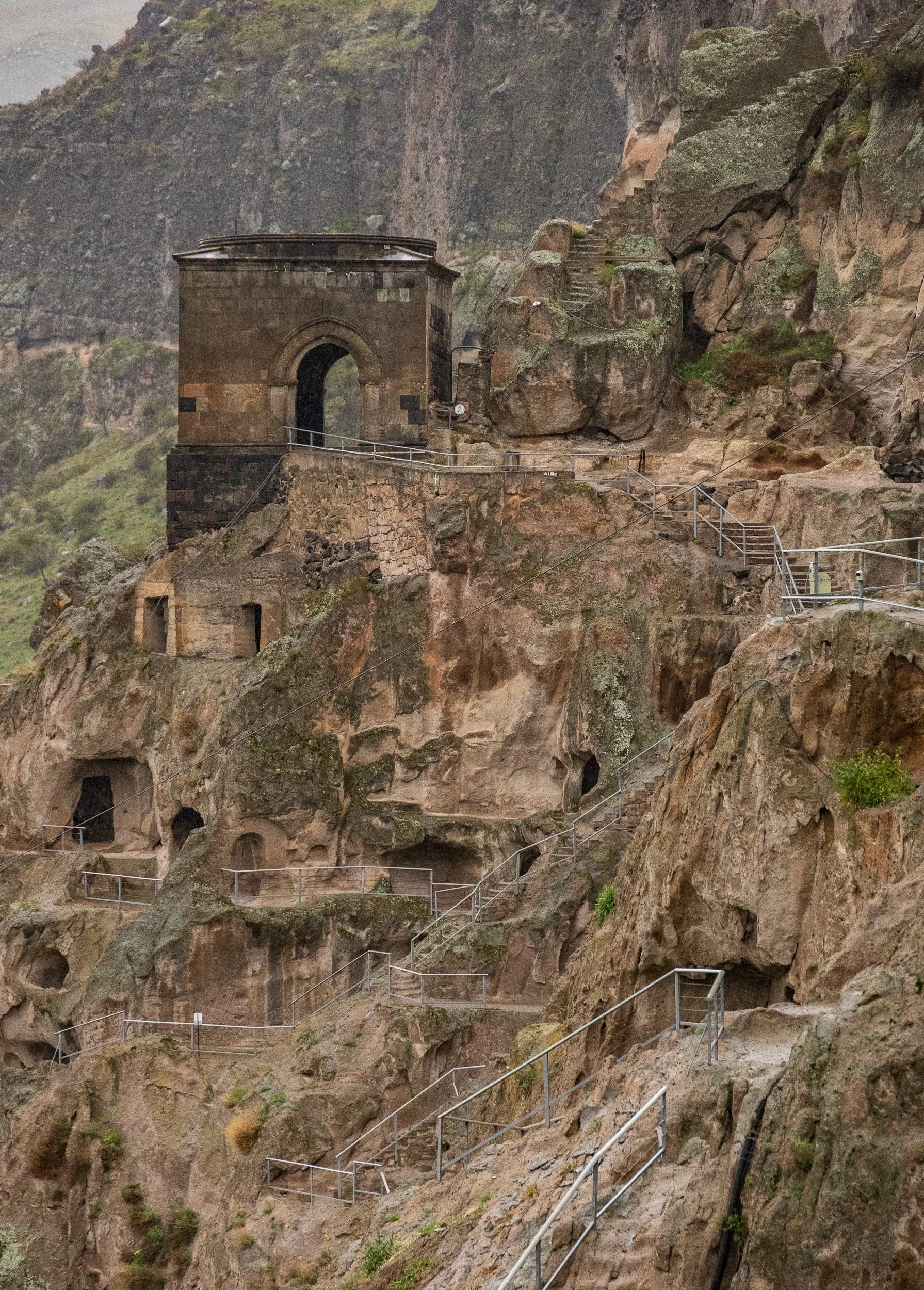
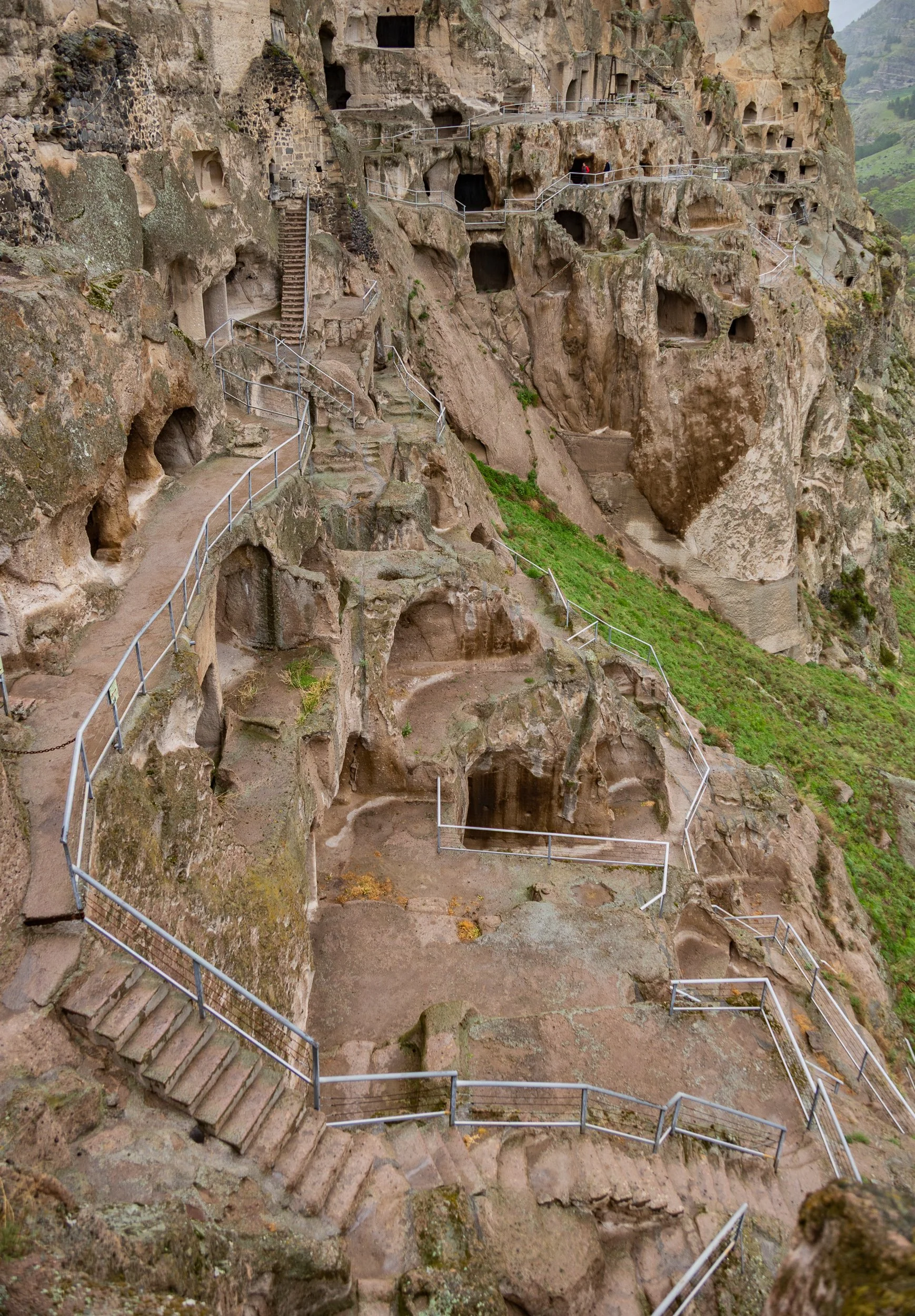
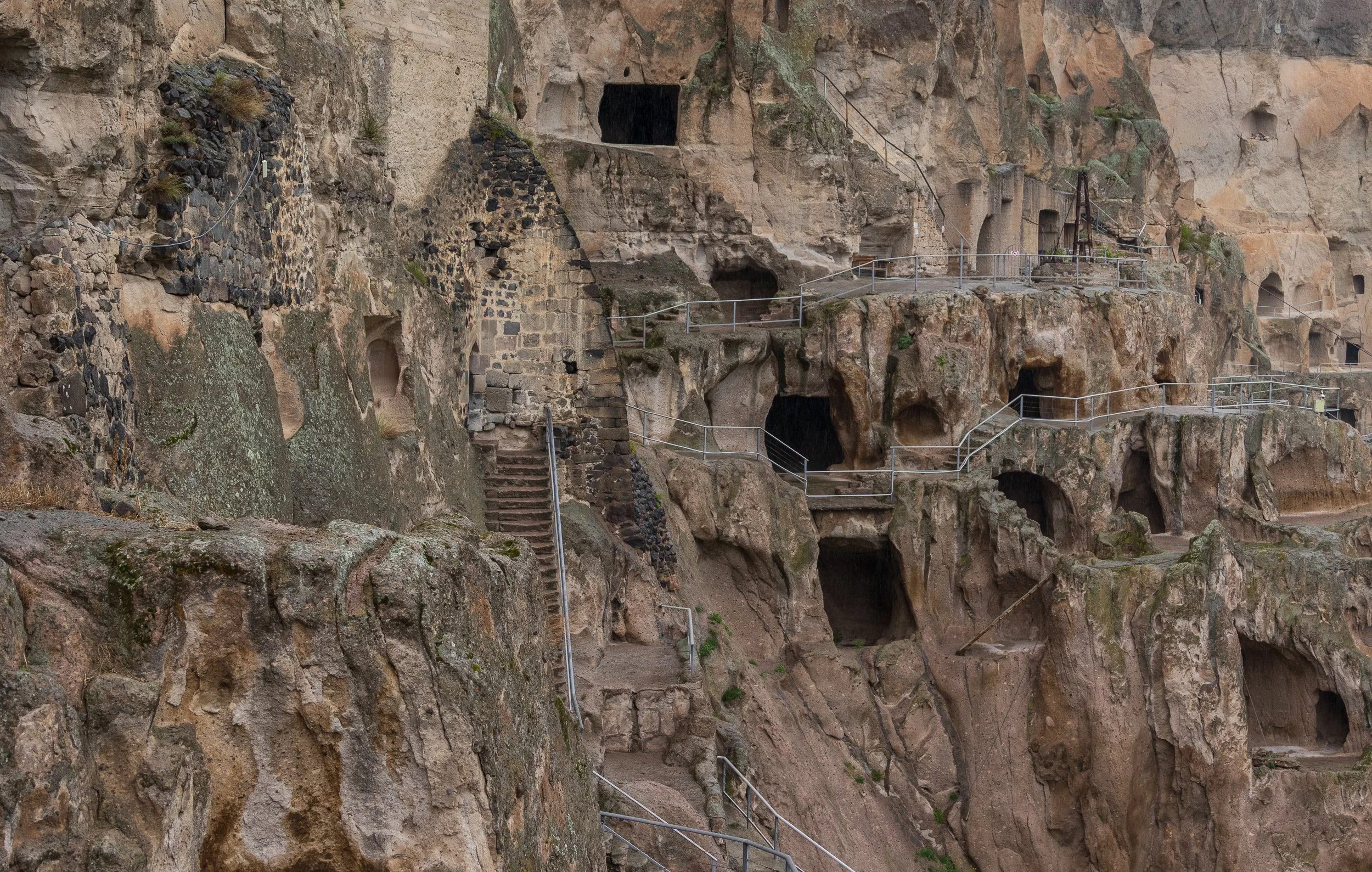
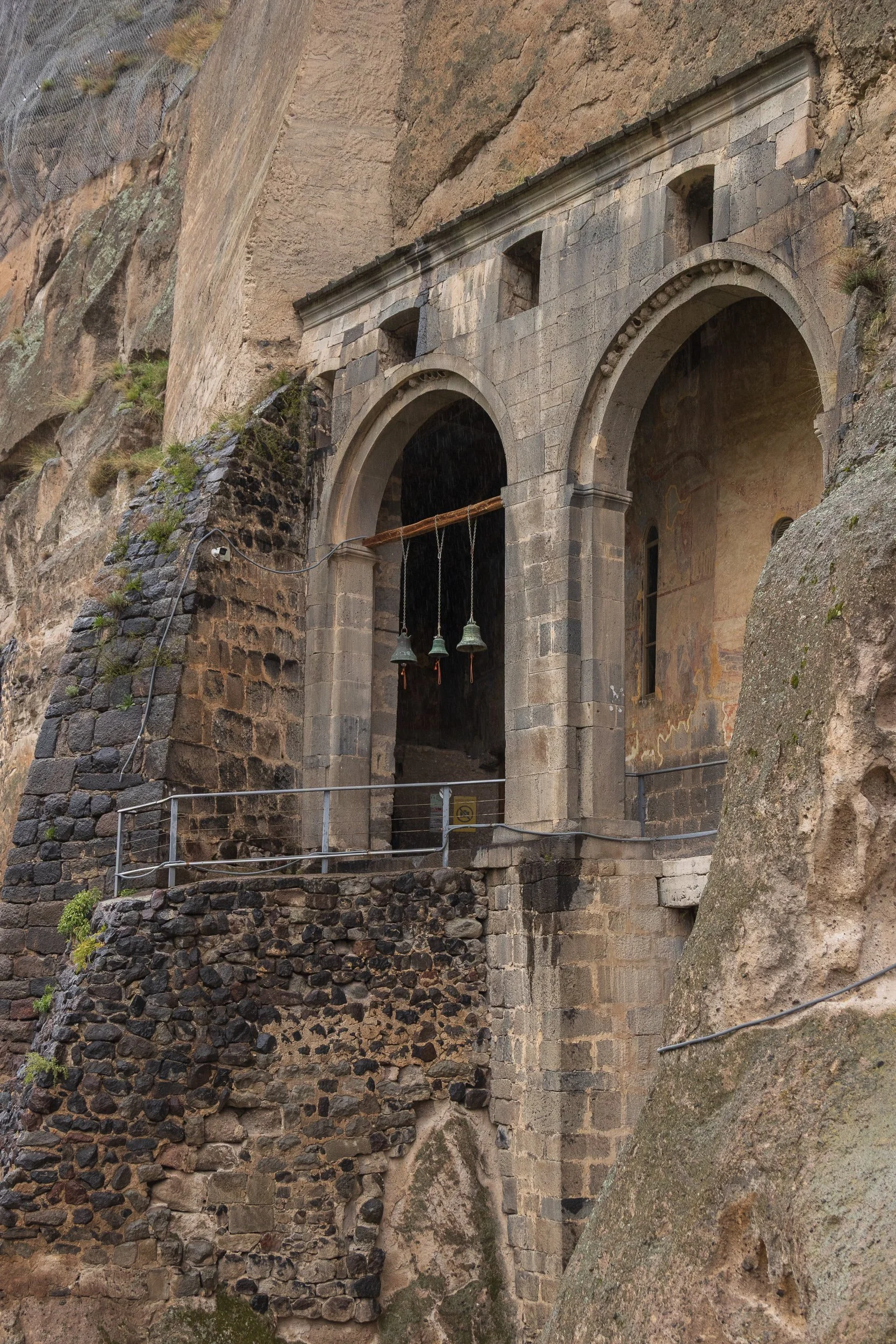
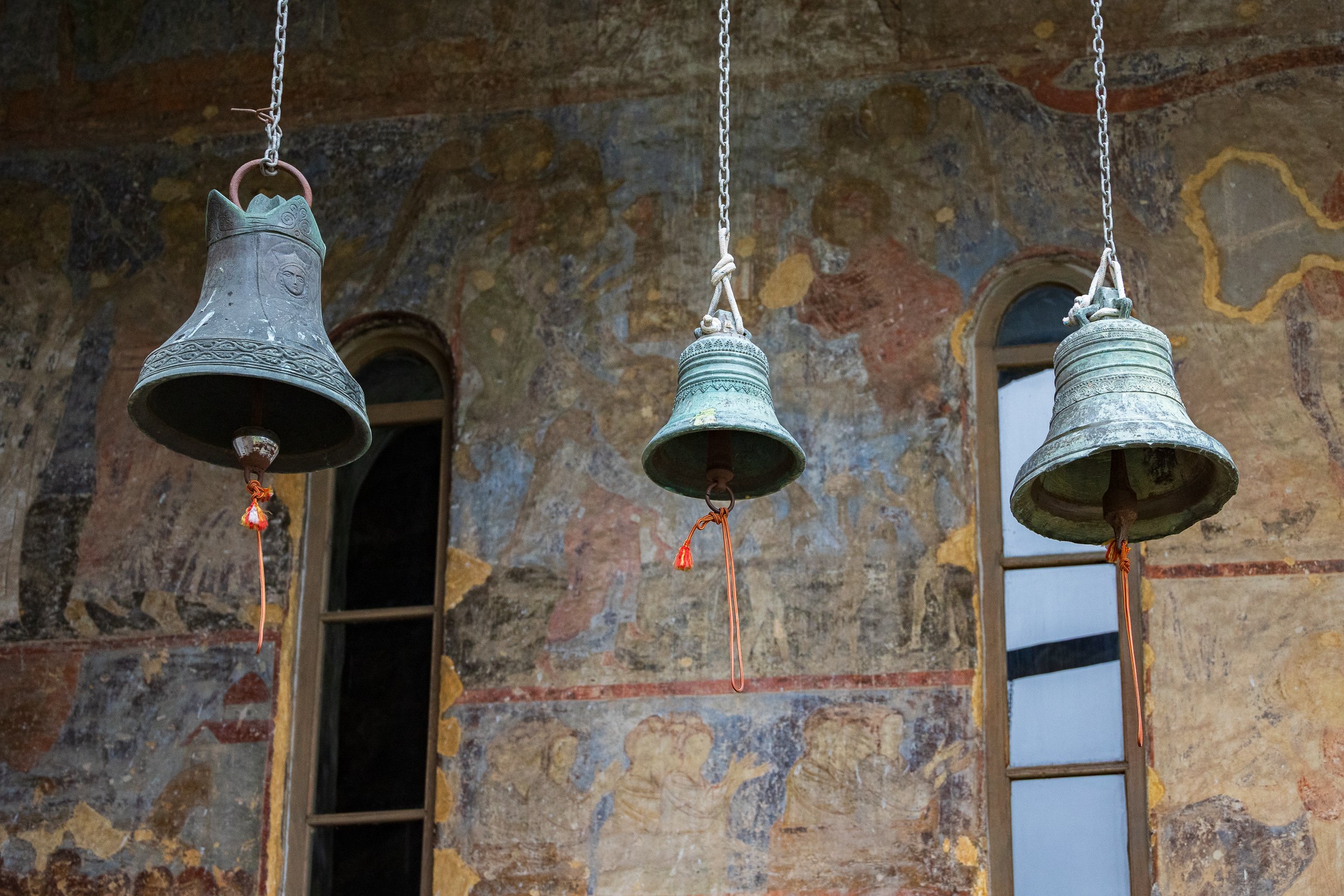
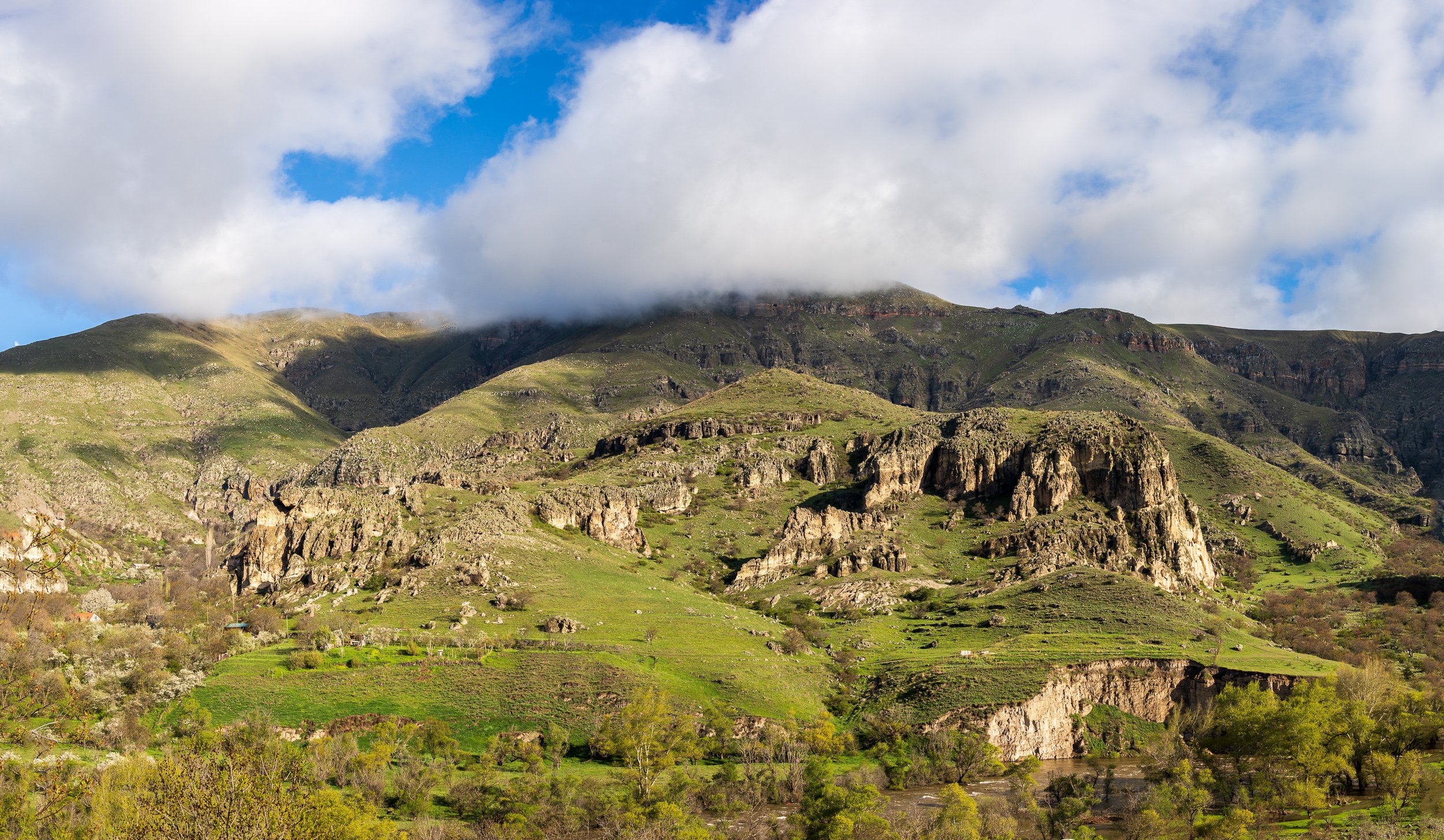
VardziaA cave monastery carved into a cliff face in southern Georgia. Around 641 chambers across 13 levels, stretching 500 metres along the cliff face, connected by tunnels, staircases, and terraces. Wine cellars, meeting rooms, a small church still in use.
E13A8152.jpg
 At its peak the complex housed some 2,000 monks across 19 levels. An earthquake in 1283 sheared away half the cliff. Ottoman invasions burned the manuscripts. Shepherds moved in after that, which is why many of the chambers are still blackened insid
At its peak the complex housed some 2,000 monks across 19 levels. An earthquake in 1283 sheared away half the cliff. Ottoman invasions burned the manuscripts. Shepherds moved in after that, which is why many of the chambers are still blackened inside. Abandoned entirely in the 16th century, untouched until Soviet-era excavations, then the monks returned in 1988 and remain on the upper floors today.
E13A7857.jpg
E13A7999.jpg
E13A7992.jpg
E13A7901.jpg
E13A8034-Pano.jpg
Kutaisi
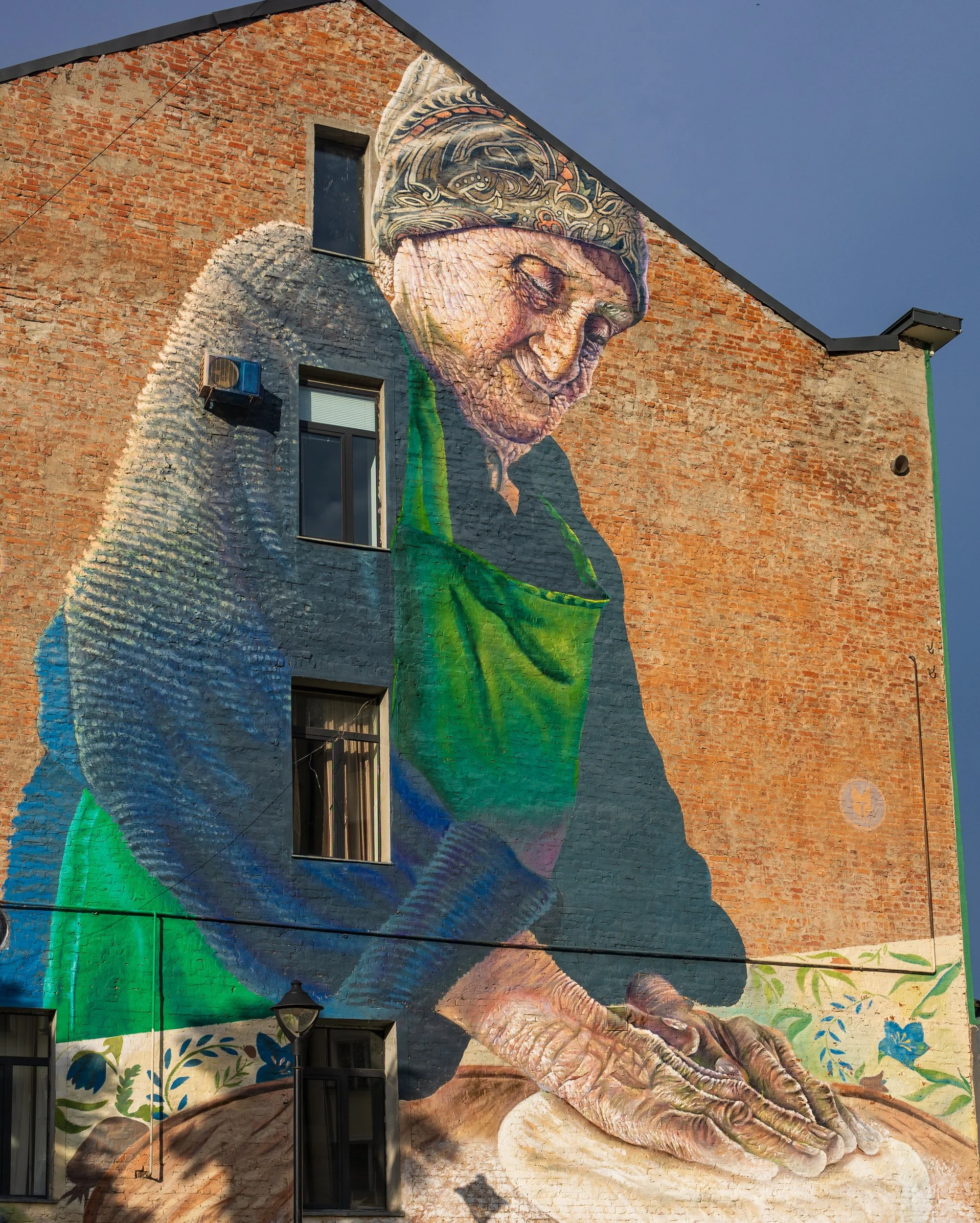
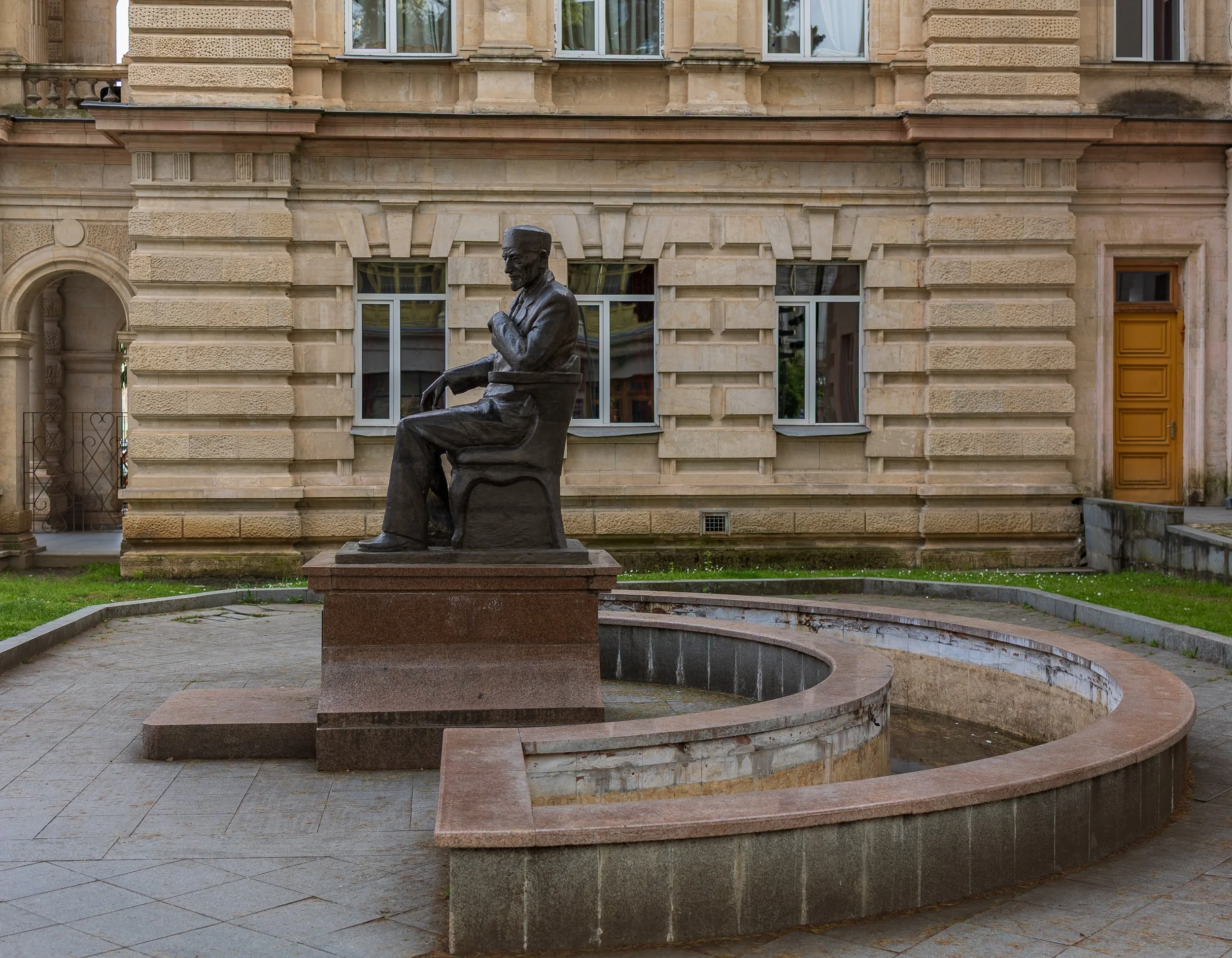
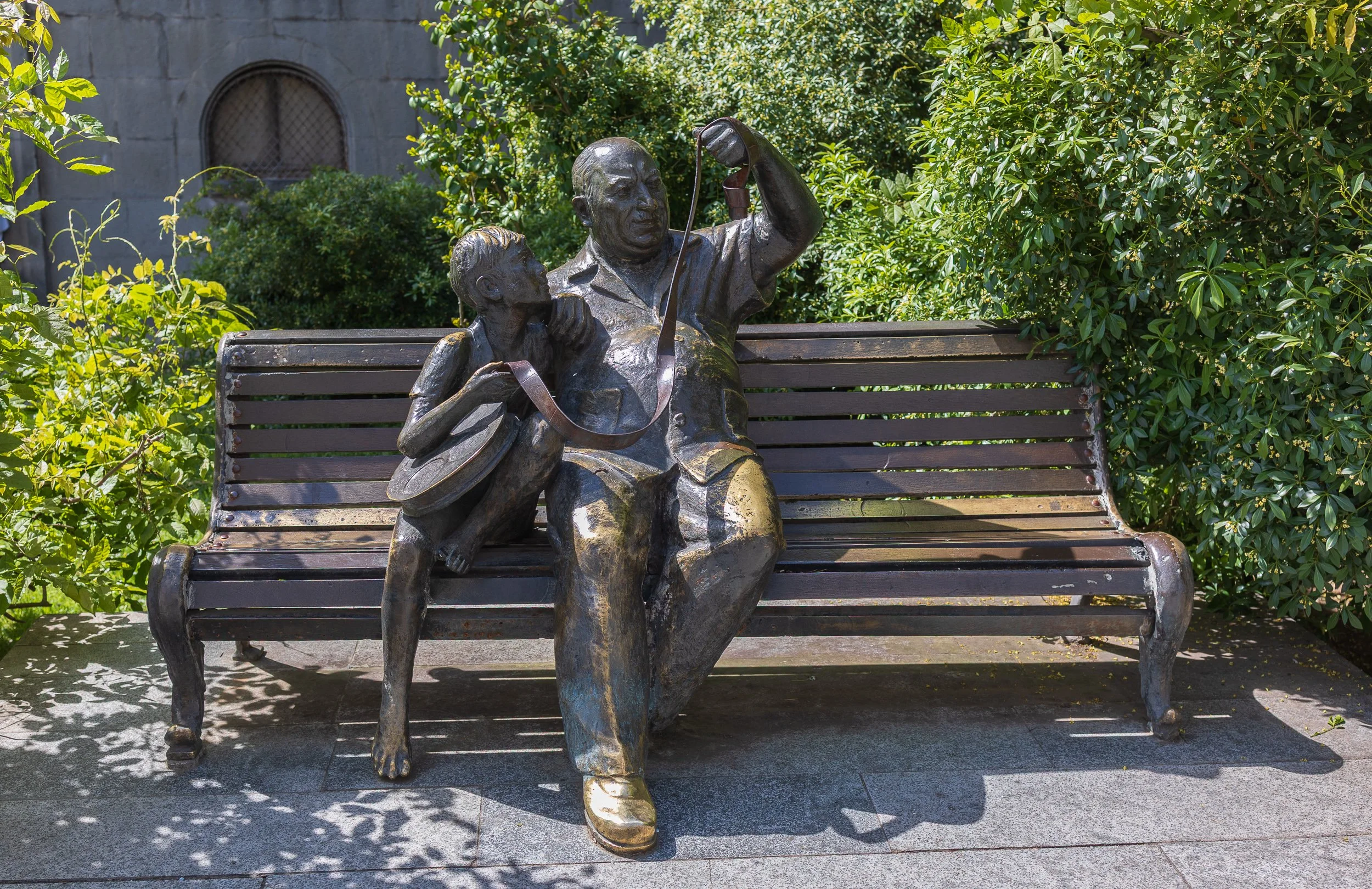
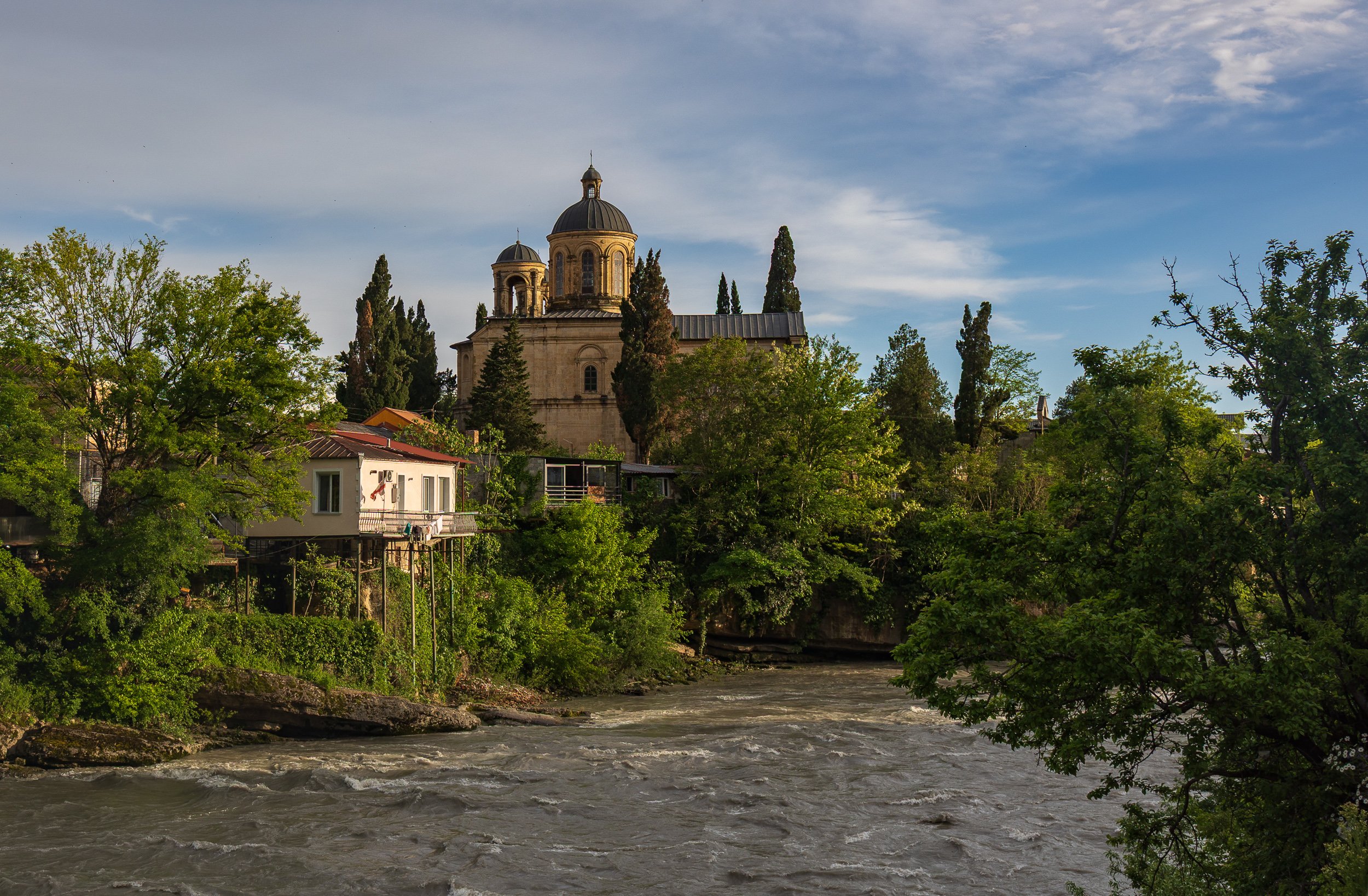
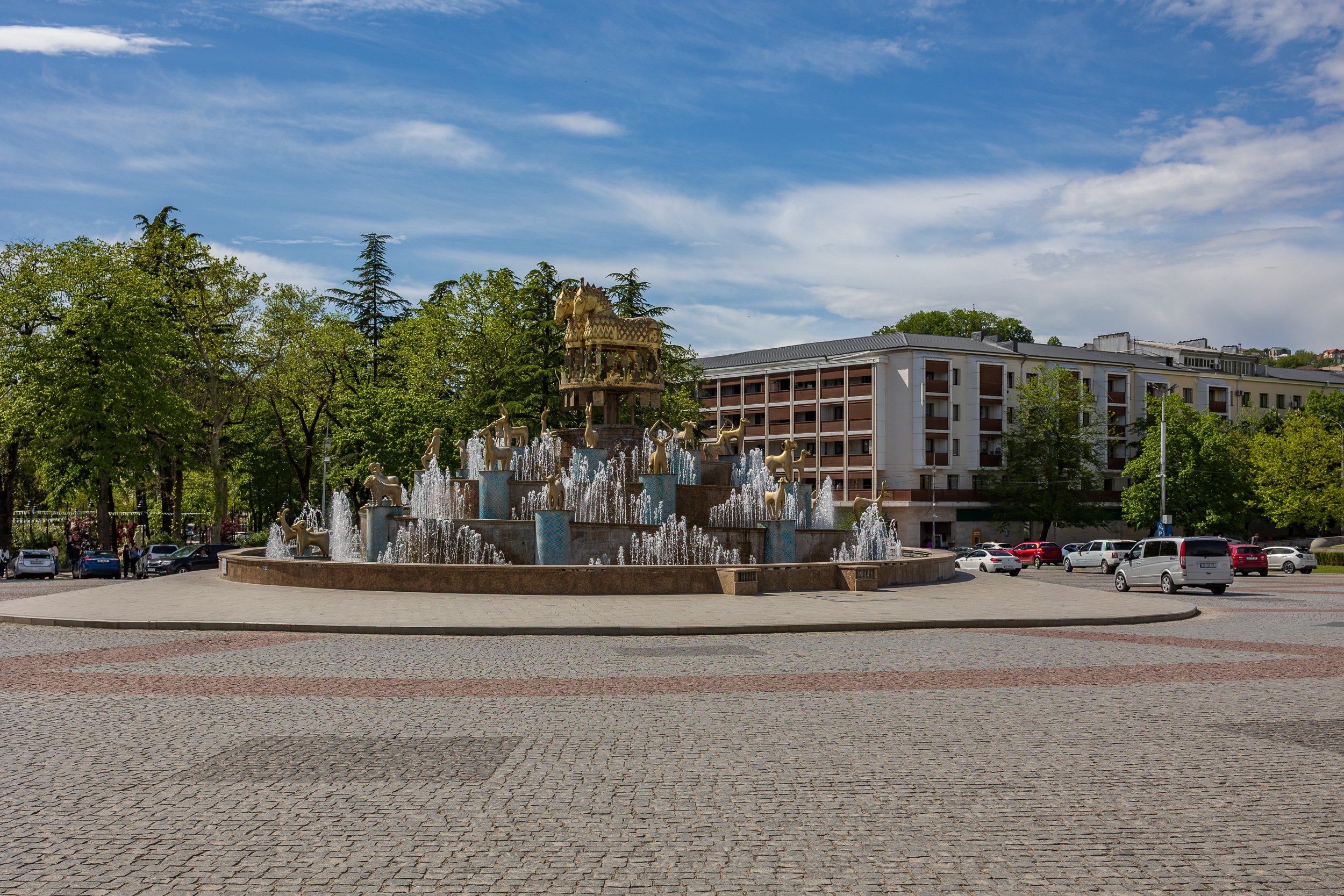
KutaisiGeorgia's third-largest city and one of the oldest settlements in Europe, home of the Golden Fleece mythology. Compact, walkable, genuinely charming. Murals, statues, art installations, green spaces, roundabouts with fountains. Within a few hours you feel like you know your way around.
E13A8225.jpg
E13A8259.jpg
E13A8154.jpg
E13A8239.jpg
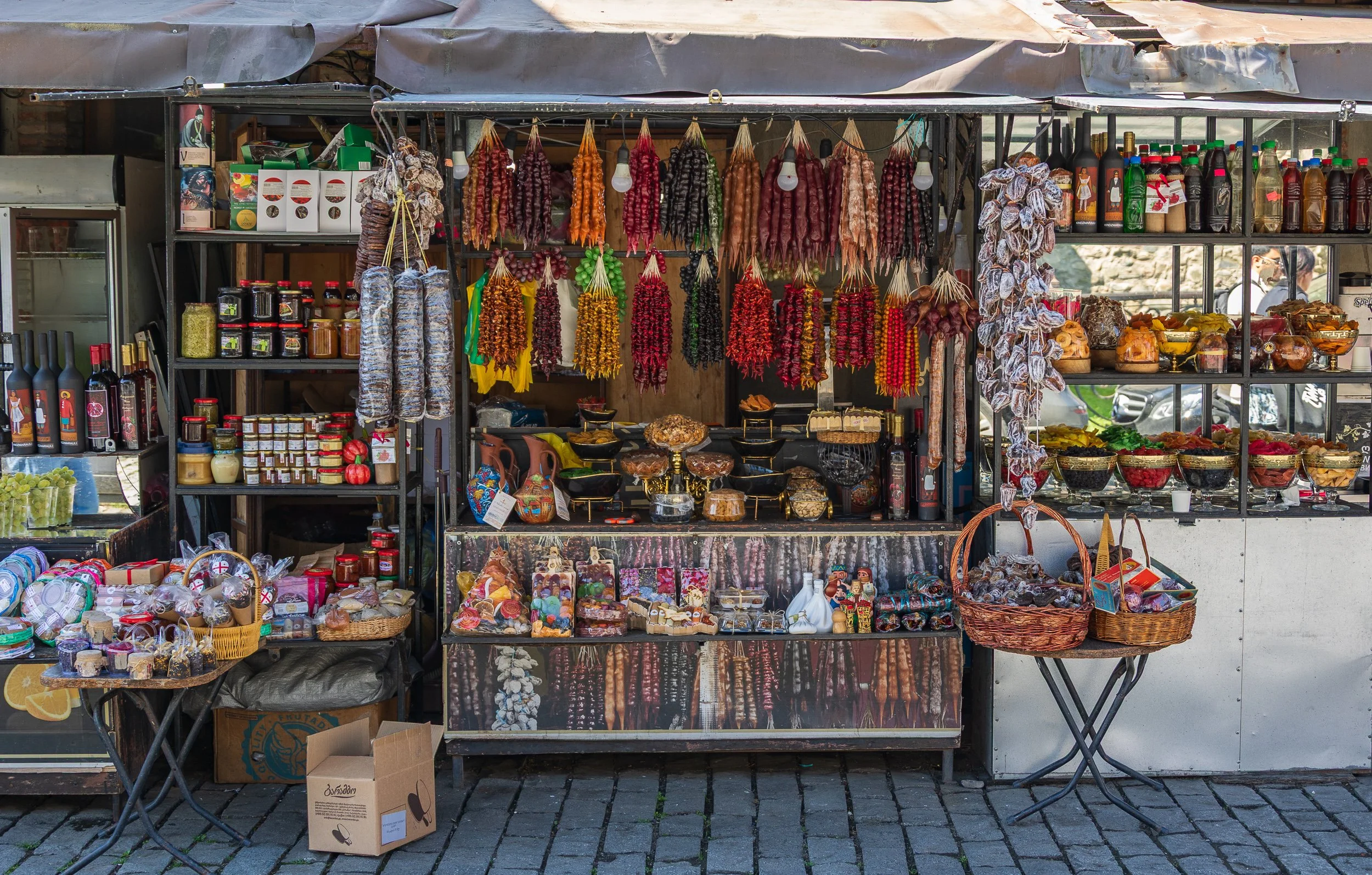
Churchkhela
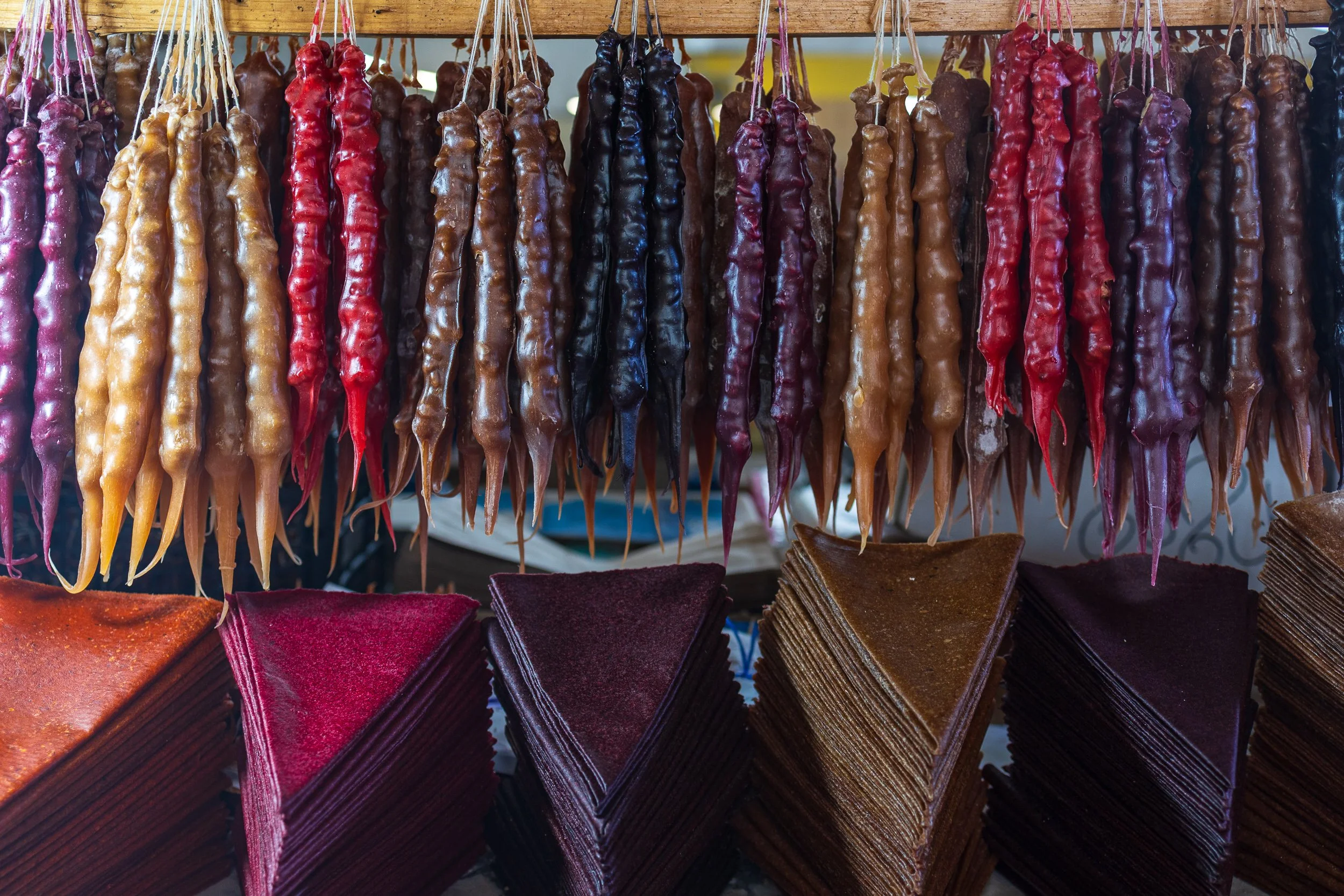
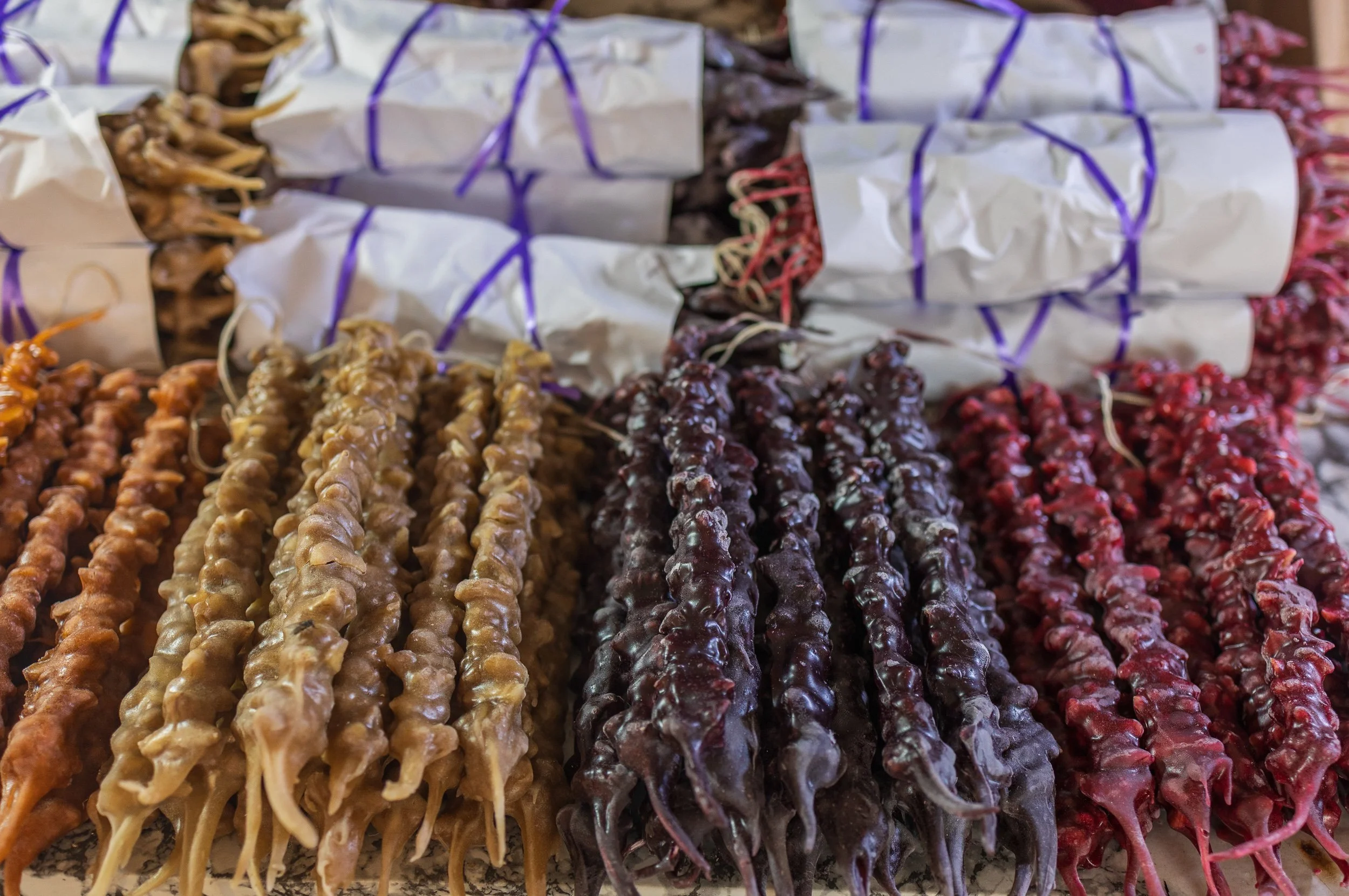
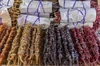
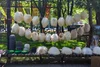
ChurchkhelaThe snack sold outside every market and tourist site, looking like badly formed candles or ugly sausages. Nuts strung on a thread, dipped repeatedly in condensed grape juice thickened with flour, dried in the sun. Think a thicker, softer fruit roll-up wrapped around nuts. Delicious. The only downside: they're sticky.
E13A8196.jpg
Tskaltubo
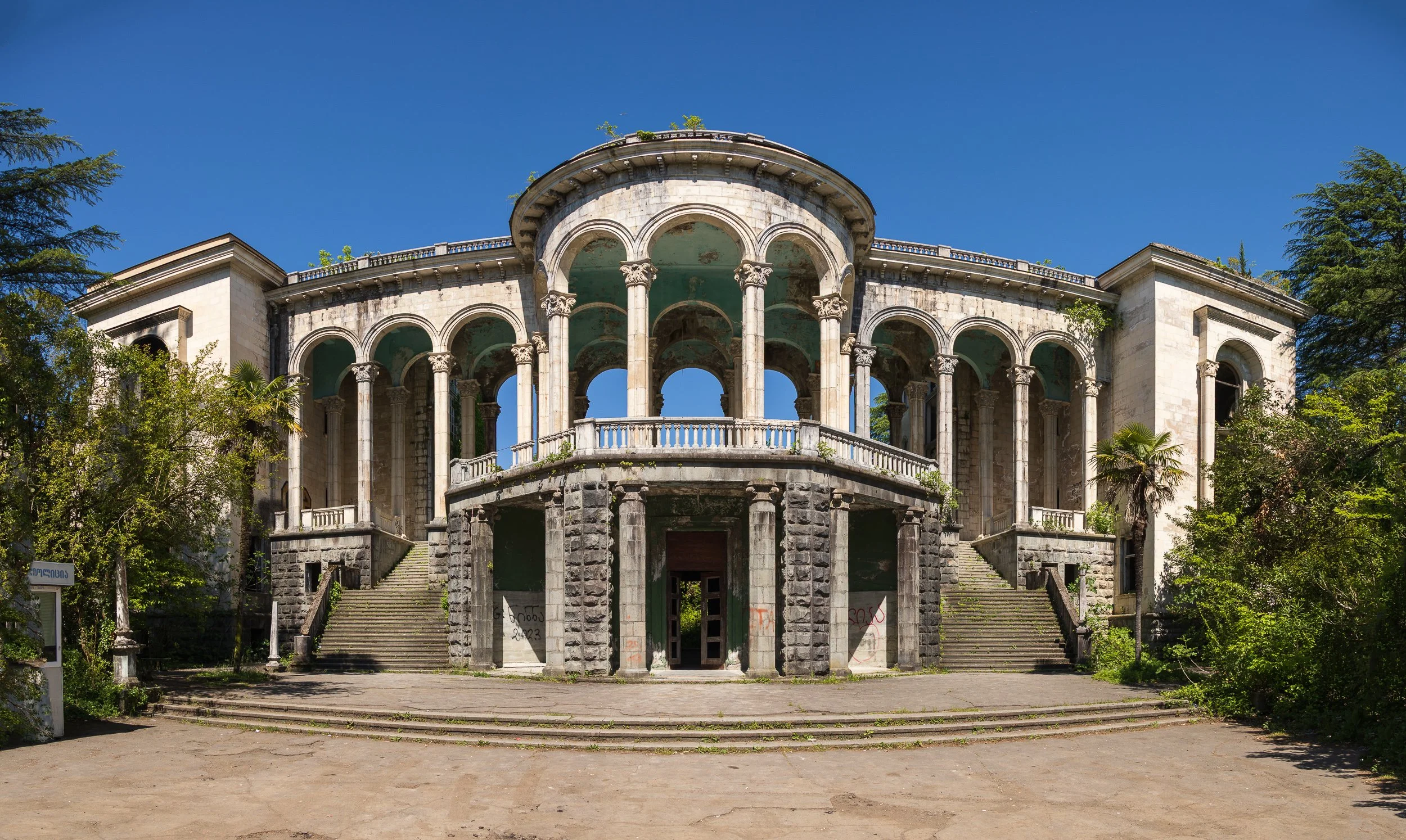
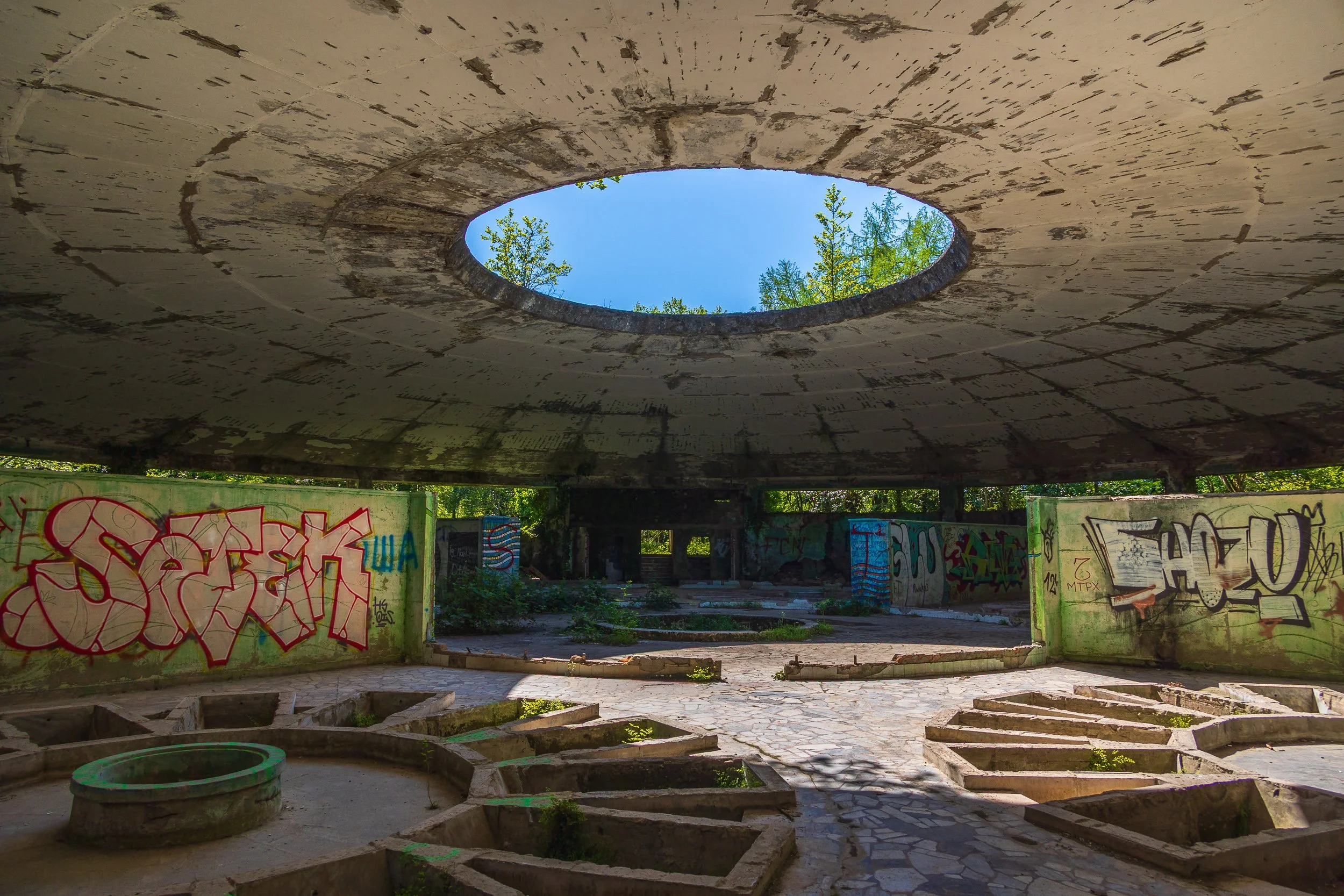
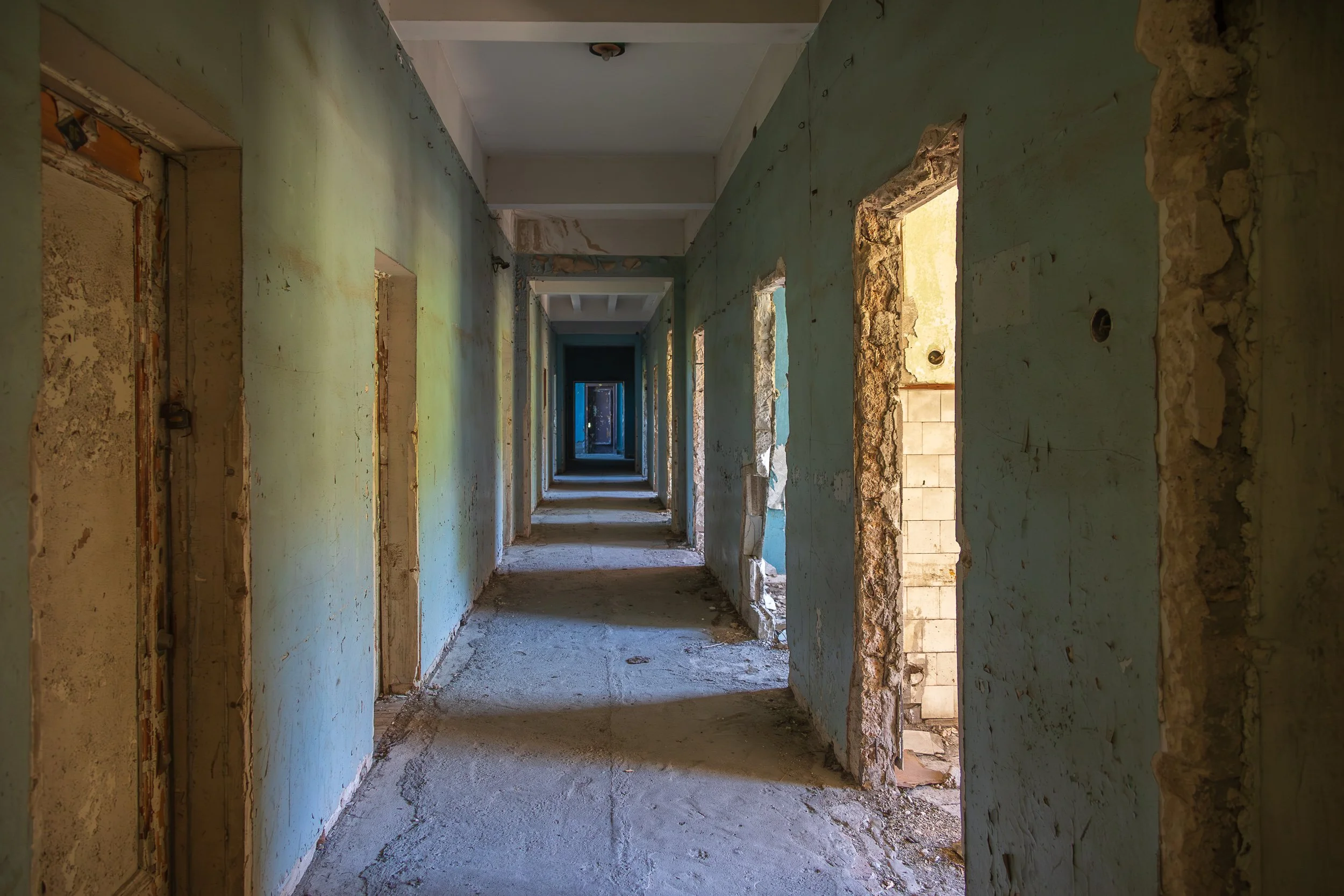
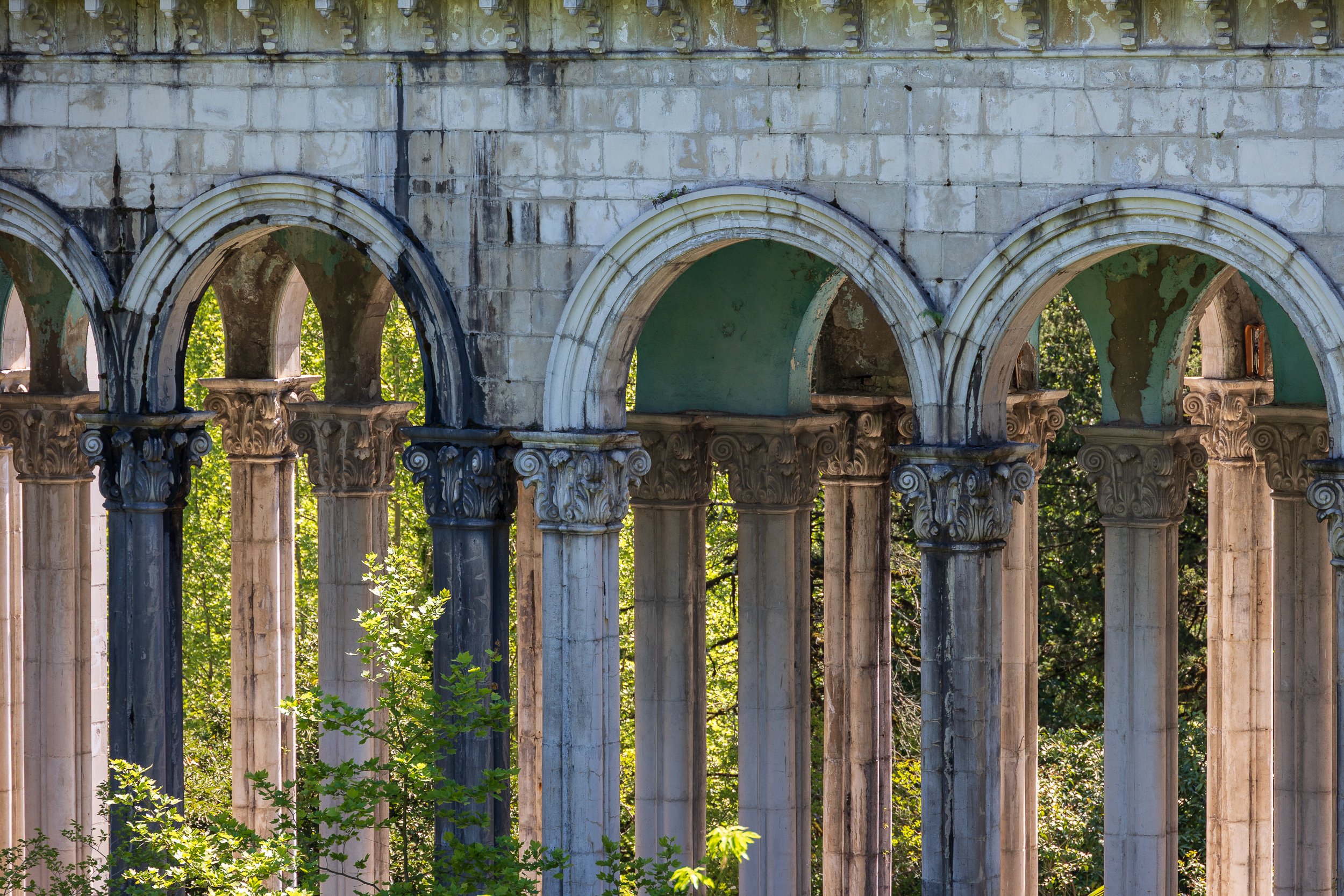
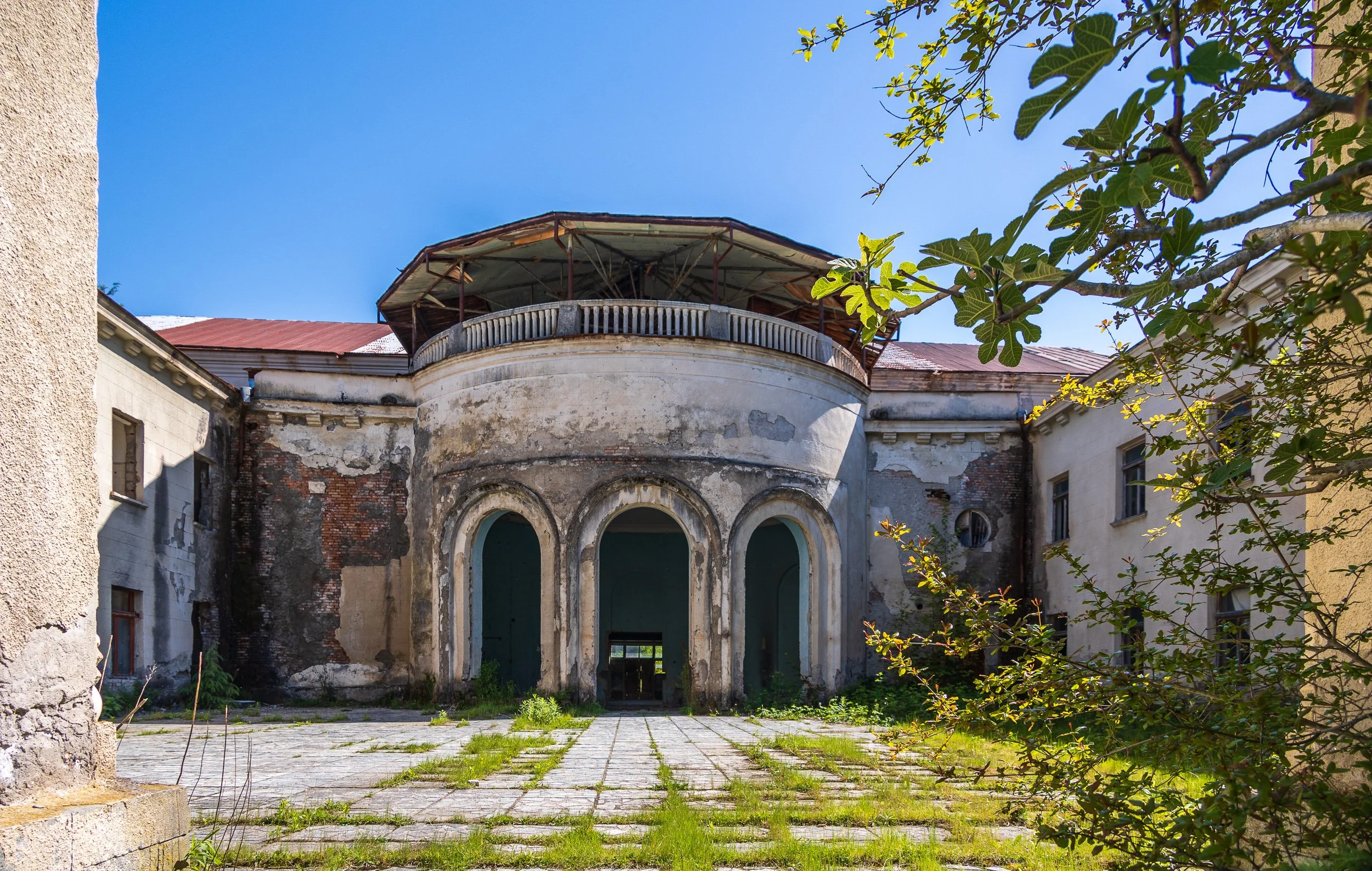
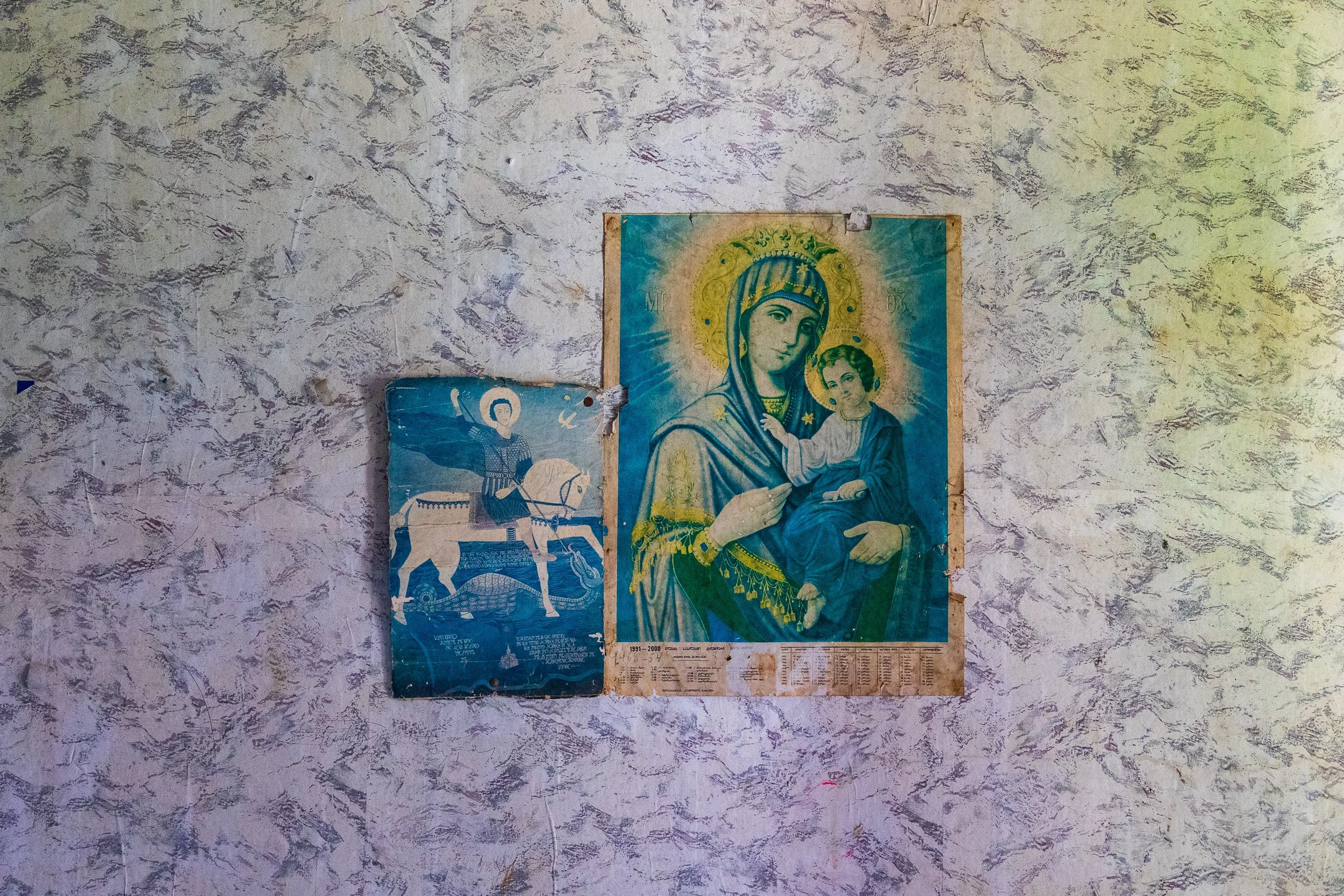
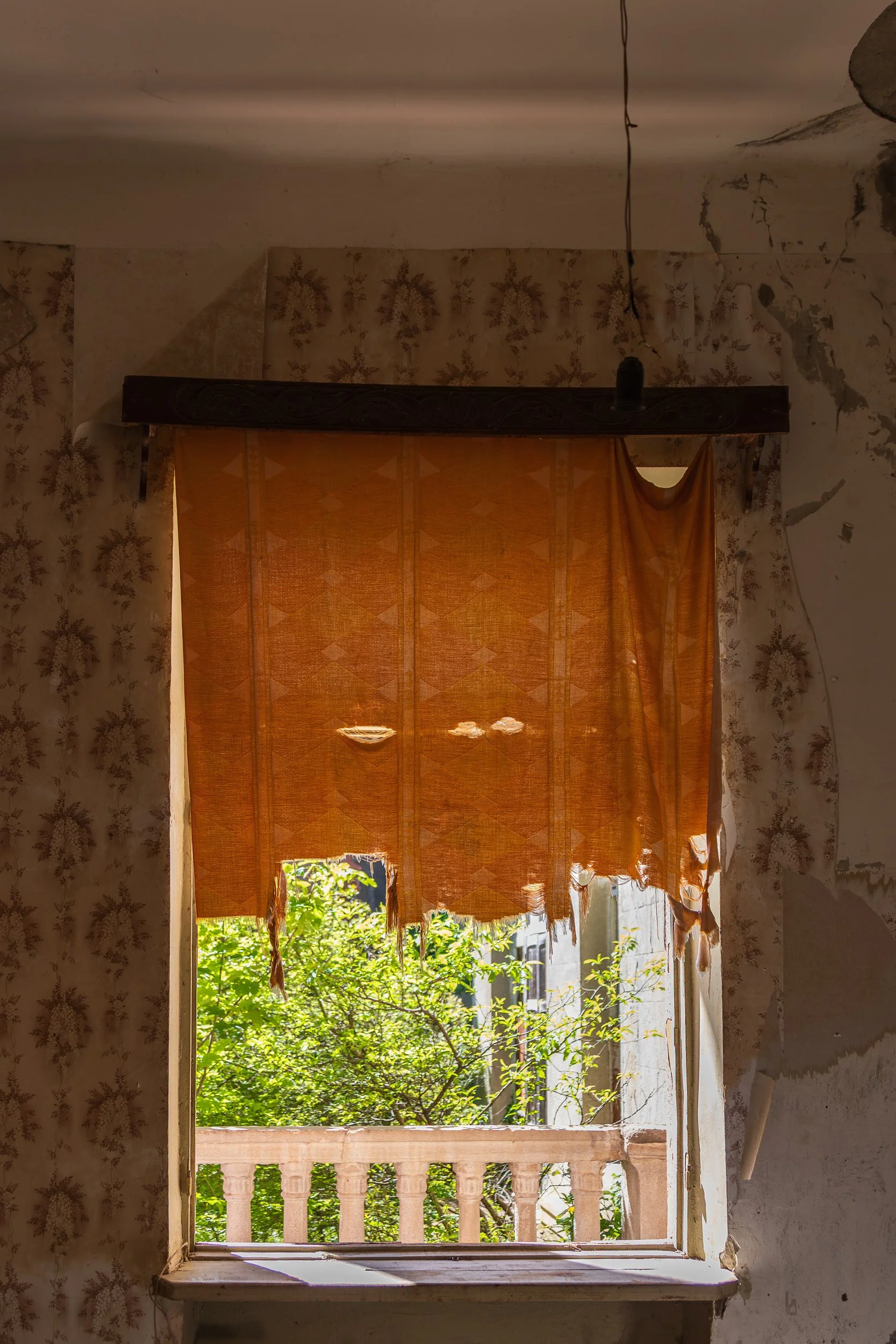
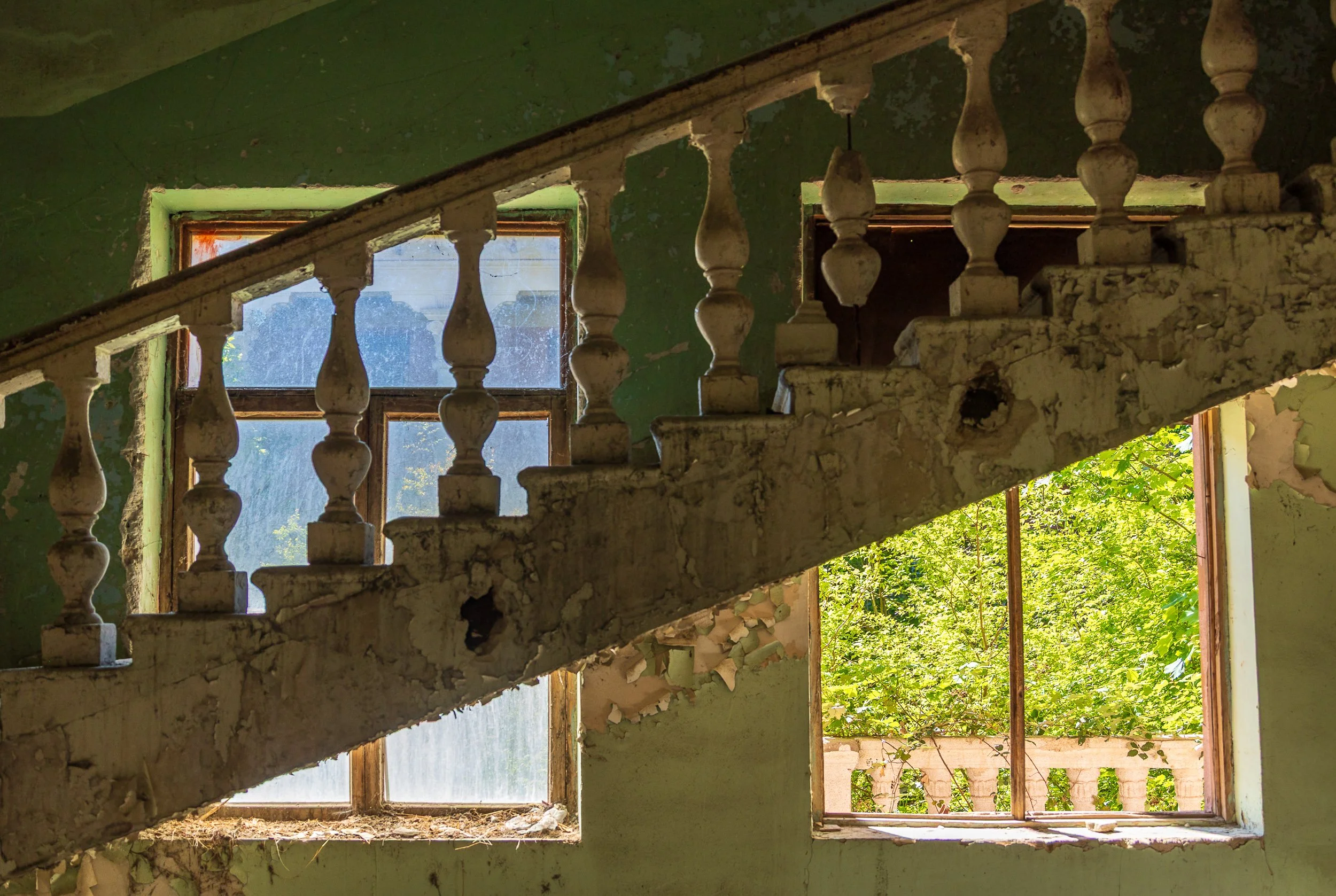
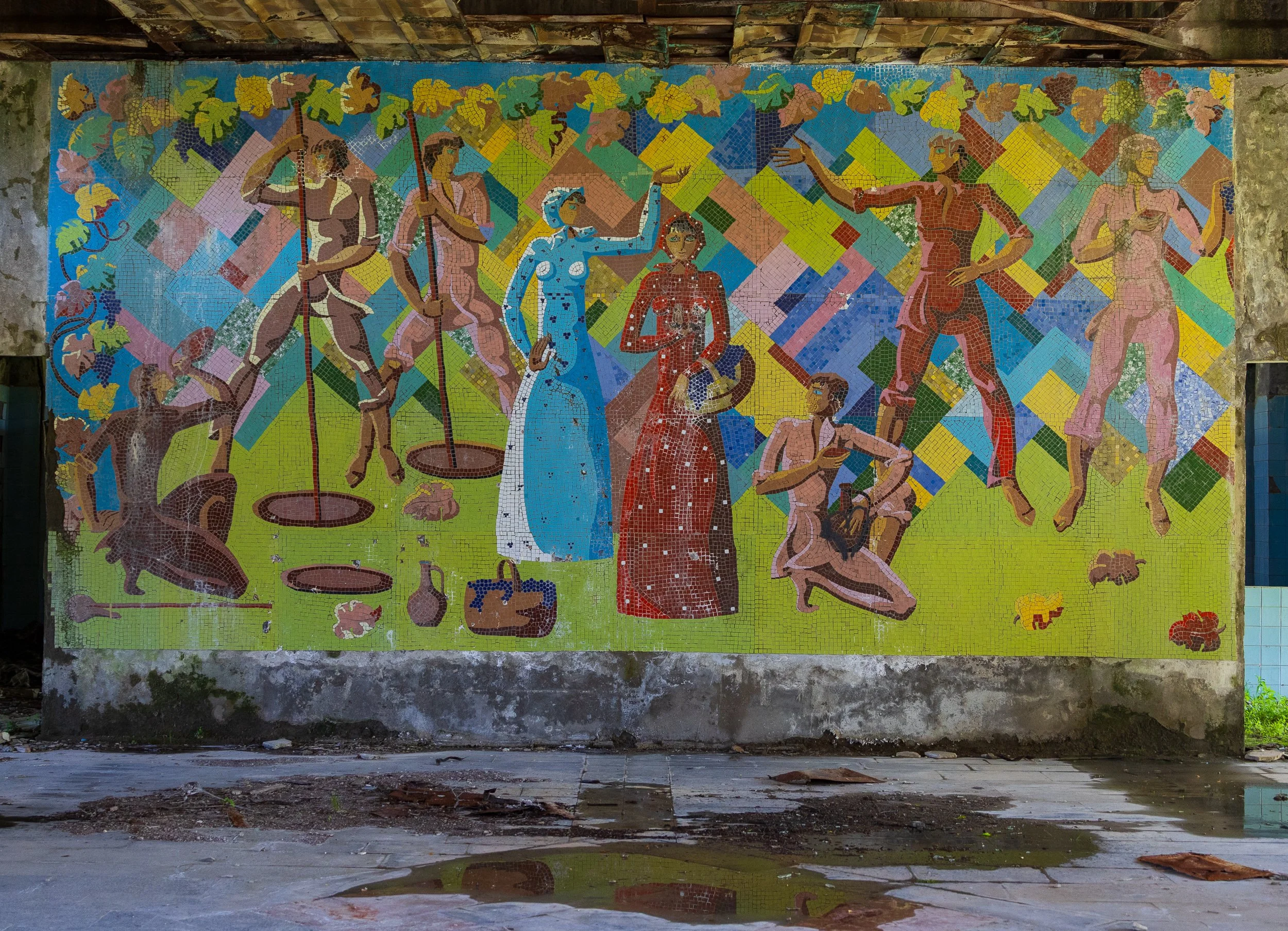
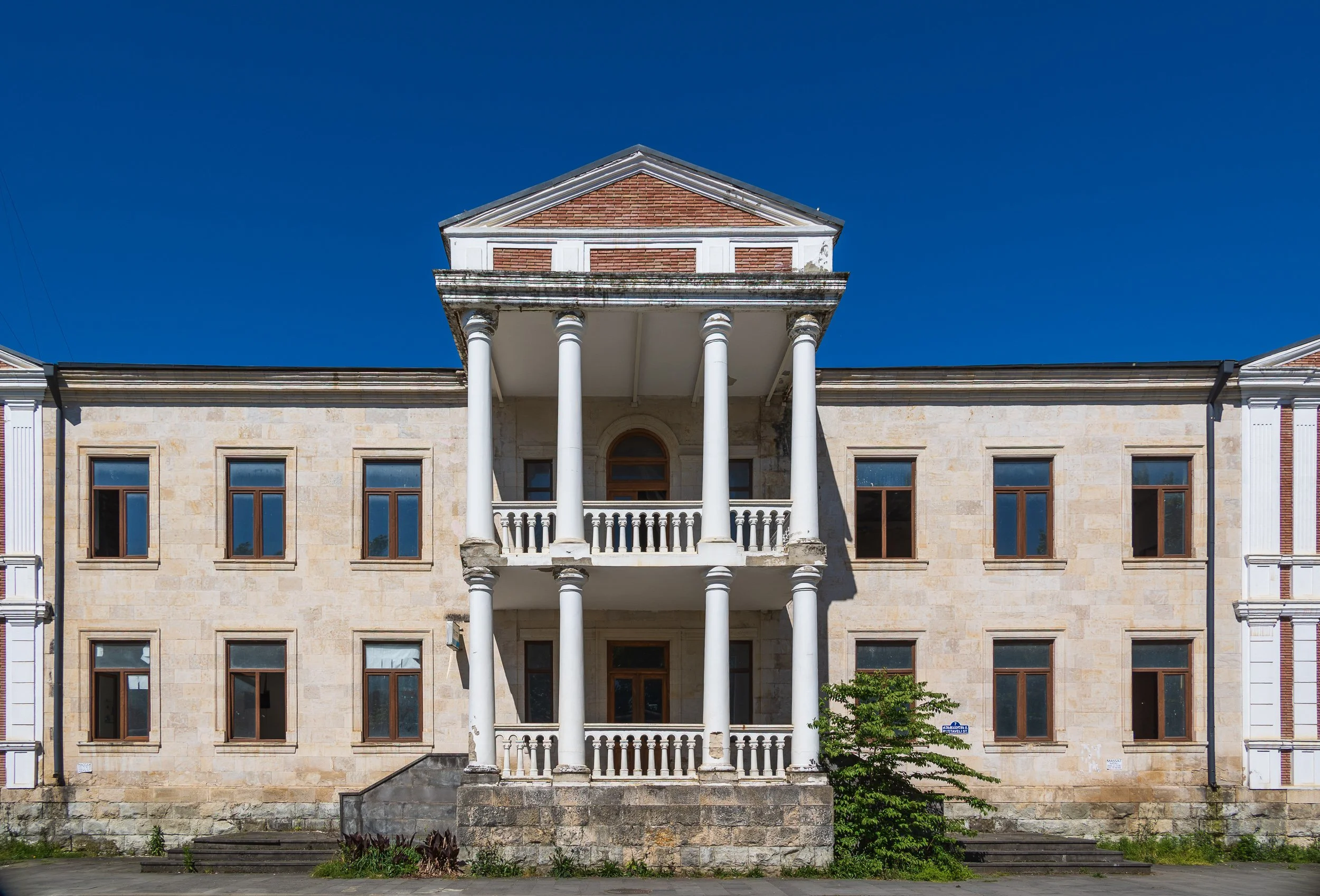
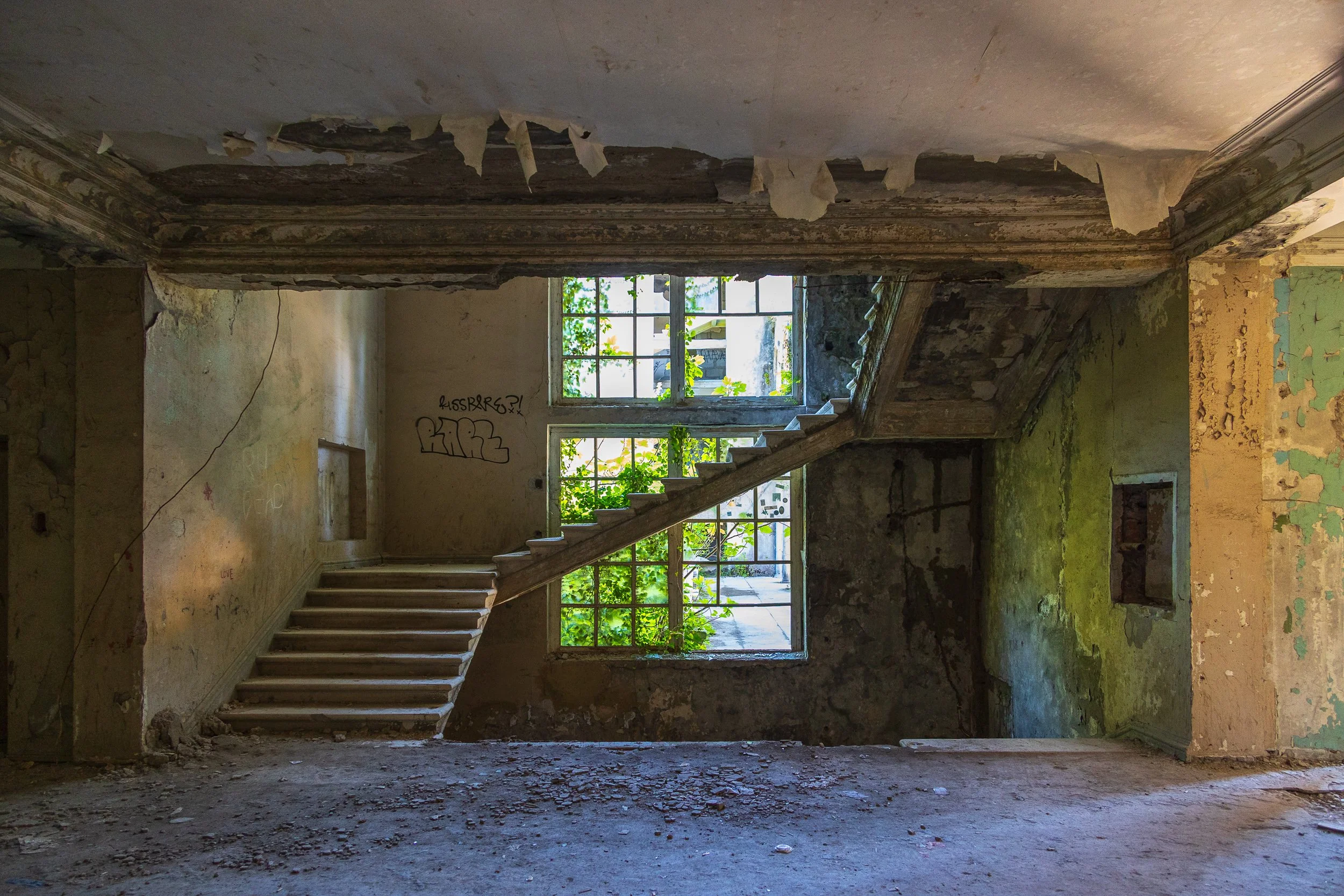
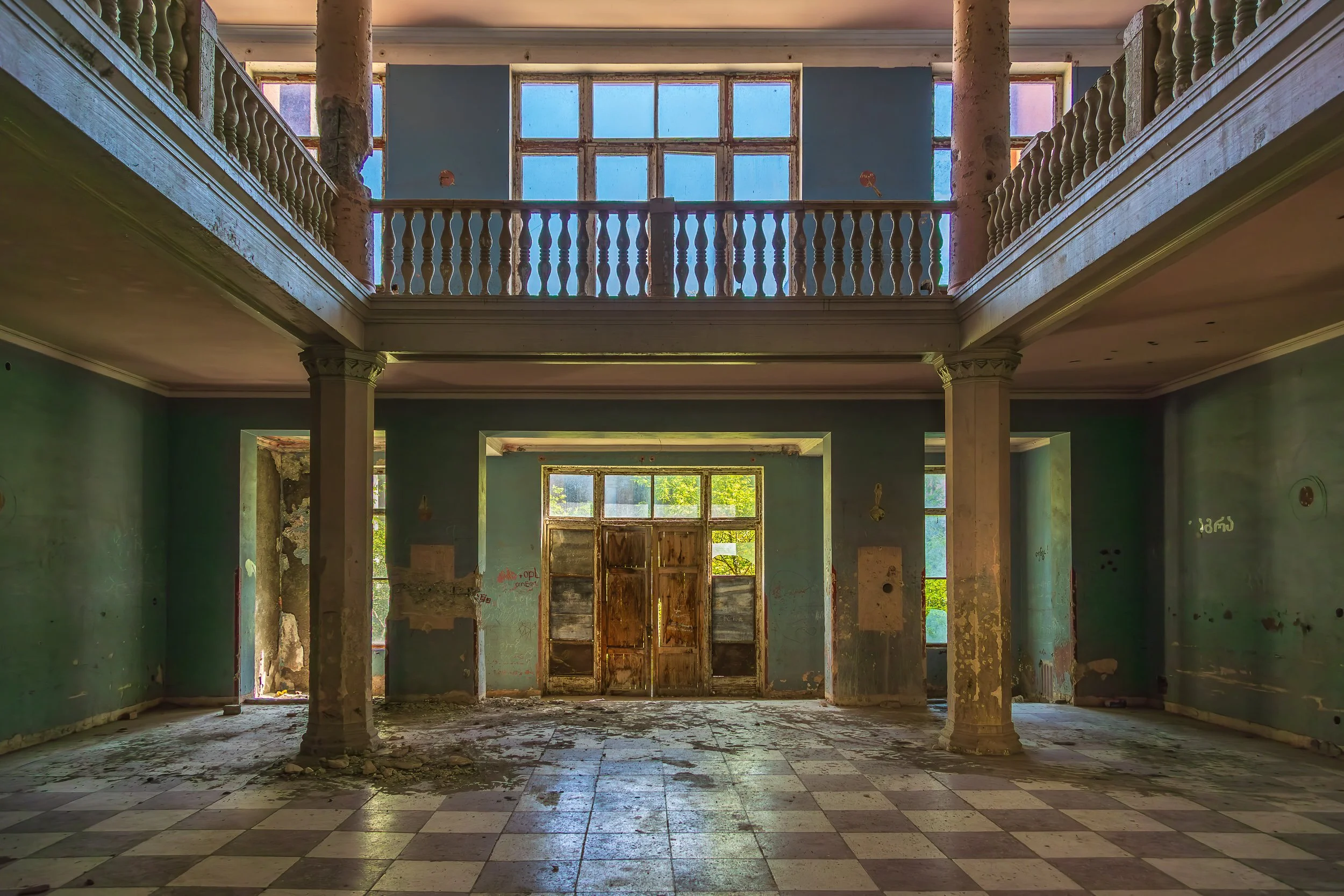
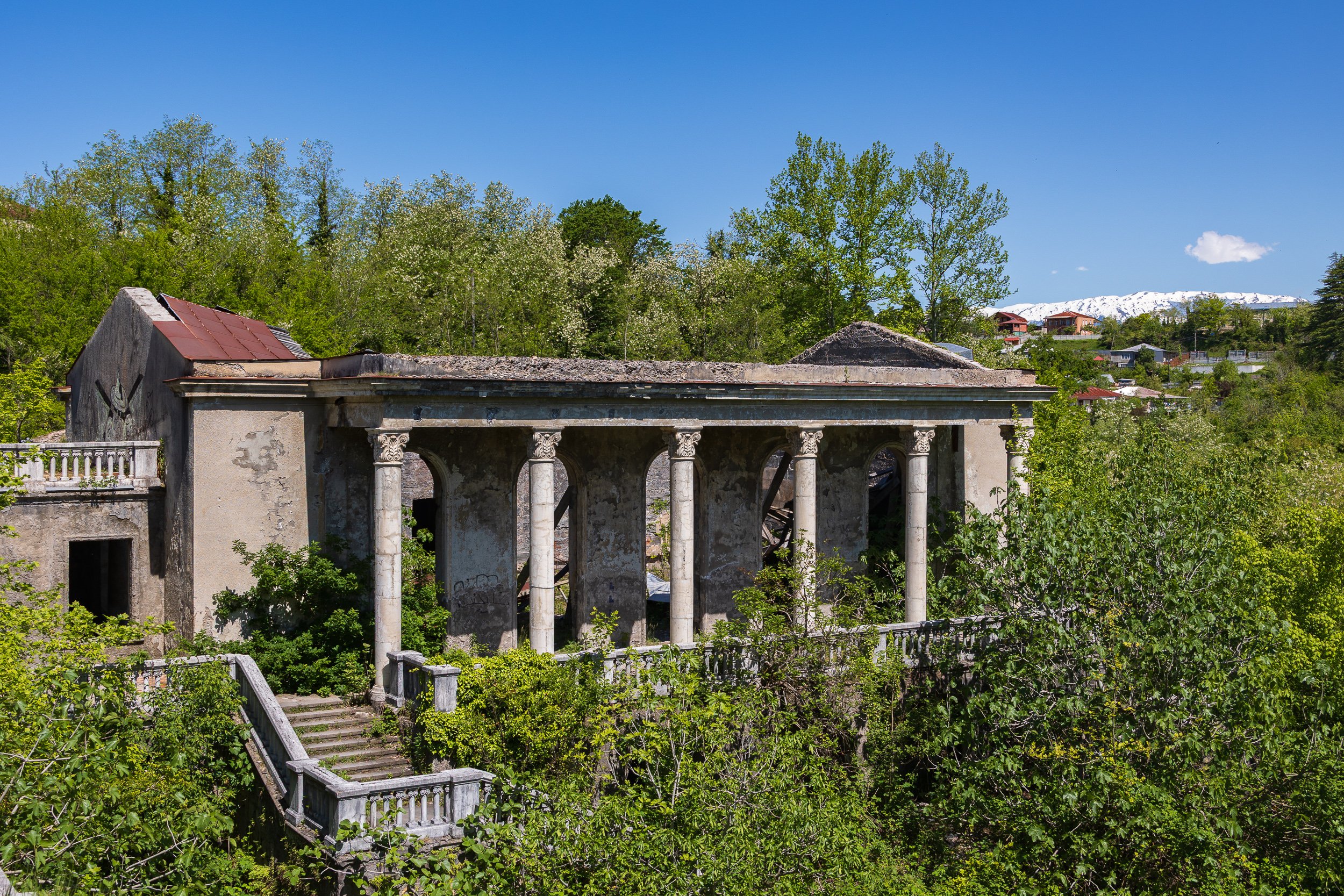
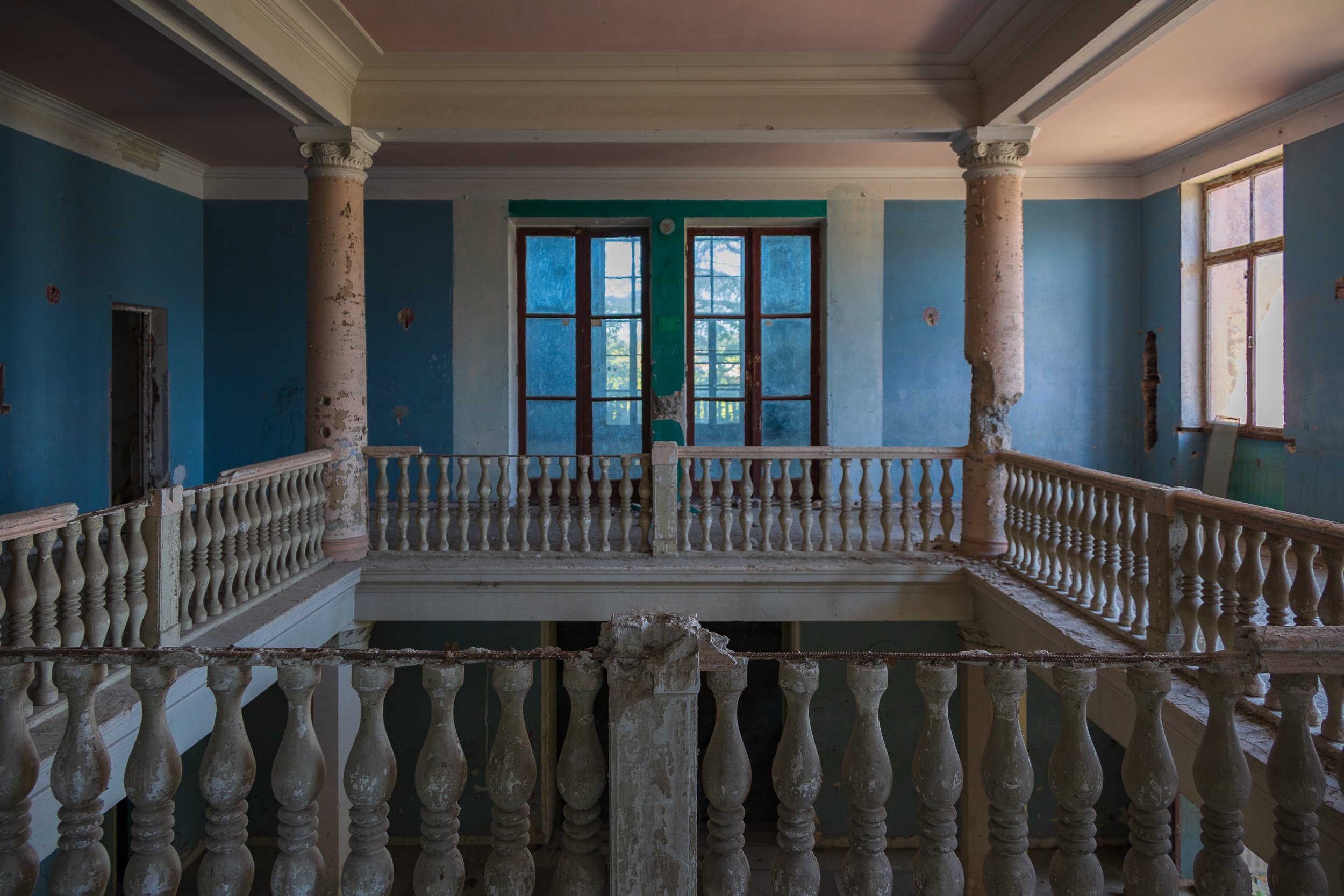
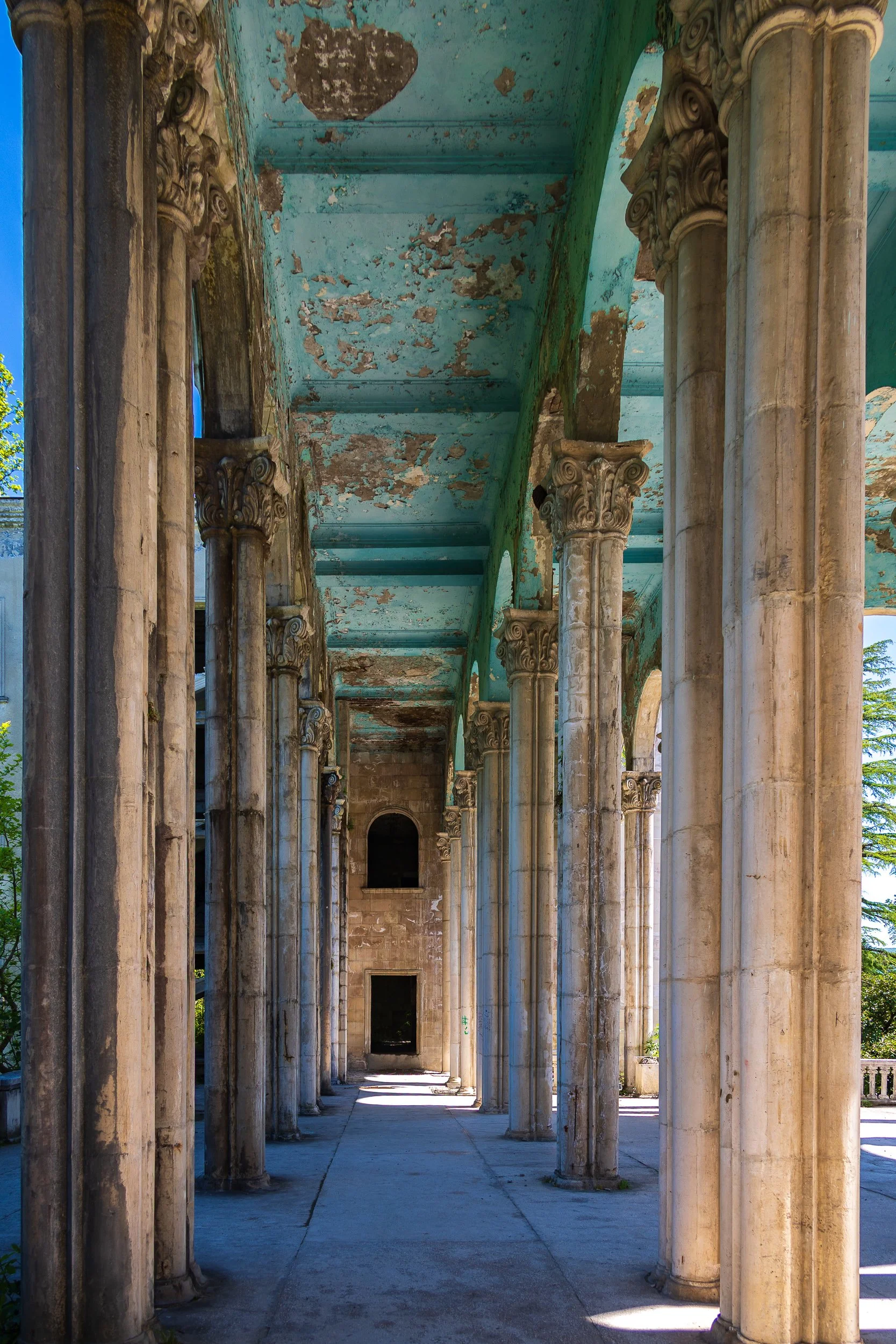
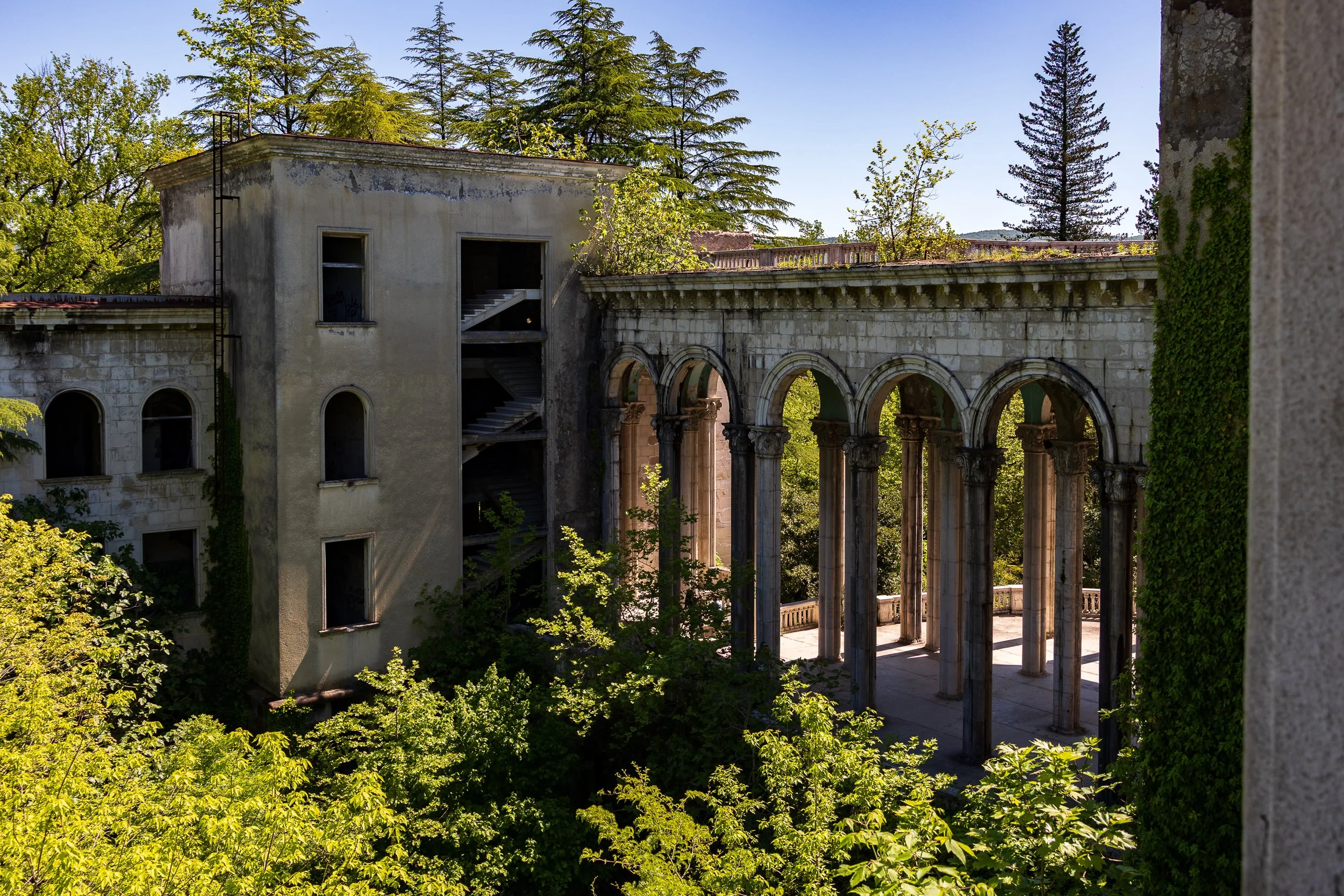
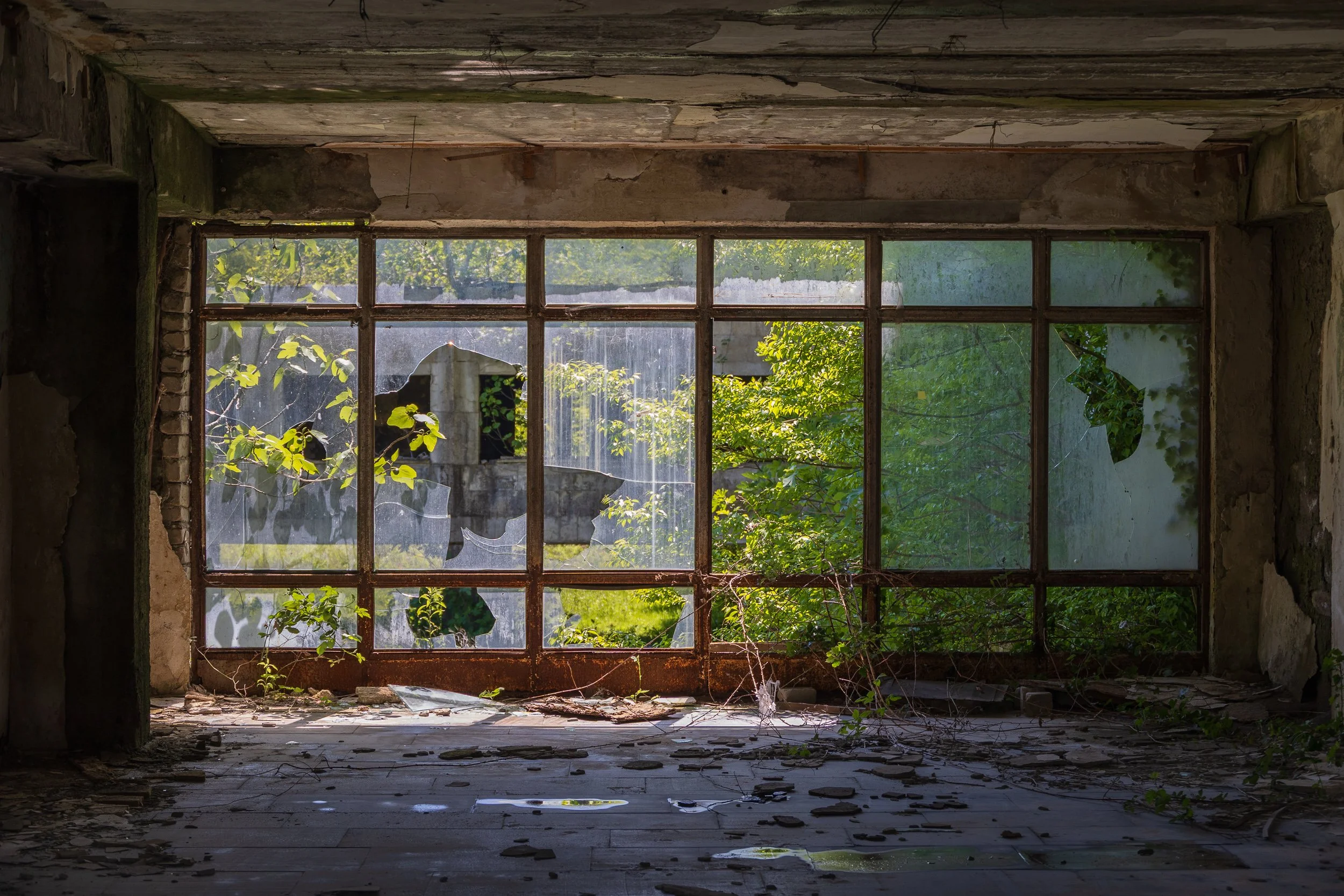
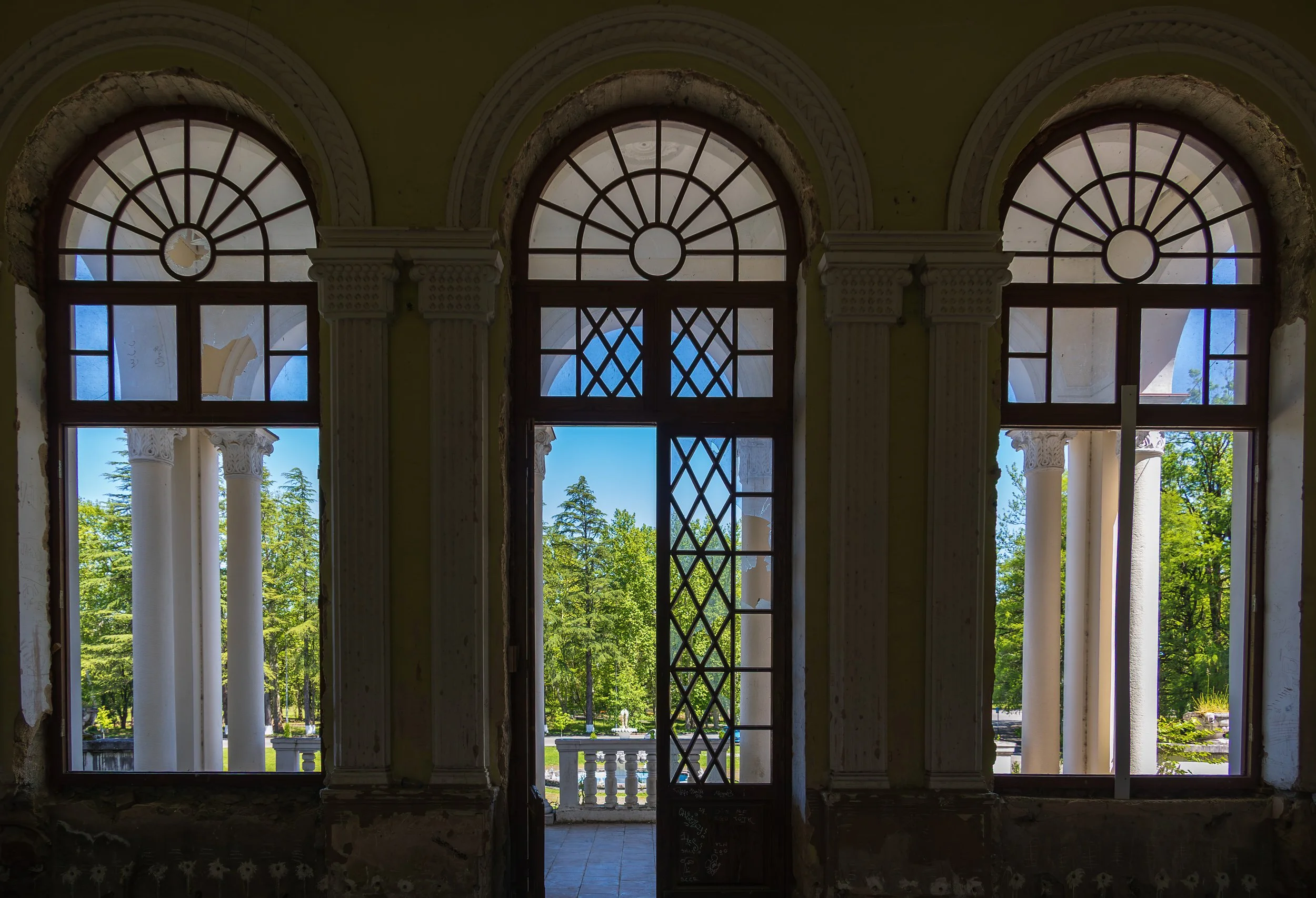
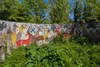
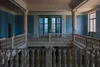
TskaltuboTskaltubo, once the most popular spa destination in the Soviet Union.  Up to 125,000 people a year arrived from across the USSR for state-mandated rest and recuperation, prescribed to bathe 20 to 30 minutes daily in radon-carbonate mineral springs that run naturally at 33 to 35 degrees. 
E13A8318.jpg
E13A8291.jpg
E13A8369.jpg
E13A8496.jpg
E13A8396.jpg
E13A8348.jpg
E13A8380.jpg
E13A8365.jpg
E13A8367.jpg
E13A8555.jpg
E13A8344.jpg
E13A8467.jpg
E13A8355.jpg
E13A8481.jpg
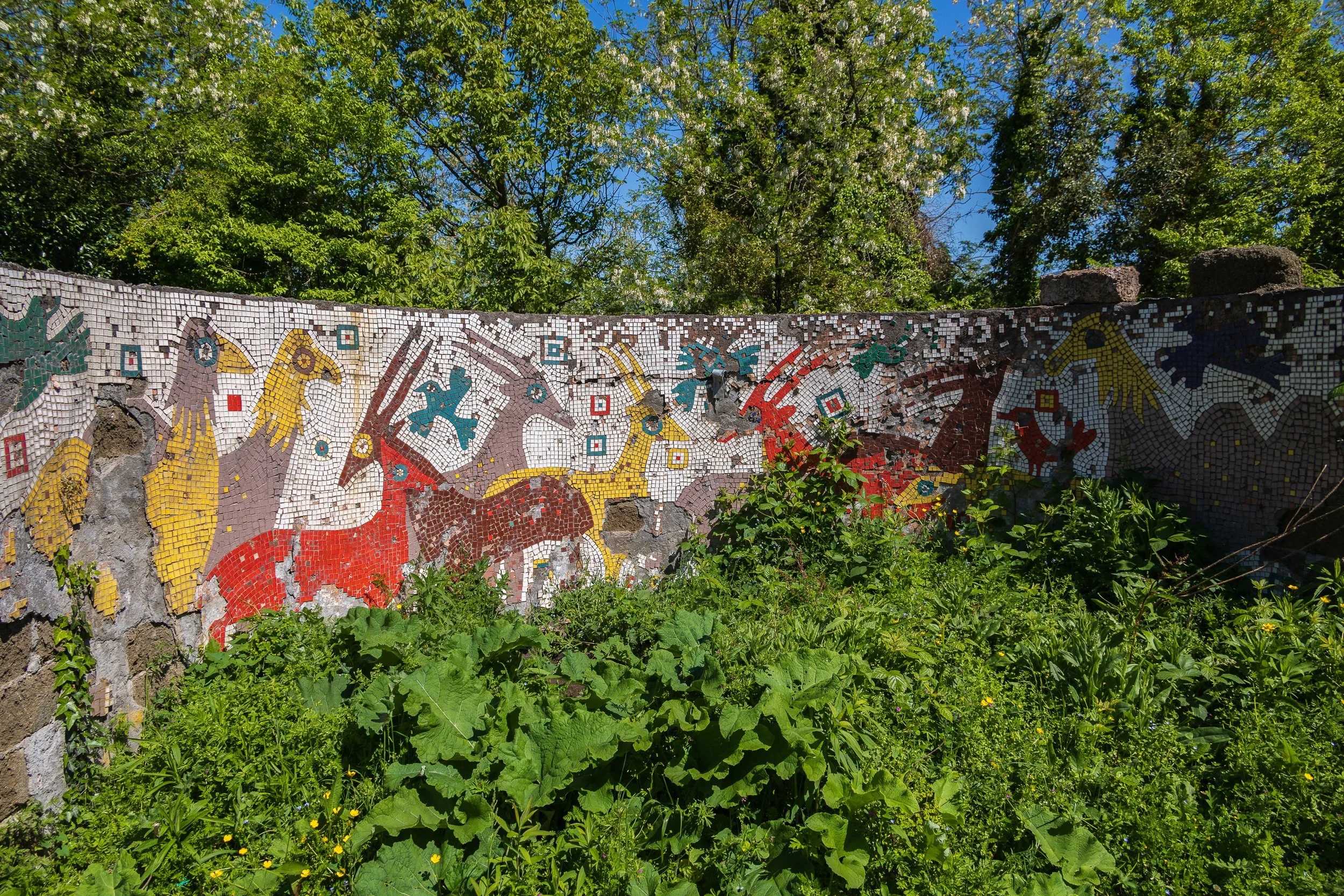
 Remants of Sanatorium Gelati, built for children, with this mosaic playground still intact.
Remants of Sanatorium Gelati, built for children, with this mosaic playground still intact.
E13A8410.jpg
E13A8458.jpg
E13A8483.jpg
E13A8552.jpg
E13A8541.jpg
Motsameta Monastery
Motsameta Monastery
 Motsameta Monastery: The name translates as "Place of the Martyrs," earned in the 8th century when two noble brothers, David and Constantine, refused to convert to Islam under Arab invasion, accepted torture and death instead, and were thrown into t
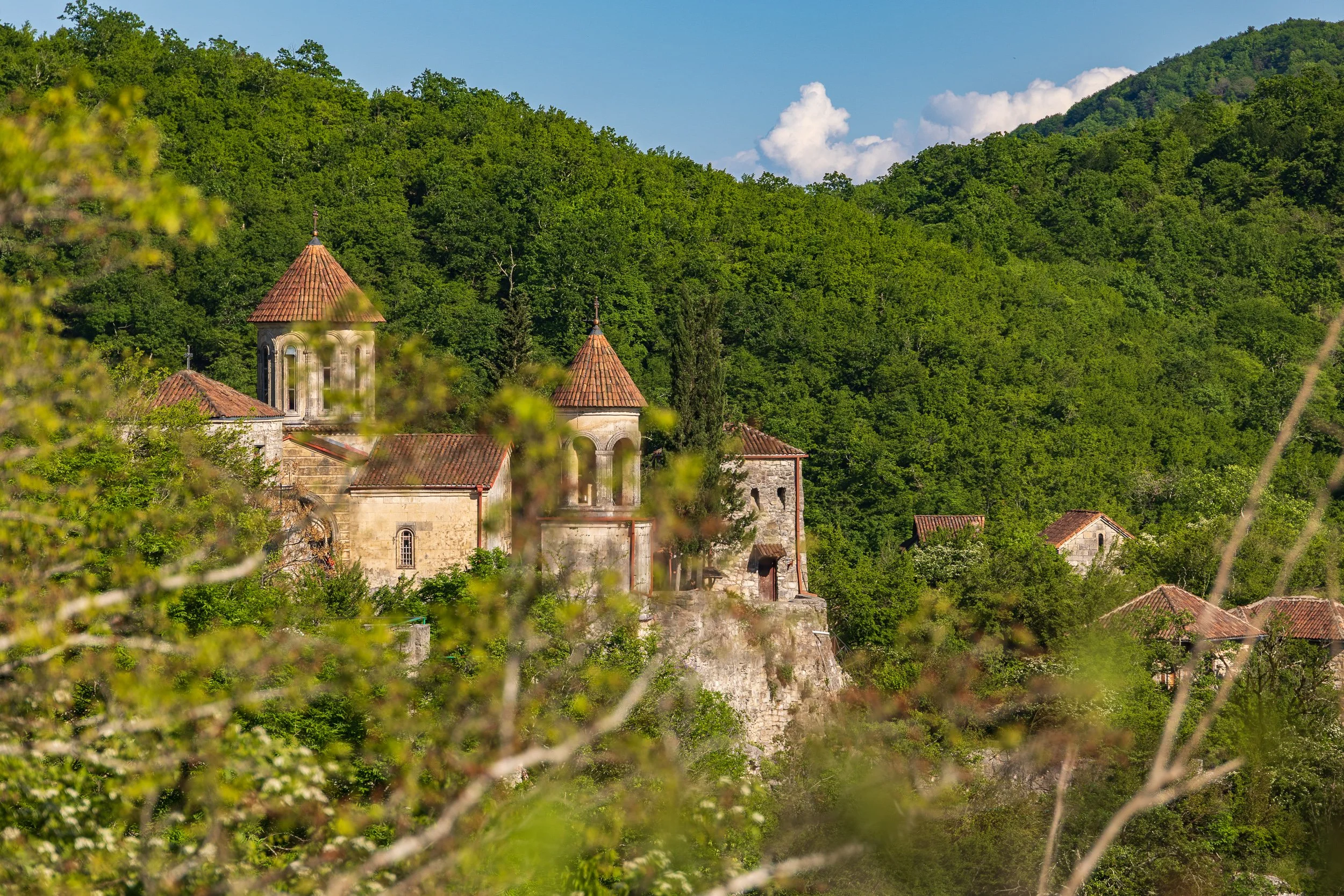
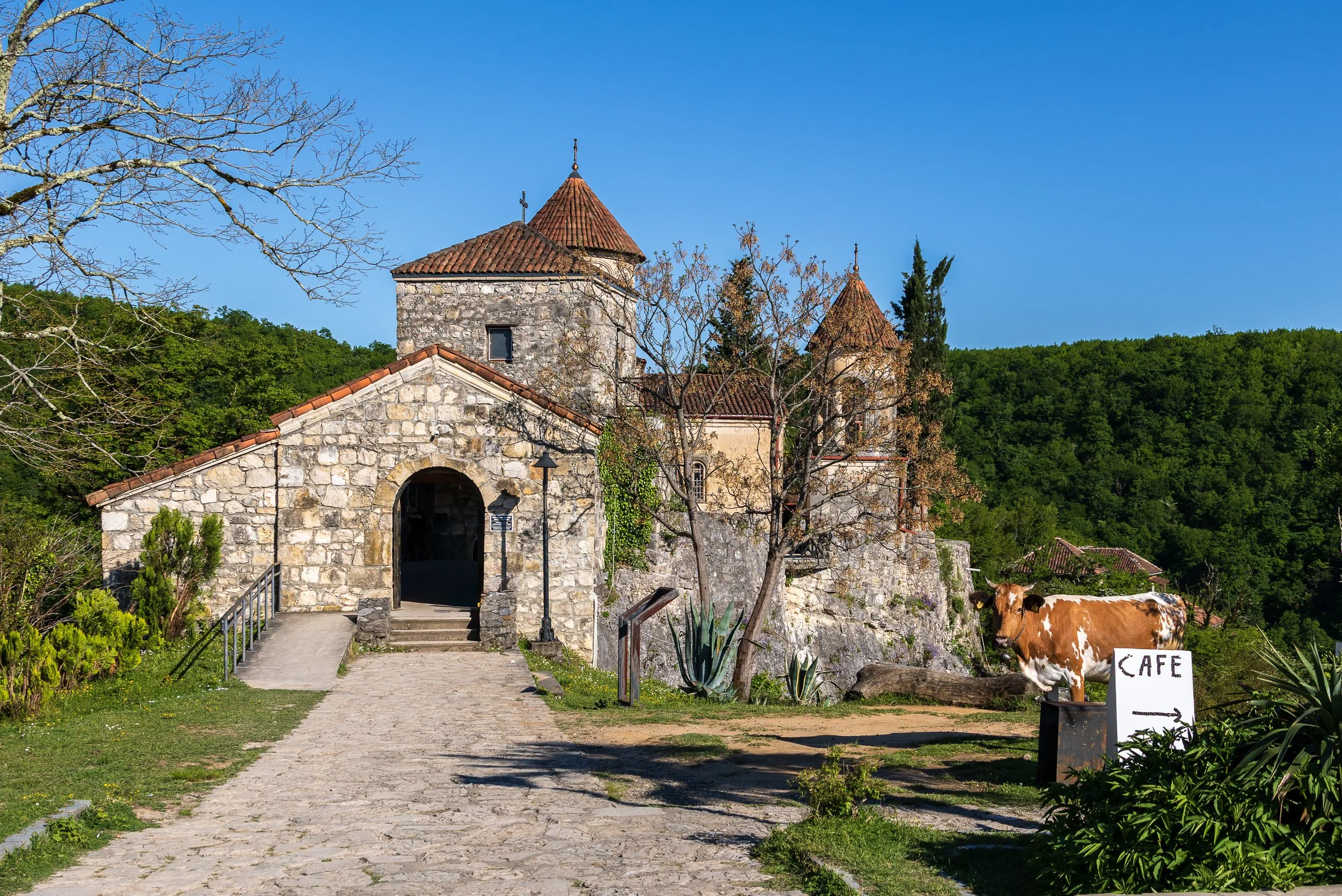
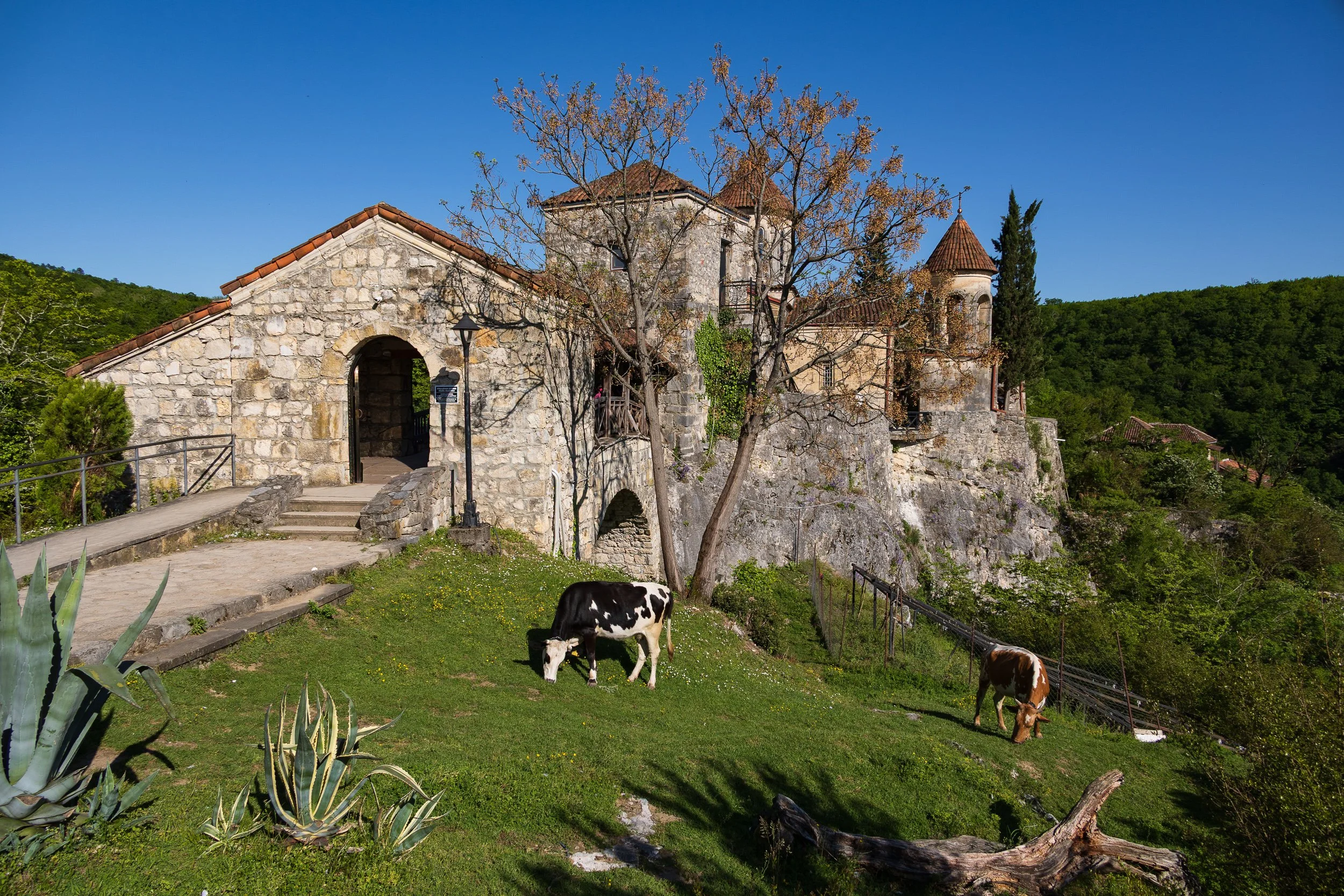
Motsameta Monastery: The name translates as "Place of the Martyrs," earned in the 8th century when two noble brothers, David and Constantine, refused to convert to Islam under Arab invasion, accepted torture and death instead, and were thrown into the river. 
E13A8582.jpg
E13A8641.jpg
E13A8626.jpg
E13A8583.jpg
E13A8611-Pano.jpg
Uplistsikhe
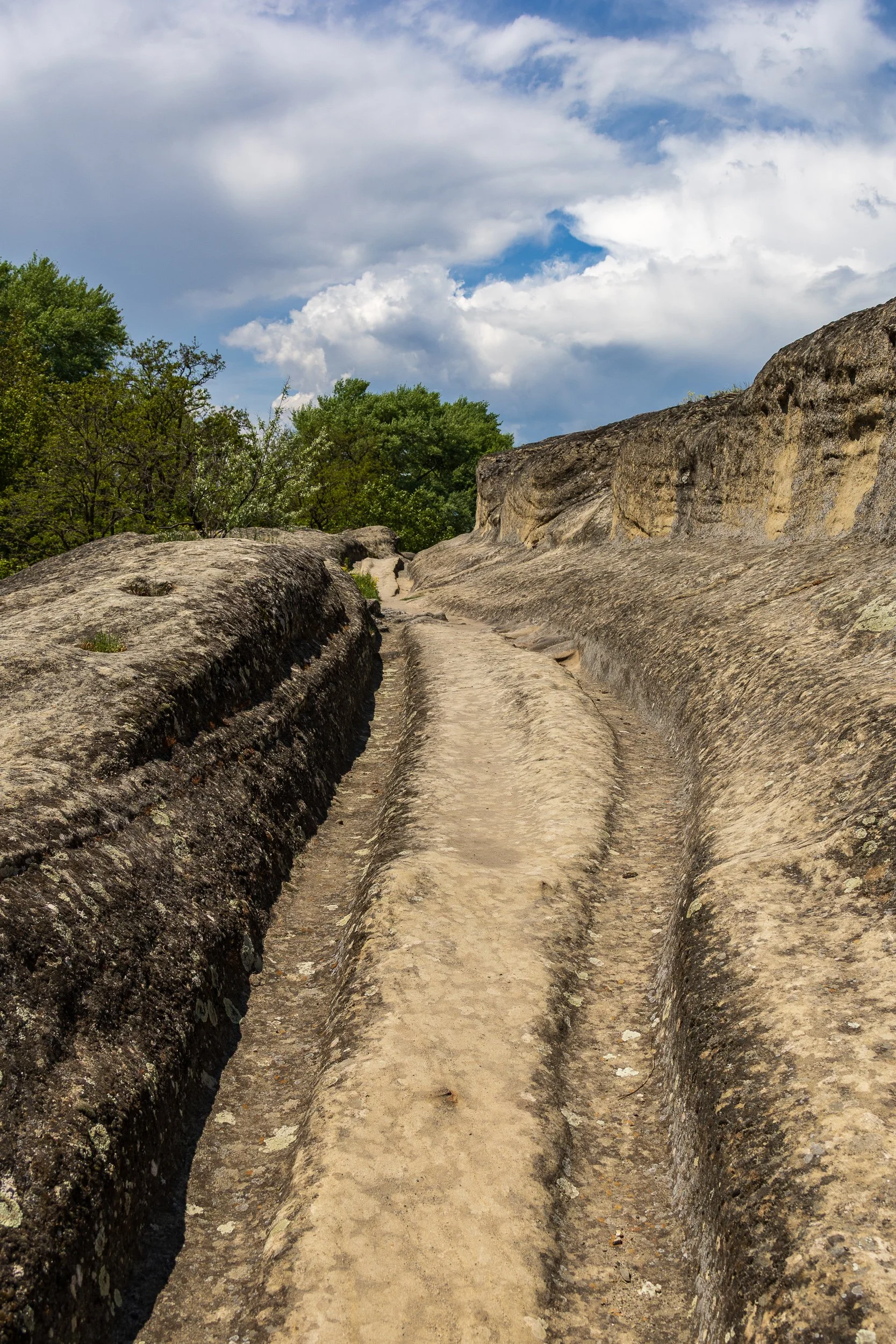
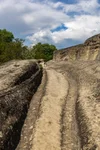
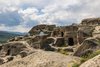
UplistsikheThe old roads and water channels part of Uplistsikhe - a town carved into the cliffside that used to be an important spiritual center.
 150 remaining caves out of a larger complex spanning 8 hectares. Notable remnants include ancient wine cellars (marani), a Hellenistic-style amphitheater, pharmacies, prisons, and the Hall of Queen Tamar
150 remaining caves out of a larger complex spanning 8 hectares. Notable remnants include ancient wine cellars (marani), a Hellenistic-style amphitheater, pharmacies, prisons, and the Hall of Queen Tamar
E13A8713.jpg
 Near the top of the hill sits the 10th-century Uplistsuli Church, a triple-church basilica built directly over the ruins of a former pagan sun temple.
Near the top of the hill sits the 10th-century Uplistsuli Church, a triple-church basilica built directly over the ruins of a former pagan sun temple.
E13A8806.jpg
 Many of the grand ceremonial spaces feature dramatic tunnel-vaulted ceilings. The soft sandstone has been carved with geometric squares and ribs, creating deep recessed panels called coffers.
Many of the grand ceremonial spaces feature dramatic tunnel-vaulted ceilings. The soft sandstone has been carved with geometric squares and ribs, creating deep recessed panels called coffers.
E13A8786.jpg
 Views looking down and out from the ancient rock-hewn caves of Uplistsikhe, Georgia, feature sweeping, panoramic vistas of the winding Mtkvari River basin and the sprawling rural valleys.
Views looking down and out from the ancient rock-hewn caves of Uplistsikhe, Georgia, feature sweeping, panoramic vistas of the winding Mtkvari River basin and the sprawling rural valleys.
E13A8771-Pano-Edit.jpg
E13A8669.jpg
 The ruins of the newer, abandoned village of Kvakhvreli are visible tucked within the scrubland below the cliff face.
The ruins of the newer, abandoned village of Kvakhvreli are visible tucked within the scrubland below the cliff face.
Tblisi
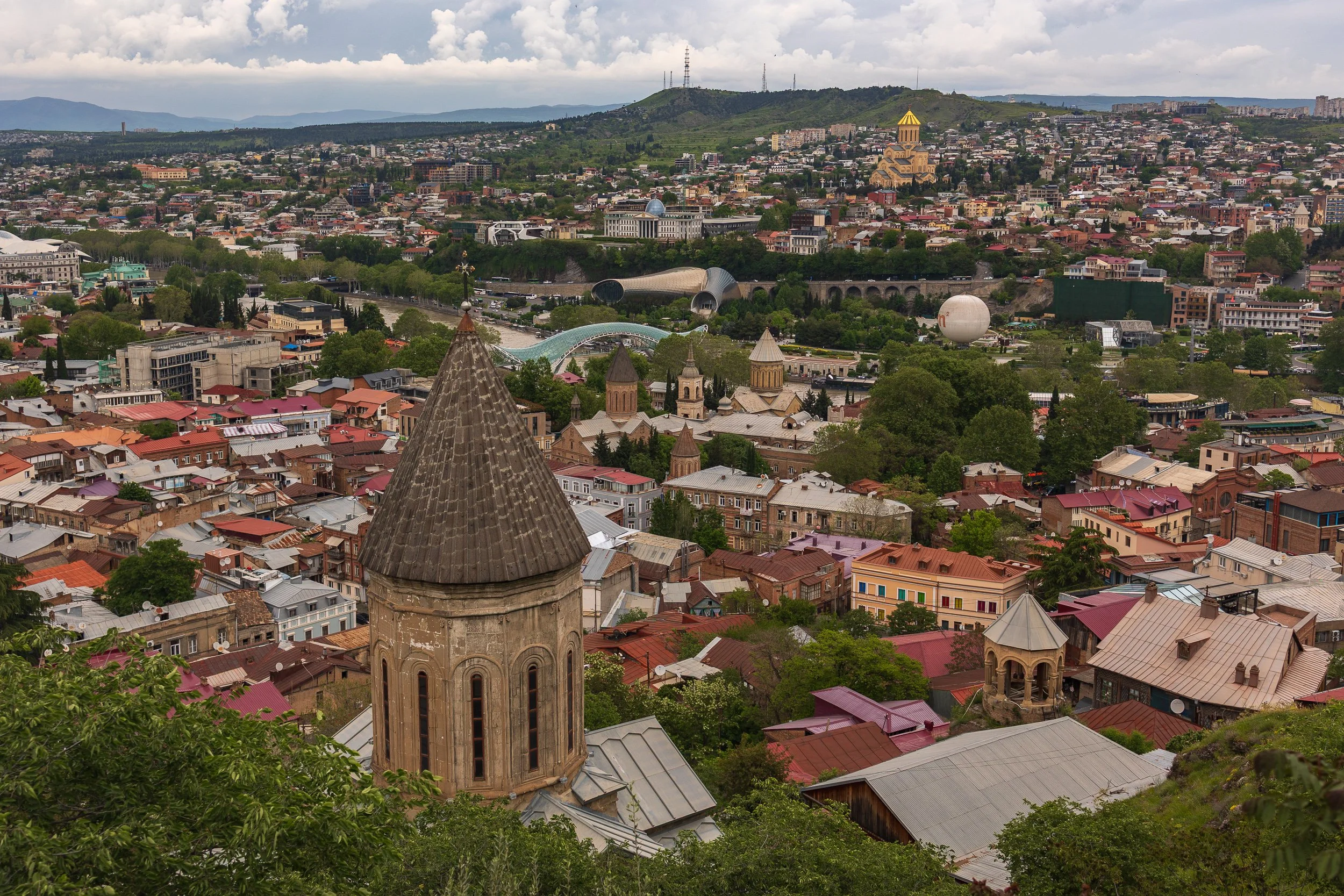
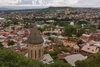
TblisiTbilisi took me a few days to find my bearings: old town, new town, the river, the hills, neighbourhoods folding into neighbourhoods. I started at the top of the city next to the Mother of Georgia statue to get the lay of the land as the sun went down.
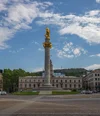
 The Freedom Monument stands at the centre of the roundabout in Freedom Square, gold against the Tbilisi skyline.
The Freedom Monument stands at the centre of the roundabout in Freedom Square, gold against the Tbilisi skyline.
E13A9191.jpg
 Stamba Hotel, a repurposed publishing house
Stamba Hotel, a repurposed publishing house
 Old Town balconies - Carved wooden balconies cling to the cliffside in Tbilisi's Old Town, layered brick and timber stacked above the rock.
Old Town balconies - Carved wooden balconies cling to the cliffside in Tbilisi's Old Town, layered brick and timber stacked above the rock.
E13A9118.jpg
 Jumah Mosque, the only surviving mosque in Tbilisi, where Sunni and Shia worshippers pray side by side beneath the same roof.
Jumah Mosque, the only surviving mosque in Tbilisi, where Sunni and Shia worshippers pray side by side beneath the same roof.
E13A9074.jpg
 Abanotubani, the sulphur bath district, domed brick bathhouses built into the hillside, still in use after centuries.
Abanotubani, the sulphur bath district, domed brick bathhouses built into the hillside, still in use after centuries.
E13A9326.jpg
E13A8992.jpg
 Narikala Fortress, brick and stone walls climbing the hillside above Old Tbilisi, watching over the city for over a thousand years.
Narikala Fortress, brick and stone walls climbing the hillside above Old Tbilisi, watching over the city for over a thousand years.
E13A9004.jpg
 Bridge of Peace -   A glass and steel canopy arcs across the Mtkvari.
Bridge of Peace - A glass and steel canopy arcs across the Mtkvari.
E13A9245.jpg
E13A9269.jpg
 Mtskheta (the town, from Jvari) - red rooftops crowding the riverbank, the cathedral and its walls at the centre.
Mtskheta (the town, from Jvari) - red rooftops crowding the riverbank, the cathedral and its walls at the centre.
 One of the oldest continuously inhabited towns in the world, founded around the 1st millennium BC, with archaeological evidence of settlement going back even further.
One of the oldest continuously inhabited towns in the world, founded around the 1st millennium BC, with archaeological evidence of settlement going back even further.
 Jvari Monastery - A 6th-century monastery on the hilltop above Mtskheta, where the Mtkvari and Aragvi rivers meet.
Jvari Monastery - A 6th-century monastery on the hilltop above Mtskheta, where the Mtkvari and Aragvi rivers meet.
E13A9431.jpg
E13A9375.jpg
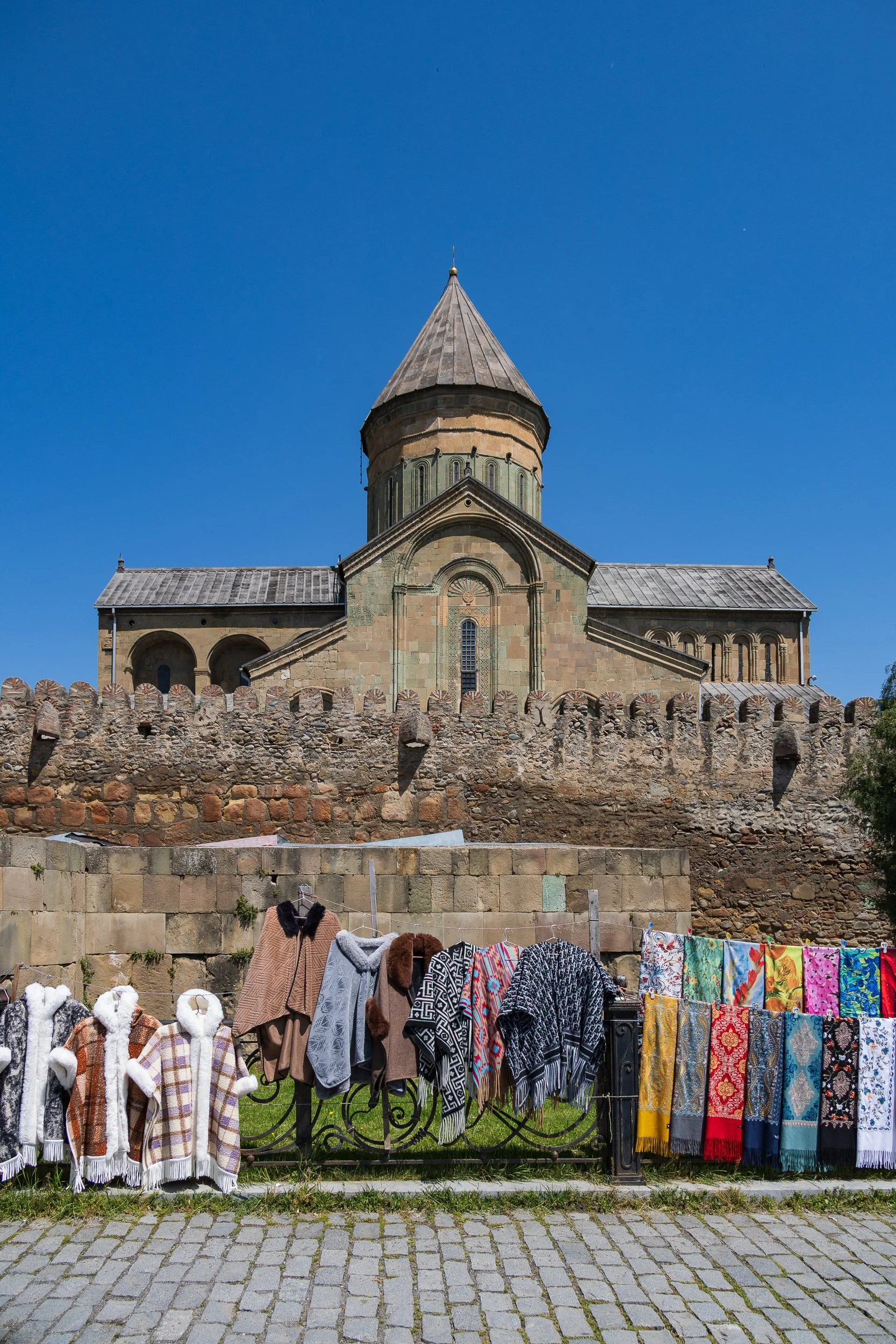
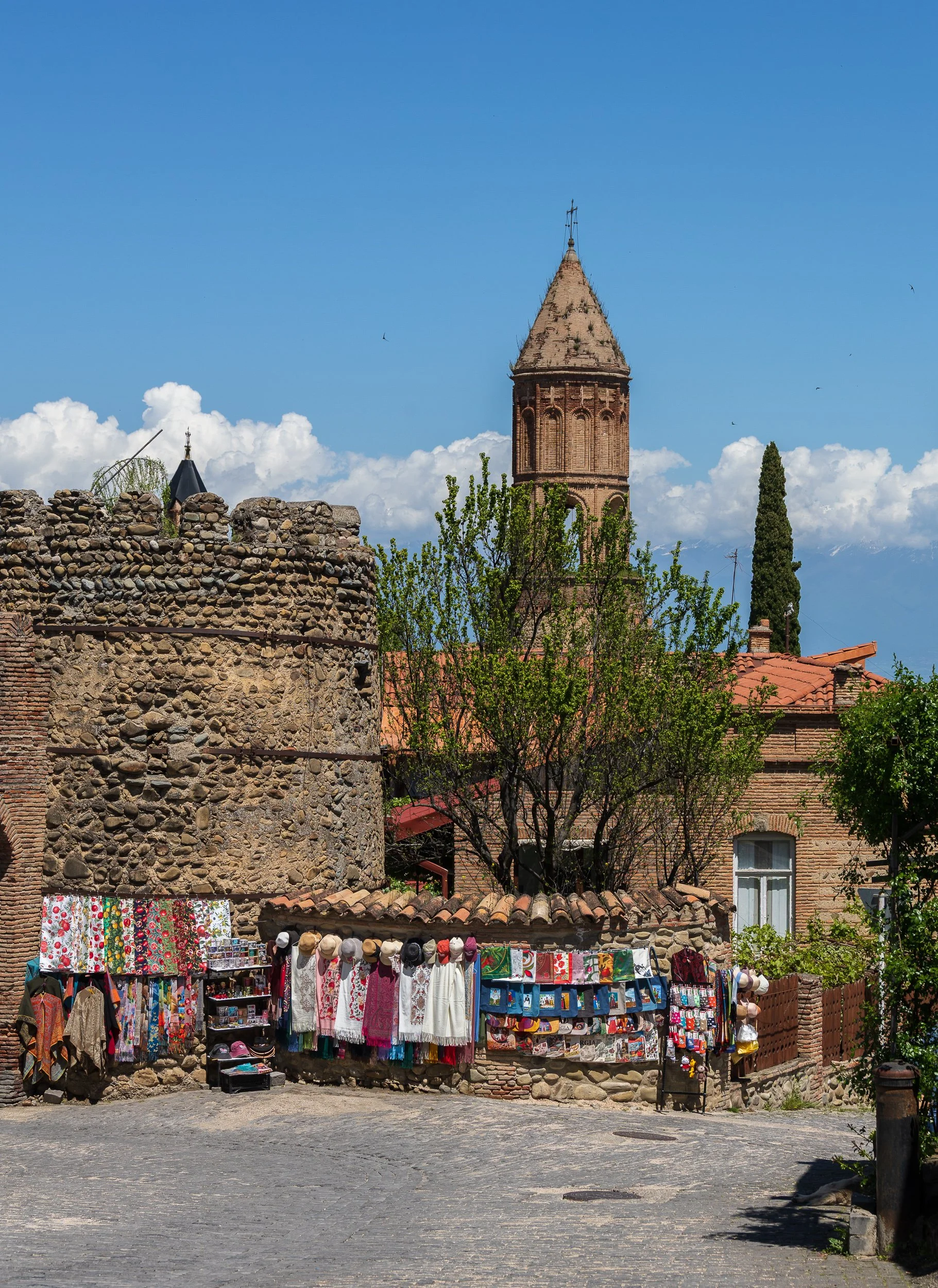
 Mtskheta (cathedral/vendors) - Svetitskhoveli Cathedral rises above the old fortified walls, vendors hanging carpets, bags, and souvenirs along the fence below.
Mtskheta (cathedral/vendors) - Svetitskhoveli Cathedral rises above the old fortified walls, vendors hanging carpets, bags, and souvenirs along the fence below.
E13A9576.jpg
 Capital of the early Georgian Kingdom of Iberia from the 3rd century BC to the 5th century AD. The capital later moved to Tbilisi, but Mtskheta remained the spiritual and cultural centre of the nation. Its historic monuments, Jvari Monastery, Svetit
Capital of the early Georgian Kingdom of Iberia from the 3rd century BC to the 5th century AD. The capital later moved to Tbilisi, but Mtskheta remained the spiritual and cultural centre of the nation. Its historic monuments, Jvari Monastery, Svetitskhoveli Cathedral, and Samtavro Monastery, became a UNESCO World Heritage Site in 1994.
 Mtskheta remains the spiritual and cultural centre of Georgia.
Mtskheta remains the spiritual and cultural centre of Georgia.
E13A9612.jpg
E13A9449.jpg
E13A9457.jpg
E13A9583.jpg
E13A9546.jpg
E13A9605.jpg
E13A9580.jpg
Chronicles of Georgia
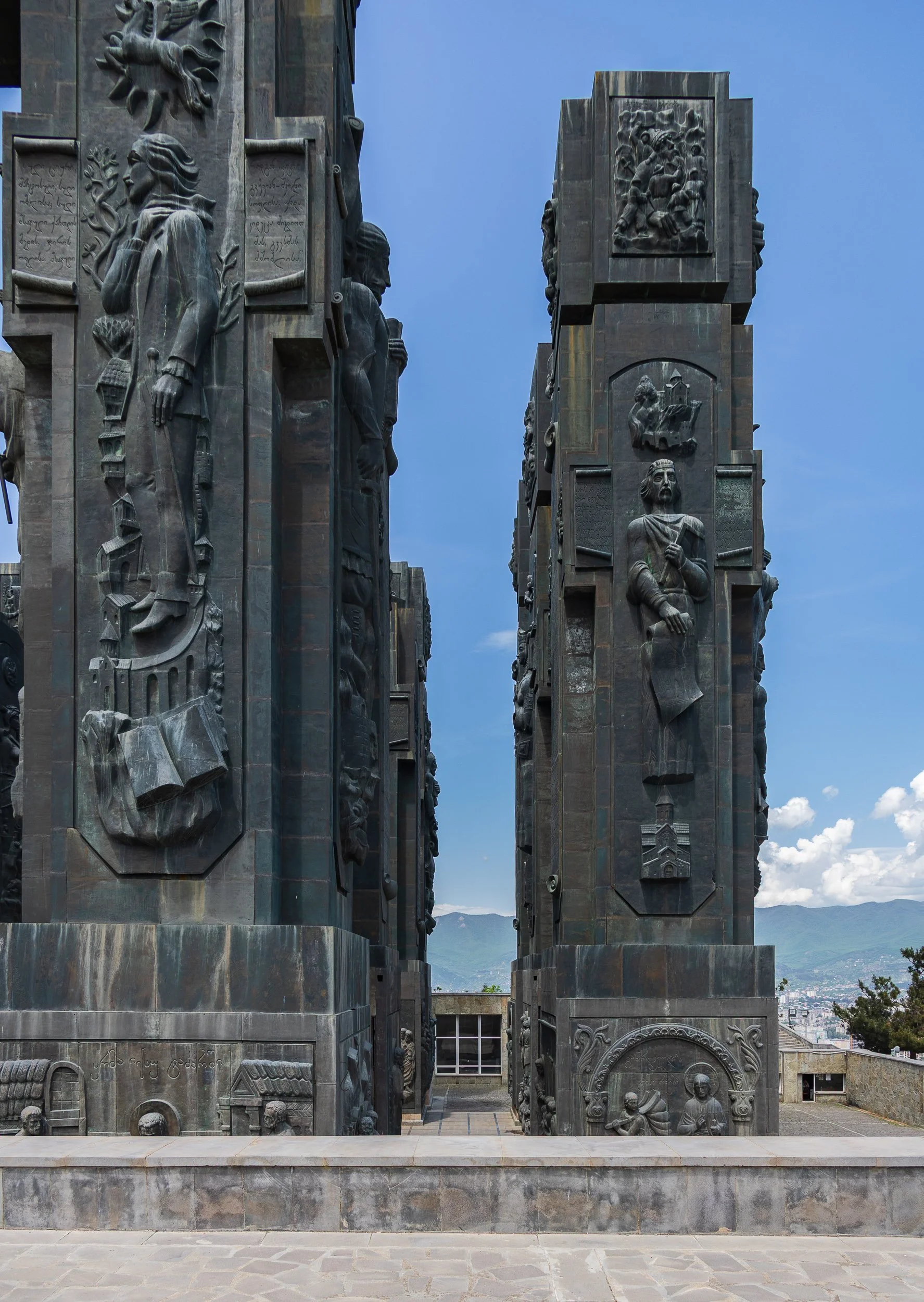
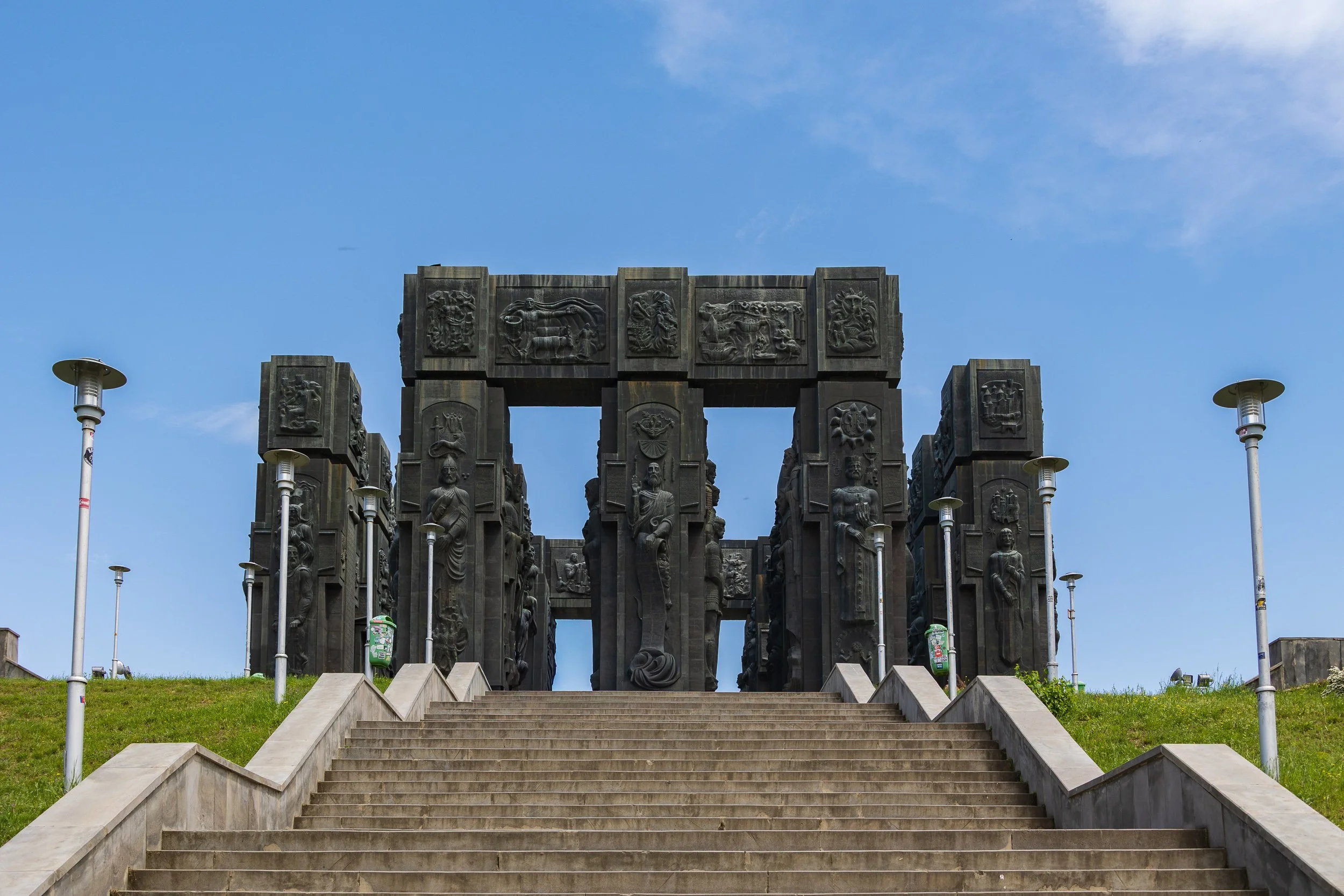
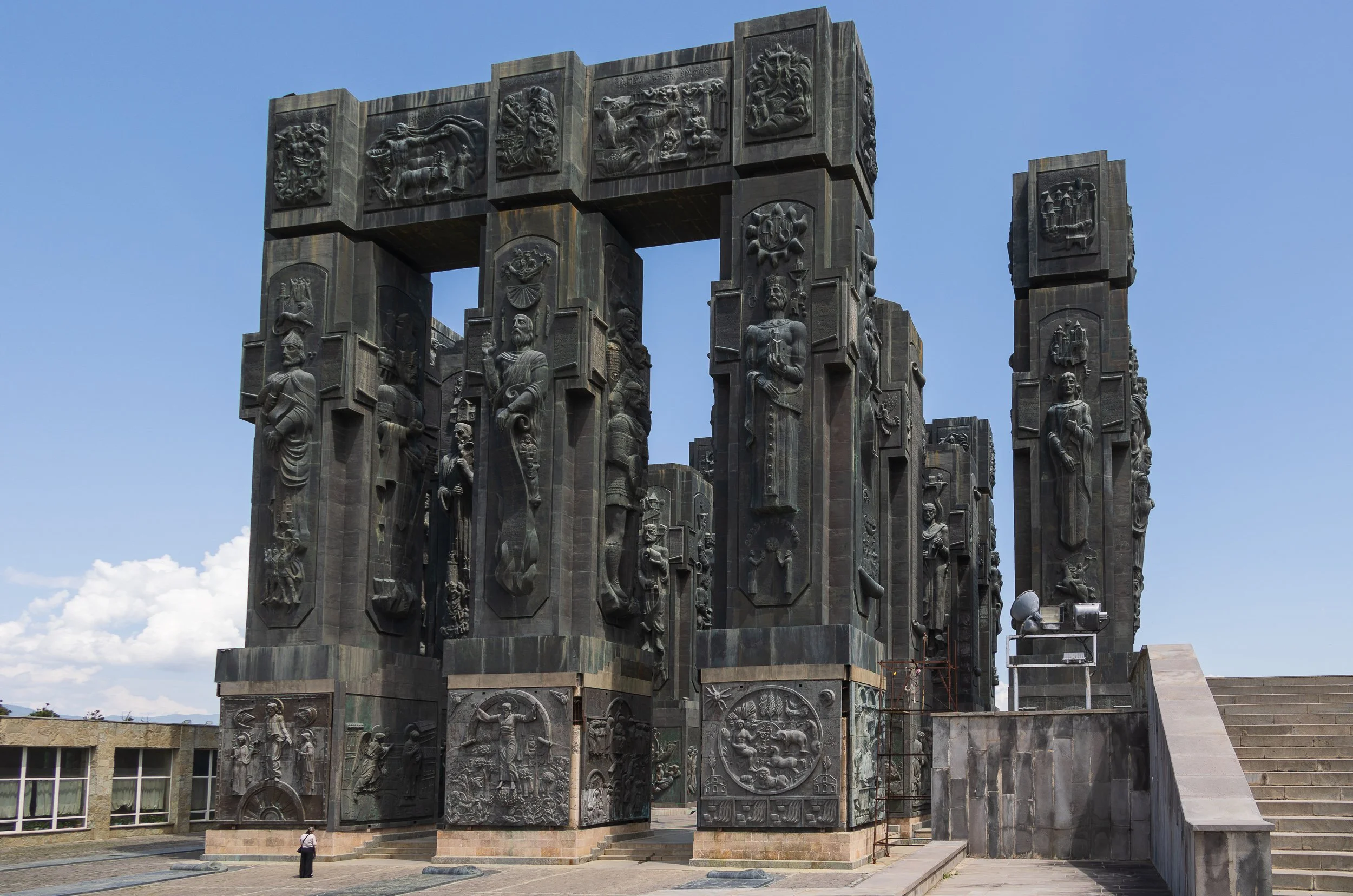
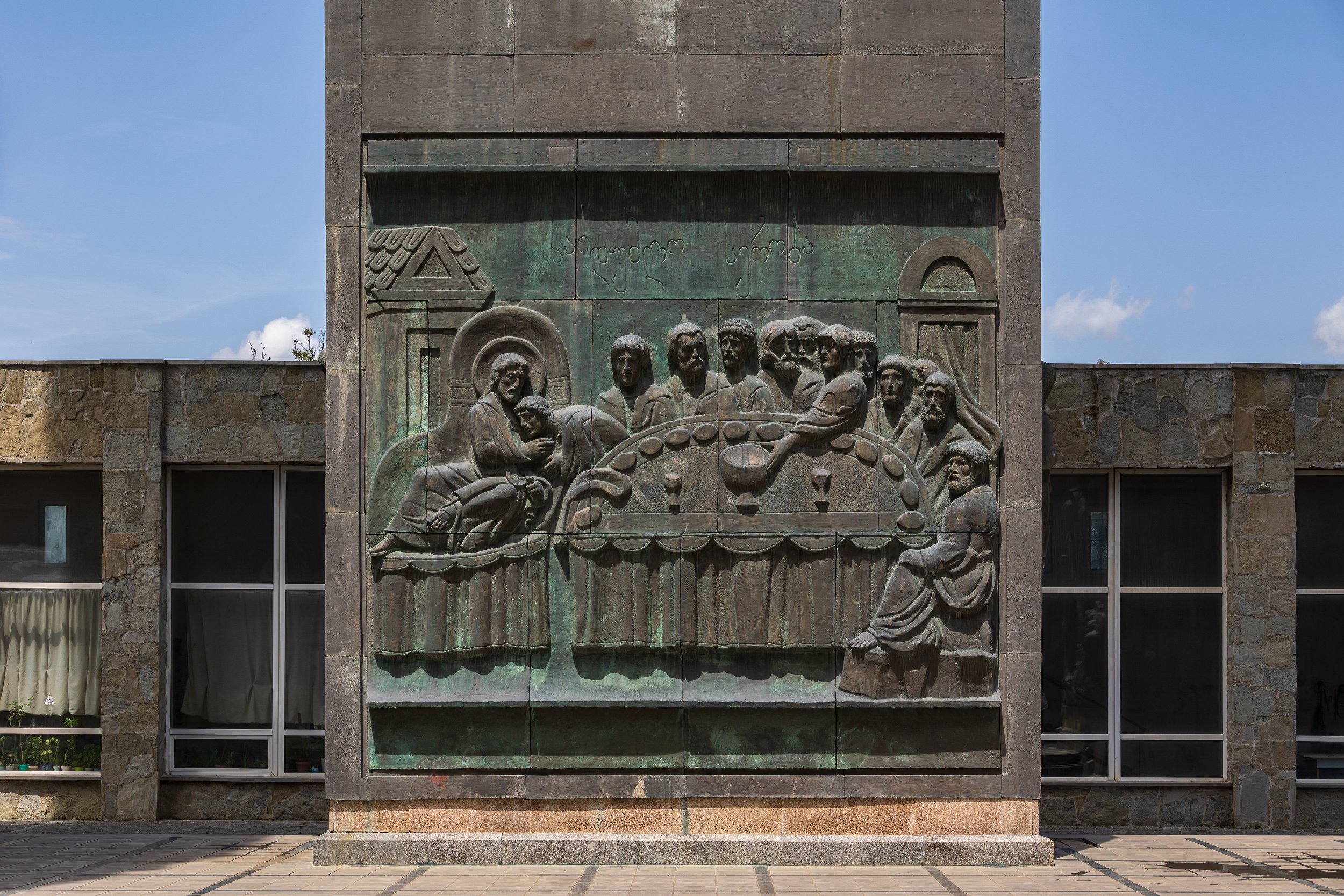
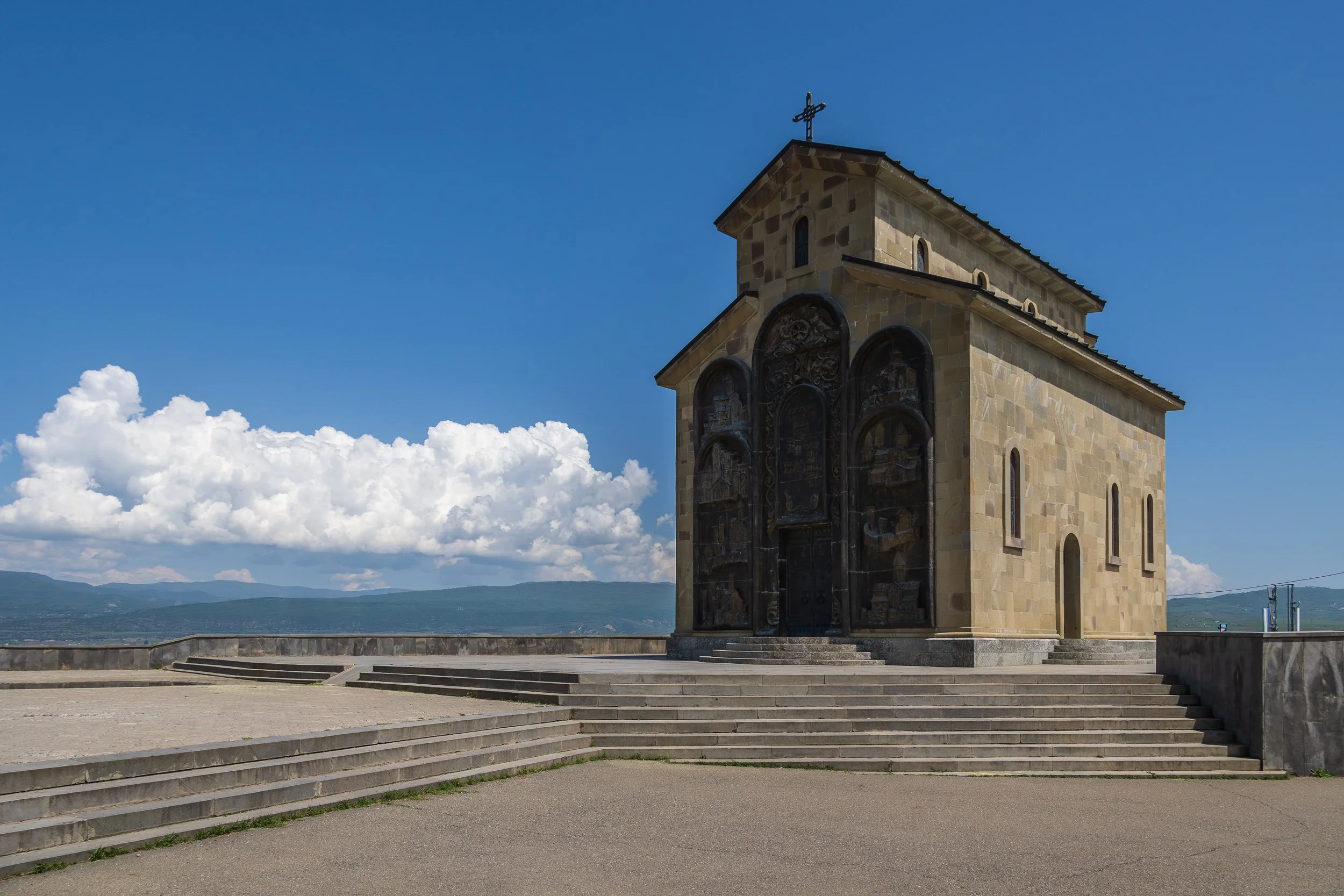
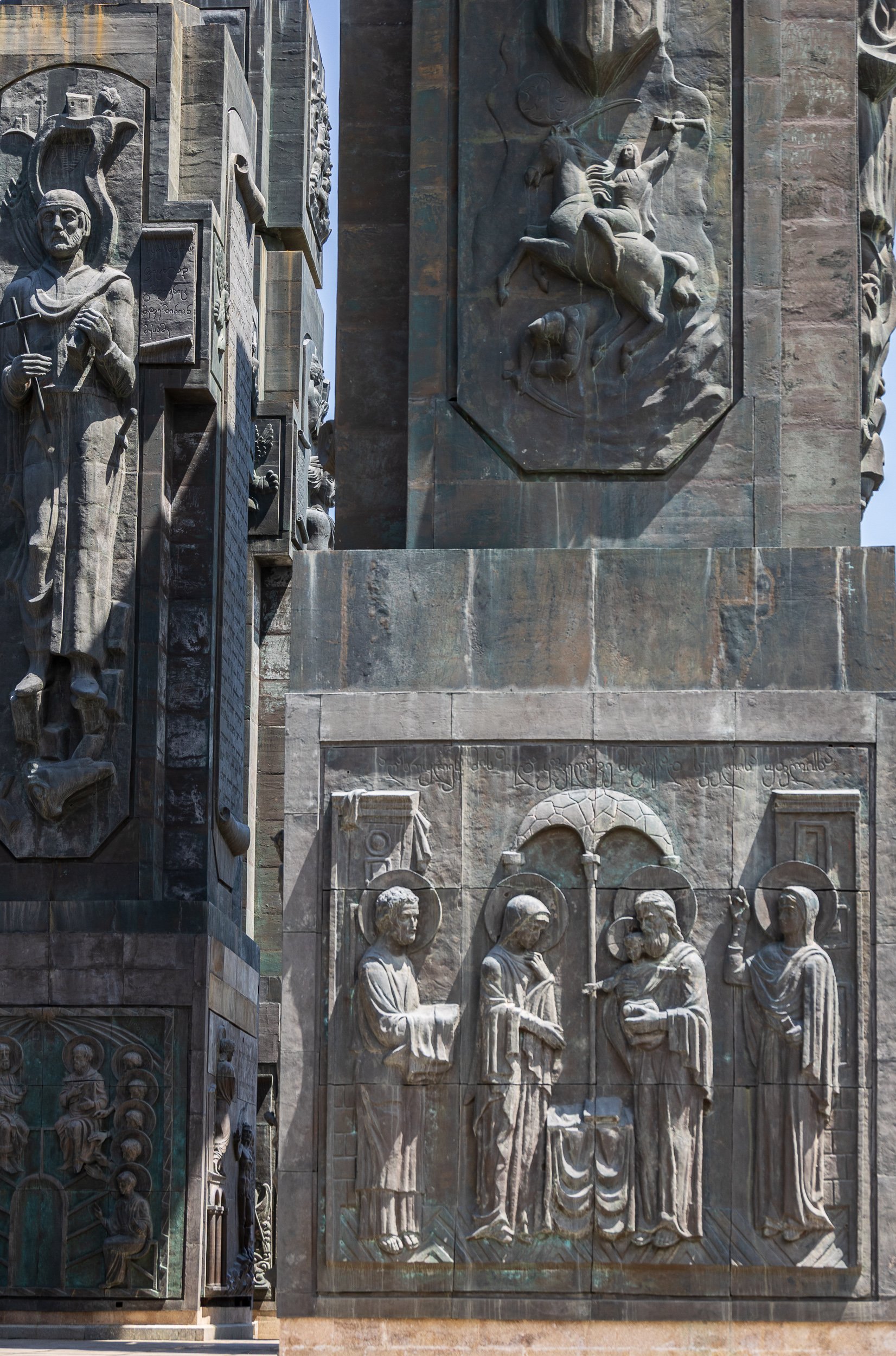
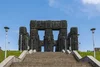
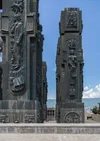
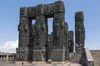
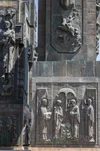
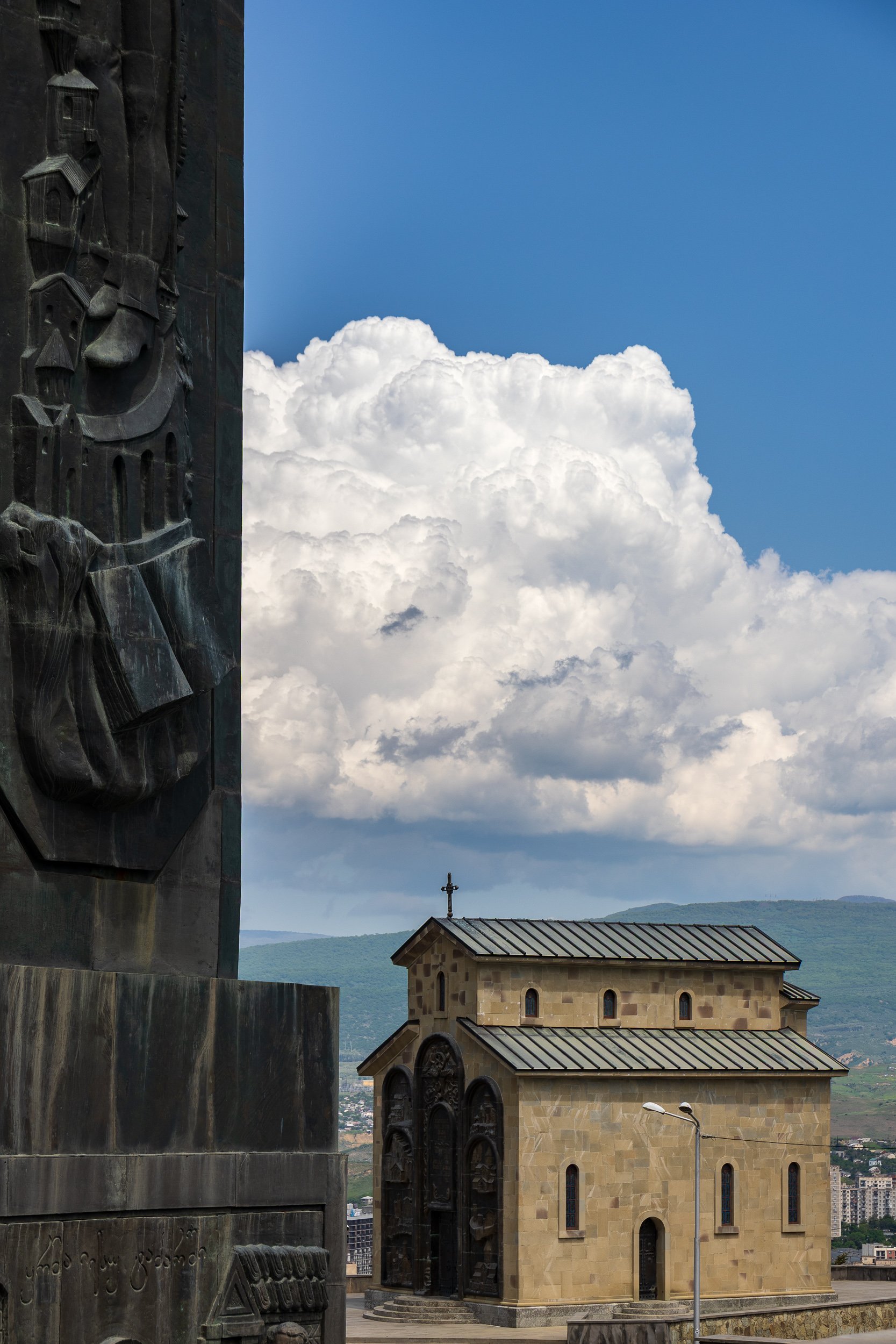
Chronicles of Georgia Sixteen pillars, each over 30 metres tall, on the outskirts of Tbilisi. Biblical scenes at the base, Georgian kings and queens above, literature and national heroes at the top. A whole civilization stacked in stone, created in the 1980s and still technically unfinished.
E13A9712.jpg
E13A9708.jpg
E13A9694.jpg
E13A9691.jpg
E13A9664.jpg
E13A9639.jpg
E13A9742.jpg
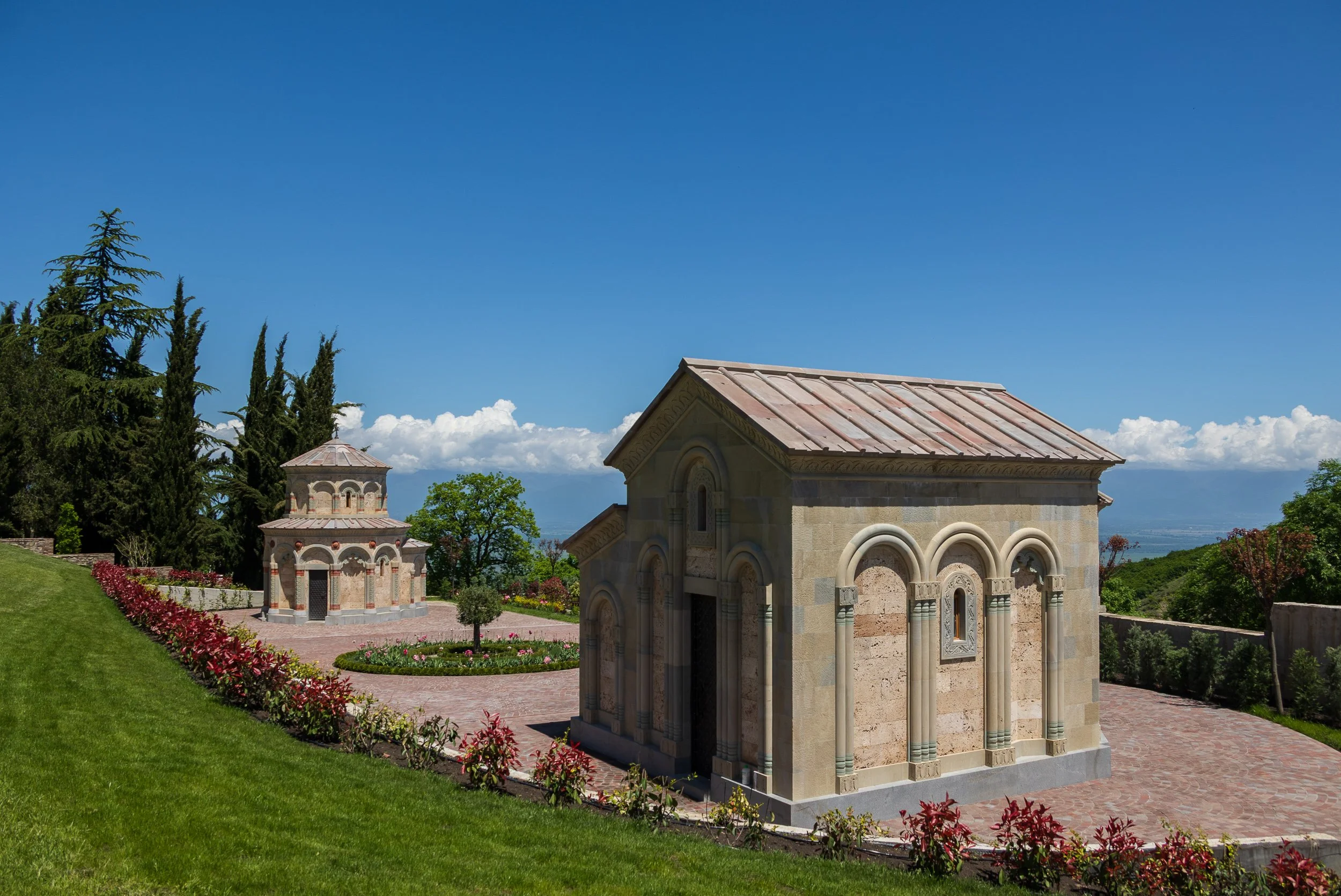
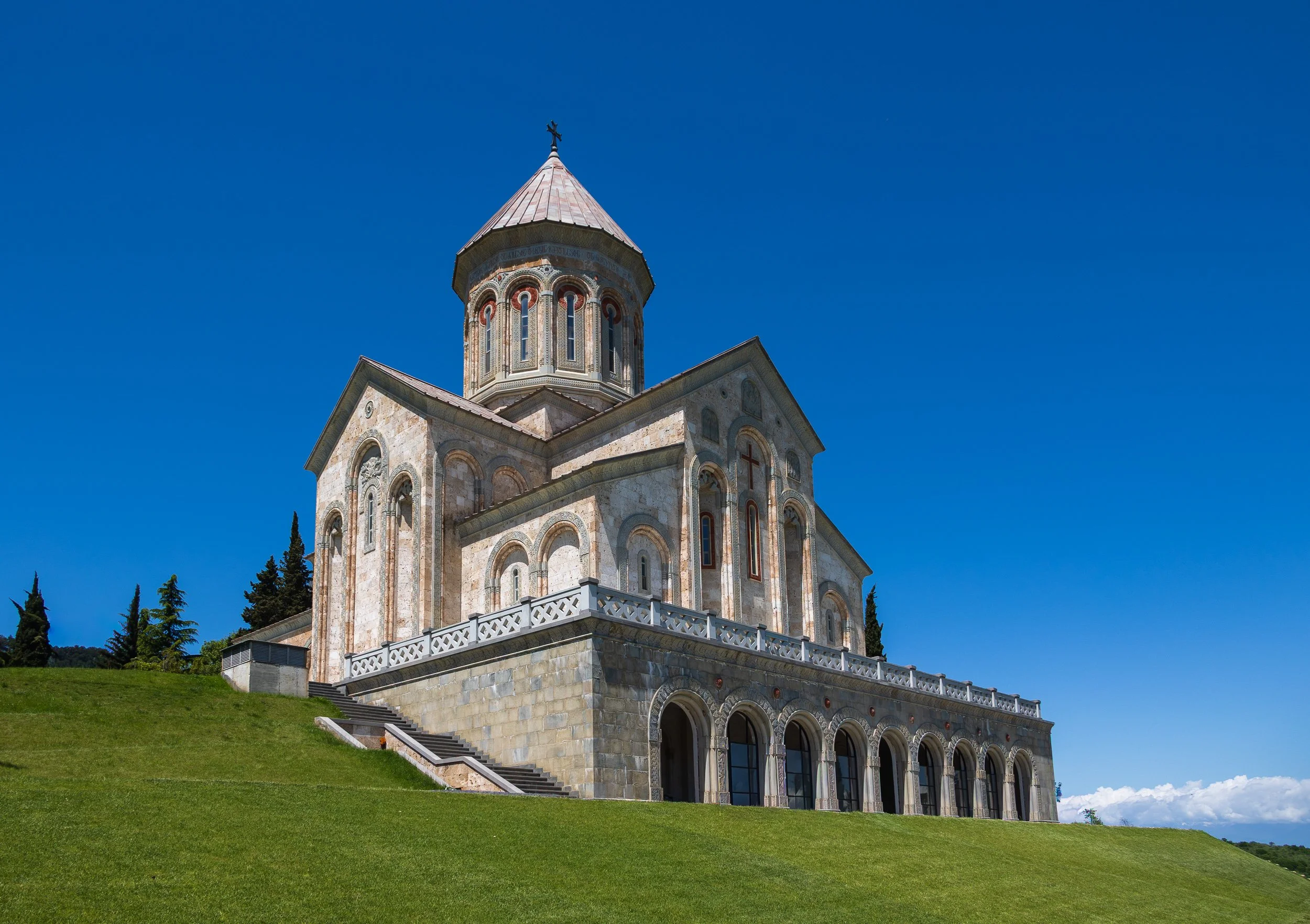
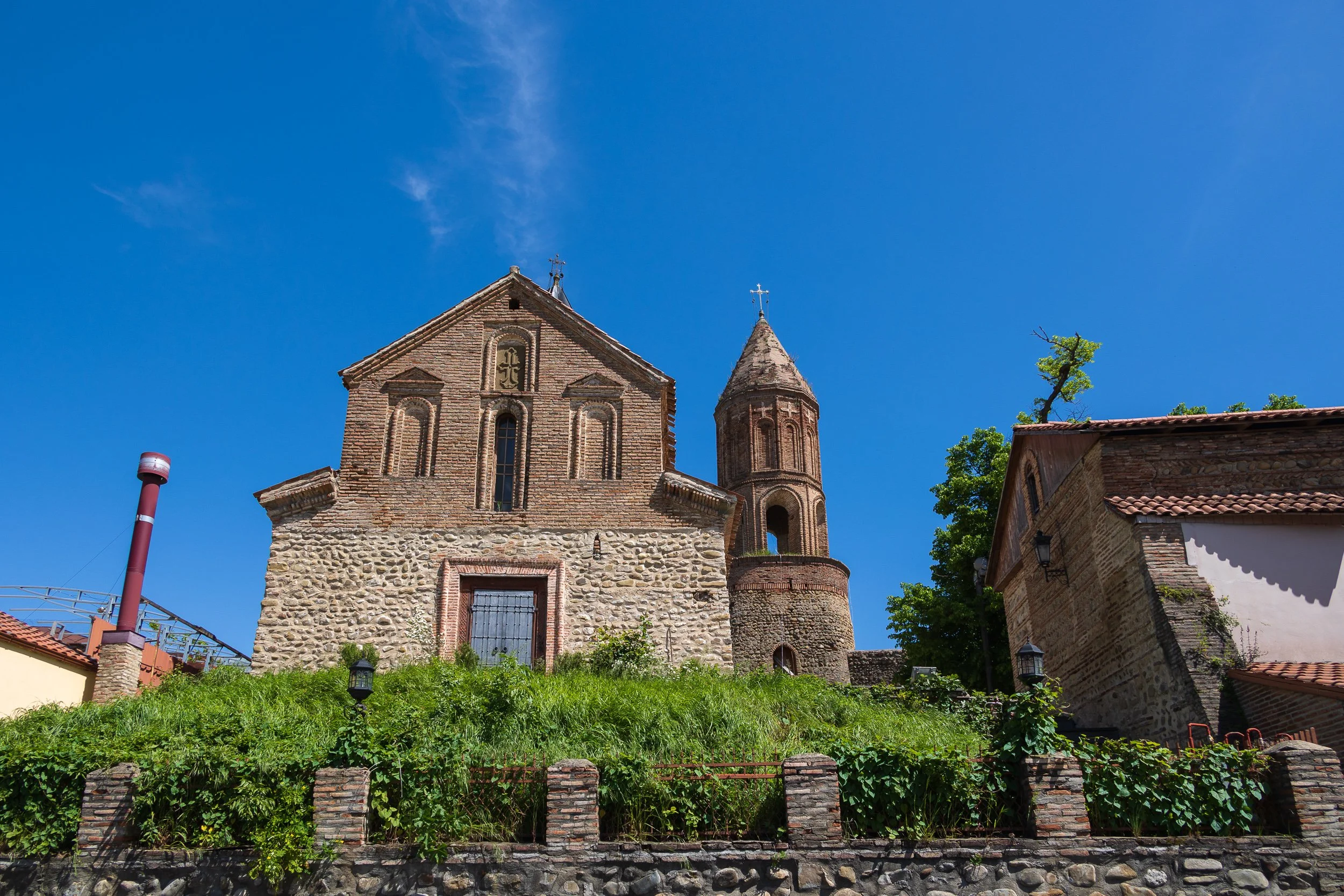
Bodbe Monastery
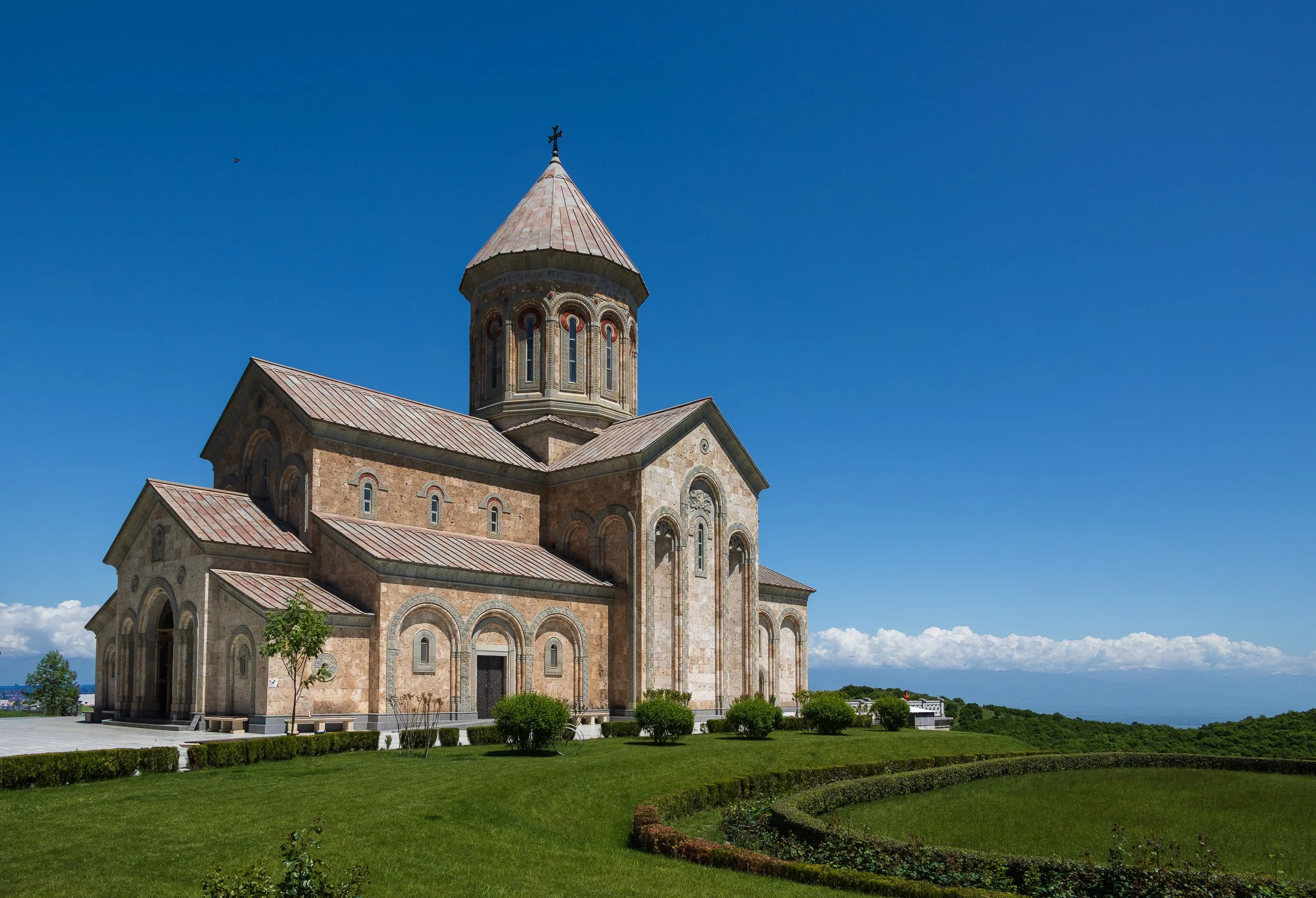
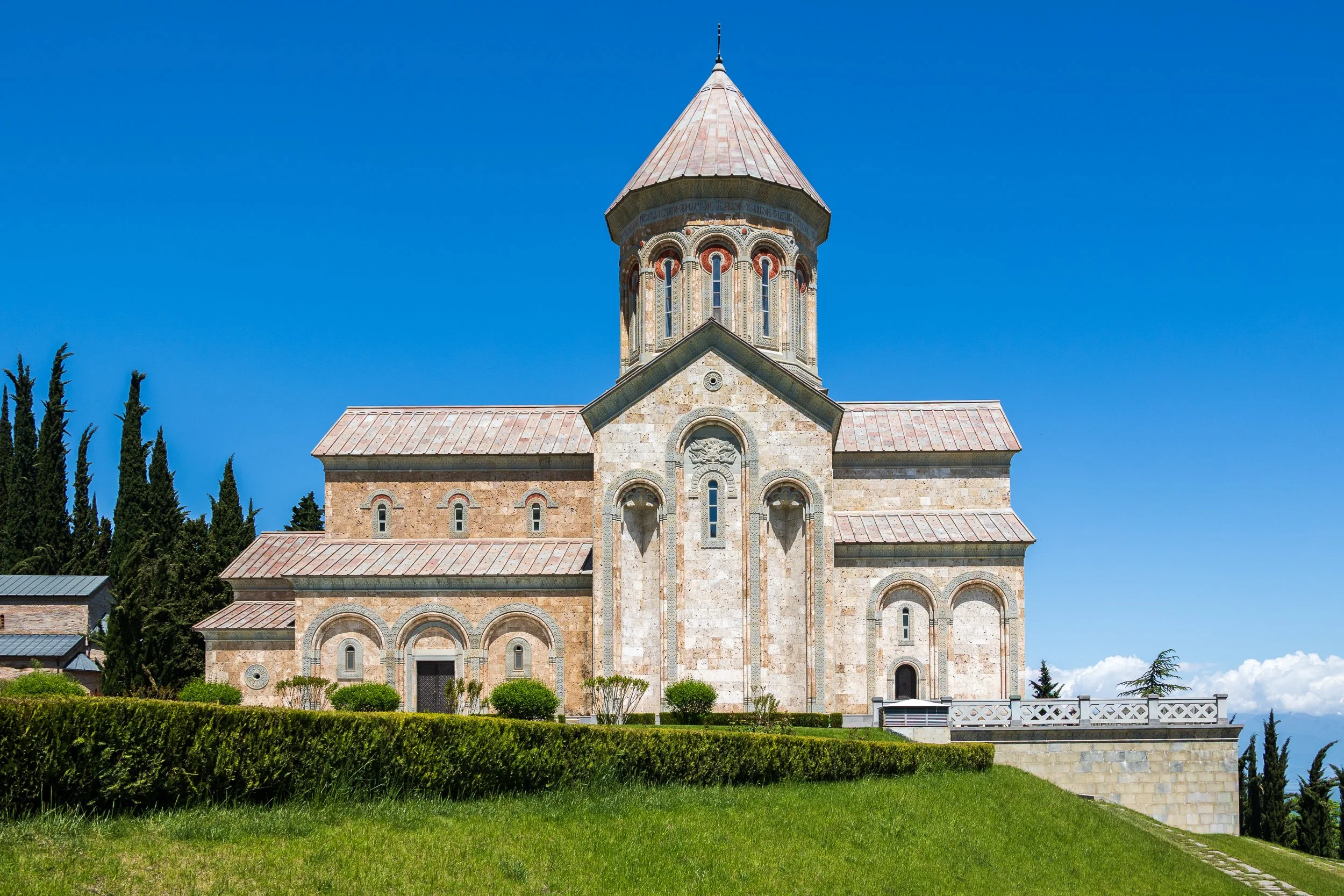
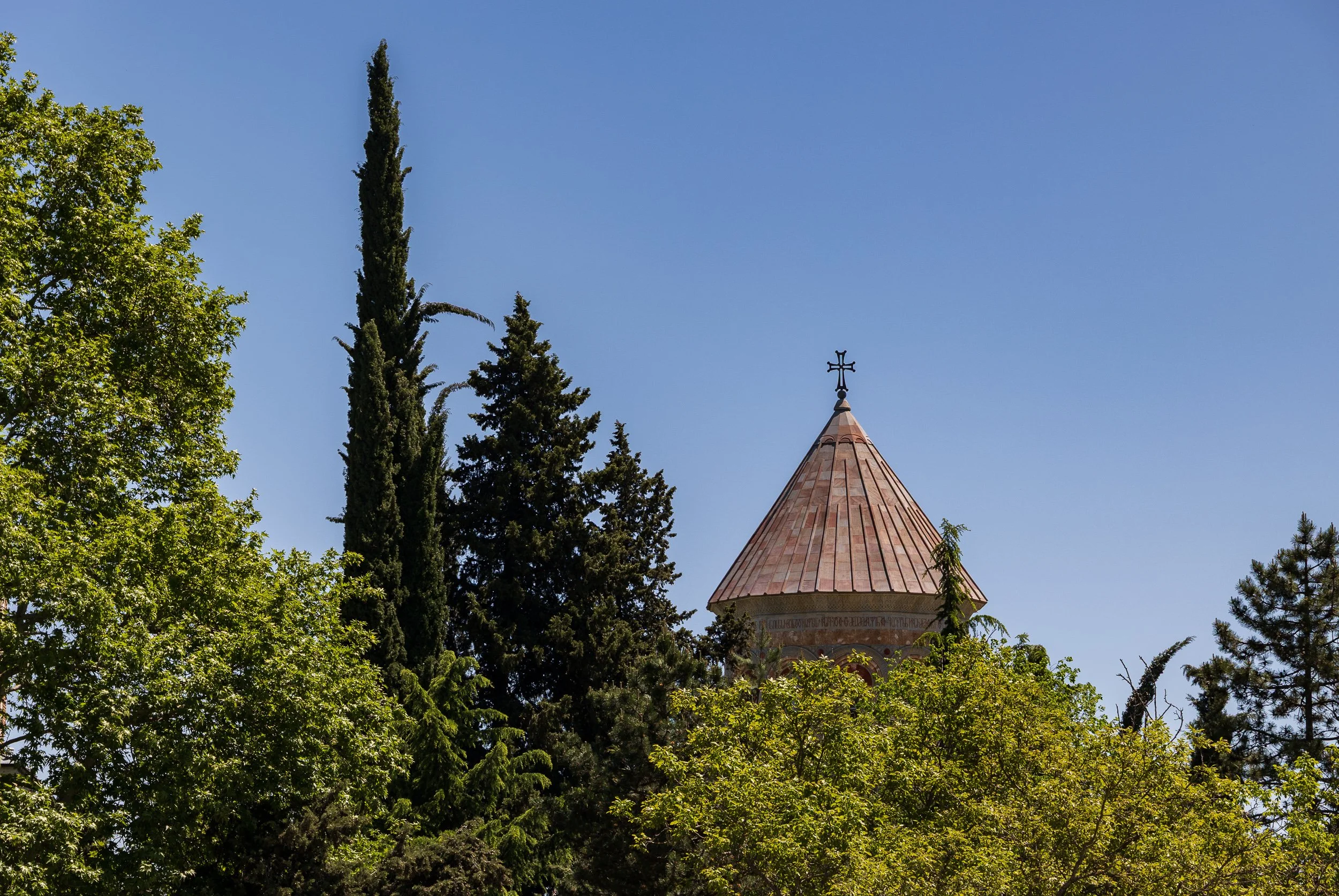
Bodbe MonasteryOn a wooded hillside outside Sighnaghi in Kakheti. Saint Nino, who brought Christianity to Georgia in the 4th century, spent her final years here and is buried at the site. The current Cathedral of Saint George dates to the 9th century. During the Soviet era it served as an operating room. The monks returned in 1991.
E13A9766.jpg
E13A9752.jpg
E13A9748.jpg
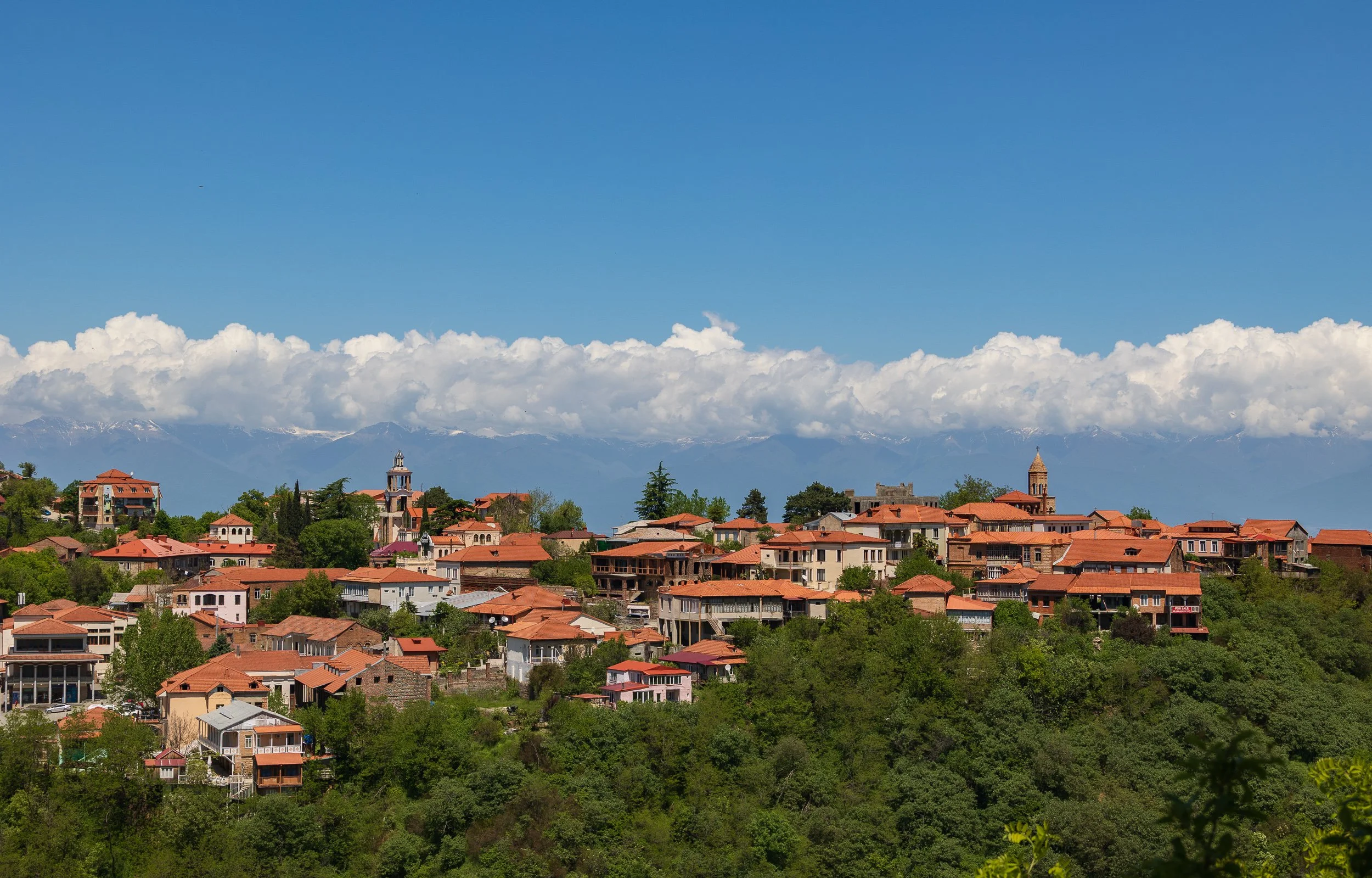
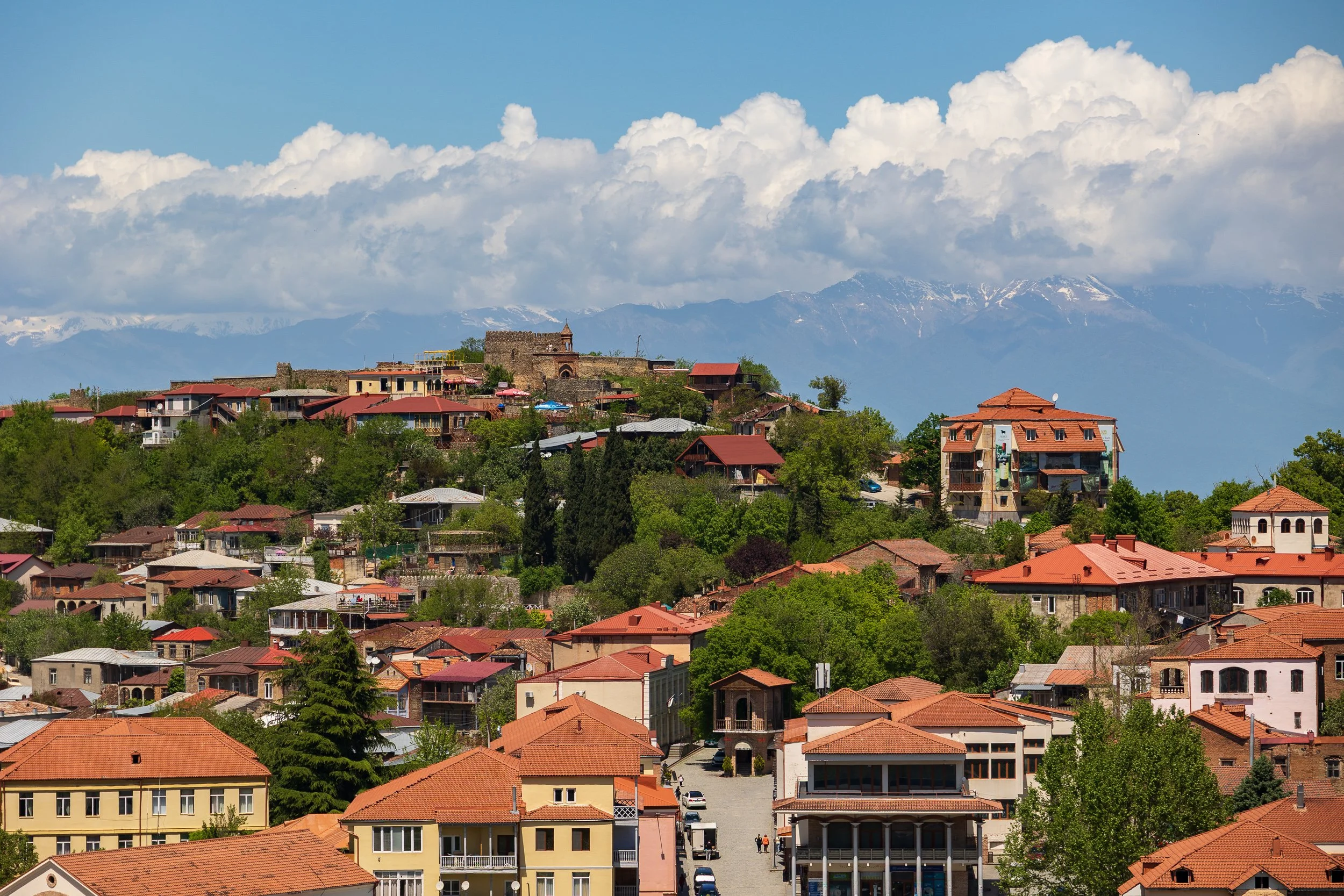
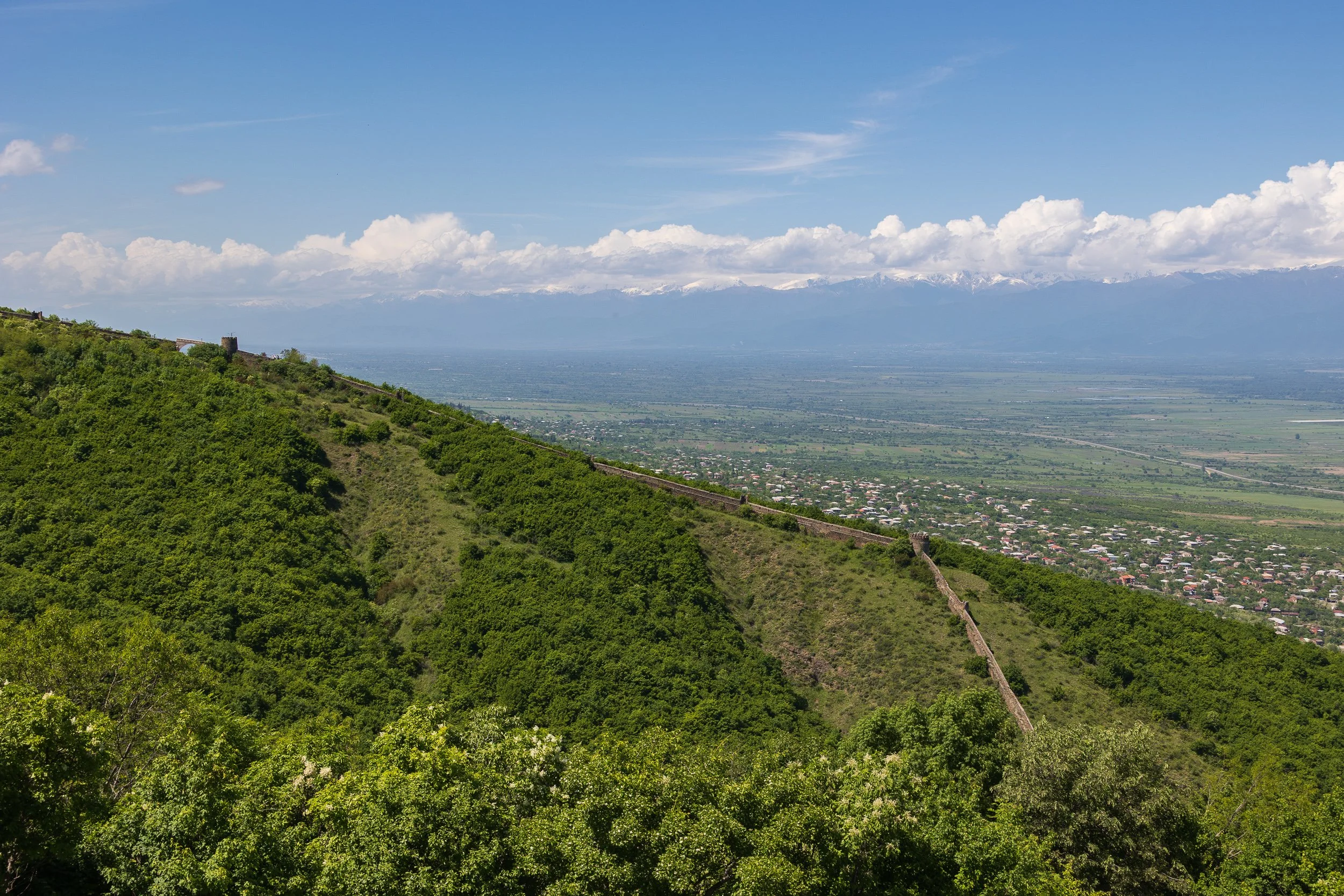
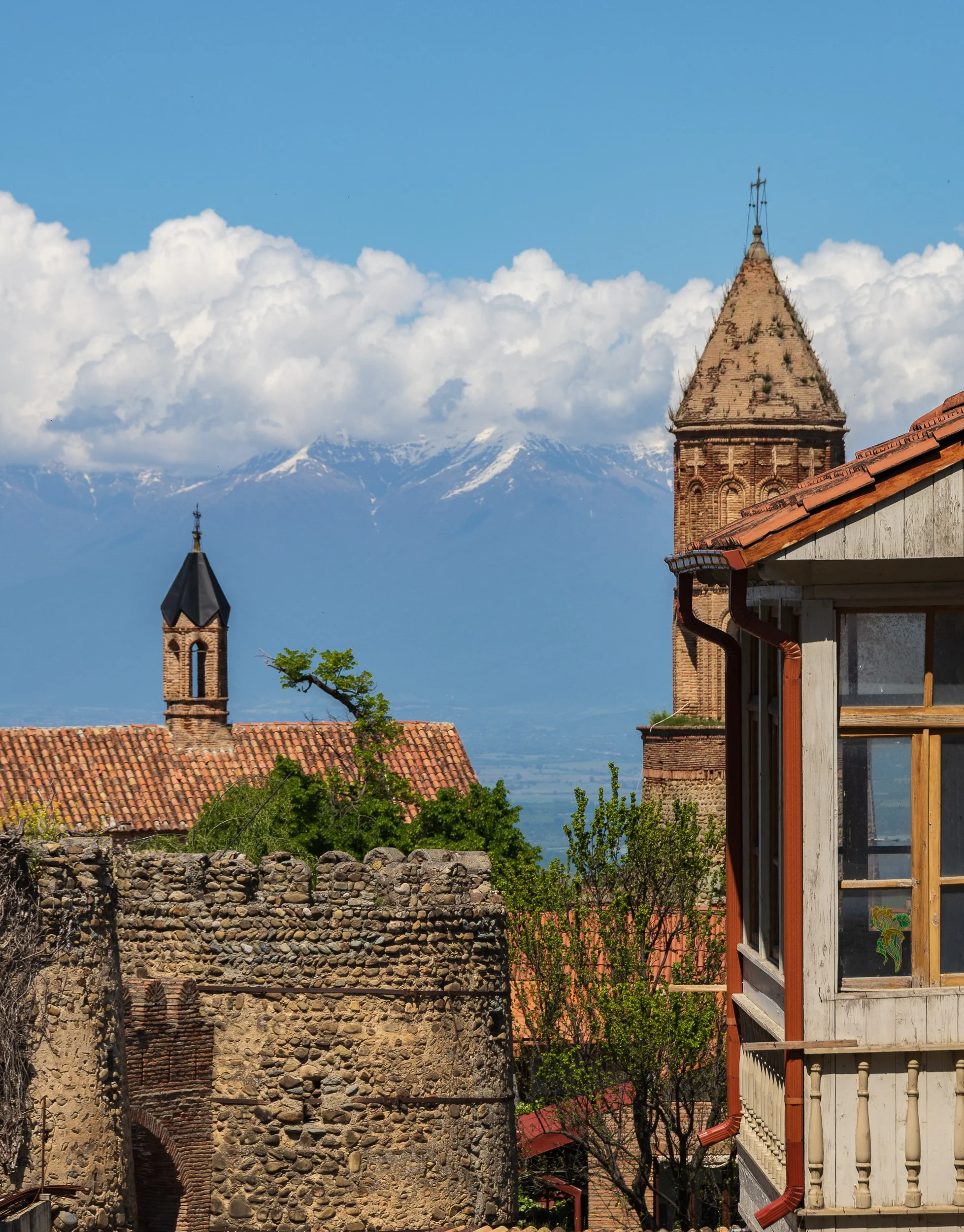
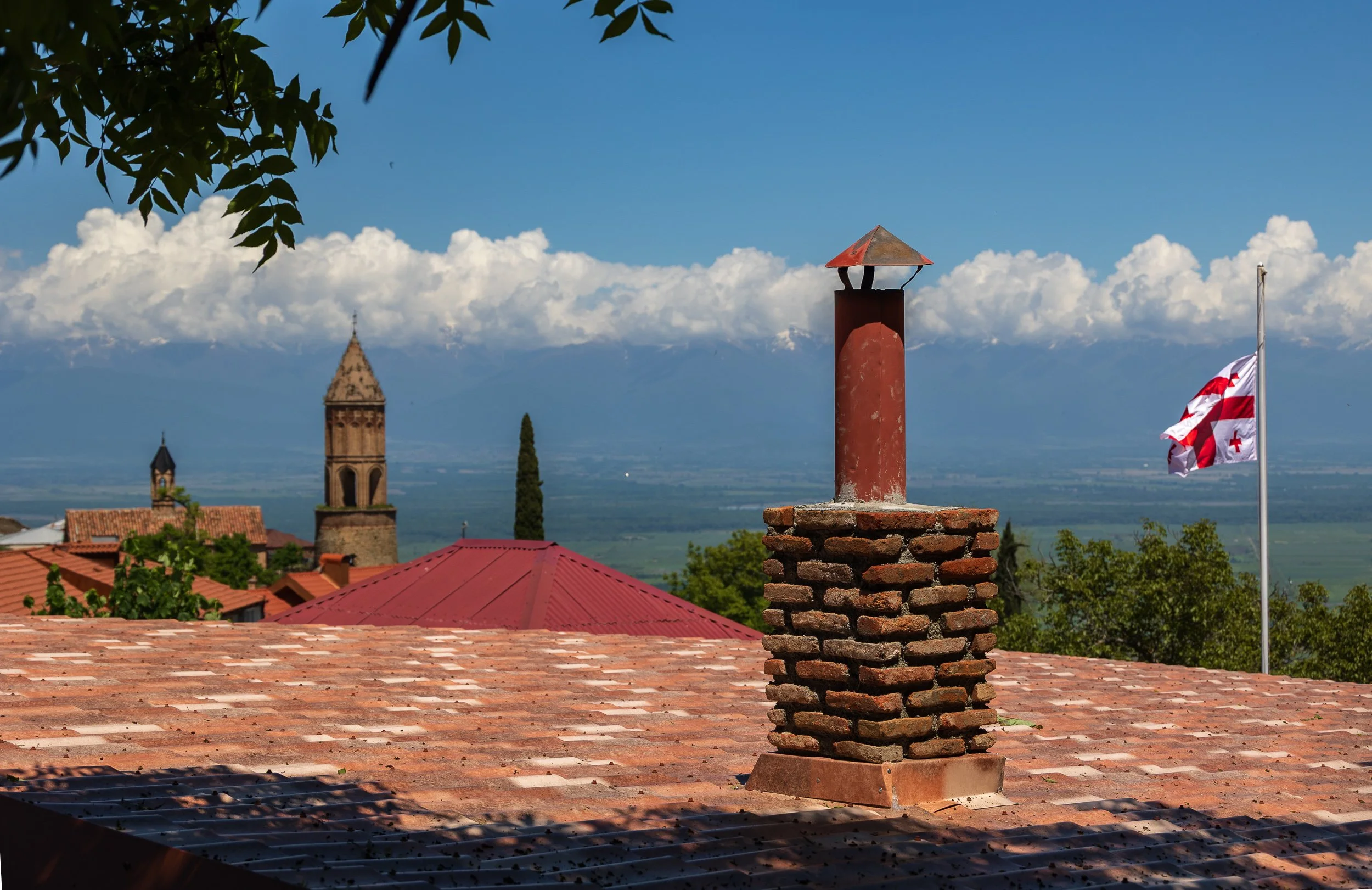
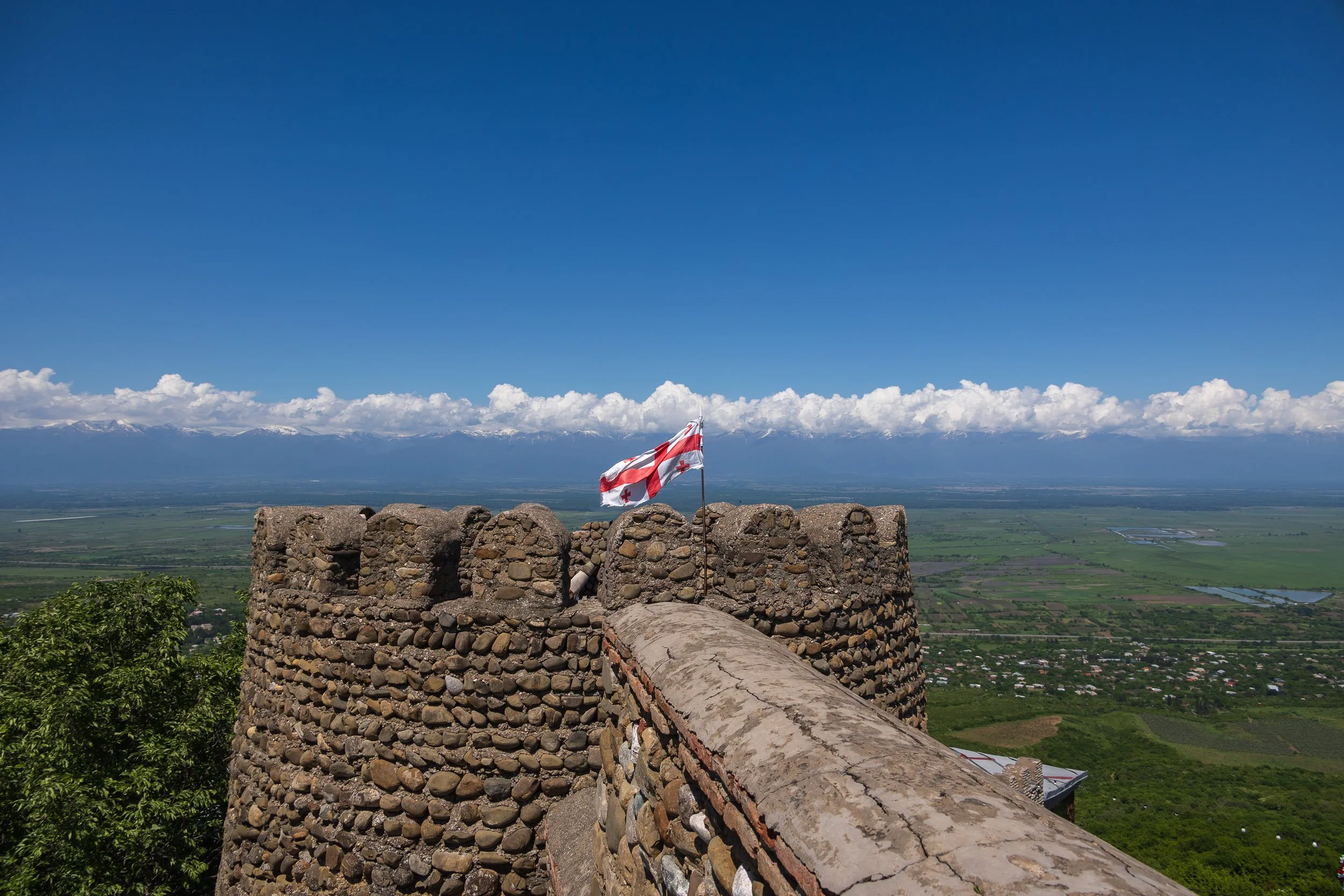
Sighnaghi
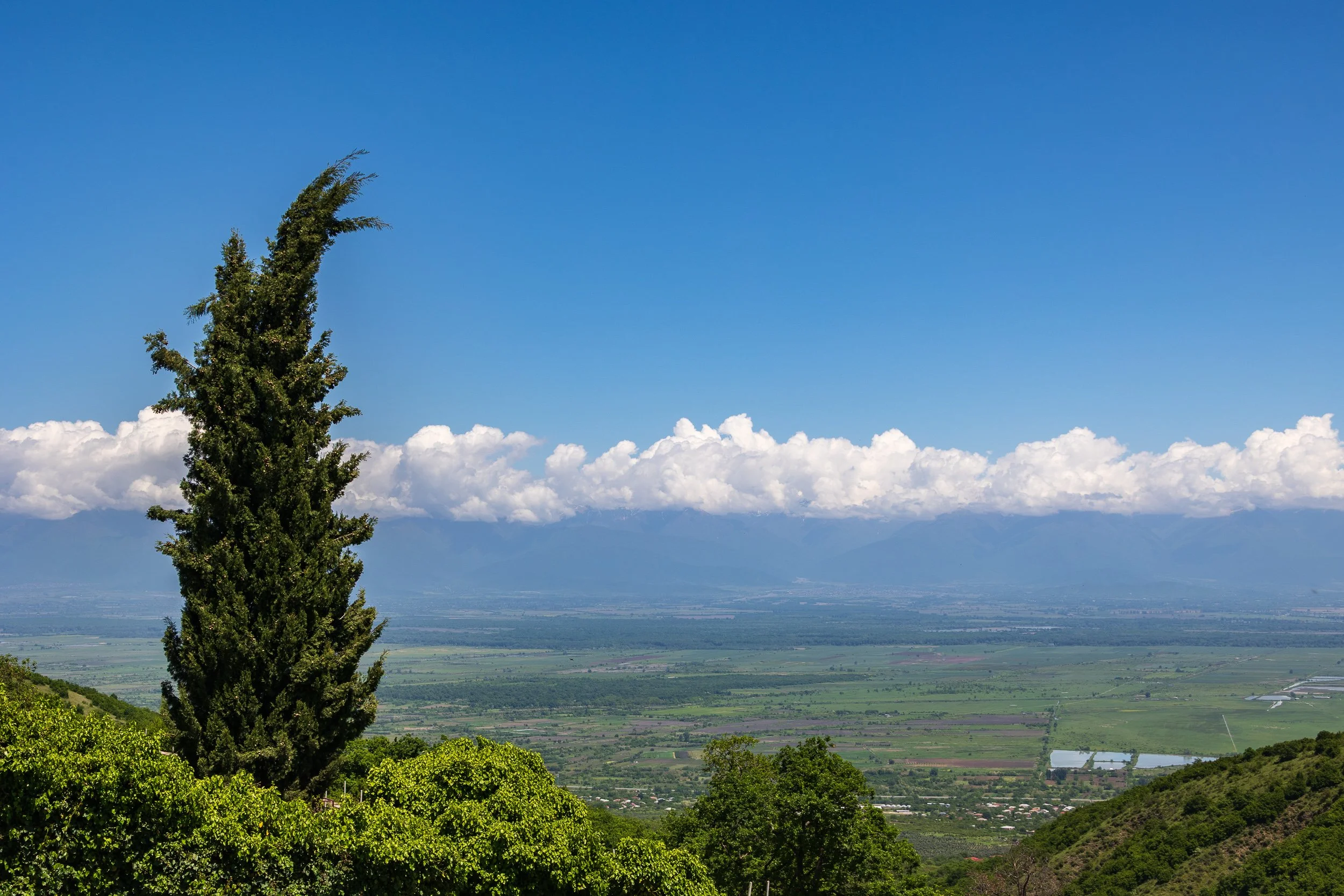
SighnaghiGeorgia's City of Love, perched above the Alazani Valley with the Caucasus Mountains as a backdrop. Walk the 4-kilometre defensive wall and find a patio with a view.
E13A9827.jpg
E13A9851.jpg
 Sighnaghi -The heart of a winemaking tradition stretching back 8,000 years, using the qvevri method: fermenting and aging in clay amphorae buried in the earth, a practice UNESCO has listed as Intangible Cultural Heritage.
Sighnaghi -The heart of a winemaking tradition stretching back 8,000 years, using the qvevri method: fermenting and aging in clay amphorae buried in the earth, a practice UNESCO has listed as Intangible Cultural Heritage.
E13A9871.jpg
E13A9832.jpg
E13A9861.jpg
E13A9834.jpg
E13A9439.jpg
E13A9725.jpg
info
prev / next